
On this page
- How Is Dehydrated Onion Made?
- Why Is Mahuva a Dehydration Hub?
- How Are Onions Selected, Peeled and Washed?
- What Happens in the Slicing and Drying Stages?
- How Are Flakes, Kibbled, Granules and Powder Made?
- How Do Sieving, Sorting and Metal Detection Work?
- Which Quality Standards and Packaging Apply?
- How Do You Source Dehydrated Onion from India?
- Frequently asked questions
Dehydrated onion is made by peeling and washing fresh white onions, slicing them, drying the slices with controlled hot air to about 5–8% moisture, and then milling and sieving the dried pieces into flakes, chopped, granules or powder. Sortex cleaning and metal detection follow before the product is packed. About 8–9 kg of fresh onion make 1 kg of dried flakes. This guide walks through each stage of the onion dehydration process, as it runs in Gujarat’s Mahuva belt.
Key takeaways
- White onions with high dry matter and strong pungency are preferred, because they give more yield, a pale colour and better flavour.
- Drying happens on multi-stage belt dryers. Moisture ends at about 5% or less for powder and up to 8% for larger cuts.
- Cuts are made after drying, by breaking, milling and sieving to set mm or mesh ranges.
- Sortex, metal detection and lot-wise testing for moisture, ash and microbiology protect quality.
How Is Dehydrated Onion Made?
Dehydrated onion is made in seven main steps: raw onion selection, peeling and washing, slicing, drying, sizing, cleaning and packing. Each step removes a defect or controls a risk. Peeling and washing remove soil and skins. Drying removes water so microbes cannot grow. Sizing gives the cut the buyer needs, and cleaning removes dark pieces and foreign matter.
Most units work in a continuous line. Fresh onion enters at one end, and dried, sized product leaves at the other end, ready for testing and packing. Onion is processed mainly during the Gujarat harvest, from about February to May. The finished stock is then stored and shipped all year round. If you are new to the product itself, our guide to what dried onion is explains the forms and uses.
Why Is Mahuva a Dehydration Hub?
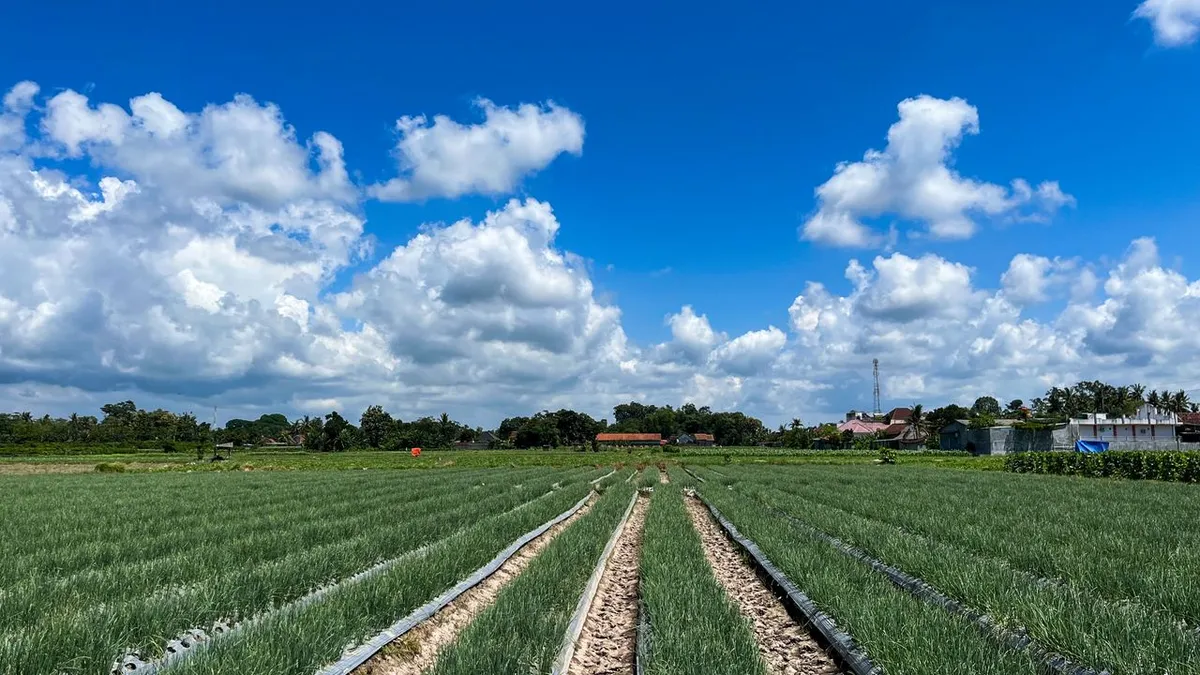
Mahuva is a dehydration hub because it sits in India’s white onion growing belt, so factories can process large volumes of fresh onion close to the farms. Mahuva lies in Bhavnagar district, Gujarat, and most of India’s onion and garlic dehydration units are located around it. Short transport from field to factory keeps the onions fresh and the cost low.
The cluster has established processing skills and support services, and it is within reach of Gujarat’s ports, including Pipavav, Mundra and Kandla. Gujarat shipped about 83,000 tonnes of dehydrated white onion in 2023-24. India as a whole is the world’s largest exporter of dried onion, with about 1.13 lakh tonnes worth US$ 221 million in 2024, according to World Bank WITS trade data.
How Are Onions Selected, Peeled and Washed?
Onions for dehydration are selected for colour, dry matter and pungency, then peeled and washed to remove skins, roots and soil. White onions are used for the standard export grades, because they give a white to creamy white product. Varieties with high total solids are preferred. More solids mean less water to remove, a higher yield of dried product per tonne, and a stronger flavour.
- Grading: damaged, sprouted, rotten or undersized bulbs are removed.
- Topping and tailing: the neck and the root plate are cut off.
- Peeling: the dry outer skins are removed, usually with compressed air or machine peelers, followed by hand finishing.
- Washing: peeled onions are washed in chlorinated water to reduce soil and surface microbes.
Careful peeling matters. Skin pieces that remain become dark specks in the finished product, and soil left on the bulb raises ash and acid-insoluble ash results.
What Happens in the Slicing and Drying Stages?
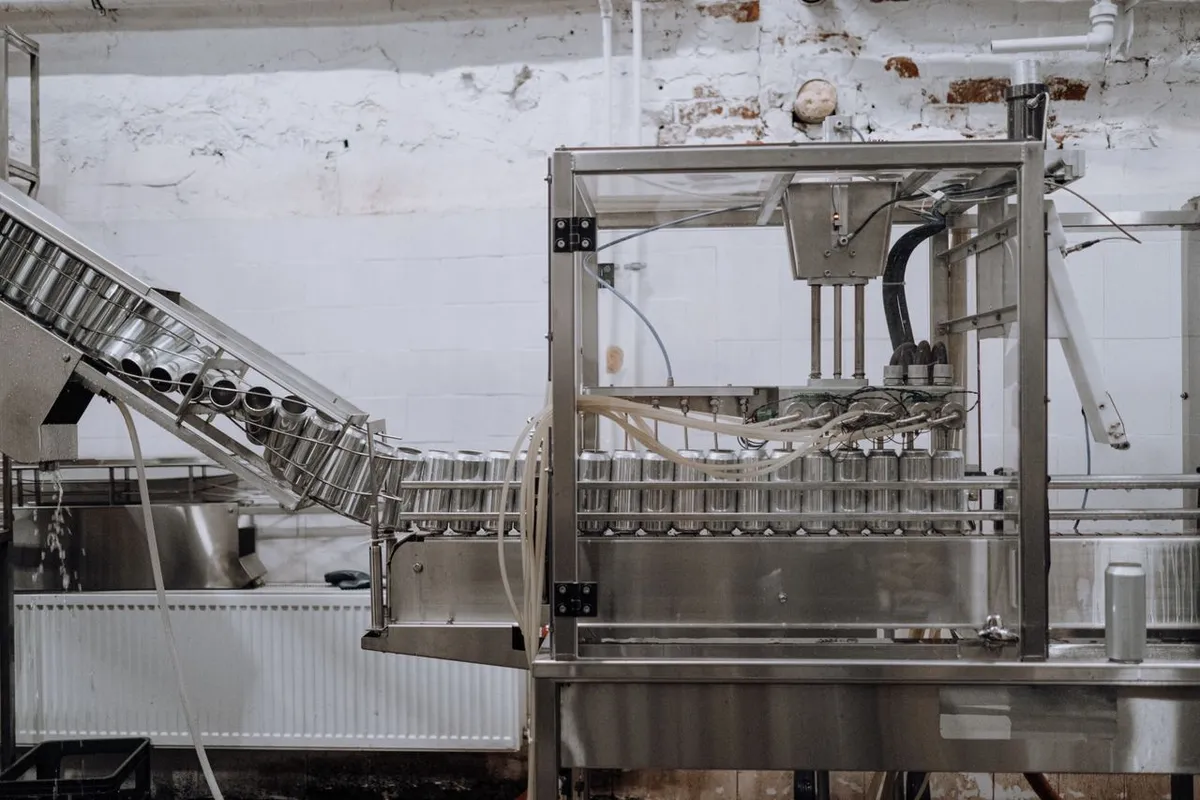
In the slicing and drying stages, washed onions are cut into slices and dried with hot air on belt dryers until they reach the target moisture. This is the core of the onion dehydration process, and it decides colour and flavour.
Slicers cut the onion into rings or slices of an even thickness, so that every piece dries at the same rate. The slices are spread on a moving perforated belt and pass through several drying zones. Hot air flows through the bed of slices and carries the water away. The early zones remove most of the free water. The later zones finish the product more gently, because the onion is now dry and can scorch.
Temperature control is critical. Too much heat causes browning and a burnt or cooked note. Too little heat leaves the product damp, which risks caking and microbial growth. Operators monitor the outlet moisture and adjust air temperature and belt speed. Some plants finish the product in a separate bin dryer to bring the moisture down evenly.
Drying also explains the yield. Fresh onion is mostly water, so a large weight of raw onion shrinks to a small weight of dried product. About 8–9 kg of fresh onion are needed for 1 kg of flakes. This is why raw onion quality has such a strong effect on cost: onions with more solids give more dried product per tonne and use less energy per kilogram.
How Are Flakes, Kibbled, Granules and Powder Made?
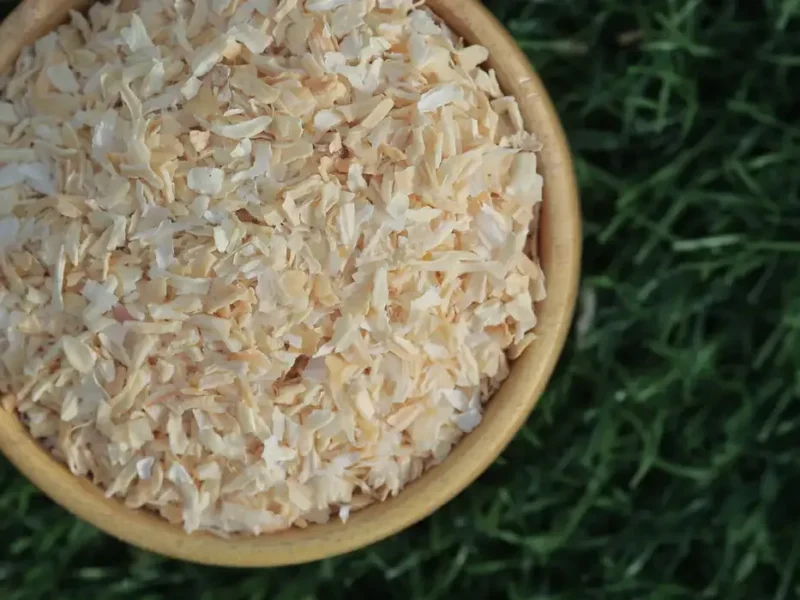
All cuts start as dried slices. The slices are broken, milled and sieved to a set size, and each fraction becomes a different product. Large pieces are sold as kibbled flakes. Smaller fractions become chopped and minced onion, and fine milling produces granules and powder.
| Cut | Typical size | How it is made | Common uses |
|---|---|---|---|
| Flakes (kibbled) | 8–25 mm | Dried slices broken and sieved | Soups, stews, frying |
| Chopped | 3–5 mm; large 5–8 mm | Flakes cut and graded | Sauces, ready meals, toppings |
| Minced | 1–3 mm | Further cutting and sieving | Rubs, dressings, meat products |
| Granules | 0.2–0.5 mm and 0.5–1 mm | Milled and sieved to a narrow range | Seasonings, snack coatings |
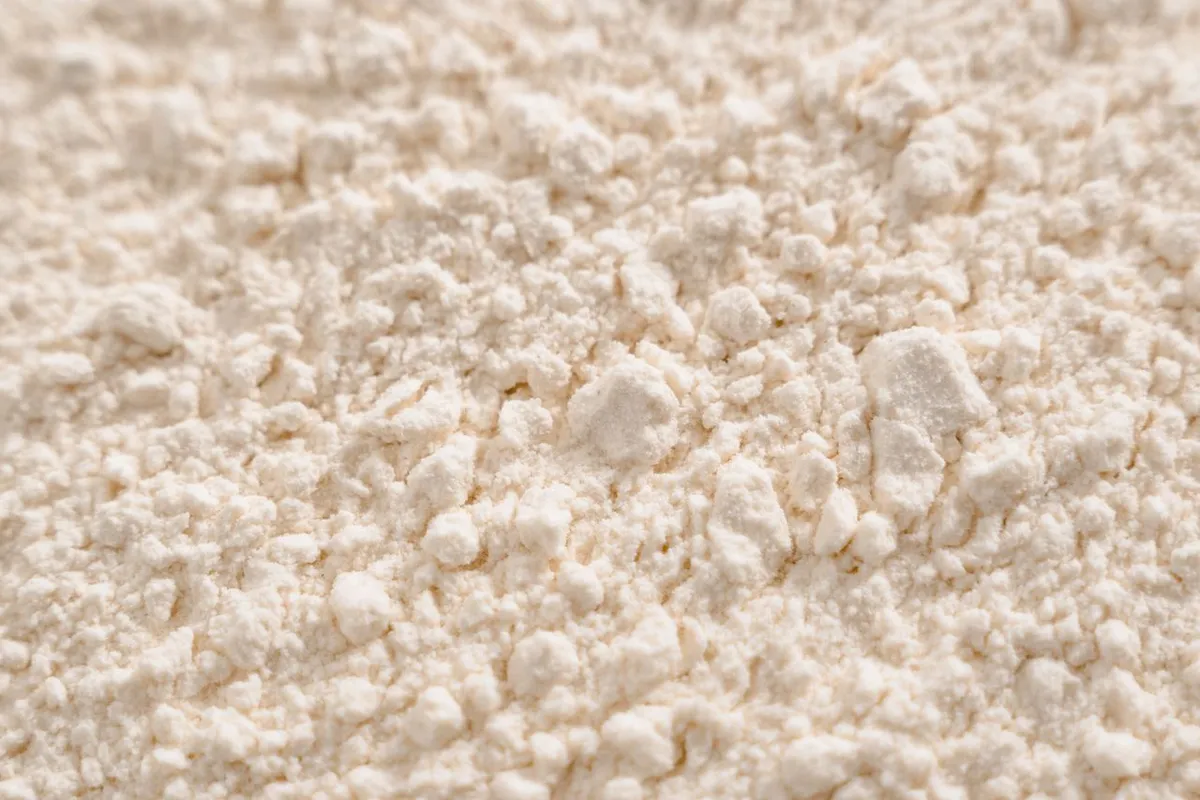
| Powder | 80–100 mesh | Fine milling and sifting | Seasonings, soups, sauces |
Powder must be drier than the larger cuts. Under the Indian standard IS 4452 and FSSAI rules, moisture is limited to 5% for powder and 8% for other forms. Fine powder also absorbs moisture faster, so it is milled and packed in low-humidity conditions.
How Do Sieving, Sorting and Metal Detection Work?
Sieving, sorting and metal detection clean the dried onion so that only the right size, colour and quality reach the pack. Vibrating sieves with different screens separate the fractions and remove fines and oversize. Optical sortex machines use cameras to find dark, brown or burnt pieces and remove them with air jets. Magnets and metal detectors then check for ferrous and non-ferrous metal before packing.
Some buyers also need a low-microbial grade for ready-to-eat foods. In that case, the product is steam-sterilised. We recommend asking for steam treatment and not ethylene oxide (ETO), which is not permitted in many markets.
Which Quality Standards and Packaging Apply?
Dehydrated onion is made to IS 4452 in India, which is aligned to ISO 5559, and to FSSAI rules. These set limits for moisture, total ash (5% maximum) and acid-insoluble ash (0.5% maximum). Buyers add their own limits for particle size, colour and microbiology, including total plate count, yeast and mould, coliforms, E. coli and Salmonella.
Packing protects the product from moisture. Flakes and chopped onion are usually packed in 12.5–14 kg poly bags inside kraft paper bags or cartons. Powder and granules go in 20–25 kg poly-lined cartons, with aluminium-foil liners on request. Kept sealed in cool, dry storage, dehydrated onion typically lasts 18–24 months. See our packaging page for export packing options.
Related reading: Granulated Garlic vs Garlic Powder: Differences and Uses.
How Do You Source Dehydrated Onion from India?
Now that you know how dehydrated onion is made, you can write a clear specification. State the cut and size range, the moisture limit, the micro grade, the sterilisation method and the packing. Ask for a Certificate of Analysis for each lot that covers moisture, ash, microbiology and pesticide residues.
Plan the container load early, because dried onion cuts have very different densities. A 20 ft container holds only about 6–7 MT of onion flakes, but about 14–15 MT of onion powder. Our container load calculator helps you compare landed cost per kilogram for each cut.
Elysium Agri Corporation, based in Jamnagar, Gujarat, exports dehydrated white onion from the Mahuva belt in flakes, chopped, minced, granules and powder. Every lot is tested before shipment, and low-micro grades are steam-sterilised, never treated with ETO. We can combine several cuts in one container. Tell us the cut, size, quantity and destination port, and we will send a specification and price. Request a dehydrated onion quote →
Frequently asked questions
How is dehydrated onion made?
Fresh white onions are graded, peeled and washed in chlorinated water, then sliced and dried with hot air on multi-stage belt dryers to about 5 to 8 percent moisture. The dried slices are broken, milled and sieved into flakes, chopped, minced, granules or powder, cleaned by sortex and metal detection, tested and packed.
Which onion varieties are used for dehydration?
White onion varieties are used for standard export grades, because they give a white to creamy white product. Processors prefer bulbs with high total solids and strong pungency. More solids mean less water to remove, a higher yield per tonne of fresh onion and a stronger flavour in the finished product.
What is the difference between onion flakes, granules and powder?
The difference is particle size. Flakes or kibbled onion are 8 to 25 mm pieces of dried slices. Granules are milled and sieved to about 0.2 to 1 mm. Powder is finely milled to about 80 to 100 mesh. Larger pieces give visible texture, while finer forms blend evenly into seasonings and sauces.
How much moisture does dehydrated onion contain?
Under the Indian standard IS 4452 and FSSAI rules, dehydrated onion powder may contain up to 5 percent moisture and other forms up to 8 percent. Flakes are typically dried to about 5 to 6 percent. Many buyers set tighter limits in their contracts, because lower moisture reduces caking and microbial risk.
Why is Mahuva known for onion dehydration?
Mahuva, in Bhavnagar district of Gujarat, sits in India's white onion growing belt, and most of the country's onion and garlic dehydration units are located around it. Factories can process fresh onion close to the farms, and the area is within reach of Gujarat's export ports. India is the world's largest dried onion exporter.
Related reads


