
On this page
- What Are Dried Green Peas?
- How Are Dried Green Peas Used in Snacks?
- How Are Dried Green Peas Used in Soups and Ready Meals?
- Are Dried Peas a Source of Pea Protein?
- What Are the Main Dried Green Peas Uses by Industry?
- What Is the Difference Between Whole and Split Dried Green Peas?
- Which Quality Specifications Do Buyers Look For?
- How Can You Buy Dried Green Peas in Bulk from India?
- Frequently asked questions
The main dried green peas uses are fried and roasted snacks, soups, curries and ready meals, canned and rehydrated peas, pea flour, and pea protein for meat alternatives and protein foods. Whole peas suit snacks and canning, while split peas suit soups and purées. Dried green peas are mature pea seeds (Pisum sativum) that are harvested dry, cleaned and graded. They store well, cost less than fresh or frozen peas and are traded by the container. This guide lists the main industrial uses and the specifications buyers check.
Key takeaways
- Snack makers, soup and ready-meal makers, canners, millers and protein processors are the main bulk buyers of dried green peas.
- Dry peas contain about 20–25% protein, which makes them a raw material for pea flour, concentrates and isolates.
- Whole peas are used where shape matters; split peas cook faster and suit soups, dal and purées.
- Colour, moisture, damage and pesticide limits are the key specifications in an export contract.
What Are Dried Green Peas?
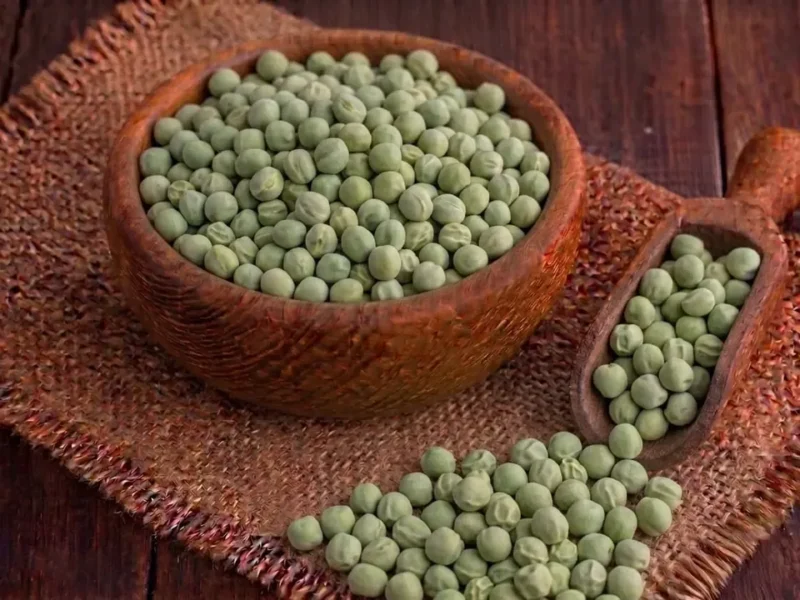
Dried green peas are the mature, dry seeds of the green pea plant. Farmers leave the pods on the plant until the seeds are hard and dry, then harvest and thresh them. In India the crop is known as dry matar or hara matar. It is a rabi (winter) crop, sown in October and November and harvested from March, mainly in Uttar Pradesh, Madhya Pradesh and Bihar.
After harvest, the peas are cleaned, graded and often sorted by colour (sortex) to give an even green colour. They can be sold whole or split. Splitting removes the seed coat and divides the pea into two halves. In trade, dried green peas fall under HS code 0713 10 20, while yellow peas are 0713 10 10.
Dried green peas differ from the fresh or frozen garden peas sold in shops. Fresh peas are picked young, when they are soft and sweet. Dried peas are picked when mature, so they have more starch and protein, less sugar and very little water. They must be soaked or cooked before eating. In return, they keep for 12–18 months in cool, dry storage and are much easier to ship.
How Are Dried Green Peas Used in Snacks?
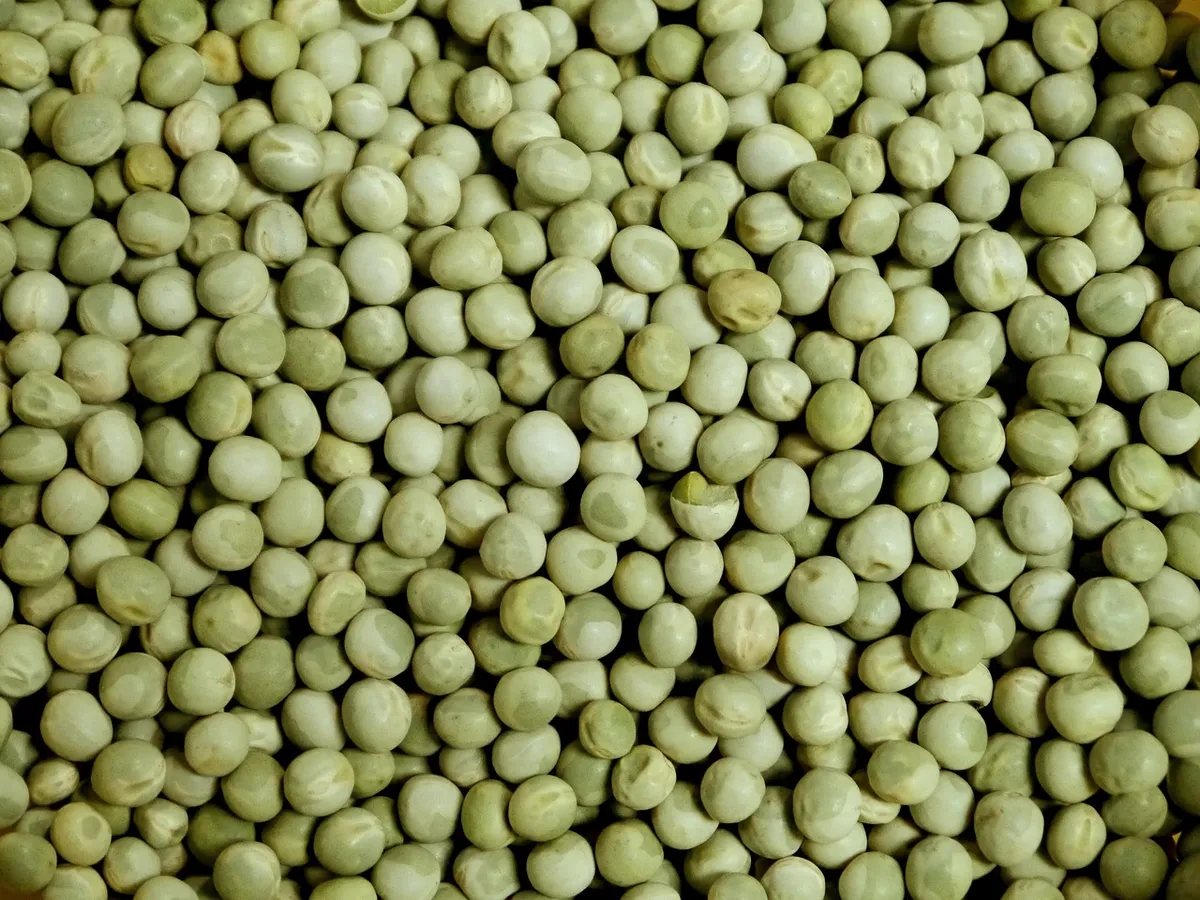
Snacks are one of the largest uses of whole dried green peas. The peas are soaked, then fried or roasted and seasoned. Common products include:
- Fried green peas: salted, spiced or wasabi-coated peas, sold as a snack on their own.
- Namkeen and trail mixes: fried peas are mixed with lentils, peanuts and sev in Indian namkeen, and with nuts and seeds in snack mixes.
- Roasted peas: dry-roasted peas for lower-fat snack lines.
- Extruded snacks: pea flour is blended into puffs, crisps and sticks to raise protein and fibre.
Snack makers need bold, uniform peas with an even green colour. Peas of one size fry evenly, and bleached or damaged peas show up clearly in the finished pack. For this reason, many exporters offer a separate snack grade. Moisture must also be controlled, because peas that are too wet or too dry can split or harden when fried.
How Are Dried Green Peas Used in Soups and Ready Meals?
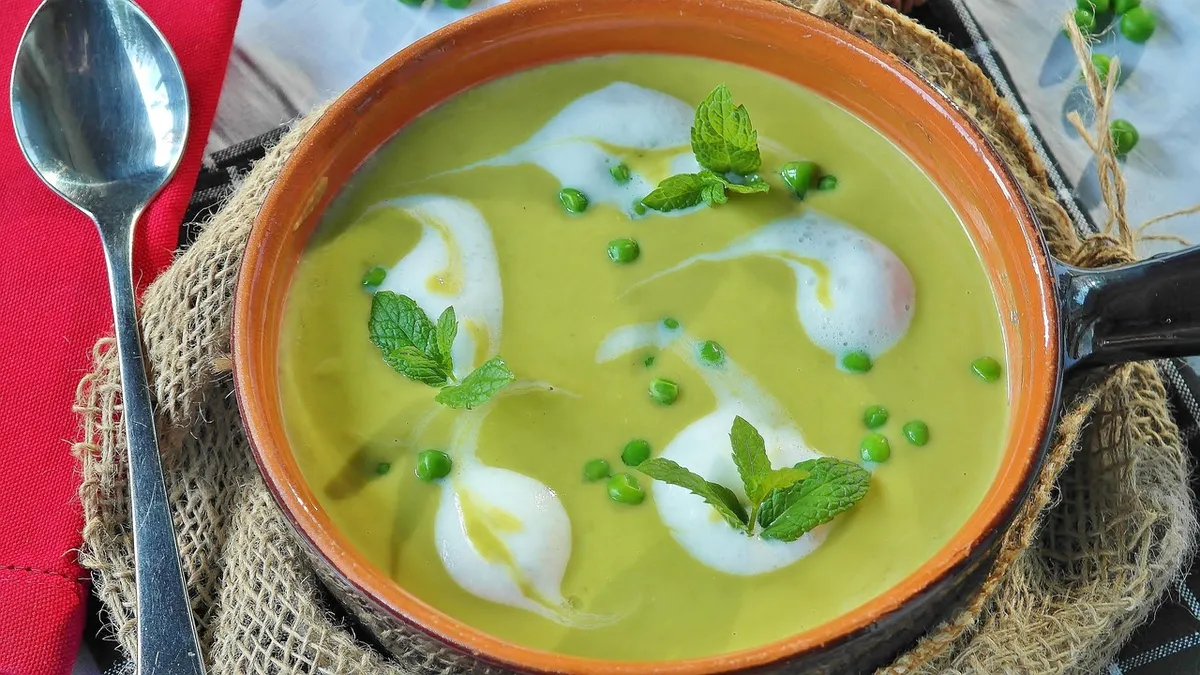
Split green peas are a classic soup ingredient. They break down when cooked and give a thick, smooth texture without any added starch. Split pea soup is a traditional dish in many countries, and food makers produce it as canned, chilled, frozen and dried soup.
Ready-meal and food-service makers use dried peas in curries, stews, dal and side dishes. In South Asian cooking, dried peas are cooked into matar curries, ragda and chaat. Canners soak and cook dried peas to make processed peas, sometimes sold as “mushy peas”. Dried peas give canners a steady supply all year, unlike fresh peas, which are only available at harvest.
For these uses, buyers look for peas that cook evenly and keep a good green colour after cooking. Split peas save processing time, because they cook faster and need less soaking than whole peas.
Are Dried Peas a Source of Pea Protein?
Yes. Dried peas are the raw material for pea protein. A 2023 review in the journal Foods reports that pea seeds contain about 20–25% protein on a dry basis, together with starch and a high level of dietary fibre. Pea protein is rich in lysine, an amino acid that is low in cereals, so it pairs well with grain-based foods.
Processors make three main pea protein products:
- Pea flour: dehulled peas are milled into flour for bakery, pasta, snacks and batters.
- Pea protein concentrate: dry fractionation (air classification) separates fine protein particles from heavier starch granules. A 2025 review in Molecules puts the protein content of dry-fractionated pea protein at about 50%.
- Pea protein isolate: wet extraction dissolves the protein at alkaline pH and then recovers it at about pH 4.5. The same review reports protein levels of around 80% or more for these isolates.
Pea protein is used in plant-based meat and dairy alternatives, protein powders, bars and drinks, and as a replacement for soy or egg in some foods. Much of the world’s pea protein is made from yellow peas, but green peas are also used, especially for flour and concentrates. The starch and fibre left after protein extraction are sold as separate ingredients, so very little of the pea is wasted. If you compare pulse proteins, our guide to chickpea protein and nutrition covers another common option.
What Are the Main Dried Green Peas Uses by Industry?
The table below summarises the main dried green peas uses by industry, with the form and quality each buyer usually needs.
| Industry | Main products | Preferred form | Key quality points |
|---|---|---|---|
| Snack manufacturing | Fried and roasted peas, namkeen, snack mixes | Whole, bold, snack grade | Uniform size, even green colour, low splits |
| Soups and ready meals | Split pea soup, curries, stews | Split, sometimes whole | Even cooking, colour after cooking |
| Canning | Processed and rehydrated peas | Whole | Good soaking, low damage |
| Milling | Pea flour for bakery, pasta and batters | Whole or split | Low foreign matter, low moisture |
| Protein ingredients | Pea protein concentrate and isolate | Whole or split | Protein content, pesticide and heavy-metal limits |
| Retail and wholesale | Grocery packs of whole and split peas | Whole and split | Bright colour, clean appearance |
| Animal feed | Feed peas, by-products from processing | Lower grades and screenings | Price, moisture, freedom from mould |
What Is the Difference Between Whole and Split Dried Green Peas?
Whole dried green peas keep the seed coat and the round shape. Split dried green peas are dehulled and broken into two halves. The choice depends on your product:
- Whole peas are used where the pea must keep its shape, such as fried snacks, canned peas and salads. They need longer soaking and cooking. They are usually cheaper.
- Split peas cook faster and break down into a smooth texture, so they suit soups, dal, purées and milling. Because splitting adds a processing step, split peas usually cost more than whole peas.
Moisture limits also differ. Under FSSAI rules, the legal maximum moisture is 14% for whole peas and 12% for dehusked or split peas. Many export contracts set 12% for both. For a wider view of pulse forms, see our guide to types of lentils, another pulse sold whole and split.
Which Quality Specifications Do Buyers Look For?
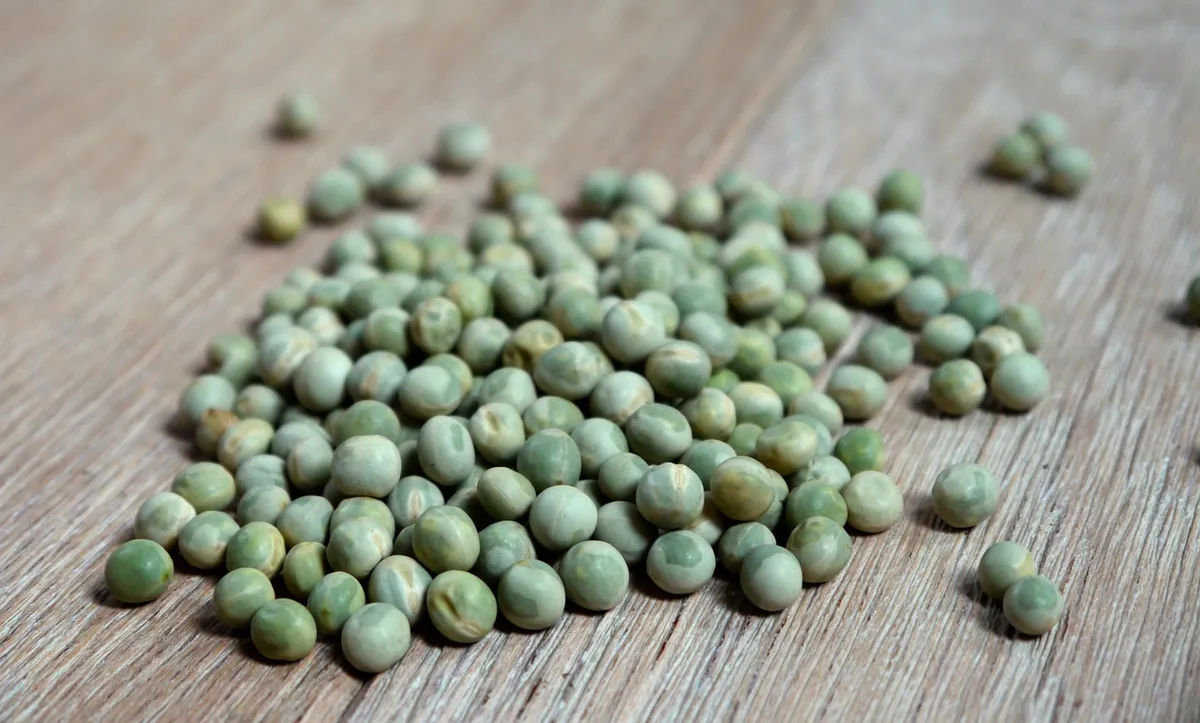
Buyers of dried green peas usually set limits for purity, moisture, colour, damage and food safety. Many specify peas against the Canadian Grain Commission grades, Codex standard CXS 171-1989 or FSSAI rules. Our standard export specification is:
- Purity: 99% minimum, with foreign matter of 0.5% maximum.
- Moisture: 12% maximum.
- Bleached (off-colour) peas: 3% maximum.
- Total damage: 3% maximum; splits in whole peas 2% maximum.
- Pesticide residues: within EU or destination limits.
- Heavy metals: lead 0.20 mg/kg and cadmium 0.040 mg/kg maximum, in line with EU limits for pulses.
- Live insects: nil, with fumigation before loading where needed.
Protein processors may also ask for protein content. Snack makers often add size and colour requirements. Always confirm the crop year in the contract, because older peas can lose colour.
Related reading: Types of Urad Dal: Whole, Chilka, Gota and Dhuli Explained and Green Lentils vs Red Lentils: Processing, Nutrition and Uses.
How Can You Buy Dried Green Peas in Bulk from India?
Elysium Agri Corporation exports dried green peas, whole and split, from India’s rabi crop. We clean, grade and sortex every lot for even green colour and low damage, and we test for moisture, admixture, pesticides and heavy metals. Our lab testing page sets out the full panel. We also supply red lentils and other pulses, and our guide to importing pulses from India covers the full buying process.
We pack in 25 or 50 kg PP or BOPP bags, jute bags on request or 1 MT jumbo bags, with private label options. A 20 ft container holds about 24–26 MT, and a 40 ft high cube about 26–28 MT. Plan your load with our container load calculator. Each shipment comes with a phytosanitary certificate, a certificate of origin and a certificate of analysis.
Whatever your dried green peas uses, tell us the form, grade, quantity and destination port, and we will send an FOB or CIF price with the specification sheet. Request a dried green peas quote →
Frequently asked questions
What are dried green peas used for?
Dried green peas are used for fried and roasted snacks, namkeen and snack mixes, split pea soup, curries and ready meals, canned and rehydrated peas, pea flour for bakery and pasta, and pea protein concentrates and isolates. Whole peas suit snacks and canning, while split peas suit soups, dal and milling. Lower grades can also go into animal feed.
Are dried green peas used to make pea protein?
Yes. Dry peas contain about 20 to 25% protein. Processors mill them and use dry fractionation to make concentrates of about 50% protein, or wet extraction to make isolates of around 80% protein or more. Much commercial pea protein is made from yellow peas, but green peas are also used, especially for flour and concentrates.
Can dried green peas be used in snack foods?
Yes, snacks are one of the largest uses. Whole dried green peas are soaked and then fried or roasted and seasoned, for example as salted, spiced or wasabi peas, or as part of namkeen and trail mixes. Pea flour is also added to extruded snacks. Snack makers prefer bold, uniform, evenly green peas that fry evenly.
How are dried green peas different from fresh peas?
Fresh or frozen peas are picked young, when they are soft and sweet. Dried green peas are left to mature and dry on the plant, so they contain more starch and protein, less sugar and very little water. They must be soaked or cooked before eating, but they keep for 12 to 18 months in cool, dry storage.
What is the difference between whole and split dried green peas?
Whole dried green peas keep their seed coat and round shape, so they suit snacks, canning and salads. Split peas are dehulled and divided into halves. They cook faster and break down smoothly, which suits soups, dal, purées and milling. Split peas usually cost more, and FSSAI sets a lower moisture limit for them.
Related reads


