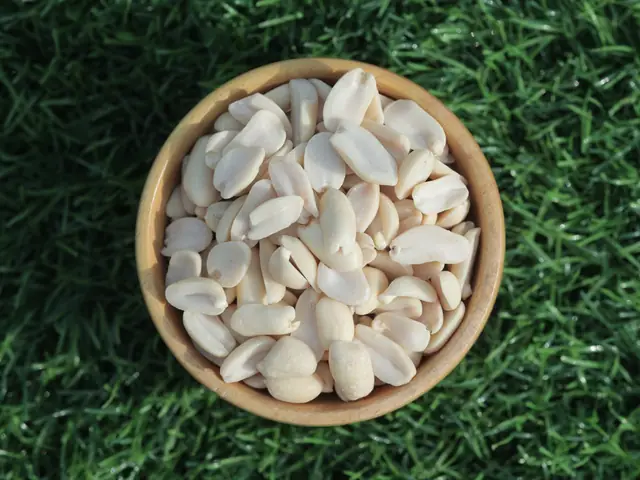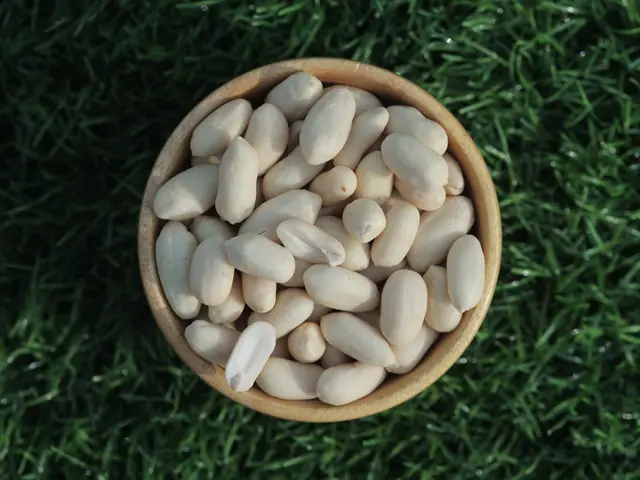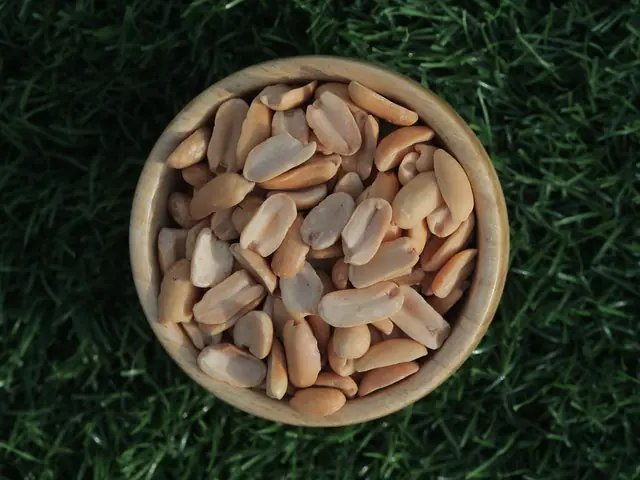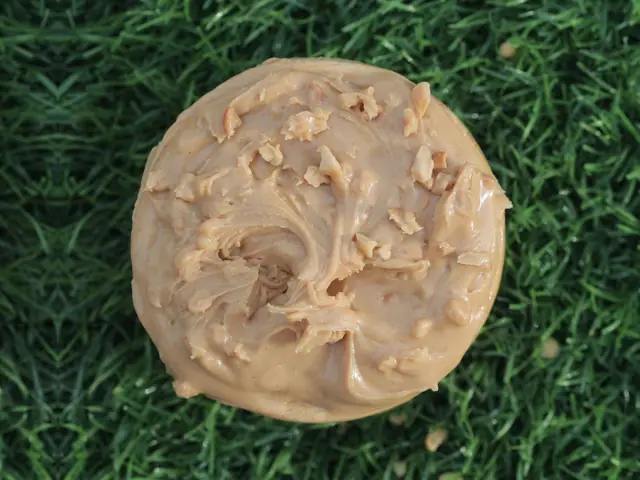
Diced Peanuts (Chopped Peanut Granules)
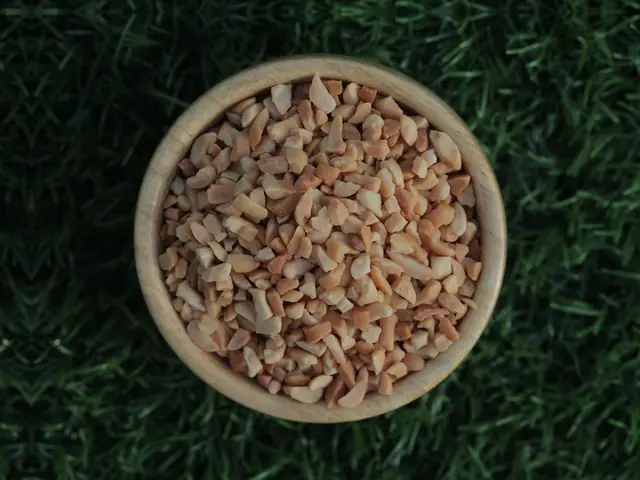
Diced peanuts are blanched peanut kernels cut and screened into even pieces for toppings and inclusions. Elysium Agri exports diced peanuts from Gujarat in sizes from 1–2 mm granules to 4–6 mm pieces, roasted or raw, with hearts removed, fines controlled and every lot tested for aflatoxin and microbiology.
Buyers call them diced, chopped or crushed peanuts, or peanut granules. They go on ice cream, cakes and cookies and into chocolate, bars, chikki and sauces, where an even size and a clean roast matter more than the whole kernel.
Diced Peanuts Specification
Sizes
1–2, 2–4, 3–5, 4–6 mm, or cut to your spec
Fines
≤ 5% passing the lower screen
Oversize
≤ 10% retained on the upper screen
Type
Roasted blanched · raw blanched · roasted with skin
Moisture
≤ 2% roasted · ≤ 5% raw
Skin
≤ 3% skin particles (blanched)
FFA / Peroxide
FFA ≤ 1.0% · PV ≤ 5 meq/kg at dispatch
Aflatoxin
EU 2 / 4 ppb or as per your market
Microbiology
Salmonella and Listeria absent / 25 g
Packing
10 / 12.5 / 25 kg cartons with liner, vacuum or N₂
Diced Peanuts: Full Specification
The standard export specification for our diced peanuts. Size, roast and packing are set to your specification; the size tolerances follow the USDA peanut granules spec.
| General | Specification | Note |
|---|---|---|
| Product | Diced (chopped) peanut pieces | Also sold as peanut granules or crushed peanuts |
| Types | Roasted blanched (most common) · raw blanched · roasted with skin | — |
| Raw material | Blanched Bold or Java kernels, hearts removed, Gujarat origin | — |
| Process | Blanch → roast (if roasted) → sort → dice → screen → metal-detect → pack | — |
| Physical | Specification | Test method / note |
|---|---|---|
| Size grades | 1–2 mm (fine / granules) · 2–4 mm (medium) · 3–5 mm · 4–6 mm (coarse) | Sieve analysis |
| Fines (passing lower screen) | 5% max | USDA granules: ≤ 5% through a No. 12 (1.70 mm) sieve |
| Oversize (retained on upper screen) | 10% max | USDA granules: ≤ 10% on a No. 4 (4.75 mm) sieve |
| Moisture | 2% max (roasted) · 5% max (raw) | ISO 665 |
| Roast colour | Light / medium / dark to buyer's standard (USDA colour 2–3 = medium) | Colour meter or visual standard |
| Hearts (germ) | Removed | — |
| Foreign matter | 0.05% max; metal nil | Visual + metal detection |
| Taste and odour | Clean roasted (or raw) peanut; no bitter, burnt or rancid notes | Sensory |
| Food safety | Specification | Test method / note |
|---|---|---|
| Aflatoxin, EU (direct consumption) | B1 ≤ 2 µg/kg; total ≤ 4 µg/kg | HPLC at an APEDA-approved lab (EN ISO 16050); Certificate of Analysis per lot |
| Aflatoxin, other markets | As per destination rules or your contract (e.g. USDA 15 µg/kg, US FDA 20 µg/kg total) | As above |
| Salmonella | Absent in 25 g | ISO 6579-1 |
| E. coli | < 10 cfu/g | ISO 16649-2 |
| Commercial | Specification | Note |
|---|---|---|
| HS code | Roasted: 2008 11 (groundnuts, prepared) · Raw / blanched, unroasted: 1202 42 (India 1202 42 90, shelled, other) | Confirm with your customs broker |
| Packing | 10 / 12.5 / 25 kg PE-lined cartons · vacuum or N₂-flushed on request · 5 kg food-service bags on request | — |
| Storage | Below 20 °C, 50–70% RH, away from light and odours | — |
| Documents | APEDA Certificate of Export · Certificate of Analysis (aflatoxin + microbiology) · Phytosanitary Certificate · Certificate of Origin · Health Certificate (where required) · FSSAI licence details on invoice | — |
Choose Your Diced Peanut Size
Diced peanuts are sized by the screens they pass through. Here are our standard cuts and where each is used.
| Size | Approx. mesh | Common name | Typical use |
|---|---|---|---|
| 1–2 mm | 8–14 mesh | Fine / granules | Chocolate and ice-cream coatings, sauces, satay |
| 2–4 mm | 5–10 mesh | Medium diced | Ice-cream and dessert toppings, cookies, cereal bars |
| 3–5 mm | 4–8 mesh | Medium-coarse | Bakery, confectionery centres, chikki |
| 4–6 mm | 3–5 mesh | Coarse / nibbed | Cake decoration, salads, garnish, visible inclusions |
Mesh equivalents are approximate. We can cut to any range you specify.
Roasted or Raw, Blanched or Skin-On
Roasted Blanched Diced
The standard for toppings: golden roast, no skin, crunchy.
Raw Blanched Diced
For buyers who roast or bake in their own process.
Roasted Diced With Skin
Darker, rustic look for bars and chikki.
Need larger pieces? Split Blanched Peanuts →· Whole? Blanched Peanuts →Roasted Peanuts →
Diced Peanut Packing and Container Loading
| Pack type | Net weight |
|---|---|
| PE-lined carton | 25 kg |
| Carton with 2 × 12.5 kg vacuum bags | 25 kg |
| Carton with 4 × 5 kg bags | 20 kg |
Where Diced Peanuts Are Used
Ice Cream and Desserts
Toppings and inclusions in cones, sundaes and frozen desserts.
Bakery
Cookies, cakes, muffins, breads and decoration.
Chocolate and Confectionery
Bars, clusters, coatings and centres.
Chikki, Brittle and Bars
Even pieces for jaggery and sugar brittles and protein bars.
Sauces and Ready Meals
Satay, noodle and Asian sauces, salads and garnish.
Breakfast Cereals and Granola
Crunchy inclusions in cereals and granola.
Diced Peanut Price: What Sets It
Diced peanuts are priced per metric tonne, FOB an Indian port, above whole blanched kernels because of roasting, dicing, screening and yield loss to fines.
- Size and tolerance: tight size ranges and low fines limits raise cost.
- Roast and skin: roasted blanched costs more than raw or skin-on.
- Raw-kernel market: diced prices follow the blanched kernel market.
- Packing: vacuum or N₂ cartons and small food-service packs cost more.
- Aflatoxin and micro standard: EU-compliant, micro-tested lots carry a premium.
Prices move with the crop and the market, so we quote on the day. Tell us your grade, quantity and port for a current FOB, CFR or CIF price.
Tested, Certified and Traceable
- Blanched kernel selection
- Roasting and dicing at an APEDA-registered unit
- Screening, colour sorting and metal detection
- Lab test (aflatoxin, micro, FFA, PV)
- APEDA Certificate of Export
Documents with every shipment
Get a Diced Peanut Quote
Share your size, roast and quantity, and we will send a price with the spec sheet.
Thank you. Our peanut desk will send your price and spec sheet.
Frequently Asked Questions (FAQ)
What are diced peanuts?
Diced peanuts are blanched peanut kernels cut and screened into small, even pieces, usually 1 to 6 mm. They are sold roasted or raw and used as toppings and inclusions in ice cream, bakery, chocolate, bars and sauces. They are also called chopped peanuts, crushed peanuts or peanut granules.
What sizes do diced peanuts come in?
Common sizes are 1–2 mm (fine granules), 2–4 mm (medium diced), 3–5 mm and 4–6 mm (coarse or nibbed). Elysium Agri supplies these standard cuts and can dice to a custom range.
What is the fines and oversize tolerance for diced peanuts?
A typical tolerance is no more than 5% fines passing the lower screen and no more than 10% oversize retained on the upper screen. This follows the USDA peanut granules spec, which allows 5% through a 1.70 mm sieve and 10% on a 4.75 mm sieve.
Are diced peanuts roasted?
Most diced peanuts for toppings are roasted and blanched, which gives a golden colour and crunch. Raw blanched diced peanuts are also available for buyers who roast or bake them in their own process.
What is the HS code for diced peanuts?
Roasted diced peanuts fall under HS heading 2008.11 (groundnuts, prepared). Raw or blanched diced peanuts that are not roasted fall under 1202.42; India uses 1202 42 90 for shelled groundnuts, other. Confirm the code with your customs broker.
What is the shelf life of diced peanuts?
Cut pieces have more exposed surface than whole kernels, so they oxidise faster.
Who exports diced peanuts from India?
Elysium Agri Corporation, based in Jamnagar, Gujarat, exports diced peanuts in 1–2, 2–4, 3–5 and 4–6 mm sizes, roasted or raw, with hearts removed, fines controlled, and lot-wise aflatoxin and microbiology testing.