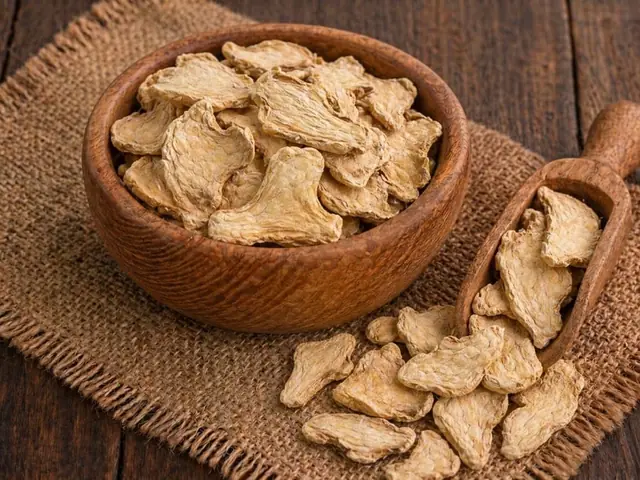
Dry Ginger (Whole Sonth)
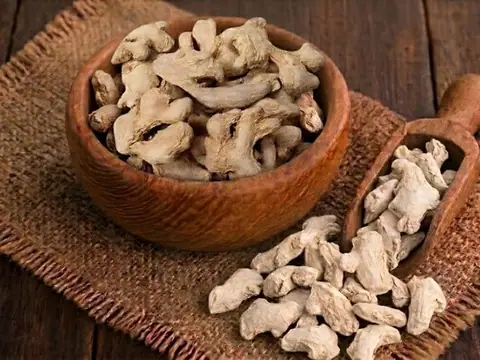
Elysium Agri exports whole dry ginger (sonth, sukku) from India, the world's largest ginger grower. We supply scraped unbleached and lime-bleached ginger rhizomes, garbled to export grade, with volatile oil of at least 1.5 ml/100 g and every lot tested for pesticides, ethylene oxide, aflatoxin and lead.
Kerala's "Cochin ginger" is the benchmark for export dry ginger; Karnataka and the North-East grow most of India's crop. India exported about 1.46 lakh tonnes of ginger in all forms, worth US$ 143 million, in 2025-26 (Spices Board).
Dry Ginger Specification
Types
Unbleached (scraped) · bleached (limed)
Extraneous Matter
1% max
Moisture
12% max (10% typical)
Volatile Oil
1.5 ml/100 g min
Total Ash
≤ 8% unbleached · ≤ 12% bleached
Acid-Insoluble Ash
≤ 1.5%
Calcium as CaO
≤ 1.1% unbleached · ≤ 2.5% bleached
Aflatoxin / OTA
B1 ≤ 5 · total ≤ 10 · OTA ≤ 15 µg/kg
ETO and Pesticides
ETO not detected; EU / US MRLs
Container Load
20 ft ≈ 12–14 MT · 40 ft ≈ 25 MT
Dry Ginger: Full Export Specification
The standard export specification for our whole dry ginger, benchmarked to Codex CXS 343-2021 and the FSSAI dried ginger (sonth) standard. Send your own specification with your enquiry.
| General | Specification | Note |
|---|---|---|
| Product | Whole dried ginger rhizomes (Zingiber officinale Roscoe), scraped | Sonth / sukku / saunth |
| Types | Unbleached (scraped, sun-dried) · bleached (lime-treated) | Specify on order |
| Crop / season | Harvested 7–8 months after planting, mainly Dec–Feb; sun-dried 8–10 days | Crop year on each contract |
| Colour / aroma | Light buff to pale yellow; strong, pungent, lemony aroma | Sensory |
| Physical | Specification | Test method / note |
|---|---|---|
| Extraneous matter | ≤ 1.0% | ISO 927; Codex max 1.0% |
| Foreign matter | ≤ 0.5% | Codex max 0.5% |
| Mouldy or insect-damaged pieces | ≤ 1.0% | FSSAI max 1.0% (Codex 3%) |
| Moisture | ≤ 12% (10% typical) | ISO 939; Codex max 12% |
| Live insects | Nil | Codex |
| ASTA cleanliness (US) | Whole dead insects ≤ 4; mammalian excreta ≤ 3 mg/lb; other excreta ≤ 3 mg/lb; mouldy / insect-infested pieces ≤ 3% | For US buyers |
| Chemical | Specification | Test method / note |
|---|---|---|
| Volatile oil | ≥ 1.5 ml/100 g | ISO 6571; Codex and FSSAI min 1.5 |
| Total ash (dry basis) | ≤ 8.0% unbleached · ≤ 12.0% bleached | ISO 928; Codex |
| Acid-insoluble ash | ≤ 1.5% | ISO 930; Codex max 1.5% |
| Calcium (as CaO) | ≤ 1.1% unbleached · ≤ 2.5% bleached | FSSAI; ISO 1003:2025 method |
| Food safety | Specification | Test method / note |
|---|---|---|
| Aflatoxin | B1 ≤ 5 µg/kg; total ≤ 10 µg/kg | HPLC; EU limit for ginger (Reg 2023/915) |
| Ochratoxin A | ≤ 15 µg/kg | HPLC; EU limit for spices |
| Ethylene oxide (ETO + 2-chloroethanol) | Not detected; no ETO fumigation | GC-MS/MS; official certificate for EU |
| Pesticide residues | Within EU / US / Japan MRLs (chlorpyrifos below LOQ) | LC-MS/MS and GC-MS/MS multi-residue screen |
| Lead | ≤ 1.5 mg/kg | ICP-MS; EU limit for root and rhizome spices |
| PAH: benzo(a)pyrene / sum of 4 | ≤ 10 / ≤ 50 µg/kg | GC-MS; EU limit for dried spices |
| Total plate count | ≤ 10⁵ cfu/g | ISO 4833-1 |
| Yeast and mould | ≤ 10³ cfu/g | ISO 21527 |
| Salmonella | Absent in 25 g | ISO 6579-1 |
| Commercial | Specification | Note |
|---|---|---|
| HS code | 0910 11 20 (dried, unbleached) · 0910 11 30 (dried, bleached) | Fresh ginger is 0910 11 10; powder 0910 12 10 |
| Packing | 25 / 50 kg jute or PP bags · 25 kg paper bags with liner | Buyer's marks and private label on request |
| Container load | 20 ft: about 12–14 MT · 40 ft: about 25 MT | See Dry Ginger Packing and Container Loading |
| Shelf life | Up to 24 months in cool, dry storage; aroma fades after about 2 years | Cool, dry, ventilated storage away from odours |
| Documents | Spices Board clearance · Official ETO certificate for EU (Annex II) · Certificate of Analysis (pesticides, ETO, aflatoxin, ochratoxin, lead, Salmonella) · Phytosanitary Certificate · Certificate of Origin · Fumigation Certificate (where required) | — |
Which Dry Ginger Do You Need?
Indian dry ginger is traded by origin and by how it is treated after scraping.
| Type | How it is made | Look | Typical buyers |
|---|---|---|---|
| Unbleached (scraped) | Peeled with bamboo splits, washed, sun-dried | Light buff, natural | EU, UK, USA, grinders |
| Bleached (limed) | Scraped ginger dipped in slaked lime and dried | Whitish, chalky surface | Middle East, North Africa, traditional markets |
| Cochin type (Kerala) | Traditional scraped Kerala ginger | Light yellow, lemony aroma | Premium grinders, Europe |
| Calicut type | Kerala ginger, less scraped | Reddish-brown | Blenders, Middle East |
Whole, Sliced or Powdered Ginger
Whole Unbleached
Garbled rhizomes for grinding and extraction.
Whole Bleached
Lime-treated for traditional markets.
Ginger Slices
Dried slices and flakes for teas and blends.
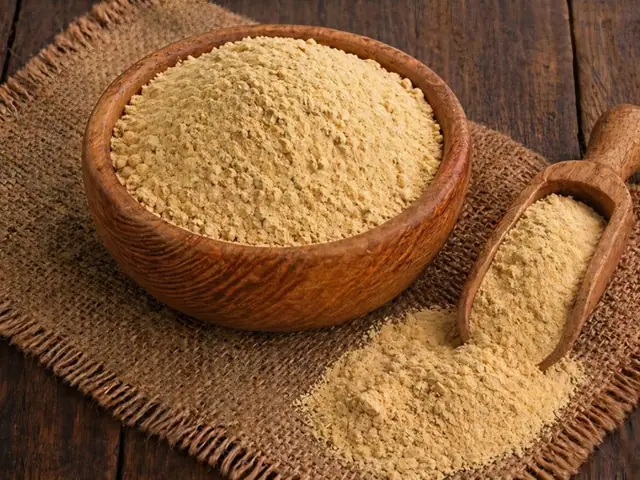
Ginger Powder
Ground to 60–100 mesh.
Other forms: Ginger Slices →Ginger Powder →
Dry Ginger Packing and Container Loading
| Pack type | Net weight | Units per 20 ft | Net per 20 ft | Net per 40 ft HC |
|---|---|---|---|---|
| Jute bag | 25 kg | ≈ 480–560 | ≈ 12–14 MT | ≈ 25 MT |
| PP bag | 50 kg | ≈ 240–280 | ≈ 12–14 MT | ≈ 25 MT |
| Paper bag with liner | 25 kg | ≈ 480–560 | ≈ 12–14 MT | ≈ 25 MT |
Where Dry Ginger Is Used
Spice Grinders
Ground ginger for retail and food makers.
Curry Powders and Masalas
A core spice in blends.
Bakery and Confectionery
Gingerbread, biscuits and cakes.
Beverages
Ginger beer, ginger ale and tea blends.
Oil and Oleoresin
Extraction of ginger oil and oleoresin.
Ayurvedic and Herbal
Sonth in traditional medicine.
Dry Ginger Price: What Sets It
Dry ginger is quoted per kilo in Kerala markets and per metric tonne FOB for export. Prices swing sharply with the fresh-ginger market.
- Crop size: Karnataka and Kerala harvests; new arrivals push prices down.
- Fresh-ginger prices: when fresh ginger is dear, farmers dry less.
- Type and origin: Cochin-type and high-oil lots cost more.
- Import competition: Nigerian and Chinese ginger affect world prices.
- Compliance: EU-grade lots with ETO and pesticide testing carry a premium.
Prices move with the crop and the market, so we quote on the day. Tell us your grade, quantity and port for a current FOB, CFR or CIF price.
Tested, Certified and Traceable
Every lot of dry ginger is sampled and tested at an NABL-accredited or Spices Board lab for pesticide residues, ethylene oxide, aflatoxin, ochratoxin, lead and Salmonella. Indian ginger is listed in Annex II of the EU's border-control regulation for ethylene oxide (20% checks, Regulation (EU) 2019/1793 as amended by 2026/1206), so EU shipments carry the official ETO certificate.
- Lot sampling (Spices Board / NABL-accredited lab)
- Pesticides, ETO, aflatoxin, ochratoxin, lead and Salmonella tests
- Spices Board clearance and export documents
Documents with every shipment
Get a Dry Ginger Quote
Share your type, quantity and destination, and we will send an FOB or CIF price with the spec sheet.
Thank you. Our herbs desk will send your price and spec sheet.
Frequently Asked Questions (FAQ)
What is dry ginger?
Dry ginger (sonth or sukku) is the ginger rhizome that has been scraped and sun-dried to about 10% moisture. It keeps for up to two years and is ground into ginger powder, used in spice blends, or distilled for ginger oil and oleoresin.
What is the specification of dry ginger for export?
Export dry ginger typically has moisture ≤ 12%, volatile oil ≥ 1.5 ml/100 g, total ash ≤ 8% (≤ 12% for bleached), acid-insoluble ash ≤ 1.5% and extraneous matter ≤ 1%, in line with Codex CXS 343-2021, with Salmonella absent and pesticide, ETO and aflatoxin results within buyer limits.
What is the HS code for dry ginger?
In India's ITC-HS, dried unbleached ginger is 0910 11 20 and dried bleached ginger is 0910 11 30. Ginger powder is 0910 12 10.
What is the difference between bleached and unbleached dry ginger?
Unbleached ginger is simply scraped and sun-dried. Bleached ginger is dipped in lime to give a whiter look and deter insects, which raises its ash and calcium content. EU and US buyers mostly take unbleached.
Where is ginger grown in India?
India's largest ginger producers are Madhya Pradesh and Karnataka, followed by Odisha, Assam, Meghalaya and other North-Eastern states. Kerala is known for Cochin dry ginger.
Does Indian dry ginger need special documents for the EU?
Yes. Indian ginger is in Annex II of Regulation (EU) 2019/1793 for ethylene oxide, so every EU consignment needs an official certificate and lab results, with 20% border checks. Elysium Agri tests every EU lot and ships with the certificate.
Who exports dry ginger from India?
Elysium Agri Corporation, based in Jamnagar, Gujarat, exports whole dry ginger, ginger slices and ginger powder, with lot-wise pesticide, ETO, aflatoxin and lead testing and Spices Board clearance.