
On this page
- What Are Corn Grits and What Are They Used For?
- Why Are Corn Grits Used in Brewing?
- How Are Corn Grits Used for Snacks and Extruded Foods?
- Which Corn Grits Grades Suit Each Application?
- What Particle Size, Moisture, Fat and Colour Should You Specify?
- How Are Corn Grits Packed, and How Long Do They Keep?
- How Do You Buy Corn Grits in Bulk from India?
- Frequently asked questions
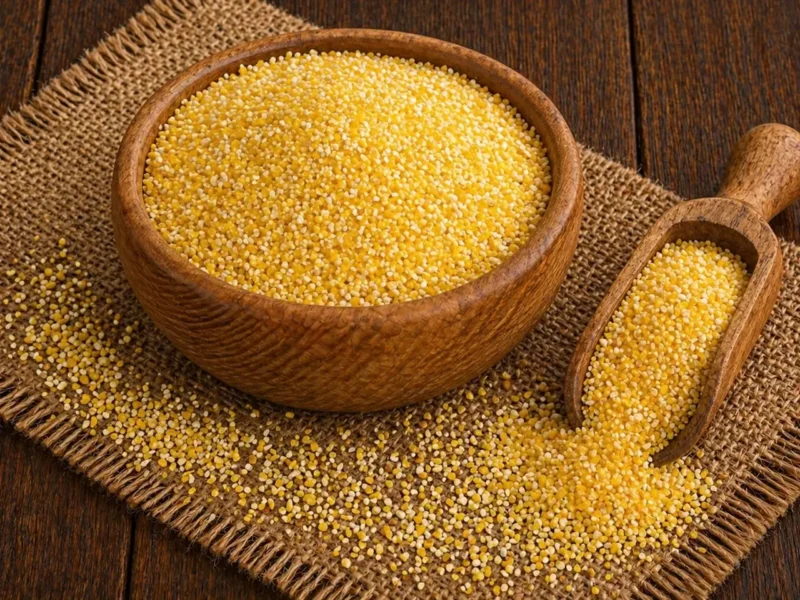
The main corn grits uses are brewing, extruded snacks, breakfast cereals and cooked foods such as polenta and porridge. Each use needs a different grit size: coarse grits for brewing, fine grits for snack extrusion and large flaking grits for cornflakes. Corn grits are small pieces of dry-milled, degermed maize. This guide explains how brewers and snack makers use them, which grades suit each application, and which specifications to put in your contract.
Key takeaways
- Corn grits are made by dry milling maize and removing the oil-rich germ, which keeps fat low and shelf life longer.
- Brewers use coarse grits (Indian grade 101, about 850–1,180 µm) as a starch adjunct, typically up to about 20% of the grist in mass-market lagers.
- Snack makers use fine grits (grade 108, about 300–600 µm) because even granulation gives even expansion in the extruder.
- Specify particle size, moisture, fat, ash and aflatoxin in the contract, not only the grade name.
What Are Corn Grits and What Are They Used For?
Corn grits are coarse particles of dry-milled maize, usually made from degermed yellow maize, and they are used for brewing, snacks, breakfast cereals, polenta and bakery. They are also called maize grits or hominy grits. The miller cleans the maize, conditions it with a little water, removes the bran and the germ, and then breaks the hard endosperm into pieces. Sieves sort these pieces into size grades.
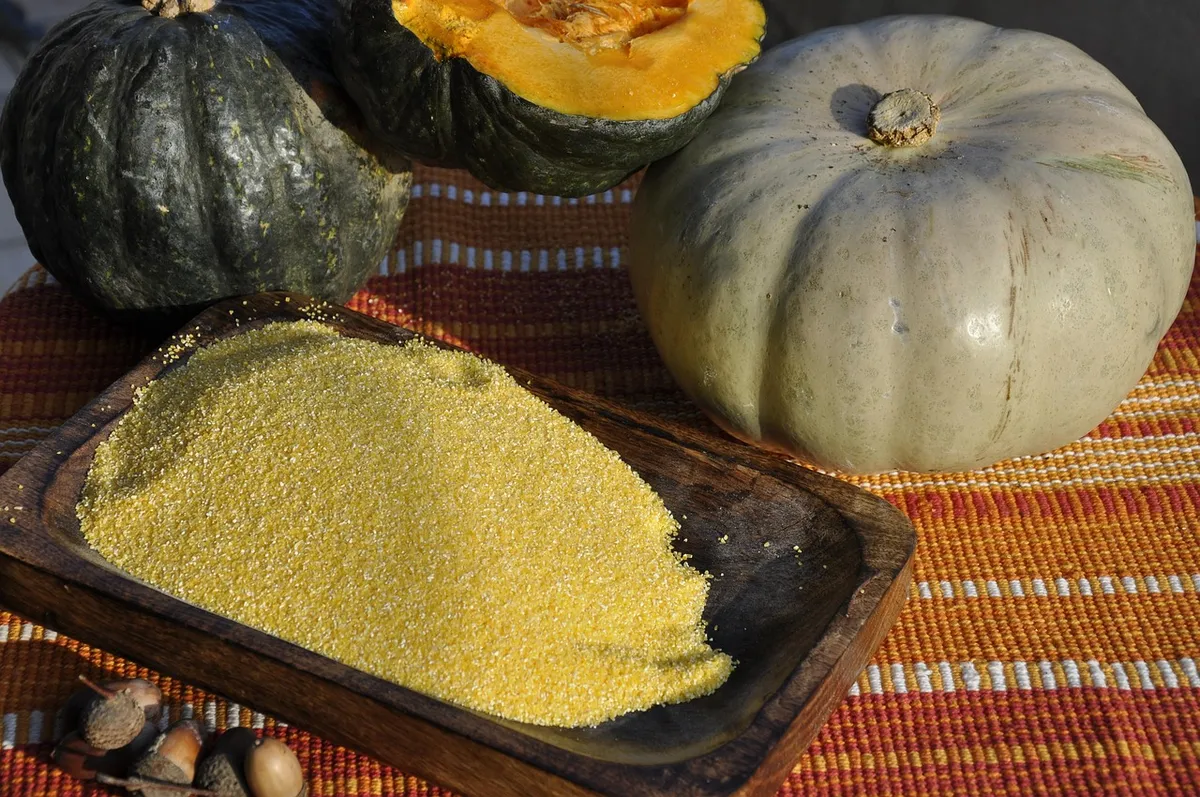
The germ is removed because it is rich in oil, and oil can turn rancid. Degermed grits are mostly starch with some protein, so they store well and behave in a predictable way in a mash tun or an extruder. Our corn grits are milled from Indian yellow maize, which is non-GMO. If you want to know how grits relate to other maize products, see our guide to the types of corn.
The main corn grits uses by industry are:
- Brewing: a starch adjunct for light lager beers.
- Snacks: extruded puffs, curls and rings.
- Breakfast cereals: cornflakes and other flaked or puffed cereals.
- Cooking: polenta, porridge and hot cereal.
- Bakery and food service: corn bread, toppings and catering packs.
Why Are Corn Grits Used in Brewing?
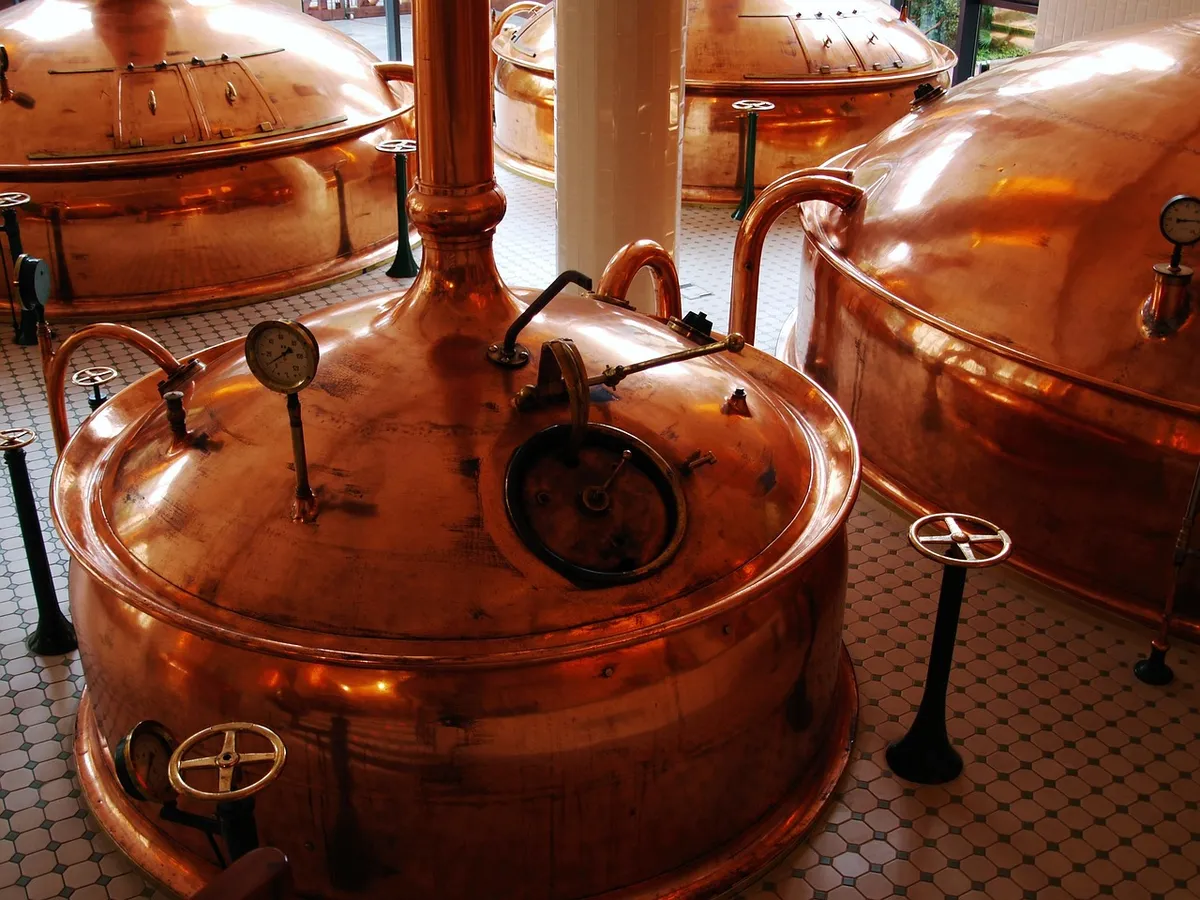
Brewers use corn grits as an adjunct, which means a source of starch that replaces part of the barley malt. The starch turns into sugar during mashing, and yeast ferments that sugar into alcohol. Corn adds fermentable extract without adding much colour, protein or flavour, so the beer comes out lighter and cleaner.
According to The Oxford Companion to Beer, corn is common in mass-market North American beers and is typically used as up to 20% of the grist. The same source notes that corn produces a lighter colour and flavour than barley malt.
Corn grits cannot go straight into the main mash. The gelatinisation temperature of corn starch is much higher than that of barley starch. Brewers therefore cook the grits first in a separate vessel, called a cereal cooker, often with a small amount of malt. They then add the cooked mash to the main mash, where the malt enzymes convert the starch to sugar.
For brewing, the key quality points are:
- Low fat: oil left from the germ can harm beer foam and cause stale flavours. Brewers usually set a tight fat limit, often around 1%.
- Coarse, even particle size: coarse grits cook evenly and do not form lumps. Too many fines can make the cooker mash sticky.
- Low ash and fibre: these show good bran removal and clean milling.
- Low mycotoxins: aflatoxin and other mycotoxins must be within the limits of your market.
How Are Corn Grits Used for Snacks and Extruded Foods?
Snack makers feed fine corn grits into an extruder, where heat, pressure and moisture cook the starch. When the hot mass leaves the die, the pressure drops and the water turns to steam, so the product puffs up. This is how corn puffs, curls and many ring-shaped snacks are made.
Particle size matters most here. If the grits are a mix of large and small pieces, they absorb water and cook unevenly, and the snack expands unevenly. A narrow size range, such as the 300–600 µm of Indian 108-type grits, gives a more uniform texture and colour from batch to batch.
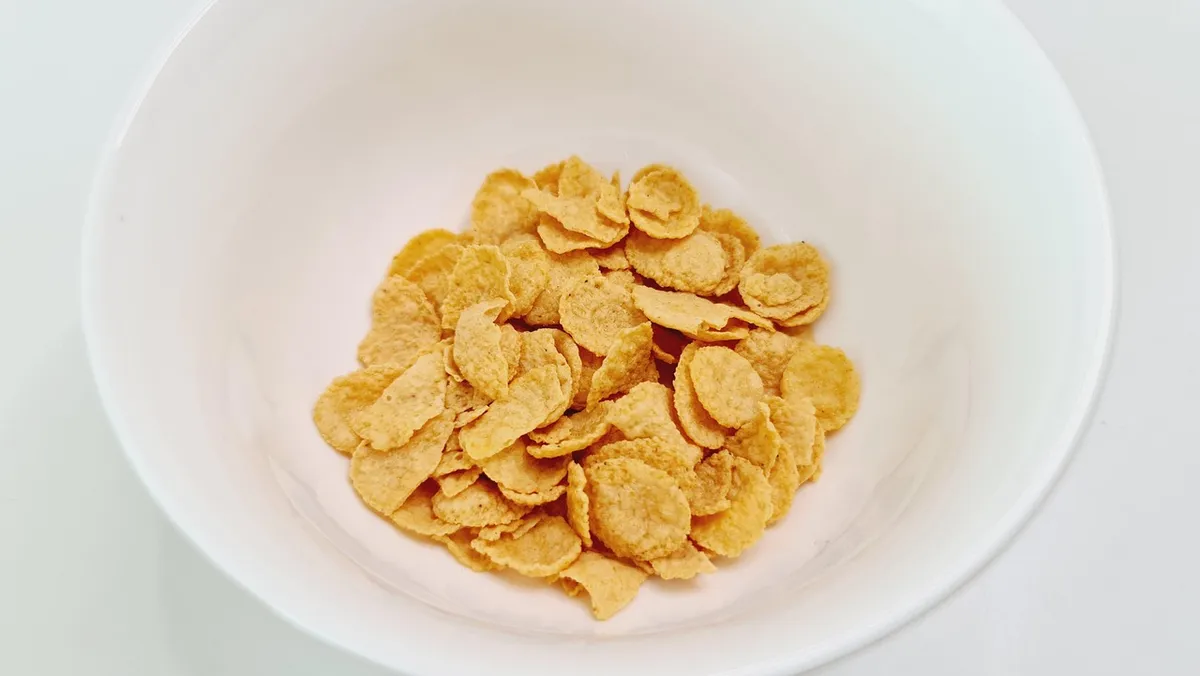
Breakfast cereal makers use a different grade. Large flaking grits, about 3–4 mm, are cooked with flavourings, dried, rolled into flakes and toasted to make cornflakes. Each grit becomes one flake, so the size of the grit controls the size of the flake.
Which Corn Grits Grades Suit Each Application?
Corn grits are sold mainly by particle size, and the right grade depends on your process. The table shows the common Indian trade grades and their uses.
| Grade | Typical size | Key requirement | Best for |
|---|---|---|---|
| Brewers grits (101) | 850–1,180 µm | Low fat, coarse and even | Beer brewing adjunct |
| Snack / extrusion grits (108) | 300–600 µm | Narrow, even granulation | Puffs, curls and extruded snacks |
| Flaking grits | About 3–4 mm | Large, uniform pieces | Cornflakes and breakfast cereals |
| Polenta / cooking grits | Medium to coarse | Per buyer | Polenta, porridge and bakery |
Corn grits grades by application. Confirm the exact size range in your contract.
Grade names such as 101 and 108 are trade terms used by Indian mills. They are not international standards, and two mills may define them slightly differently. Always write the sieve range in microns, or the mesh size, into the specification.
What Particle Size, Moisture, Fat and Colour Should You Specify?
Specify particle size, moisture, fat, ash, protein, colour and food safety limits. The Codex standard for degermed maize meal and grits (CXS 155-1985) gives a baseline. It requires at least 95% of grits to pass a 2.00 mm sieve and no more than 20% to pass 0.71 mm. It sets moisture at 15% maximum, ash at 1% maximum and protein at 7% minimum on a dry basis.
Buyers usually set tighter limits than Codex. Our standard export specification is:
- Moisture: 13.5% maximum.
- Fat: 1–1.5% maximum, depending on grade.
- Ash: 0.5–1.0% maximum on a dry basis.
- Protein: 7–10% on a dry basis.
- Crude fibre: 1% maximum.
- Colour: bright yellow.
- Microbiology: Salmonella absent in 25 g, E. coli below 10 cfu/g, yeast and mould 10³ cfu/g or less.
Mycotoxins need special attention in maize. The EU and many other markets set maximum levels for aflatoxin and other mycotoxins in maize milling products. Ask for a lot-wise Certificate of Analysis that covers moisture, ash, fat, protein, microbiology and mycotoxins. Our lab testing page sets out how we test,.
How Are Corn Grits Packed, and How Long Do They Keep?
Corn grits are normally packed in 25 kg or 50 kg PP or paper bags with an inner liner, and jumbo bags are available on request. A 20 ft container takes about 20–24 MT, and a 40 ft high cube takes about 25–26 MT. You can check loads for your bag size with our container load calculator.
Shelf life is about 8–12 months in cool, dry and ventilated storage, away from strong odours. Coarse grits keep longer than fine grits, because fine particles have more surface area exposed to air and moisture. Keep stock off the floor, rotate it first-in first-out, and check moisture if the store is humid. Buyer’s marks and private label packing are available; see our packaging page for options.
Related reading: Scientific Name of Pearl Millet and Other Millet Names and Types of Millets: Major and Small Millets Explained.
How Do You Buy Corn Grits in Bulk from India?
Start with your end use, then send a specification that names the grade, sieve range, fat, moisture and mycotoxin limits, the packing and the destination port. India is an established supplier. It exported about 92,500 tonnes of maize grits and groats in 2025, mainly to Saudi Arabia, Indonesia, Malaysia and Jordan. Indian maize is non-GMO, which suits buyers who need non-GMO raw materials. For other grains we export, see our guide on how millets grow.
Elysium Agri Corporation supplies corn grits dry-milled from degermed Indian yellow maize: 101 brewers grits, 108 snack grits and flaking grits for cornflakes. Every lot is sieved to the stated range and tested for fat, ash and aflatoxin, and ships with a Certificate of Analysis and a certificate of origin, plus phytosanitary and health certificates where your market needs them. The HS code is 1103 13 00, and you can confirm it for your country with our HS code finder.
Tell us your grade, fat limit, quantity and port, and we will send an FOB or CIF price with the specification sheet. Request a corn grits quote →
Frequently asked questions
What are corn grits used for?
Corn grits are used mainly for brewing beer, making extruded snacks such as puffs and curls, producing cornflakes and other breakfast cereals, and cooking polenta and porridge. Each use needs a different particle size. Brewers use coarse grits, snack makers use fine grits, and cereal makers use large flaking grits of about 3–4 mm.
What grit size is used for brewing?
Brewers usually use coarse corn grits. In India this is the 101 grade, with particles of about 850–1,180 µm, roughly 18 to 20 mesh. Coarse, even grits cook evenly in the cereal cooker and do not form lumps. Grade names vary between mills, so always state the sieve range in microns or mesh in the contract.
What is the difference between brewing grits and snack grits?
Brewing grits are coarse, around 850–1,180 µm, with a tight fat limit to protect beer foam and flavour. Snack grits are finer, around 300–600 µm, with a narrow size range so they absorb water and expand evenly in the extruder. Both are made from degermed maize, but they are sieved to different ranges.
What moisture and fat levels are typical for corn grits?
Export corn grits typically have moisture of 13.5% or less and fat of about 1–1.5% or less, depending on grade. Codex allows up to 15% moisture. Brewers often ask for the lowest fat, around 1%, because oil can harm beer foam and flavour stability. Ash is usually 0.5–1.0% maximum on a dry basis.
Why are corn grits used as a brewing adjunct?
Corn grits add fermentable starch with little colour, protein or flavour, so they help brewers make light, clean lager beers. Corn is commonly used as up to about 20% of the grist in mass-market beers. Because corn starch gelatinises at a higher temperature than barley starch, the grits are cooked separately before mashing.
Related reads


