
On this page
The main corn types are dent, flint, sweet corn, popcorn, flour corn and waxy corn. They are all the same species, Zea mays, but differ in the kind of starch inside the kernel, and that decides whether the corn goes to feed mills, starch plants, food factories or the fresh vegetable market. Most traded field corn is dent or flint. This guide explains each of the corn types, compares them by use and shows which type suits which industry.
Key takeaways
- Corn types are defined by the kernel’s endosperm: hard (flint), soft (flour) or a mix of both (dent).
- Dent and flint corn are field corn, harvested dry and used for feed, starch, ethanol and milling.
- Sweet corn is picked immature and eaten as a vegetable; popcorn is a small-kernel flint type.
- Indian yellow maize is a dent/flint field corn and is non-GMO.
What Are the Main Types of Corn?
There are six main types of corn, also called types of maize: dent, flint, flour, sweet, pop and waxy. The difference lies in the endosperm, the starchy part that makes up most of the kernel. Some endosperm is hard and glassy. Some is soft and floury. The balance between the two decides how the kernel looks, how it dries and how it behaves in a mill.
According to New Mexico State University’s guide to specialty corns, flint corn has mostly hard, glassy endosperm, flour corn has soft starch, and dent corn has flinty sides with a soft starch core. Popcorn is a small-kernelled flint corn. Waxy corn has starch that is 100% amylopectin, while normal dent corn has about 72% amylopectin and 28% amylose.
In the grain trade, buyers also group corn by colour (yellow or white) and by end use (feed grade, food grade or starch grade). These groups cut across the botanical types. For example, a feed mill buying “yellow corn” is usually buying dent or dent-flint field corn.
What Is Dent Corn?
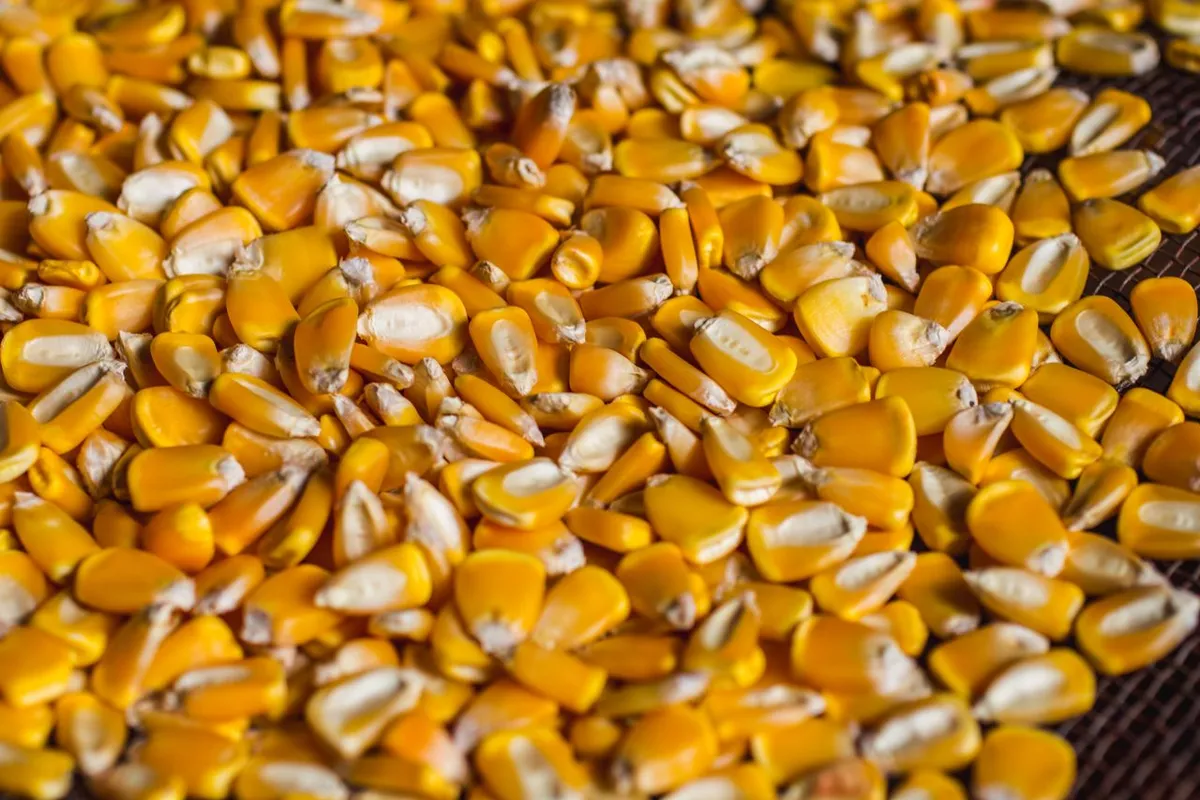
Dent corn is the most widely grown field corn in the world. It gets its name from the small dent that forms on the top of each kernel as it dries. The soft starch at the centre shrinks more than the hard starch at the sides, so the crown collapses inwards.
Dent corn is high-yielding and easy to mill, which makes it the standard grain for animal feed, wet milling for starch and sweeteners, and ethanol. In the USA, the NMSU guide notes, most of the dent crop goes into animal feed or exports. Yellow dent is the most common form, and white dent is grown for food uses such as tortillas and maize meal.
What Is Flint Corn?
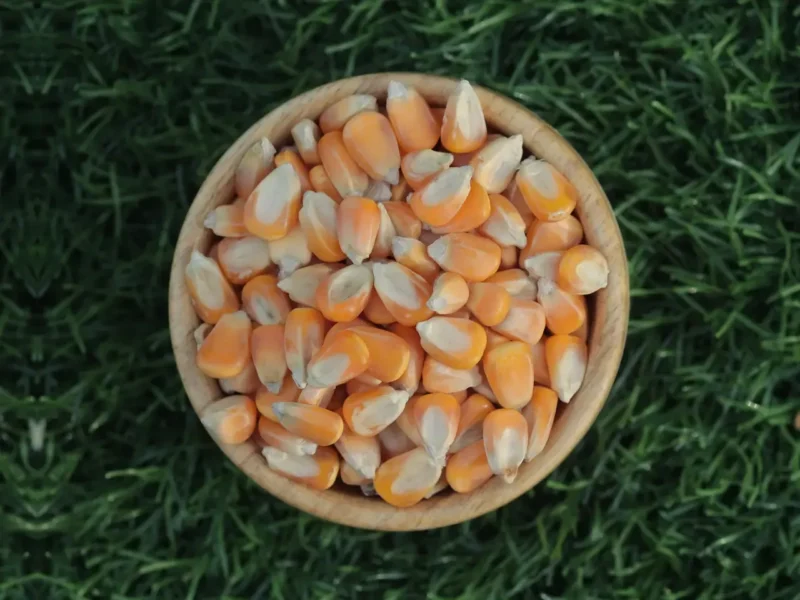
Flint corn has a hard, glassy outer layer that surrounds a small soft core. The kernels are smooth and rounded, with no dent, and they are often bright orange, red or multicoloured. The hard endosperm gives flint corn good resistance to insects and storage damage.
Flint corn is valued in dry milling, because hard kernels give a high yield of coarse grits for breakfast cereals, polenta and snacks. It is grown widely in South America, Europe and Asia. Many tropical field corns, including much of India’s crop, are dent-flint types that combine features of both.
Two smaller types sit beside dent and flint. Flour corn has mostly soft starch and a thin seed coat, so it grinds easily into fine meal. It is one of the oldest corn types and is still grown for traditional flours and baked foods in parts of the Americas. Waxy corn looks like dent corn, but its starch is made almost entirely of amylopectin. This gives a starch that stays clear and stable in sauces, puddings and frozen foods, so it is grown under contract for specialty starch plants. Both are niche crops and are rarely traded as general commodity corn. When a buyer simply asks for “corn” or “maize”, they almost always mean yellow or white field corn of the dent or flint type.
What Is Sweet Corn?
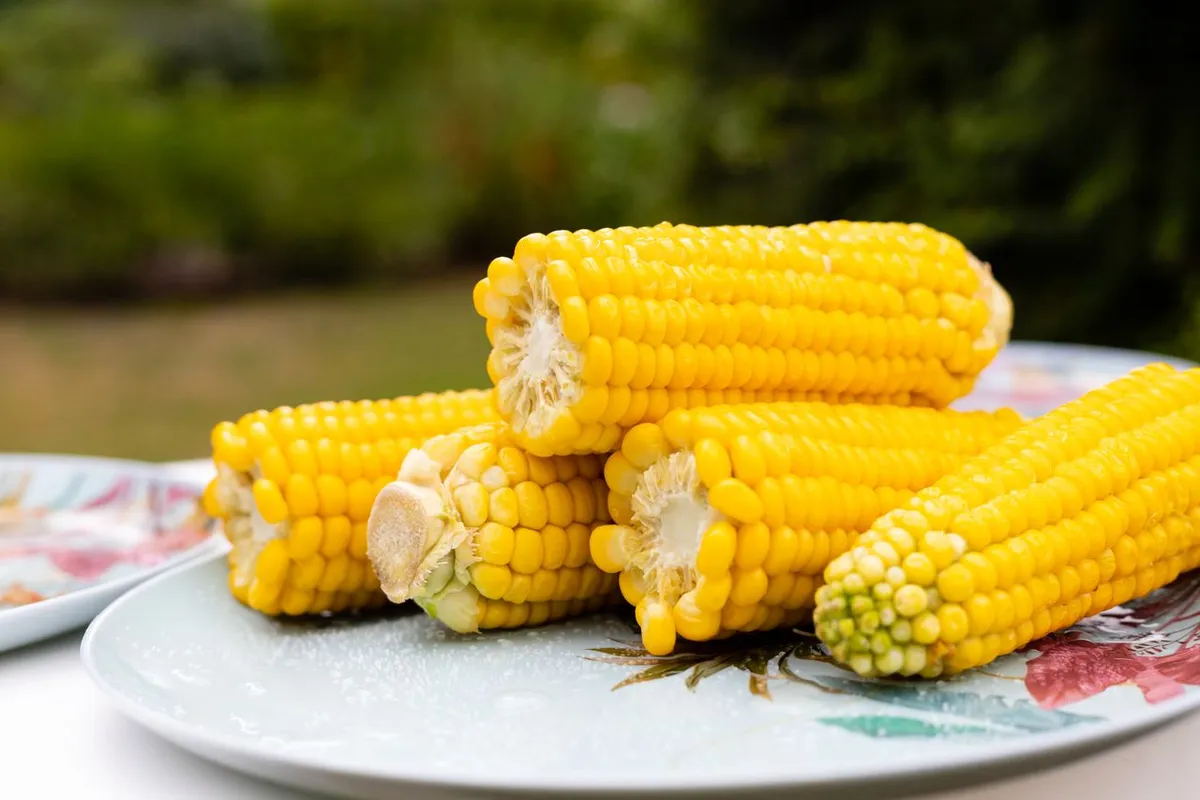
Sweet corn is corn grown to be eaten fresh as a vegetable. It carries genes that slow the change of sugar into starch. Standard sweet corn uses the sugary-1 (su-1) gene, and “super sweet” varieties use the shrunken-2 (sh-2) gene, which gives two to three times more sucrose than standard sweet corn, according to NMSU.
Unlike field corn, sweet corn is harvested while the kernels are still immature and milky. It is sold as fresh cobs, frozen kernels or canned corn, and is used in soups, salads and ready meals. Sweet corn is not suitable for feed milling or starch, because it is harvested before the kernel fills with starch.
What Type of Corn Is Popcorn?
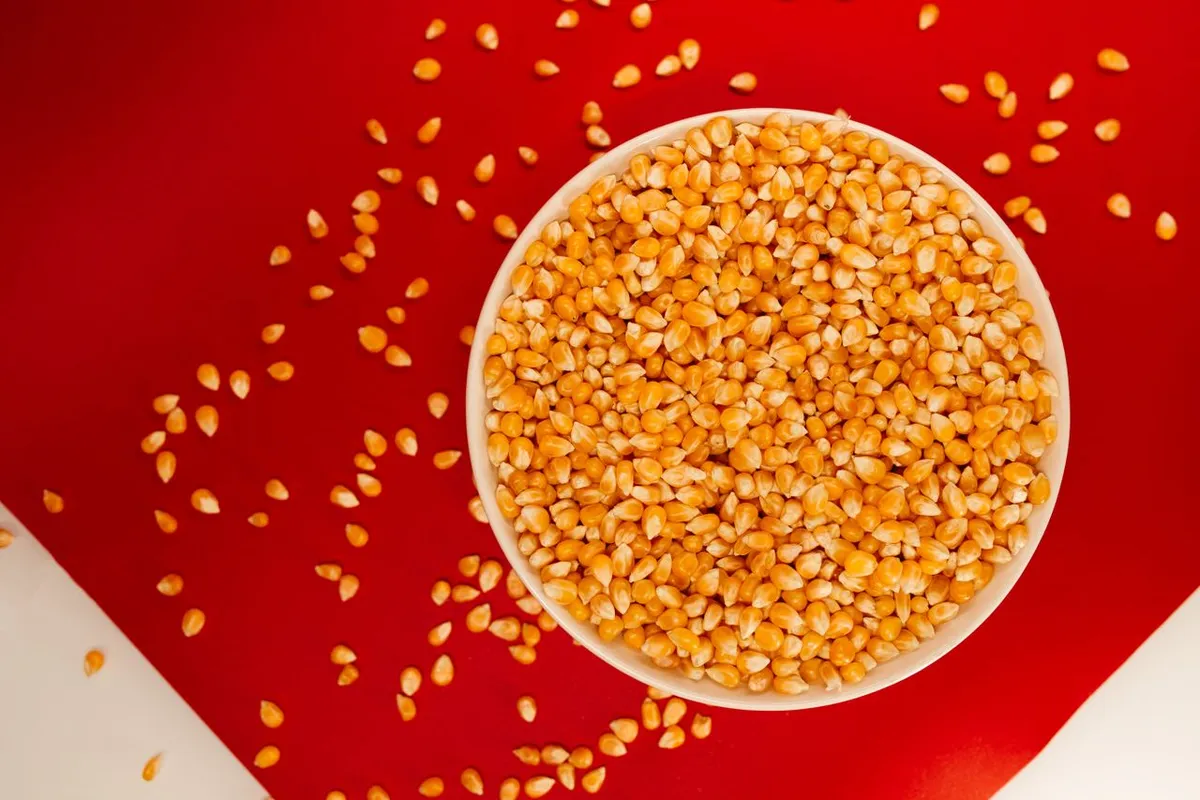
Popcorn is a type of flint corn with small kernels and a very hard, tight seed coat (pericarp). When the kernel is heated, the moisture inside turns into steam. Pressure builds until the seed coat splits and the starch expands into a white foam.
Popcorn needs the right moisture to pop well. NMSU gives the best range as 13.5–14%, and good popcorn expands to 30–40 times its volume. Popcorn is sold in two kernel shapes: “butterfly” for cinema and loose popcorn, and “mushroom” for coated and caramel products that need a round, strong piece.
Corn Types Compared by Use
The table compares the main corn types by kernel structure, harvest stage and typical buyers.
| Corn type | Kernel and endosperm | Harvested | Main uses |
|---|---|---|---|
| Dent | Soft core, hard sides; dented crown | Dry, mature | Animal feed, starch, sweeteners, ethanol |
| Flint | Mostly hard, glassy; smooth crown | Dry, mature | Grits, polenta, cereals, feed |
| Flour | Mostly soft starch; thin seed coat | Dry, mature | Traditional flours and meals |
| Sweet | High sugar; su-1 or sh-2 genes | Immature, milky stage | Fresh, frozen and canned vegetable |
| Popcorn | Small, hard flint kernel; tight pericarp | Dry, mature | Snack popcorn |
| Waxy | 100% amylopectin starch | Dry, mature | Specialty food starches, adhesives |
Which Corn Type Suits Which Industry?
Most industrial buyers need yellow dent or dent-flint field corn. The right grade then depends on moisture, foreign matter and, above all, aflatoxin.
- Poultry and cattle feed mills: yellow field corn is the main energy grain. It makes up about 55% of a typical Indian poultry diet. Feed grade usually allows up to 20 ppb aflatoxin B1 under EU feed rules. See our feed maize page.
- Starch and ethanol plants: dent corn with high starch and low foreign matter, usually 1% or less.
- Dry millers and snack makers: clean, food-grade corn with low aflatoxin, often with harder kernels for a better grit yield. Milled products include corn grits and corn flour.
- Vegetable processors: sweet corn, bought fresh from growers rather than as dry grain.
- Snack brands: popcorn, bought by expansion volume and kernel shape.
Food uses need stricter limits. Under EU Regulation 2023/915, maize for sorting or processing has a limit of 5 µg/kg aflatoxin B1 and 10 µg/kg total aflatoxins, and maize for direct human use has lower limits. Ask for a lot-wise report that matches your end use. Our lab testing page explains the tests we run.
Related reading: Sharbati Wheat, Lokwan and Other Indian Wheat Varieties and Processing of Corn: How Maize Is Milled into Grits, Meal and Flour.
Buying Corn in Bulk from India
Indian corn is yellow dent and flint field corn, and it is non-GMO, because India has not approved GM maize for cultivation. The main kharif crop is harvested from September to November, and a rabi crop follows from March to May. Indian maize ships mainly to Nepal, Bangladesh, Sri Lanka and Vietnam, where short transit keeps it competitive. Whichever of the corn types you need, ask for the crop year, moisture, foreign matter and aflatoxin figures in the contract.
Elysium Agri Corporation exports Indian yellow corn in feed, starch and food grades from Jamnagar, Gujarat. Our maize is supplied with moisture of 14% or less, and every lot is tested for aflatoxin. A 20 ft container holds about 24–26 MT in 50 kg PP bags, and larger volumes can move in bulk vessels. You can plan a load with our container load calculator and estimate the delivered cost with the landed cost calculator.
Share your grade, quantity and destination port, and we will send a current FOB, CFR or CIF price. Request a corn quote →
Frequently asked questions
What are the main types of corn?
The main types of corn are dent, flint, flour, sweet, popcorn and waxy. All are the same species, Zea mays, but they differ in kernel starch. Dent and flint are field corns harvested dry for feed, starch and milling. Sweet corn is eaten fresh as a vegetable, and popcorn is grown for snacks.
What is the difference between dent and flint corn?
Dent corn has a soft starch core with hard sides, so the top of the kernel collapses into a dent as it dries. Flint corn is mostly hard, glassy starch with a smooth, rounded crown. Dent is easier to mill and dominates feed, starch and ethanol use. Flint gives better grit yields and stores well.
What is sweet corn used for?
Sweet corn is used as a vegetable. It is harvested while the kernels are immature and sweet, then sold as fresh cobs, frozen kernels or canned corn. Food makers use it in soups, salads, pizzas and ready meals. It is not used for feed milling or starch, because it is picked before the starch develops.
What type of corn is used for popcorn?
Popcorn comes from a special type of flint corn with small kernels and a very hard seed coat. When heated, moisture inside the kernel turns to steam and bursts the coat, and the starch expands into foam. Good popcorn pops best at about 13.5 to 14% moisture and expands 30 to 40 times.
Which corn type is used in animal feed?
Animal feed mostly uses yellow dent or dent-flint field corn. It is the main energy grain in poultry, pig and cattle rations, and makes up about 55% of a typical Indian poultry diet. Feed mills buy it on moisture, foreign matter and aflatoxin, with feed grade usually allowing up to 20 ppb aflatoxin B1.
Related reads


