
On this page
- Corn Flour vs Maize Flour vs Cornstarch: What Is the Short Answer?
- What Is Maize Flour?
- What Is Corn Flour?
- What Is Cornstarch?
- How Do the Names Differ Across Regions?
- How Do Composition and Uses Compare?
- Which Product Should Your Business Stock?
- How Do You Source Maize Flour and Corn Flour from India?
- Frequently asked questions
In the corn flour vs cornstarch question, the key difference is what part of the kernel you get: corn flour (maize flour) is the whole or degermed maize kernel ground fine, while cornstarch is the pure starch extracted from the kernel, with almost no protein, fat or fibre. Corn flour is used as a flour for flatbreads, batters and snacks. Cornstarch is used as a thickener. The names cause confusion because in the UK and India “cornflour” usually means cornstarch. This guide explains each product, the naming differences and which one your business should stock.
Key takeaways
- Maize flour and US-style corn flour are the same thing: finely ground maize kernels, whole or degermed.
- Cornstarch is a refined, almost pure carbohydrate made by wet milling. It thickens liquids; it does not behave like flour.
- In the UK, Ireland and India, “cornflour” normally means cornstarch, so always check the HS code and specification.
- Maize flour is HS 1102 20 and cornstarch is HS 1108 12. Name the product by code on every contract.
Corn Flour vs Maize Flour vs Cornstarch: What Is the Short Answer?
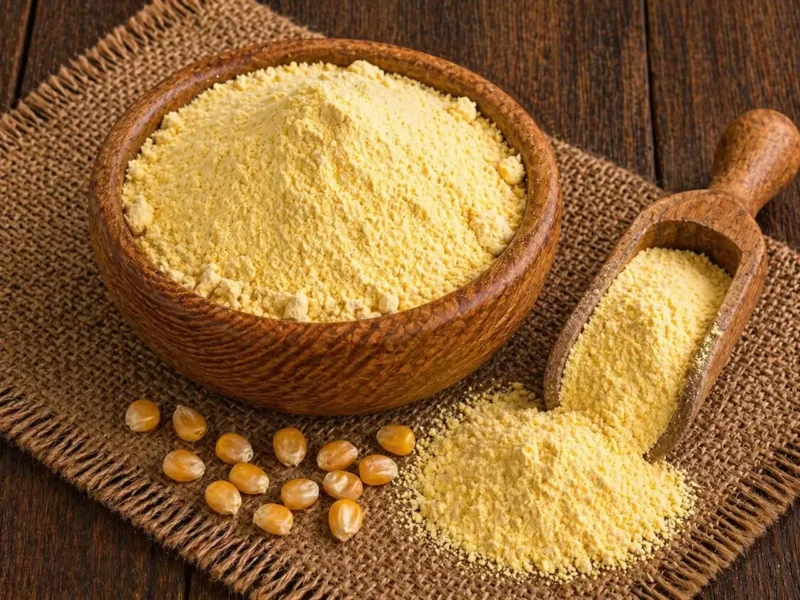
Maize flour and corn flour are the same product when the term is used in the US sense: maize kernels milled into a fine flour. Cornstarch is a different product. It is the white starch separated from the rest of the kernel. It has a different composition, a different HS code and a different job in the kitchen or the factory.
- Maize flour / corn flour: yellow or white, with a corn taste. It contains the protein, fat and some fibre of the grain. It is used for makki roti, tortillas, cornbread, batters and snacks.
- Cornstarch: bright white, fine and squeaky to the touch, with no real taste. It is almost all carbohydrate. It is used to thicken sauces, soups and custards, to coat fried food, and in many industrial products.
What Is Maize Flour?
Maize flour is made by dry milling maize kernels into a fine powder. It comes in two main types. Whole maize flour, known in India as makki atta, keeps the germ and bran, so it has more fat, fibre and flavour. Degermed maize flour has the germ and most of the bran removed. It has less fat, a lighter colour and a longer shelf life, which suits snack, bakery and batter makers.
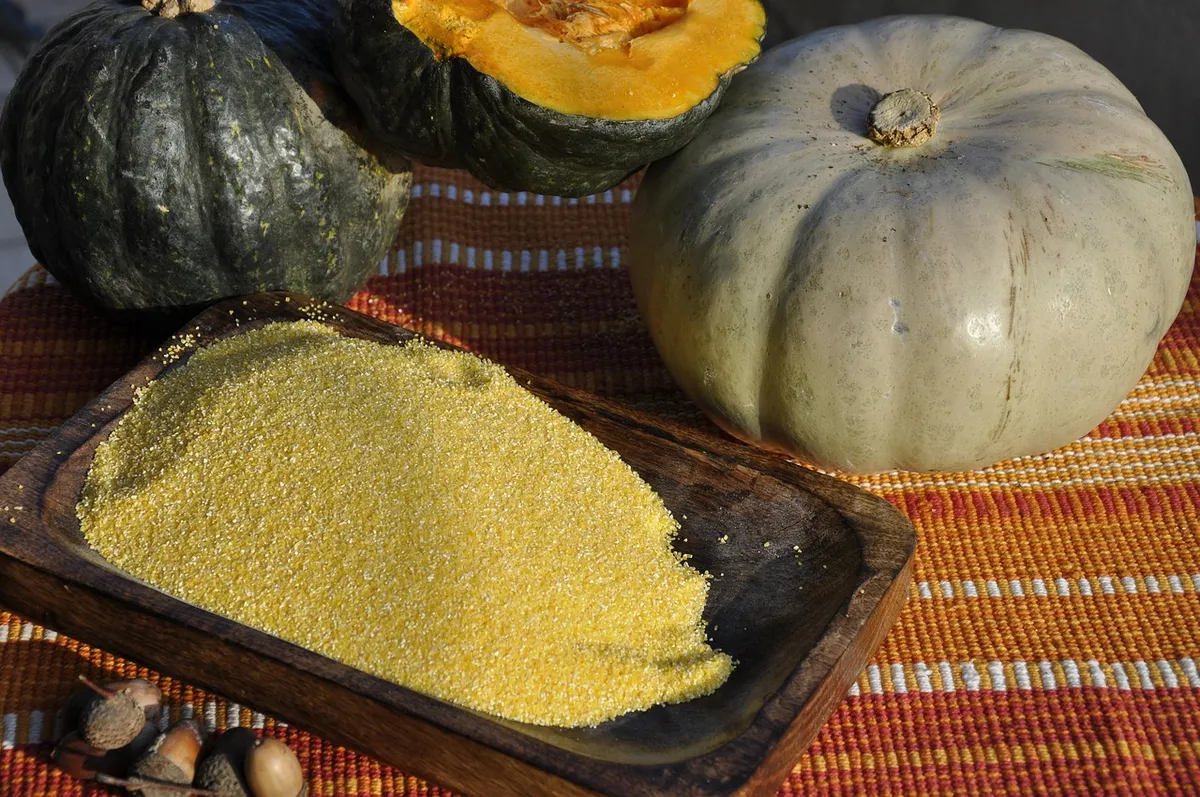
The international reference is Codex standard CXS 154-1985 for whole maize meal. It sets limits for moisture, fat, ash, protein and particle size. Grind size defines the product name too. Coarser particles are sold as corn grits or cornmeal rather than flour. Our corn flour (maize flour) page gives our full specification, and the corn grits page covers the coarser cut. For more on maize milling, read our guide on how maize is processed.
What Is Corn Flour?
“Corn flour” has two meanings, depending on where you are. In the United States, corn flour is finely ground maize, the same product as maize flour. In the UK, Ireland, India and much of the Commonwealth, “cornflour” (usually one word) means cornstarch.
This is why a recipe from London and a recipe from New York can use the same word for two different products. It also explains many trade disputes. A buyer orders “corn flour” expecting a thickener and receives yellow maize flour, or the opposite. A third related product is masa harina, used for tortillas. It is maize flour made from kernels cooked in lime water (nixtamalised), which changes its taste and dough behaviour. Plain maize flour cannot simply replace masa harina.
What Is Cornstarch?
Cornstarch is the starch extracted from the maize kernel by wet milling. The corn is steeped in water for 30 to 48 hours. The germ is then separated, and the starch is washed out and separated from the fibre, the corn gluten (protein) and the steep liquor, mostly in hydrocyclones and centrifuges. Finally the starch is dried into a fine white powder. Some starch is then chemically or physically modified for special uses.
Because the protein, fat and fibre are removed, cornstarch is almost pure carbohydrate. When it is heated in liquid, the starch granules swell and the chains form a mesh that thickens the liquid. Cornstarch gives a clear, glossy sauce rather than the cloudy result of wheat flour. Long, hard boiling can break the mesh down again and thin the sauce. Besides cooking, cornstarch is used in confectionery, as an anti-caking agent in icing sugar, and in paper, adhesives and bioplastics.
How Do the Names Differ Across Regions?
The same words describe different products in different markets. The safest rule is to name products by HS code and specification, not by their common name. The table summarises the usual meanings.
| Region | Finely ground maize is called | Pure maize starch is called |
|---|---|---|
| United States and Canada | Corn flour (coarser: cornmeal) | Cornstarch |
| United Kingdom and Ireland | Maize flour, maize meal, polenta | Cornflour |
| India | Makki atta, maize flour | Cornflour, corn starch |
| Australia | Maize flour, maize meal | Cornflour (often made from wheat: “wheaten cornflour”) |
| Trade and customs | Maize (corn) flour, HS 1102 20 | Maize (corn) starch, HS 1108 12 |
Common naming of maize flour and maize starch by market. Always confirm by specification.
If you are unsure of the code for a product, our HS code finder helps you check it before you place an order.
How Do Composition and Uses Compare?
Maize flour is a whole-food ingredient with protein, fat and fibre; cornstarch is a refined starch with almost none of them. The table compares typical values per 100 g, using USDA FoodData Central data for whole-grain yellow corn flour and cornstarch.
| Feature | Maize flour (whole-grain corn flour) | Cornstarch |
|---|---|---|
| Part of kernel | Whole kernel or degermed endosperm | Starch only |
| Milling | Dry milling | Wet milling and separation |
| Colour and taste | Yellow or white; corn flavour | Bright white; neutral |
| Energy (per 100 g) | About 361 kcal | About 381 kcal |
| Protein | About 7 g | About 0.3 g |
| Fat | About 3.9 g | About 0.1 g |
| Dietary fibre | About 7 g | Under 1 g |
| Carbohydrate | About 77 g | About 91 g |
| Main uses | Flatbreads, tortillas, cornbread, batters, snacks, bakery | Thickening, coatings, custards, confectionery, industry |
| Shelf life | Whole flour 3–6 months; degermed longer | Long, if kept dry |
| HS code | 1102 20 | 1108 12 |
Nutrient values are rounded from USDA FoodData Central and vary by maize type and milling.
The two products are not interchangeable. Cornstarch cannot replace maize flour in a flatbread or cornbread, because it has no protein or structure and gives no corn flavour. Maize flour can thicken a stew a little, but it makes it cloudy and grainy and is far weaker than cornstarch. Our article on types of corn explains which maize types are used for each product.
Which Product Should Your Business Stock?
Stock the product that matches what your customers cook or make. Use these rules of thumb.
- South Asian grocery and food service: whole maize flour (makki atta) for makki roti, plus cornstarch, sold as “cornflour”, for Indo-Chinese dishes and sauces.
- Snack and bakery manufacturers: degermed maize flour for batters, coatings and baked goods; corn grits for extruded snacks.
- Sauce, soup and dessert makers: cornstarch, often a modified grade that is stable to freezing or acid.
- Retail importers in the UK or India: label clearly. Put “maize flour” or “corn starch” on the pack, not only “cornflour”.
Whichever product you choose, write a clear specification. For maize flour, state whole or degermed, particle size, moisture, fat, ash and aflatoxin limits. For cornstarch, state native or modified, whiteness, moisture and viscosity. Whole maize flour has a shorter shelf life because the oil in the germ can turn rancid, so plan smaller, more frequent orders for it.
Related reading: Difference Between Atta and Maida, and Where Suji Fits and Kharif and Rabi Crops: Seasons, Examples and Key Differences.
How Do You Source Maize Flour and Corn Flour from India?
Once you have settled the corn flour vs cornstarch question, specify the flour type clearly. We supply corn flour milled from Indian non-GMO yellow maize: whole-grain maize flour (makki atta) and degermed maize flour. We do not supply cornstarch. Our flours are benchmarked to Codex CXS 154-1985 and the USDA degermed cornmeal specification, and each lot is tested for moisture, ash, protein, microbiology and aflatoxin through our lab testing programme.
We pack in 25 kg PP or paper bags with liners, and a 40 ft high-cube container holds about 24–26 MT. Tell us the flour type, particle size and destination.
Frequently asked questions
What is the difference between corn flour and cornstarch?
Corn flour, in the US sense, is maize kernels ground into a fine flour, so it keeps the grain's protein, fat, fibre and corn flavour. Cornstarch is only the starch, extracted by wet milling, and is almost pure carbohydrate. Corn flour is used for flatbreads, batters and snacks, while cornstarch is used mainly to thicken sauces, soups and desserts.
Is maize flour the same as corn flour?
Yes, when corn flour is used in the American sense. Maize flour and US corn flour both mean finely ground maize, whole or degermed, under HS code 1102 20. In the UK, Ireland and India, however, "cornflour" usually means cornstarch. To avoid errors, specify the product by description, specification and HS code rather than by name alone.
Can cornstarch replace corn flour in recipes?
Usually not. Cornstarch has almost no protein, fat or fibre and no corn flavour, so it cannot make flatbreads, cornbread or tortillas. It works only where the job is thickening or crisping. Maize flour can thicken a stew slightly, but it is weaker than cornstarch and makes the liquid cloudy and slightly grainy, so the swap rarely works well.
Which corn product is used to thicken sauces?
Cornstarch is the corn product used to thicken sauces, gravies, soups, pie fillings and custards. Mixed with cold water and heated, its starch granules swell and form a clear, glossy gel. In the UK and India it is sold as cornflour. Long, hard boiling can thin the sauce again, so it is usually added near the end of cooking.
Why does corn flour mean different things in the US and UK?
The difference comes from local usage. In the US, the word "flour" describes the ground grain, so corn flour is ground maize and the starch is called cornstarch. In British usage, cornflour became the name for the fine white starch, while ground maize is called maize flour or maize meal. India and many Commonwealth countries follow the British usage.
Related reads


