
On this page
- What Is Maize Processing?
- How Is Maize Cleaned and Conditioned?
- How Do Degerming and Dry Milling Work?
- How Is Milled Maize Sifted and Graded into Grits, Meal and Flour?
- How Are Milled Maize Products Dried and Packed?
- What Are the By-Products and How Are They Used as Animal Feed?
- What Is the Difference Between Dry Milling and Wet Milling?
- How Do You Source Corn Grits and Maize Products from India?
- Frequently asked questions
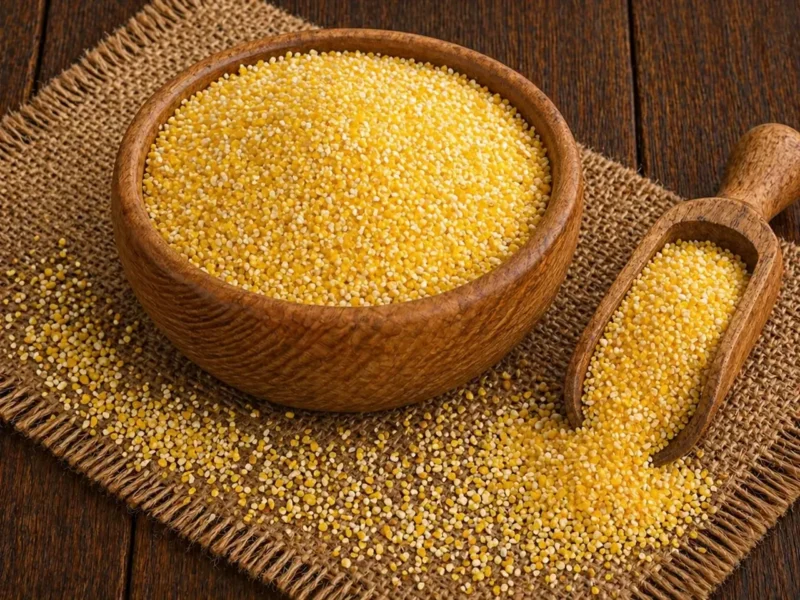
The processing of corn for food is done mainly by dry milling: the maize is cleaned, tempered with water, degermed to remove the germ and bran, dried, and then ground and sifted into grits, meal and flour. Wet milling is a separate process that steeps the grain to extract starch. This guide explains each step of the corn milling process, the products it makes and what buyers of corn grits and flour should specify.
Key takeaways
- Dry milling separates the maize kernel into endosperm, germ and bran, and grinds the endosperm into grits, meal and flour.
- Degerming removes the oily germ, which gives grits a low fat content and a longer shelf life.
- Grits, meal and flour are graded mainly by particle size, from 3–4 mm flaking grits down to fine flour.
- Germ and bran by-products are used for corn oil and as hominy feed for livestock.
What Is Maize Processing?
Maize processing is the conversion of dried maize grain into food, feed and industrial products. The kernel has three main parts. The endosperm is the starchy centre and makes up most of the grain. The germ, or embryo, holds most of the oil. The bran, or pericarp, is the thin outer skin. Each processing route separates these parts in a different way.
There are two main industrial routes. Dry milling uses little water and mechanical separation. It makes grits, meal and flour for brewing, snacks, breakfast cereals and bakery. Wet milling soaks the grain and separates it chemically and physically into starch, protein, fibre and germ. A third route, whole-grain milling, simply grinds the whole kernel. It is used for traditional flours such as makki atta in India.
How Is Maize Cleaned and Conditioned?
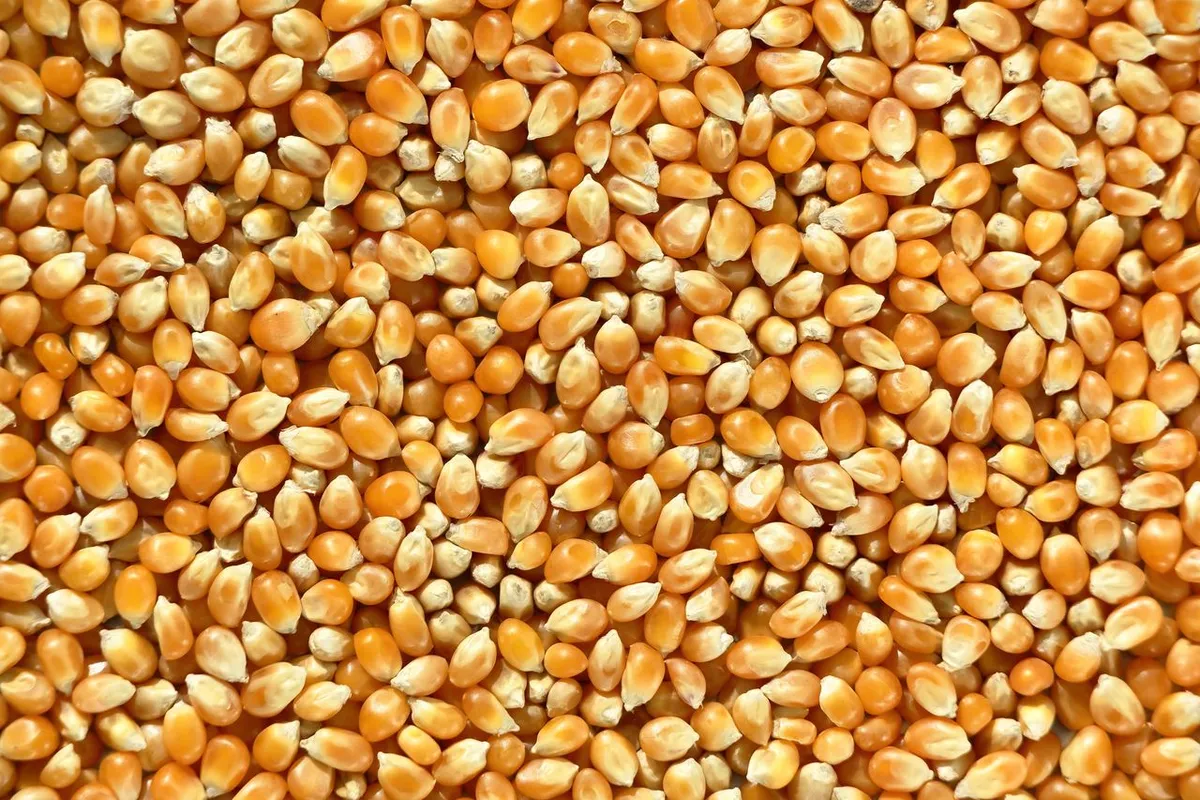
Maize is first cleaned to remove anything that is not sound grain, then conditioned with water so that the parts of the kernel separate cleanly. Good cleaning protects both product quality and food safety.
- Screening and aspiration: sieves remove cobs, stalks, stones and broken kernels, and air currents lift dust and light material.
- Magnets and destoners: remove metal pieces and heavy stones.
- Sorting: optical sorters can remove discoloured or mouldy kernels. This step helps reduce aflatoxin, because mould damage is usually concentrated in a small share of the kernels.
- Tempering: water is added to bring the maize to about 18–24% moisture, usually for a short time of under an hour. The bran and germ become tougher and more flexible, while the endosperm stays hard. This makes the germ easier to remove in one piece.
Mills usually prefer hard, flint-type or medium-hard maize, because it gives a higher yield of large grits. Soft, floury maize breaks into more fine meal and flour.
How Do Degerming and Dry Milling Work?
Degerming breaks the tempered kernel open and frees the germ and bran from the endosperm. Dry milling then reduces the endosperm to the particle sizes the buyer needs.
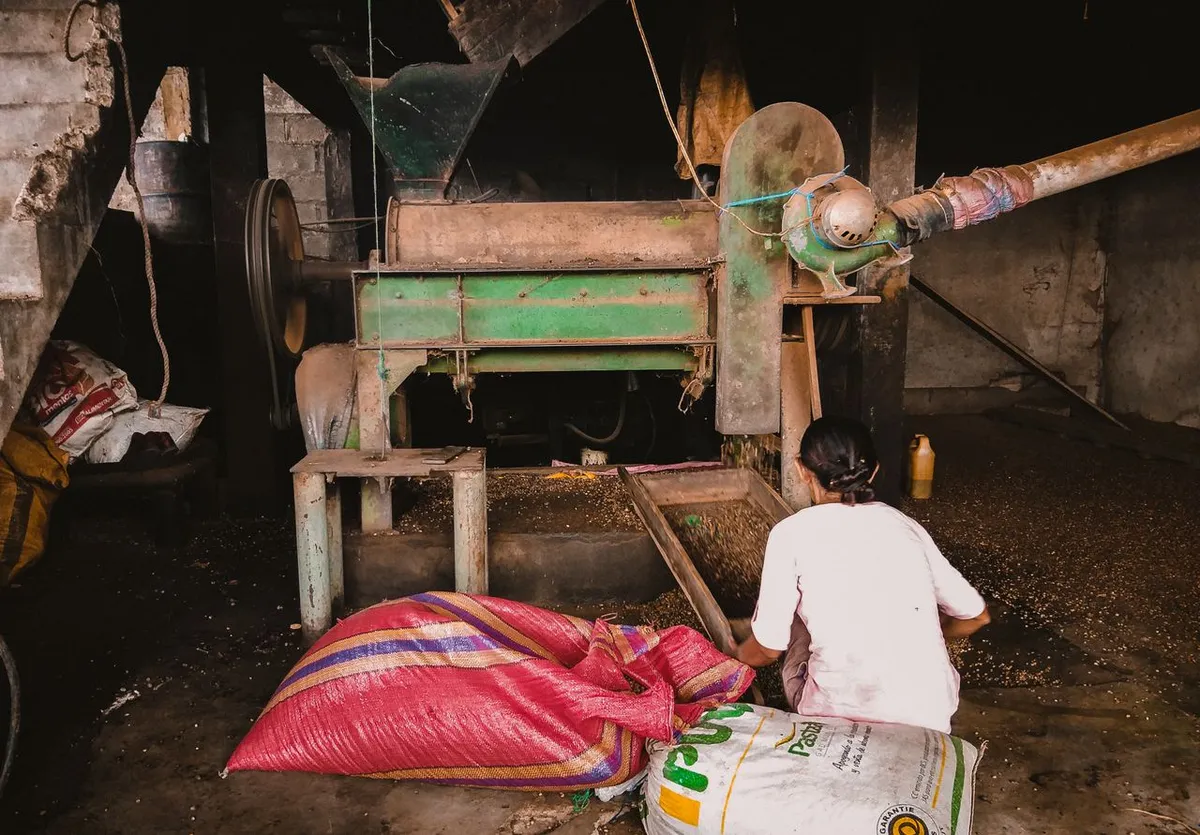
In most large mills, a degerminator rubs and impacts the kernels against a rotating cone or rotor. The endosperm breaks into large pieces, while the germ and bran come away. The mixture, called stock, is then dried to about 15% moisture and cooled. Next, a series of sifters, aspirators and gravity tables separate the large endosperm pieces from the germ and bran. Roller mills then break the endosperm step by step into smaller particles. After each pass, sifters sort the material by size, and any remaining bran is lifted away by air.
Removing the germ is the most important step for quality. The germ contains most of the fat in the kernel. If it stays in the product, the fat can turn rancid and shorten shelf life. This is why degermed corn grits typically have a fat content of 1–1.5% or less, while whole maize flour has 3% or more.
How Is Milled Maize Sifted and Graded into Grits, Meal and Flour?
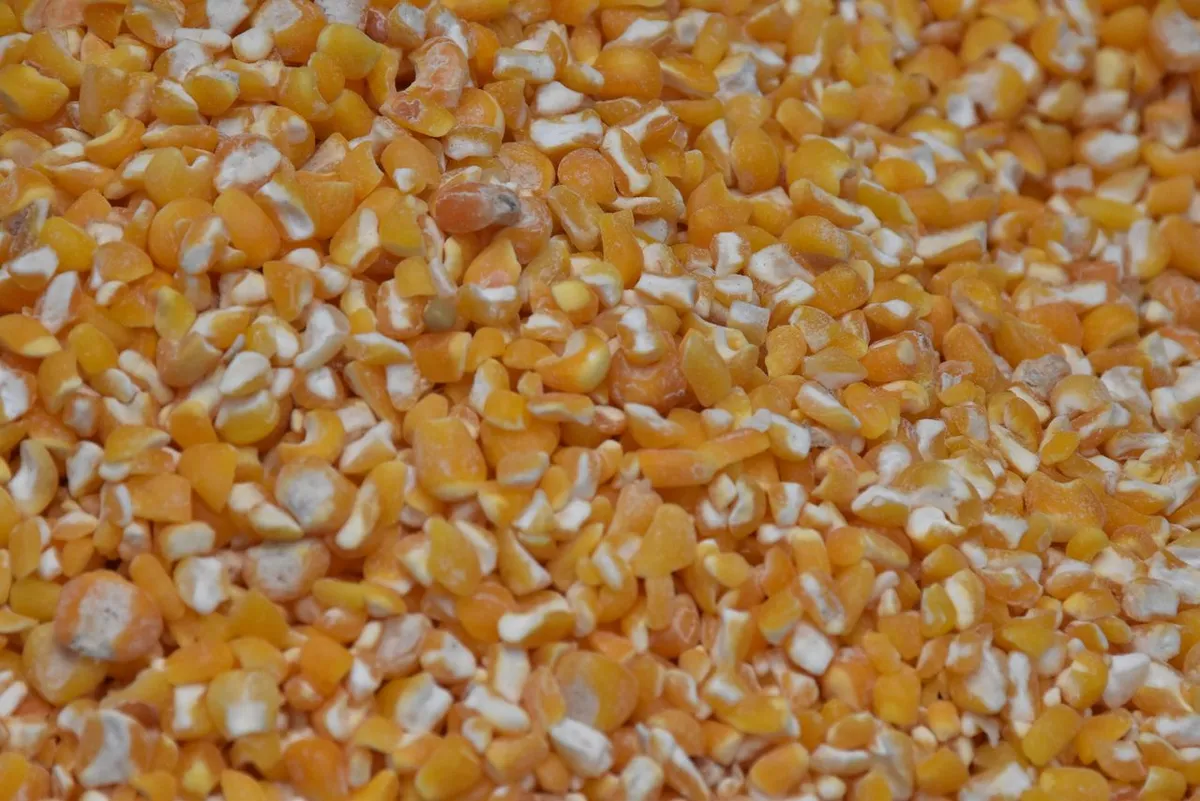
Milled maize is graded by particle size. The same endosperm can become flaking grits, brewers grits, meal or flour, depending on how far it is ground and which sieve it passes. The table shows the main products and their typical uses.
| Product | Typical particle size | Main uses |
|---|---|---|
| Flaking grits | About 3–4 mm | Cornflakes and breakfast cereals |
| Coarse grits (101 type) | 850–1,180 µm | Brewing adjunct, coarse snacks |
| Fine grits (108 type) | 300–600 µm | Extruded snacks, puffs, polenta |
| Corn meal | Finer than grits, coarser than flour | Bakery, coatings, cornbread |
| Degermed corn flour | Fine; set by buyer specification | Batters, bakery, snack doughs |
| Whole maize flour | Fine; whole kernel ground | Flatbreads (makki roti), traditional foods |
Dry-milled maize products by particle size. Exact ranges are set in each buyer’s specification.
Indian mills use trade names such as 101 and 108 for coarse and fine grits. Buyers also specify moisture (often 13.5% or less), ash, protein, crude fibre and fat. Codex Standard CXS 155-1985 for degermed maize meal and grits gives the international baseline for these points. In typical dry milling of good maize, total grits make up roughly half of the output, with meal and flour, germ and hominy feed making up the rest. Actual yields depend on the maize hardness and the mill.
How Are Milled Maize Products Dried and Packed?
Milled products are checked for moisture and packed in clean, lined bags so that they stay dry and free from pests during shipping. Grits and meal with low moisture and low fat keep well, while whole maize flour has a shorter life because of its oil.
Before packing, the product passes through a final sifter and often a metal detector. It is then packed into 25 or 50 kg PP bags or paper bags with a liner, or into jumbo bags for large users. Degermed grits typically keep for about 8–12 months in cool, dry storage. Whole maize flour usually keeps for only 3–6 months. In transit, use a container liner or desiccant to limit condensation. Our packaging page shows the bag options, and the container load calculator estimates how many tonnes fit in your container.
What Are the By-Products and How Are They Used as Animal Feed?
The main by-products of dry milling are the germ and the bran. Almost nothing from the kernel is wasted.
- Germ: pressed or solvent-extracted for corn oil. The remaining germ cake or meal is used in feed.
- Hominy feed: a mix of bran, part of the germ and fine endosperm. It is a common energy ingredient in cattle, pig and poultry feed.
- Bran: can be sold on its own as a fibre source for food or feed.
Maize used for ethanol produces another feed product, distillers dried grains with solubles (DDGS). We export corn DDGS for the livestock trade.
What Is the Difference Between Dry Milling and Wet Milling?
Dry milling separates the kernel mechanically and makes grits, meal and flour. Wet milling soaks the kernel and separates it into pure starch, protein, fibre and germ. The two routes serve different buyers.
In wet milling, maize is steeped for about 30 to 50 hours in warm water with a small amount of sulphur dioxide. This softens the kernel and loosens the starch from the protein. The germ is then removed, and the rest is ground, screened and spun in centrifuges. The products are corn starch, glucose and other sweeteners, corn gluten meal, corn gluten feed and corn oil. Wet milling plants are large and costly to build. Dry mills are smaller and simpler, and they make the food ingredients that snack, cereal and brewing companies buy.
Related reading: Sharbati Wheat, Lokwan and Other Indian Wheat Varieties and What Is Wheat Flour? Types, Protein and Uses Explained.
How Do You Source Corn Grits and Maize Products from India?
Knowing the processing of corn helps you write a clear specification. State the grade or particle size, the moisture, the fat limit, the protein and ash, and the mycotoxin limits for your market. Ask for a lot-wise Certificate of Analysis and a sample from the same production run. India exported about 92,500 tonnes of maize grits and groats in 2025, mainly to Saudi Arabia, Indonesia, Malaysia and Jordan, and Indian maize is non-GMO.
Elysium Agri Corporation supplies corn grits dry-milled from degermed Indian yellow maize, in 101 coarse, 108 fine and flaking grades, as well as corn flour and yellow maize grain. A 40 ft high-cube container holds about 25–26 MT of grits. Our lab testing page lists the moisture, micro and mycotoxin tests we run.
Tell us the grade, quantity, packing and destination port, and we will send a quote with the specification sheet. Request a corn grits quote →
Frequently asked questions
How is maize processed into corn grits?
Maize is cleaned, then tempered with water to about 18–24% moisture. A degerminator removes the germ and bran, and the stock is dried to about 15% moisture. Roller mills and sifters then break the endosperm into pieces of set sizes, which are sold as flaking, coarse or fine corn grits.
What is the difference between corn grits and corn flour?
The main difference is particle size. Corn grits are coarse pieces of endosperm, from about 300 µm up to 3–4 mm, used for brewing, snacks and cereals. Corn flour is ground much finer. Degermed corn flour has low fat, while whole maize flour includes the germ and bran.
What is dry milling of corn?
Dry milling is the mechanical separation of the maize kernel into endosperm, germ and bran with only a little added water. The endosperm is ground and sifted into grits, meal and flour. The germ goes to corn oil production, and the bran and fine material become hominy feed for livestock.
What is the difference between dry milling and wet milling?
Dry milling separates the kernel mechanically and makes grits, meal and flour for food. Wet milling steeps the maize for about 30 to 50 hours in warm water with a little sulphur dioxide, then separates it into starch, gluten meal, gluten feed, fibre and germ. Wet milling is used to make starch and sweeteners.
What are the by-products of dry milling maize?
The main by-products are the germ and the bran. The germ is pressed or extracted for corn oil, and the remaining germ meal goes into feed. Bran, some germ and fine endosperm are blended into hominy feed, an energy ingredient for cattle, pigs and poultry. Bran can also be sold as a fibre source.
Related reads


