On this page
- What Are the Types of Millets?
- What Are the Major Millets: Bajra, Jowar and Ragi?
- What Are the Small Millets: Foxtail, Kodo, Barnyard, Little and Proso?
- How Do the Types of Millets Compare?
- Where and When Are Millets Grown in India?
- How Are Millets Used in Food and Industry?
- How Do You Source Millets from India?
- Frequently asked questions
The main types of millets are the major millets, pearl millet (bajra), sorghum (jowar) and finger millet (ragi), and the small millets, foxtail, kodo, barnyard, little, proso and browntop. All are small-seeded grasses grown for grain, and most are hardy, rain-fed crops of dry regions. India grows more kinds of millet than any other country, so this list of millets also works as a guide to what Indian exporters can supply.
Key takeaways
- Bajra, jowar and ragi make up most of India’s millet crop; small millets are grown in smaller areas, often in hill and tribal regions.
- Millet types differ widely: ragi is rich in calcium, foxtail and proso are high in protein, and kodo and barnyard are high in fibre.
- Most Indian millets are kharif crops harvested from September to October, with rabi jowar and summer bajra adding supply.
- Specify the exact millet, botanical name and grade on every order, because “millet” alone can mean several different grains.
What Are the Types of Millets?
Millets are a group of small-grained cereal grasses, not a single crop. They come from several different plant genera, so the grains differ in size, colour, taste and nutrition. In India they are often grouped into two classes: major millets, which are grown on large areas, and small (or minor) millets, which have tiny grains and are grown on smaller areas.
The common Indian list of millets has nine members: pearl millet, sorghum, finger millet, foxtail, kodo, barnyard, little, proso and browntop. Grains such as quinoa, amaranth and buckwheat are sometimes sold next to millets, but they are pseudo-cereals from other plant families. The United Nations declared 2023 the International Year of Millets, following a proposal by India, and this raised demand for millet foods worldwide.
According to the APEDA millet portal, India is the largest producer of millet, followed by Niger and China. India produced about 18 million tonnes in 2024-25.
What Are the Major Millets: Bajra, Jowar and Ragi?
Bajra, jowar and ragi are the three millets grown on the largest areas in India and traded in the largest volumes. Some classifications, including the research programme of the Indian Council of Agricultural Research (ICAR), place ragi with the small millets, but in trade it is usually listed with the major ones.
- Pearl millet (bajra), Pennisetum glaucum: the most widely grown millet in India. Indian export bajra has a greenish-grey colour and is often sold as “green millet”. It grows in hot, dry areas of Rajasthan, Gujarat and Uttar Pradesh, and is used for rotis, flour, bird feed and poultry feed.
- Sorghum (jowar), Sorghum bicolor: a larger, rounder grain, usually white or cream for food. It is also called milo or cholam. Maharashtra and Karnataka are the main sources. Jowar is milled into flour for bhakri and gluten-free foods, and the coloured types are used for feed.
- Finger millet (ragi), Eleusine coracana: a tiny reddish-brown seed, known as nachni in western India. Karnataka is the largest producer. Ragi flour is used for porridge, baby foods and health foods.

What Are the Small Millets: Foxtail, Kodo, Barnyard, Little and Proso?
Small millets are millets with very small grains, usually grown on small farms and often on poor soils. Most need dehulling before cooking, and many are eaten whole as a rice substitute.
- Foxtail millet (kangni, navane), Setaria italica: a small yellow grain grown mainly in Karnataka and Andhra Pradesh. It cooks like rice and is used in upma, pulao and health foods.
- Kodo millet (kodra), Paspalum scrobiculatum: a hardy grain with a tough husk, grown in central India. It is cooked as a rice substitute.
- Barnyard millet (sanwa, jhangora), Echinochloa species: a quick-growing grain, popular as a fasting food in northern India.
- Little millet (kutki, samai), Panicum sumatrense: a very small grain related to proso, cooked like rice or made into flakes.
- Proso millet (chena, white millet), Panicum miliaceum: a round, smooth grain that is widely traded for bird-seed mixes, as well as for cereals and gluten-free baking.
Browntop millet (Brachiaria ramosa) is a ninth, less common type, grown on small areas in southern India. It is still a niche product in export markets.
How Do the Types of Millets Compare?
Each millet has its own strengths. Ragi stands out for calcium, foxtail and proso for protein, and kodo and barnyard for fibre. The table below uses values published by the ICAR-Indian Institute of Millets Research (IIMR), per 100 g of grain.
| Millet | Indian name | Protein (g) | Fibre (g) | Calcium (mg) | Iron (mg) | Main use |
|---|---|---|---|---|---|---|
| Pearl millet | Bajra | 10.6 | 1.3 | 38 | 16.9 | Flour, bird and poultry feed |
| Sorghum | Jowar | 10.0 | 4.0 | 54 | 2.6 | Flour, gluten-free foods, feed |
| Finger millet | Ragi | 7.3 | 3.6 | 344 | 3.9 | Porridge, baby food |
| Foxtail millet | Kangni | 12.3 | 8.0 | 31 | 2.8 | Rice substitute, health foods |
| Proso millet | Chena | 12.5 | 2.2 | 14 | 0.8 | Bird seed, cereals |
| Kodo millet | Kodra | 8.3 | 9.0 | 27 | 0.5 | Rice substitute |
| Little millet | Kutki | 7.7 | 7.6 | 17 | 9.3 | Rice substitute, flakes |
| Barnyard millet | Sanwa | 11.2 | 10.1 | 11 | 15.2 | Fasting foods, rice substitute |
Source: ICAR-IIMR. Values vary with variety, soil and test method; newer Indian food composition data gives lower iron figures for some millets.
No single millet is the most nutritious on every measure, so the right choice depends on what you need. Our guide to millet nutrition covers energy, minerals and how processing affects each grain. For buyers, it is also worth knowing that fibre figures depend heavily on whether the grain is whole or dehulled.
Where and When Are Millets Grown in India?
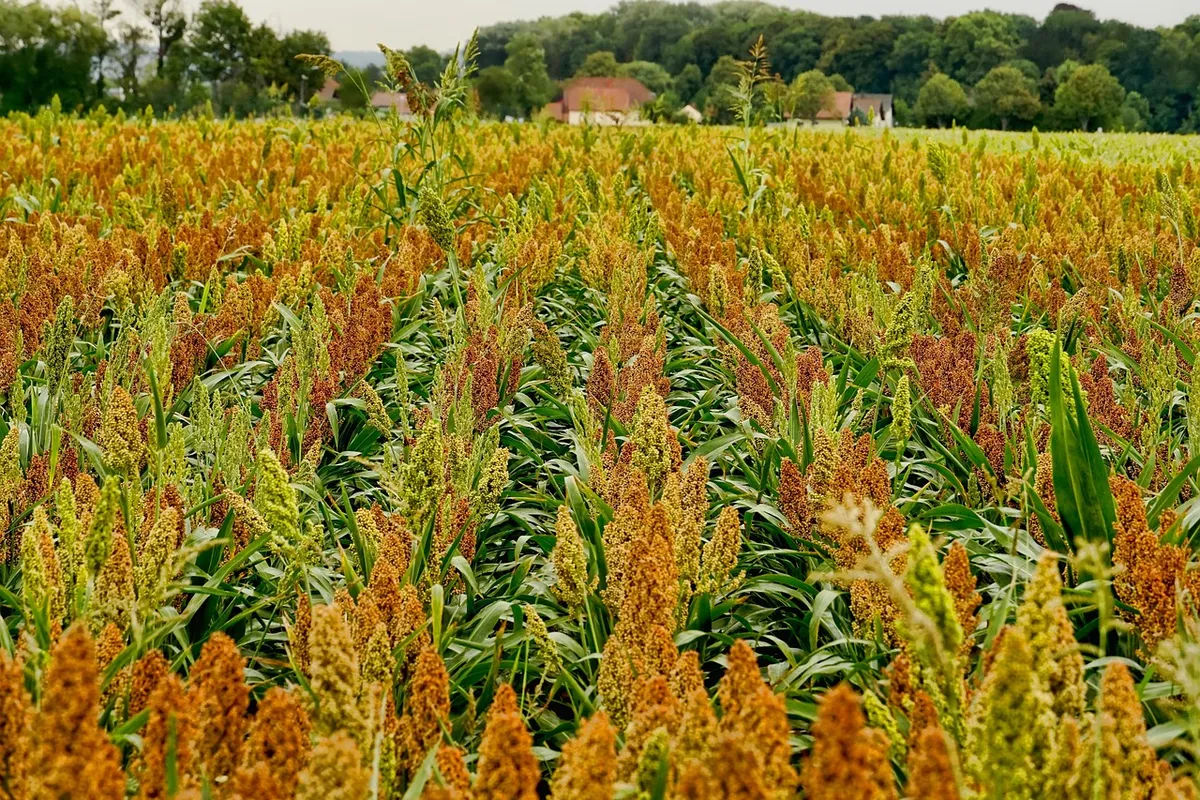
Most Indian millets are grown as rain-fed kharif crops, sown with the monsoon in June and July and harvested in September and October. The APEDA millet portal names Rajasthan, Maharashtra, Karnataka, Andhra Pradesh and Madhya Pradesh as the main millet-growing states.
| Millet | Main Indian sources | Main season |
|---|---|---|
| Bajra | Rajasthan, Gujarat, Uttar Pradesh | Kharif (harvest Sep–Oct); Gujarat summer crop (harvest May–Jun) |
| Jowar | Maharashtra, Karnataka | Kharif and rabi |
| Ragi | Karnataka | Mainly kharif |
| Foxtail | Karnataka, Andhra Pradesh | Mainly kharif |
| Other small millets | Central, southern and hill states | Mainly kharif |
The seasons matter for buyers, because the freshest lots and the widest choice come soon after harvest. Our guide to kharif vs rabi crops explains the two main Indian seasons, and the crop calendar shows harvest windows by crop. For how the plants grow from sowing to grain, see how millets grow.
How Are Millets Used in Food and Industry?
Millets are used as whole grains, flours, flakes and puffs in food, and as energy grains in animal and bird feed. Because millets contain no gluten, millet flours are popular in gluten-free products, though buyers should check for cross-contact with wheat during handling.
- Staple foods: rotis and bhakri from bajra and jowar, ragi porridge, and small millets cooked like rice.
- Gluten-free flours and mixes: jowar and ragi flours for breads, pasta and baking blends.
- Breakfast cereals and snacks: millet flakes, puffs, bars and extruded snacks.
- Baby and health foods: ragi and small millets in porridges and malted drinks.
- Bird feed: bajra and proso are key parts of seed mixes in Europe and North America.
- Poultry and cattle feed: bajra and coloured sorghum as energy grains, and by-products such as millet meal.
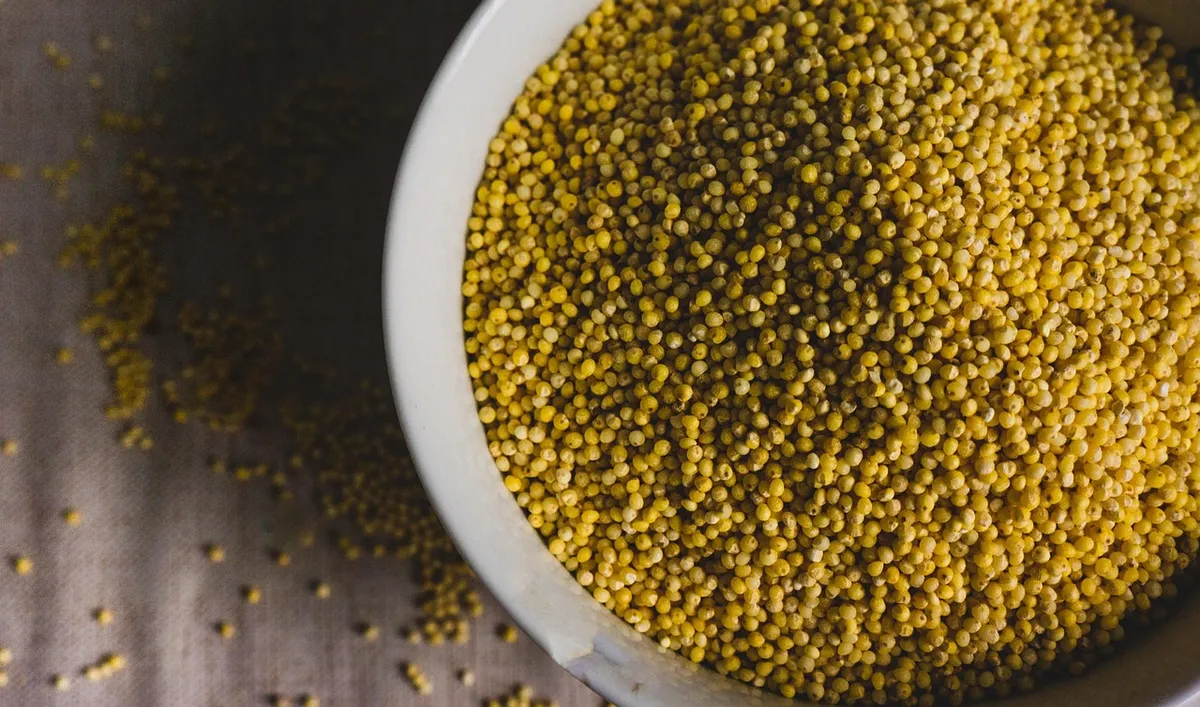
Each end use needs a different grade. Food buyers usually need sortex-cleaned grain with tight limits on stones, mycotoxins and ergot, while bird-feed and feed buyers often accept machine-cleaned grades at a lower price.
How Do You Source Millets from India?
To source millets from India, start by naming the exact millet and its botanical name, then agree the grade, crop year, packing and test panel. Knowing the types of millets helps you avoid confusion, since “millet” alone can mean bajra in one market and proso in another. Each millet also has its own HS code, which our HS code finder can help you check.
Elysium Agri Corporation exports millet grain from Gujarat, including green bajra, jowar, ragi and small millets such as foxtail and proso. Our food grade is sortex-cleaned to 99.9% purity, with moisture 12% max and foreign matter 1% max. Every lot is tested for moisture, quality, aflatoxins, ochratoxin A, ergot and pesticide residues against EU or destination limits. We pack in 25 or 50 kg PP or jute bags, about 24–25 MT in a 20 ft container, with buyer’s marks or private label on request.
Tell us the millet, grade, quantity and destination port, and we will send an FOB or CIF price with the specification sheet. Request a millet quote →
Frequently asked questions
What are the main types of millets?
The main types of millets are pearl millet (bajra), sorghum (jowar) and finger millet (ragi), plus the small millets: foxtail, kodo, barnyard, little, proso and browntop. They are all small-seeded cereal grasses. Quinoa, amaranth and buckwheat are often sold alongside millets, but they are pseudo-cereals from other plant families.
What is the difference between major and small millets?
Major millets, mainly bajra and jowar and usually ragi, are grown on large areas and traded in large volumes. Small millets, such as foxtail, kodo, barnyard, little and proso, have very small grains, are grown on smaller areas and often need dehulling. Some Indian research programmes list ragi with the small millets.
Which millet is the most nutritious?
No single millet is best on every measure. ICAR-IIMR data shows ragi is far richer in calcium than other millets, foxtail and proso are highest in protein, and kodo and barnyard are high in fibre. The best choice depends on your product and nutrition goals, and values vary by variety and processing.
What is the difference between bajra, jowar and ragi?
Bajra is pearl millet, a small greenish-grey grain grown in dry areas and used for rotis, flour and bird feed. Jowar is sorghum, a larger white or cream grain milled into gluten-free flour. Ragi is finger millet, a tiny reddish-brown seed rich in calcium and used for porridge and baby foods.
Which millets are grown in India?
India grows all the main millets: bajra, jowar, ragi, foxtail, kodo, barnyard, little, proso and browntop. Rajasthan, Maharashtra, Karnataka, Andhra Pradesh and Madhya Pradesh are leading millet states. Most millets are kharif crops harvested in September and October, and India is the world's largest millet producer.
Related reads