
On this page
- What Is Roasted Chana?
- What Is Roasted Chana Nutrition per 100g?
- How Much Protein and Fibre Does Roasted Chana Contain?
- Which Vitamins and Minerals Does Roasted Chana Provide?
- How Does Roasted Chana Compare with Raw and Boiled Chickpeas?
- How Is Roasted Chana Used as a Snack and Food Ingredient?
- What Does the Research Say About Chickpeas?
- How Do You Source Roasted Chana from India?
- Frequently asked questions
The main roasted chana benefits are a high protein content, about 22 g per 100 g, useful fibre, especially in the skin-on form, and minerals such as iron and phosphorus, all in a dry, crunchy food that needs no cooking. Roasting removes water and adds crispness without oil, so roasted chana works as a simple snack and as an ingredient for chutneys, sattu and snack mixes. This fact sheet sets out roasted chana nutrition, compares it with raw and boiled chickpeas and summarises what research says.
Key takeaways
- Indian food composition data lists roasted Bengal gram at about 369 kcal and 22 g of protein per 100 g.
- Roasted chana with skin keeps more fibre than peeled or split roasted chana, because much of the fibre sits in the seed coat.
- Roasted chana is dry-roasted, usually in hot sand, so it contains no added oil unless it is flavoured later.
- Research links chickpea and pulse intake with better diet quality and satiety, but roasted chana is a food, not a treatment.
What Is Roasted Chana?
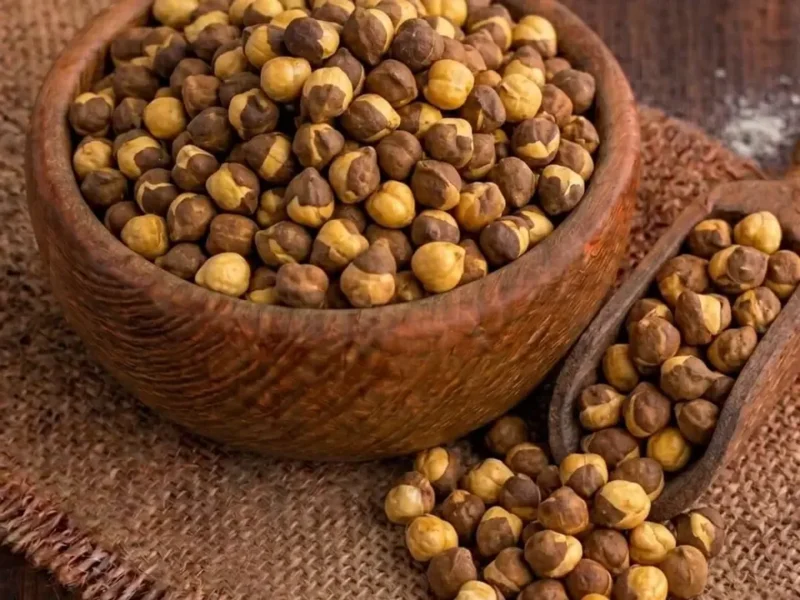
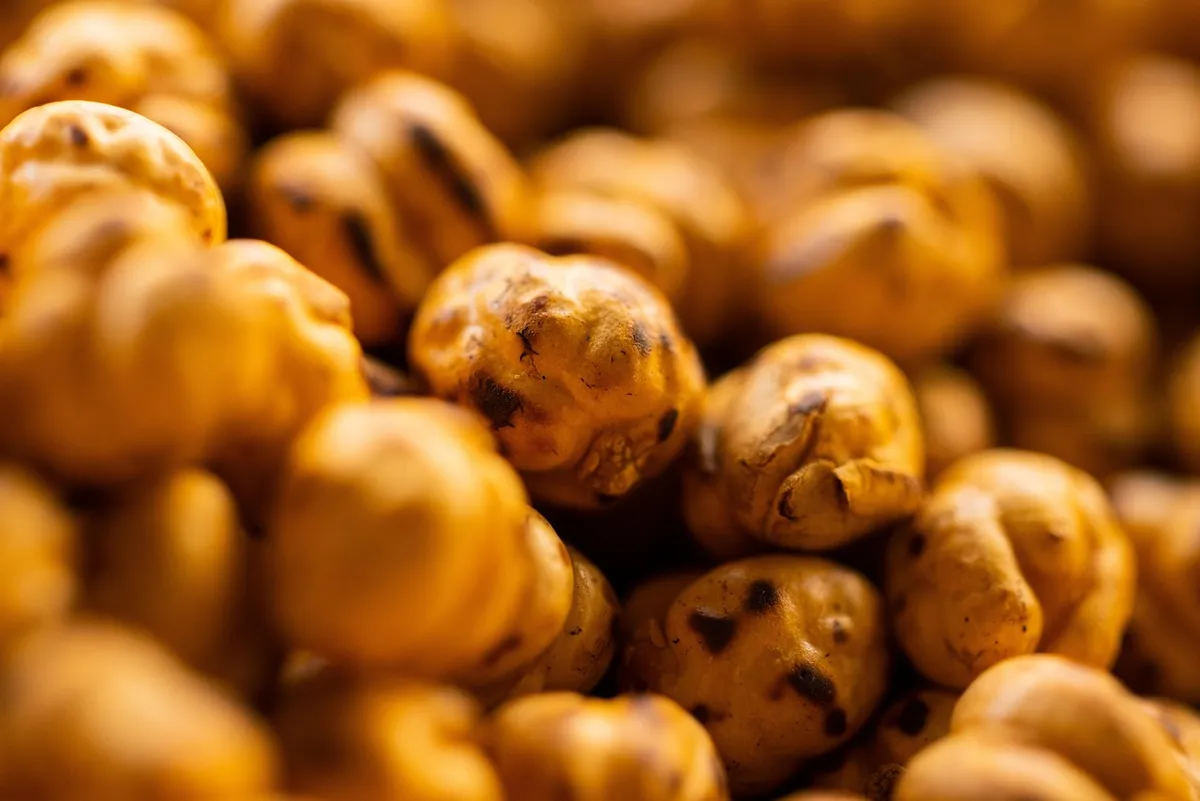
Roasted chana is desi chickpeas that have been roasted in hot sand until crisp. It is also called bhuna chana or roasted gram. It is sold in three main forms: with skin, without skin (peeled, also called phutana) and split (roasted chana dal or dalia). All three are ready to eat.
The roasting process is short. The seed is heat-conditioned, mixed with very hot sand for about two minutes and then cooled, peeled or split as needed. Roasting drives off moisture, so our export roasted chana has moisture of 5% maximum, usually about 3%. That low moisture gives the crunch and a long shelf life when the product is kept dry. Our guide on how roasted chana is made explains each step.
What Is Roasted Chana Nutrition per 100g?
Roasted chana provides about 369 kcal and 22 g of protein per 100 g. The figures below come from the Indian nutritive value tables of the National Institute of Nutrition, as published on the TNAU Agritech portal. They describe roasted Bengal gram, the Indian name for roasted desi chana.
| Nutrient (per 100 g) | Roasted Bengal gram |
|---|---|
| Energy | 369 kcal |
| Protein | 22 g |
| Fat | 5 g |
| Moisture | 11 g |
| Minerals (ash) | 2 g |
| Crude fibre | 1 g |
| Calcium | 58 mg |
| Phosphorus | 340 mg |
| Iron | 9 mg |
Two notes help you read this table. First, “crude fibre” is an older lab measure that captures only part of the fibre in a food, so it is much lower than the dietary fibre figure used on modern labels. Second, the moisture in these reference values is higher than in fresh export roasted chana, which is usually about 3%. Lower moisture means slightly more nutrients per 100 g. For a label, always use an analysis of your own finished product.
How Much Protein and Fibre Does Roasted Chana Contain?
Roasted chana contains about 22 g of protein per 100 g, which makes it one of the richer plant protein snacks. Our product page uses a rounded figure of about 20 g per 100 g. In energy terms, 22 g of protein supplies about 88 kcal, or roughly a quarter of the 369 kcal in 100 g. Under EU Regulation (EC) No 1924/2006, a “high protein” claim needs at least 20% of energy from protein, so many roasted chana products may meet that level. Brands should confirm this with a lab analysis of the finished pack.
Chickpeas are also a good source of dietary fibre. USDA FoodData Central lists raw dried chickpeas at 12.2 g of dietary fibre per 100 g. Much of this fibre is in the seed coat. That means roasted chana with skin keeps more fibre, while peeled and split roasted chana, which have had the skin removed, have less. If fibre is your main goal, choose the skin-on form. Chickpea protein is covered in more depth in our article on chickpea protein and nutrition.
Which Vitamins and Minerals Does Roasted Chana Provide?
Roasted chana is a useful source of several minerals. The Indian reference values list about 9 mg of iron, 340 mg of phosphorus and 58 mg of calcium per 100 g of roasted Bengal gram. Chickpeas in general also provide magnesium, potassium, zinc and folate. USDA data for raw dried chickpeas gives 557 µg of folate, 718 mg of potassium, 79 mg of magnesium and 2.8 mg of zinc per 100 g.
Heat can reduce some vitamins, especially folate and other B vitamins, so roasted chana may contain less of these than raw seed. Minerals are not destroyed by heat, but removing the skin removes some of them along with the fibre. Plant iron is also absorbed less well than iron from meat. Eating roasted chana with a source of vitamin C, such as lemon or tomato in a chaat, is a common way to help absorption.
How Does Roasted Chana Compare with Raw and Boiled Chickpeas?
Roasted chana is much more concentrated than boiled chickpeas because it holds very little water. Raw dried chickpeas and roasted chana are similar per 100 g, while boiled chickpeas carry about two-thirds water. The table compares them.
| Per 100 g | Roasted Bengal gram (NIN) | Raw dried chickpeas (USDA) | Boiled chickpeas (USDA) |
|---|---|---|---|
| Energy | 369 kcal | 378 kcal | 164 kcal |
| Protein | 22 g | 20.5 g | 8.9 g |
| Fat | 5 g | 6.0 g | 2.6 g |
| Fibre | 1 g crude fibre | 12.2 g dietary fibre | 7.6 g dietary fibre |
| Needs cooking? | No | Yes, soak and cook | No |
The fibre figures are not directly comparable because they use different methods. The key point is practical: roasted chana gives the nutrition of dried chickpeas in a form you can eat straight from the pack, without soaking or cooking. Raw chickpeas must always be cooked before eating.

How Is Roasted Chana Used as a Snack and Food Ingredient?
Roasted chana is used both as a finished snack and as a raw material. Common uses include:
- Plain, salted and spiced snacks: sold loose or in retail packs, often with skin.
- Chutneys and podis: roasted chana dal is the base of South Indian coconut chutney and dosa podis.
- Sattu and flour: peeled roasted chana is ground into chana sattu, a roasted gram flour used in drinks and fillings.
- Snack mixes: a crunchy base for chivda, trail mixes and namkeen.
- Confectionery and bars: peeled roasted chana is used in sweets, chikki and protein bars.
For snack and bar makers, the low moisture and neutral, nutty flavour make roasted chana easy to blend with nuts, seeds and spices.
What Does the Research Say About Chickpeas?
Most research looks at chickpeas in general rather than roasted chana specifically. A review by Wallace, Murray and Zelman in Nutrients (2016) found that people who eat chickpeas or hummus tend to have higher intakes of fibre and several vitamins and minerals, and better overall diet quality. The review also discusses studies on satiety, weight management and blood glucose, but notes that more research is needed.
These findings are associations, and they do not prove that roasted chana causes a health outcome. Roasted chana is best seen as a nutritious, practical food within a balanced diet. People with a legume allergy should avoid it, and anyone with a medical condition should take advice from a qualified professional.

This article is for general information and is not medical or dietary advice.
Related reading: Chana Dal Plant: How Chickpeas Grow from Sowing to Harvest and Desi Chana vs Kabuli Chana: How the Two Chickpeas Differ.
How Do You Source Roasted Chana from India?
If you plan to sell roasted chana on its benefits, start with a clear specification and a reliable nutrition analysis. Choose the form that suits your product, set moisture, broken and skin limits, and ask for a certificate of analysis that covers moisture, Salmonella and aflatoxin for every lot. Roasted chana benefits only reach your customer if the product stays crisp and safe, so packing in lined bags or nitrogen-flushed packs matters too.
Elysium Agri Corporation, based in Jamnagar, Gujarat, exports roasted chickpeas with skin, without skin and split, made from bold desi chana roasted in the Rajkot–Gondal belt. Every lot is tested at an NABL-accredited lab for moisture, Salmonella, E. coli, yeast and mould, and aflatoxin; see our lab testing page. We also pack retail roasted chana under your brand through our private label service.
Tell us the form, grade, pack size and destination port, and we will send a specification sheet and price. Request a roasted chana quote →
Frequently asked questions
What are the benefits of roasted chana?
Roasted chana is rich in plant protein, at about 22 g per 100 g, and provides minerals such as iron and phosphorus. The skin-on form also keeps more fibre. It is dry-roasted without oil, low in moisture and ready to eat, so it is a practical snack and ingredient. Research links chickpea intake with better diet quality, though it is not a treatment.
How much protein is in roasted chana?
Indian nutritive value tables from the National Institute of Nutrition list roasted Bengal gram at about 22 g of protein per 100 g. Product labels often round this to about 20 g. Because roasting removes water, roasted chana has much more protein per 100 g than boiled chickpeas, which contain about 8.9 g according to USDA FoodData Central.
How many calories are in 100g of roasted chana?
Roasted Bengal gram provides about 369 kcal per 100 g, according to the Indian nutritive value tables published by the National Institute of Nutrition. This is similar to raw dried chickpeas, at 378 kcal in USDA data, because both are dry. Flavoured roasted chana with added oil, salt or coatings may contain more calories, so check the product label.
Is roasted chana high in fibre?
Chickpeas are a good source of dietary fibre; USDA lists raw dried chickpeas at 12.2 g per 100 g. Much of this fibre is in the seed coat, so roasted chana with skin keeps more fibre than peeled or split roasted chana. Older Indian tables show only about 1 g of crude fibre, an older method that measures far less than total dietary fibre.
How does roasted chana differ from raw chickpeas?
Raw dried chickpeas must be soaked and cooked before eating, while roasted chana is already roasted in hot sand and ready to eat. Per 100 g their energy and protein are similar, because both are dry. Roasting may reduce some heat-sensitive vitamins such as folate, and peeled roasted chana loses some fibre and minerals with its skin.
Related reads


