
On this page
- What Is the Difference Between Kabuli and Desi Chickpeas?
- What Are Kabuli Chickpeas?
- What Are Desi Chickpeas?
- Desi Chana vs Kabuli Chana Compared
- How Do Taste, Texture and Cooking Use Differ?
- What Size Grades and Market Preferences Apply?
- Which Chickpea Type Suits Which Buyer?
- Sourcing Desi and Kabuli Chickpeas from India
- Frequently asked questions
The difference between desi chana vs kabuli chana is mainly size, colour and use: desi chana is small (about 5–8 mm), brown and rough-coated, and is milled into chana dal and besan, while kabuli chana is large (about 7–14 mm), cream-coloured and smooth, and is used for hummus, canning and retail packs. Both are the same species, Cicer arietinum. This guide compares the two types for importers, canners, millers and food brands.
Key takeaways
- Desi chana makes up most of India’s chickpea crop and is eaten mainly as dal, besan and roasted chana.
- Kabuli chana is sold by size in millimetres or count per ounce; bigger seeds cost more.
- The two types have different Indian export codes: ITC-HS 0713 20 10 for kabuli and 0713 20 20 for desi.
- India’s chickpea exports reached about 3.88 lakh tonnes worth US$ 382 million in 2025, led by the UAE, Algeria and Iran.
What Is the Difference Between Kabuli and Desi Chickpeas?
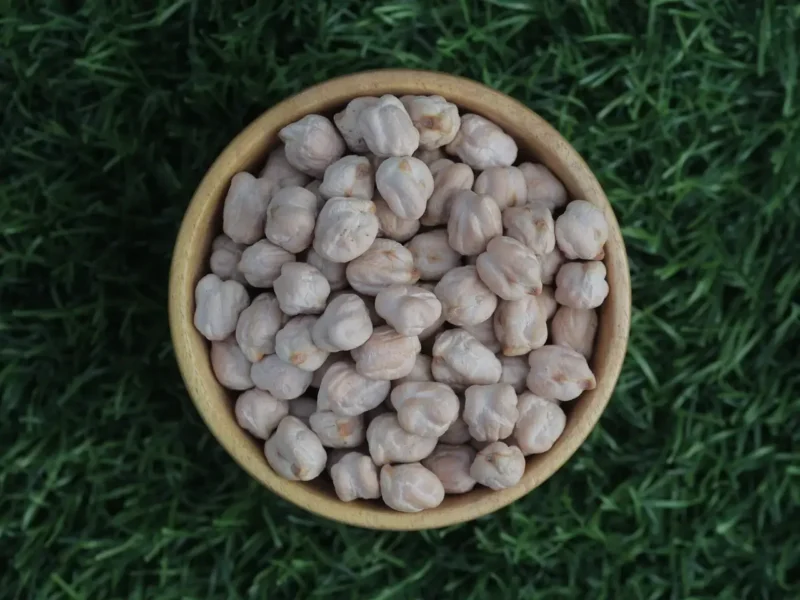
Kabuli and desi chickpeas are two market types of the same plant. They differ in seed size, coat, colour, taste and end use. Desi seeds are small and angular, with a thick, rough coat that ranges from light brown to dark brown or black. Kabuli seeds are large and rounded, with a thin, smooth, cream to beige coat and a shape often described as a “ram’s head”.
The two types also grow in different places. Desi is the main type in South Asia, Ethiopia, Mexico and Iran, mostly in semi-arid areas. Kabuli is the main type in the Mediterranean and the Middle East, in more temperate climates. India grows both, but desi dominates the Indian crop. For a look at colour terms used in the trade, see our article on white vs brown chickpeas.
What Are Kabuli Chickpeas?
Kabuli chickpeas, also called kabuli chana or white chickpeas, are the large, light-coloured chickpeas sold in supermarkets worldwide. In India they are a rabi crop, sown in October and November and harvested from February to April, with market arrivals from March to May. Madhya Pradesh is the main kabuli area, and the bold grades are traded in Indore, Neemuch and Mandsaur.
Kabuli is graded by screen size. Indian exporters quote sizes from 7–8 mm up to 12 mm and above. Buyers abroad often use count per ounce, the number of seeds in 28.35 g. The extra-bold “Dollar” grade is a trade name for kabuli of about 12 mm and above. It is a size grade, not a separate variety. See our kabuli chickpeas page for every export size.
What Are Desi Chickpeas?
Desi chickpeas, also called desi chana, Bengal gram or kala chana, are the small, brown chickpeas that make up most of India’s crop. India is the world’s largest chickpea grower, with about 11.8 million tonnes of gram in 2025-26 according to the Ministry of Agriculture’s second advance estimate. Most of this is desi chana eaten at home.
Desi chana is rarely sold as a whole bean on supermarket shelves outside South Asia. Most of it is processed. Millers dehusk and split it into chana dal, grind it into besan (gram flour), or roast it into roasted chana. Whole desi chana is also cooked into curries such as kala chana. Export grades are usually 5–8 mm, with 98–99% purity and moisture of 12% or less. Our desi chickpeas page has the full specification.

Desi Chana vs Kabuli Chana Compared
The table sets out the main trade and product differences between the two types.
| Feature | Desi chana | Kabuli chana |
|---|---|---|
| Other names | Bengal gram, kala chana, brown chickpea | White chickpea, garbanzo bean, kabuli chana |
| Seed size | Small, about 5–8 mm | Large, about 7–8 mm to 12 mm and above |
| Coat and colour | Thick, rough; light brown to black | Thin, smooth; cream to beige |
| Shape | Angular, wrinkled | Rounded, ram’s-head shape |
| Taste and texture | Nutty, earthy, firm | Mild, buttery, creamy |
| Main uses | Chana dal, besan, roasted chana, curries | Hummus, canning, salads, retail packs |
| Grading | Purity, moisture and defects | Size in mm or count per ounce, plus purity |
| Indian ITC-HS code | 0713 20 20 | 0713 20 10 |
| Share of India’s crop | Most of the crop | Smaller share |
| Container load (20 ft) | About 24–25 MT | About 24–25 MT |
On nutrition, both types are good sources of plant protein and fibre. USDA FoodData Central lists raw chickpeas at about 378 kcal, 20.5 g protein and 12.2 g dietary fibre per 100 g, without splitting the two types. Research reviews, such as Jukanti and colleagues in the British Journal of Nutrition, note that desi seeds have a thicker seed coat and so more fibre. Our guide to chickpea protein and nutrition covers this in more detail.
How Do Taste, Texture and Cooking Use Differ?
Kabuli chana tastes milder and cooks to a soft, creamy texture. Desi chana tastes nuttier and stays firmer. The difference comes mostly from the seed coat. Kabuli’s thin coat softens easily, so the bean blends smoothly. Desi’s thick coat holds the seed together and gives more bite.
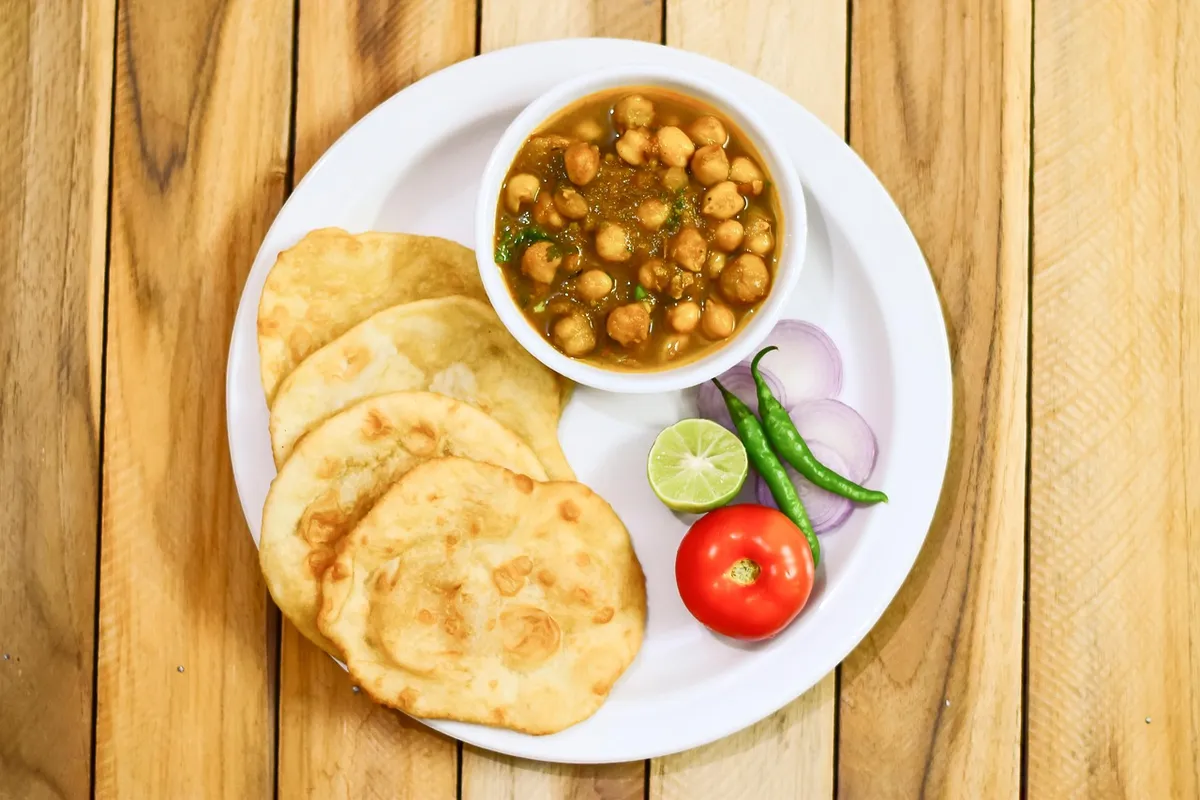
- Kabuli uses: hummus, falafel (often with fava beans in some markets), canned chickpeas, salads, chole and other North Indian curries, and ready meals.
- Desi uses: chana dal for everyday cooking, besan for pakoras, sev, namkeen and sweets, roasted chana snacks, and whole kala chana curries.
Both types need soaking before cooking as whole beans. Kabuli usually cooks faster once soaked because of its thinner coat. For processors, the choice is often fixed by the product: a hummus line needs kabuli, while a besan mill needs desi.

What Size Grades and Market Preferences Apply?
Kabuli is priced by size, while desi is priced mainly on quality and cleaning. The table below shows the common kabuli sizes and their typical uses.
| Kabuli size | Count per ounce | Typical use |
|---|---|---|
| 7–8 mm | About 75/80 | Hummus, canning, flour |
| 9 mm | About 58/60 | Canning, retail, ready meals |
| 10 mm | About 46/48 | Retail packs, canning |
| 11 mm | About 44/46 | Retail packs, salads |
| 12 mm and above (“Dollar”) | About 42/44 | Premium retail, Middle East |
Market preferences follow end use. Gulf and Middle Eastern retail buyers often ask for bold 10–12 mm kabuli. Hummus makers and canners usually buy smaller, lower-cost sizes, since the seed is blended or cooked. Desi chana demand comes from dal millers, besan makers and roasters, and from importers serving South Asian, Middle Eastern and African communities.
For export, kabuli is the more traded type and the faster-growing one from India. India’s chickpea exports (HS 0713 20) rose from about 2.47 lakh tonnes in 2024 to about 3.88 lakh tonnes worth US$ 382 million in 2025, with the UAE, Algeria, Iran, Bangladesh and China as the top buyers (World Bank WITS, UN Comtrade). World kabuli supply also comes from Mexico, Russia, Turkey and Canada, so Indian prices move with those crops.
Which Chickpea Type Suits Which Buyer?
Choose the type by your end product, then fix the grade in the contract.
- Supermarket and retail packers: kabuli, 10–12 mm, sortexed to 99% purity for an even look in clear packs.
- Canners and hummus makers: kabuli, 7–9 mm, for a lower cost per tonne with good cooking yield.
- Dal millers and besan makers: whole desi chana, machine-cleaned or sortexed.
- Roasted snack makers: desi chana for roasted chana with skin, or bold kabuli for some roasted products.
- Ethnic-grocery importers: both types, often alongside chana dal and besan.
Whatever the type, ask for a lot-wise test report for moisture, admixture, pesticide residues and heavy metals. Indian chickpeas are not under increased EU border checks, but every shipment for Europe must meet EU limits, including lead at 0.20 mg/kg and cadmium at 0.040 mg/kg.
Related reading: Chana Dal Plant: How Chickpeas Grow from Sowing to Harvest and Nutritional Value in Chana Dal: Protein, Fibre and Minerals.
Sourcing Desi and Kabuli Chickpeas from India
Whichever side of desi chana vs kabuli chana your business needs, Elysium Agri Corporation can supply it from Jamnagar, Gujarat. We export kabuli, desi and roasted chickpeas. Kabuli comes in every export size from 7–8 mm to 12 mm and above, machine-cleaned and sortexed to 99%+ purity. Desi chana comes machine-cleaned or sortexed for millers and roasters. Every lot is tested for moisture, admixture, pesticide residues, lead and cadmium before loading.
We pack in 25 or 50 kg PP or BOPP bags, jute bags on request or 1 MT jumbo bags, with buyer’s marks or private label on request. A 20 ft container holds about 24–25 MT, and a 40 ft high cube about 26–28 MT; our container load calculator helps you plan. We can also mix raw and roasted chana in one container. Tell us the type, size, quantity and destination port, and we will send an FOB or CIF price with the spec sheet. Request a chickpea quote →
Frequently asked questions
What is the difference between kabuli and desi chickpeas?
Kabuli and desi are two types of the same chickpea species. Kabuli chickpeas are large, cream-coloured and smooth, and are used for hummus, canning and retail packs. Desi chickpeas are small, brown and rough-coated, and are mostly milled into chana dal and besan or roasted. They also carry different Indian export codes: 0713 20 10 and 0713 20 20.
Which is larger, kabuli or desi chana?
Kabuli chana is larger. Export kabuli is sold from about 7–8 mm up to 12 mm and above, while desi chana is usually about 5–8 mm. Kabuli is priced by size, often quoted as count per ounce abroad, so bold 11–12 mm grades cost more than small 7–8 mm grades used for hummus and canning.
Do kabuli and desi chickpeas taste different?
Yes. Kabuli chickpeas have a mild, buttery taste and cook to a soft, creamy texture, which suits hummus and salads. Desi chickpeas taste nuttier and earthier and stay firmer because of their thick seed coat. Desi chana is preferred for dal, besan and roasted snacks, where its stronger flavour and firm bite are wanted.
Which chickpea type is more in demand for export?
Kabuli is the more traded type internationally, as it is used for hummus, canning and supermarket packs. India's chickpea exports reached about 3.88 lakh tonnes worth US$ 382 million in 2025, led by the UAE, Algeria and Iran. Desi chana is mostly consumed in India, but there is steady export demand from millers and South Asian markets.
Can desi chickpeas be used instead of kabuli chickpeas?
In many home recipes, yes, but the result differs. Desi chickpeas give a firmer, nuttier dish and a darker colour, and they make a grainier hummus. For commercial hummus, canning and retail packs, buyers expect kabuli. For besan, chana dal and roasted chana, desi is the standard choice, so most processors keep the two types separate.
Related reads


