
On this page
- How Do Chickpeas Grow?
- What Does the Chickpea Plant Look Like?
- Chana Dal, Chana and Chickpea: What Do the Terms Mean?
- What Climate and Soil Do Chickpeas Need?
- What Are the Growth Stages from Sowing to Harvest?
- When Is the Chickpea Harvest Season in India?
- How Do Harvested Chickpeas Become Export Products?
- Sourcing Chickpeas from India
- Frequently asked questions
Chickpeas grow on a small, bushy, hairy annual plant, Cicer arietinum, that is sown in cool, dry weather and produces short pods holding one or two seeds each. The chana dal plant is the same plant: chana dal is simply desi chickpeas that have been dehusked and split. In India, chickpeas are a rabi (winter) crop, sown in October and November and harvested from February to April. This guide explains the plant, its climate and soil needs, its growth stages and how the harvest becomes export-ready chickpeas.
Key takeaways
- Chickpea, chana, gram and Bengal gram all refer to the same plant, Cicer arietinum. Chana dal is split, dehusked desi chickpea.
- The plant grows about 30 to 70 cm tall, is covered in fine glandular hairs and pollinates itself.
- It needs cool days, well-drained soil and little water, and it is sensitive to waterlogging and frost at flowering.
- In India it is sown in October and November, harvested from February to April, and new-crop arrivals peak from March to May.
How Do Chickpeas Grow?
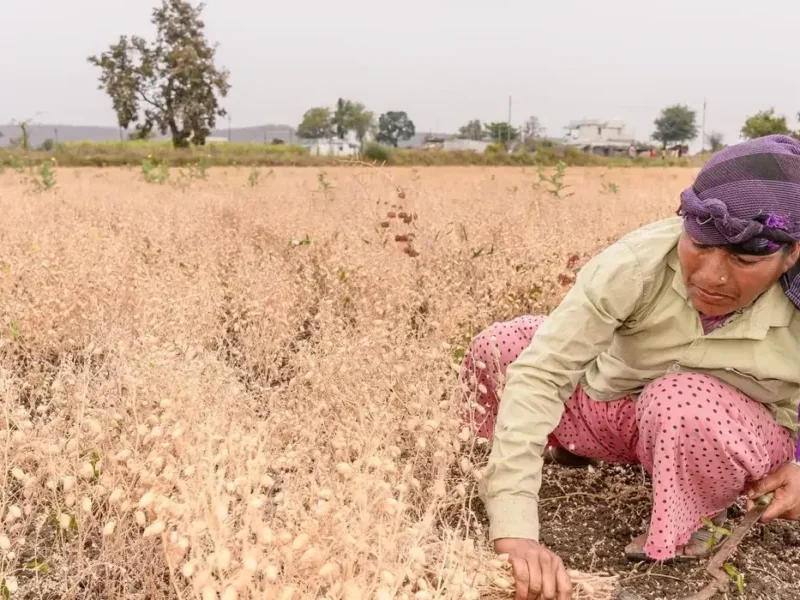
Chickpeas grow from seed in a single season. Farmers sow the seed into soil that still holds moisture from the monsoon. The plant then grows through the cool winter months mostly on that stored moisture, flowers, sets pods and dries off as temperatures rise in spring. The dry plants are cut or pulled, threshed, and the seeds are cleaned for sale.
Chickpea is one of the oldest cultivated pulses and is well suited to dry farming. ICRISAT researchers describe it as the most drought-resistant cool-season grain legume. Like other legumes, it fixes nitrogen from the air through bacteria in its root nodules, so it needs little nitrogen fertiliser and improves the soil for the next crop.
What Does the Chickpea Plant Look Like?
The chickpea plant is a small, branching herb with feathery leaves and short, puffy pods. According to the ICRISAT chickpea seed production manual, it has these features:
- Height: about 30 to 70 cm, with an upright or spreading habit depending on the variety.
- Leaves: compound leaves with 5 to 17 small, toothed leaflets.
- Hairs: the whole shoot is covered with fine hairs, many of them glandular. These release an acidic liquid that helps protect the plant from some insects.
- Flowers: small, pea-like flowers in white, pink or blue. They are self-pollinated, usually before the flower opens.
- Pods: short, inflated pods that hold usually one seed, sometimes two.
- Roots: a deep taproot that lets the plant reach moisture lower in the soil.
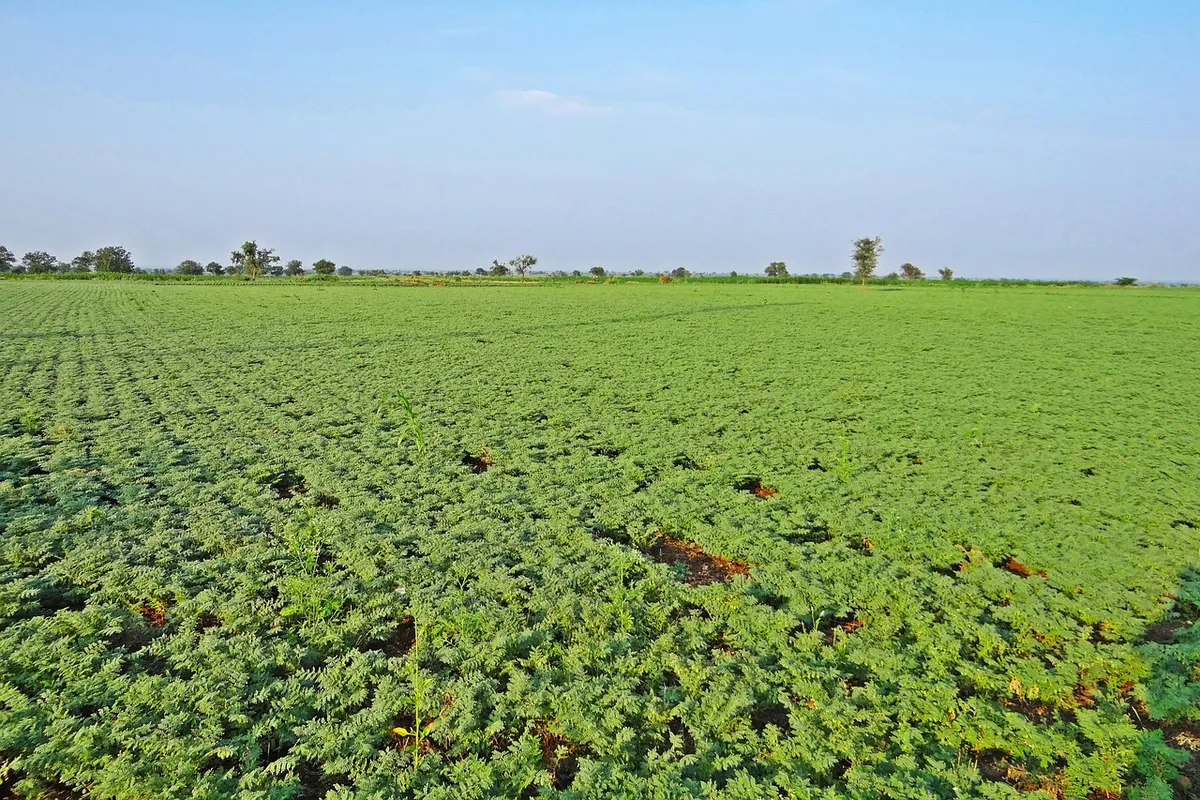
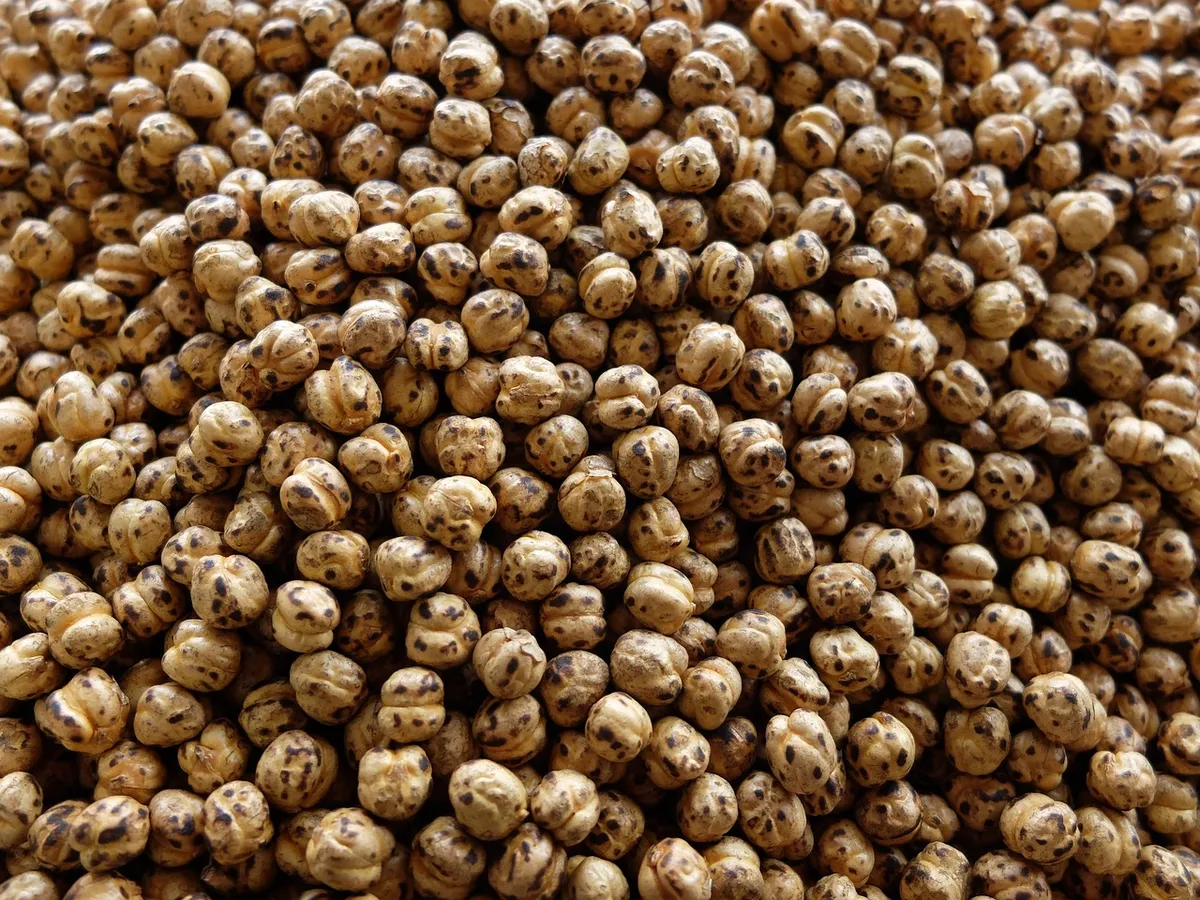
The seed type depends on the variety. Desi chickpeas have small, angular, brown seeds with a thick, rough coat, and they usually have pink or purple flowers. Kabuli chickpeas have larger, rounder, cream-coloured seeds with a thin coat, and usually white flowers. Our article on white vs brown chickpeas compares the two types in detail.
Chana Dal, Chana and Chickpea: What Do the Terms Mean?
All of these names come from the same plant, but they describe different products. The confusion is common in Indian and international trade, so it helps to define each term.
- Chickpea: the English name for the plant and its seed, Cicer arietinum.
- Chana or gram: the Hindi and Indian trade names for chickpeas. “Bengal gram” usually means desi chickpeas.
- Kala chana: whole desi chickpeas with the dark brown coat on.
- Kabuli chana: the large, cream-coloured chickpea used for hummus and chole.
- Chana dal: desi chickpeas that have been dehusked and split into two yellow halves.
- Besan: gram flour, milled from chana dal.
So there is no separate chana dal plant. Chana dal is made in a dal mill from the seeds of the desi chickpea plant. Kabuli chickpeas are not usually used for chana dal.
What Climate and Soil Do Chickpeas Need?
Chickpeas need a cool, dry growing season and deep, well-drained soil. They grow best with mild days and cool nights, and they do not like heavy rain or standing water.
- Temperature: the ICRISAT manual notes that the crop is sensitive at the reproductive stage to daily maximum temperatures above 35°C and to temperatures below 15°C. Cold and frost at flowering can cause flowers and young pods to drop.
- Water: the crop usually grows on moisture stored in the soil after the monsoon, with one or two irrigations where water is available.
- Soil: deep, neutral to alkaline sandy loams, clay loams and well-drained clays with a pH of about 5.5 to 9.0. The black cotton soils of central and western India suit the crop well.
- Problems: chickpea is sensitive to waterlogging, salinity, sodicity and boron toxicity.
These needs explain where India grows its chickpeas: mainly in the dry, black-soil areas of Madhya Pradesh, Maharashtra, Rajasthan, Gujarat, Karnataka and Andhra Pradesh.
What Are the Growth Stages from Sowing to Harvest?
A chickpea crop moves through five main stages, from emergence to maturity. In India the full cycle usually takes about three to five months, depending on the variety, the region and the weather. Early varieties in warmer central and southern areas mature faster than crops in the cooler north.
| Stage | What happens | Typical timing in India |
|---|---|---|
| Sowing and emergence | Seed is sown into moist soil; seedlings appear | Sown October–November; emergence 7–15 days after sowing |
| Vegetative growth | Branches and leaves develop; root nodules fix nitrogen | About 40–80 days, depending on variety |
| Flowering | Self-pollinated flowers open on the branches | December–January in most areas |
| Pod setting and seed filling | Pods form about 6 days after fertilisation, grow fast for 10–15 days, then fill with seed | January–February |
| Maturity and harvest | About 90% of stems and pods turn light golden yellow; plants are cut and threshed | February–April |
Chickpea growth stages and typical timing in India, based on the ICRISAT seed production manual and Indian crop seasons.
Harvest timing matters for quality. ICRISAT notes the crop is ready when seed moisture falls to about 15%, after which it is dried further before storage. Harvesting too early gives green, shrivelled seeds, while late harvesting can cause pods to shatter and seeds to crack.
When Is the Chickpea Harvest Season in India?
The chickpea harvest in India runs from February to April. Harvest starts earlier in the south and centre and moves north as the season goes on. New-crop kabuli and desi chickpeas reach the Indore, Rajasthan and Gujarat markets from March to May, which is usually the best time to book a new-crop contract. Our crop calendar shows this window next to other Indian crops.
India is the world’s largest chickpea producer. It grew about 11.8 million tonnes of gram in 2025-26, and most of it was desi. The size of each crop depends on post-monsoon soil moisture and on winter temperatures at flowering, so prices often move once the condition of the crop becomes clear in January and February.
How Do Harvested Chickpeas Become Export Products?
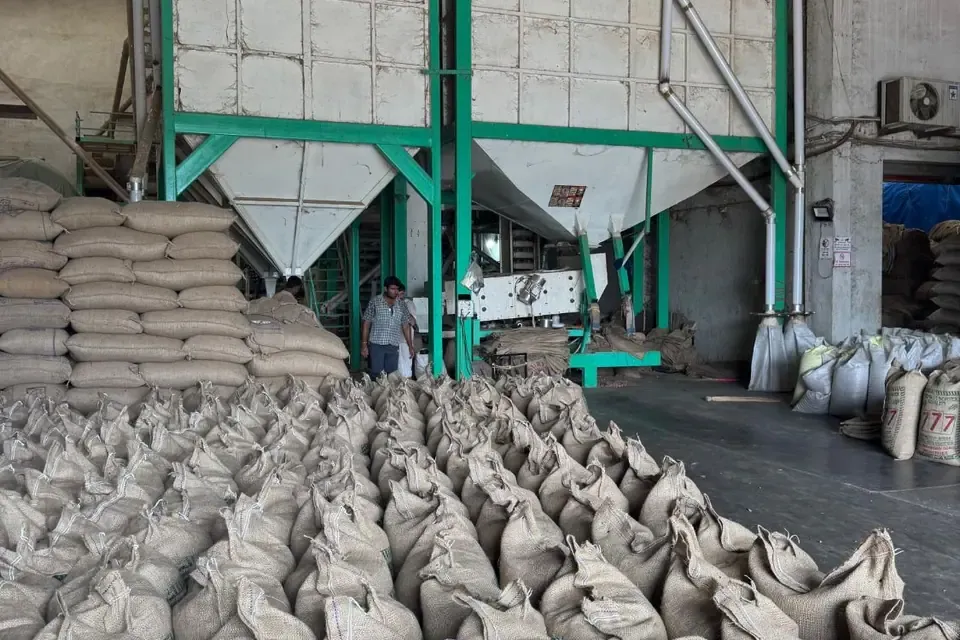
After threshing, chickpeas are dried, cleaned, graded and either packed whole or processed further. The main steps are:
- Drying: the seed is dried to a safe moisture level for storage and shipping.
- Cleaning: machines remove dust, stones, straw and other seeds.
- Grading: kabuli chickpeas are graded by size in millimetres, and desi chickpeas by boldness and uniformity.
- Sorting: colour sorters (sortex) remove discoloured, damaged and insect-bored seeds.
- Processing: desi chickpeas may be split into chana dal, milled into besan or roasted into roasted chana.
- Testing and packing: each lot is tested and packed in bags for export.
Chickpeas are valued for their plant protein and fibre. Our guide to chickpea protein and nutrition covers the nutrient profile in more detail.
Related reading: Desi Chana vs Kabuli Chana: How the Two Chickpeas Differ and Roasted Chana Benefits: Nutrition, Protein and Fibre per 100g.
Sourcing Chickpeas from India
Knowing how the chana dal plant grows helps you plan purchases around the Indian crop. Book new-crop chickpeas from March to May, name the crop year in the contract, and ask for lot-wise test reports for moisture, admixture, pesticide residues and heavy metals. Our guide to importing chickpeas and pulses from India covers documents, shipping and payment.
Elysium Agri Corporation is a chickpeas exporter based in Jamnagar, Gujarat. We supply kabuli chickpeas in sizes from 7–8 mm to 12 mm+, whole desi chickpeas, and roasted chana with skin, without skin and split. Every lot is sortex-cleaned and tested to EU limits, and we serve importers, canners, hummus and snack makers, dal millers and ethnic-food distributors.
Tell us the type, size, quantity and destination port, and we will send an FOB or CIF price with the specification sheet. Request a chickpeas quote →
Frequently asked questions
What does a chickpea plant look like?
A chickpea plant is a small, bushy annual herb about 30 to 70 cm tall. It has feathery compound leaves with small toothed leaflets, and the whole plant is covered in fine glandular hairs. It bears small white, pink or blue flowers and short, puffy pods that usually hold one seed, sometimes two.
How long does it take for chickpeas to grow?
Chickpeas usually take about three to five months from sowing to harvest, depending on the variety, region and weather. Seedlings emerge one to two weeks after sowing, the vegetative stage lasts roughly 40 to 80 days, and flowering, pod setting and seed filling follow. Early varieties in warmer areas of India mature faster than crops in the north.
When is the chickpea harvest season in India?
In India, chickpeas are a rabi crop sown in October and November and harvested from February to April. Harvest begins earlier in central and southern India and moves north. New-crop kabuli and desi chickpeas reach the Indore, Rajasthan and Gujarat markets from March to May, which is usually the best time to book.
What soil and climate do chickpeas need?
Chickpeas need a cool, dry season and deep, well-drained soil. Sandy loams, clay loams and well-drained clays with a pH of about 5.5 to 9.0 suit the crop. It grows mainly on stored soil moisture and is sensitive to waterlogging, salinity and frost or heat above 35 degrees Celsius at flowering.
Is chana dal made from the same plant as chickpeas?
Yes. Chana dal comes from the chickpea plant, Cicer arietinum. It is made from desi chickpeas, the small brown type, which are dehusked and split into two yellow halves in a dal mill. There is no separate chana dal plant. Kabuli chickpeas come from the same species but are a different seed type.
Related reads


