
On this page
- What Is the Difference Between White and Brown Chickpeas?
- What Are White (Kabuli) Chickpeas?
- What Are Brown (Desi) Chickpeas?
- How Do White and Brown Chickpeas Compare?
- How Are White and Brown Chickpeas Used in Cooking and Processing?
- Which Grades and Sizes Are Used in Trade?
- How Do You Buy White or Brown Chickpeas in Bulk from India?
- Frequently asked questions
Chickpeas white in colour are kabuli chickpeas: large, cream-coloured seeds with a thin, smooth coat. Brown chickpeas are desi chickpeas: smaller, darker seeds with a thick, rough coat. Both are the same species, Cicer arietinum, but they differ in size, use, grading and price. This guide compares white vs brown chickpeas for importers, canners, millers and snack makers.
Key takeaways
- White (kabuli) chickpeas are sold by size, from 7–8 mm to 12 mm and above, and are used for hummus, canning and retail packs.
- Brown (desi) chickpeas are 5–8 mm and are used mainly for chana dal, besan (gram flour) and roasted chana.
- Desi chana makes up most of India’s crop, while kabuli exports have grown quickly.
- Kabuli costs more than desi, and the price rises with seed size.
What Is the Difference Between White and Brown Chickpeas?
The main difference is the type of plant. White chickpeas come from the kabuli type, and brown chickpeas come from the desi type. Kabuli seeds are larger, rounder and lighter in colour. Desi seeds are smaller, angular and brown to black. The two types are grown, graded and sold as separate products.
The seed coat matters most for processing. Kabuli has a thin coat, so it cooks evenly and blends to a smooth texture. Desi has a thick coat that is easy to remove in a dal mill, leaving the yellow split kernel called chana dal. India is the world’s largest chickpea grower, with about 11.8 million tonnes of gram in 2025-26, and most of that crop is desi.
What Are White (Kabuli) Chickpeas?
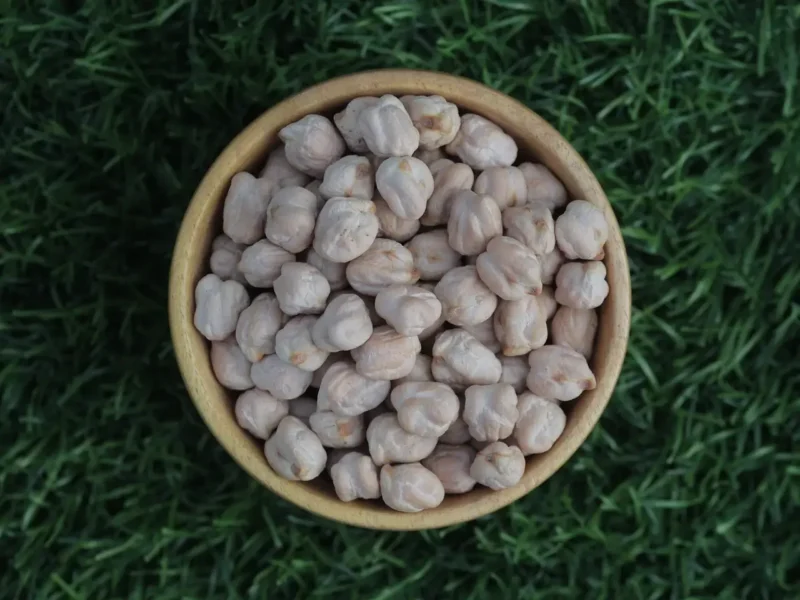
White chickpeas, also called kabuli chana or garbanzo beans, are the large, cream to light beige chickpeas found in most supermarkets outside South Asia. They have a rounded, “ram’s head” shape and a smooth coat.
In India, kabuli is a rabi crop sown in October and November and harvested from February to April. Common Indian varieties include KAK 2, JGK 1–3, Kripa and PKV Kabuli 4-1. The trade sells kabuli by screen size in millimetres and, abroad, by count per ounce. Larger sizes such as 12 mm “Dollar” and 13–14 mm “Double Dollar” sell at a premium for retail and the Middle East market.
Kabuli is also grown in Mexico, Canada, Turkey, Russia and other countries, so Indian kabuli competes on price, size range and supply timing. Buyers usually compare origins on seed size, colour, price and freight time to their own port.
What Are Brown (Desi) Chickpeas?
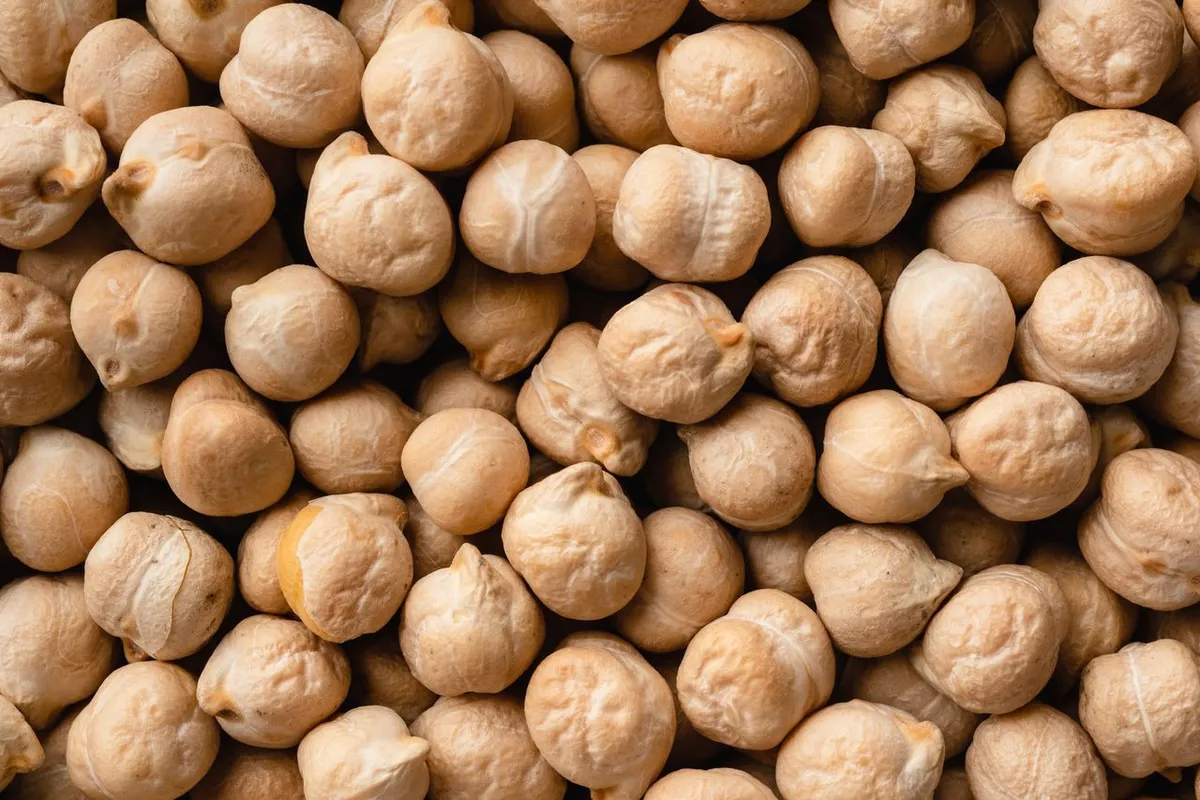
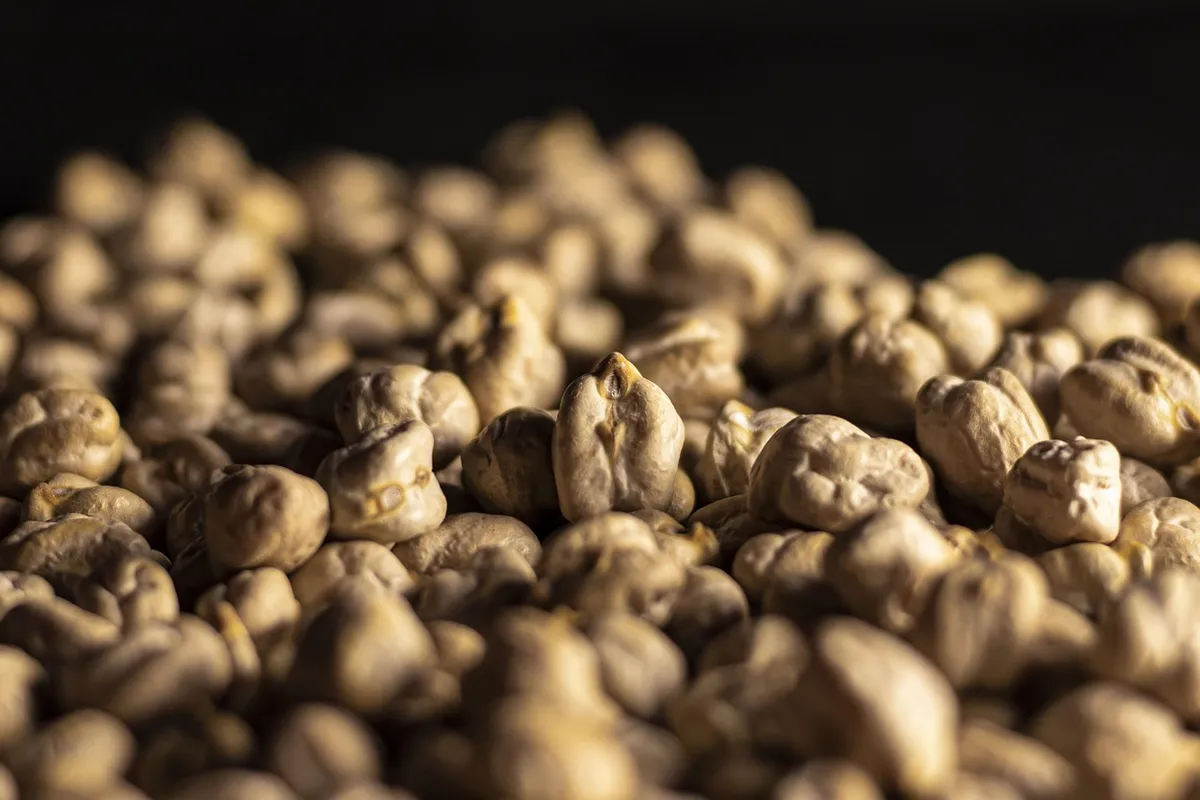
Brown chickpeas, also called desi chana, Bengal gram or kala chana, are the small, dark chickpeas that make up most of India’s chickpea crop. Their colour ranges from light brown to almost black, and their coat is thick and rough.
Desi chickpeas are also a rabi crop, grown widely in Madhya Pradesh, Rajasthan, Maharashtra and Gujarat. Common varieties include JG 11, JG 14, RSG 888 and Vijay. In India, most desi chana is split into chana dal or ground into besan. Whole desi chickpeas are cooked in curries, sprouted, or roasted as a snack. Export demand comes mainly from South Asian, Middle Eastern and African buyers, and from millers who make dal and gram flour.
How Do White and Brown Chickpeas Compare?
The table compares white vs brown chickpeas on the points that matter in trade.
| Point | White (kabuli) | Brown (desi) |
|---|---|---|
| Other names | Kabuli chana, garbanzo | Desi chana, Bengal gram, kala chana |
| Colour and coat | Cream to light beige; thin, smooth coat | Light brown to black; thick, rough coat |
| Shape | Large, rounded | Small, angular |
| Size | 7–8 mm to 12 mm+ (up to 13–14 mm) | 5–7 or 6–8 mm |
| Count per ounce | 75/80 (small) to 38/40 (largest) | Not usually sold by count |
| Share of India’s crop | Smaller share | Most of the crop |
| Main uses | Hummus, canning, salads, retail packs | Chana dal, besan, roasted chana, curries |
| Typical purity | 99% min, sortex-cleaned | 98–99% |
| HS code (India) | 0713 20 10 | 0713 20 20 |
| Price | Higher, rising with size | Lower |
White vs brown chickpeas compared for export buyers.
On nutrition, both types are good sources of plant protein and fibre. Desi chickpeas usually contain more fibre because of their thicker seed coat. For most food uses, the choice is driven by texture, appearance and cost rather than by nutrition.
How Are White and Brown Chickpeas Used in Cooking and Processing?
White chickpeas are used where the whole seed or a smooth texture is wanted. Brown chickpeas are used where the seed is split, milled or roasted.
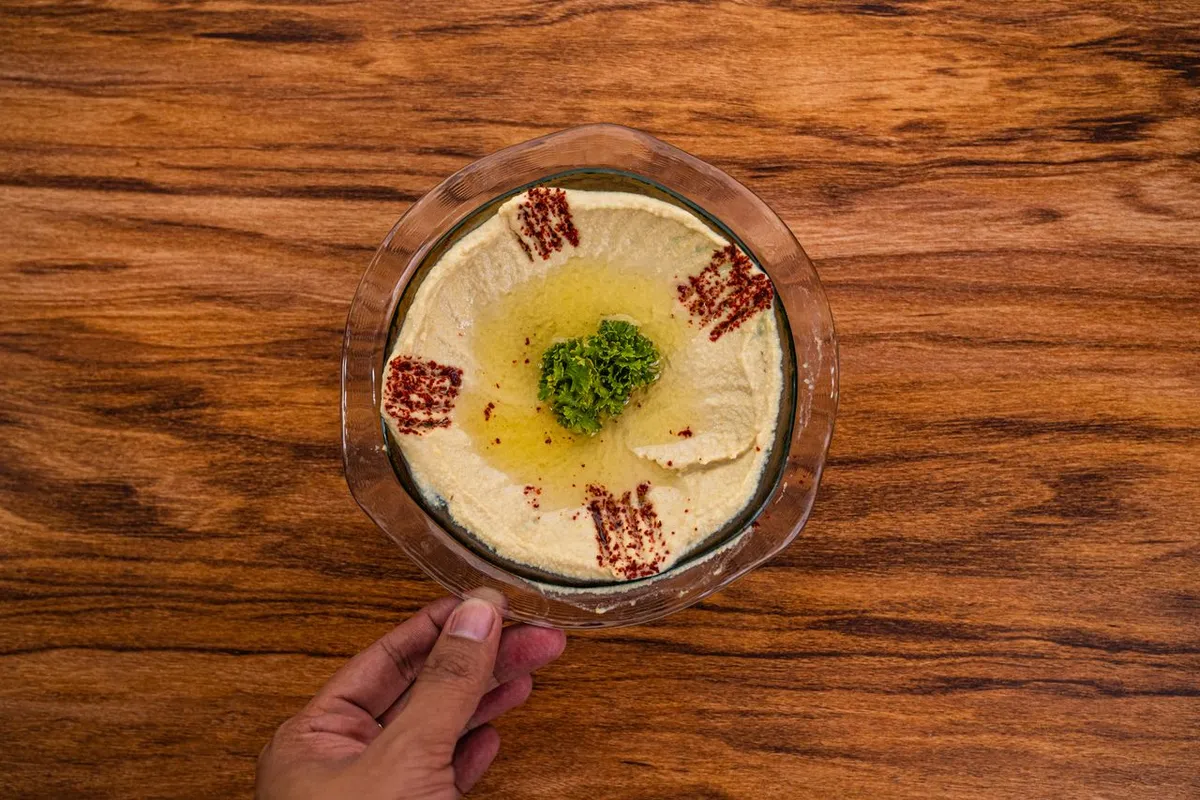
- Hummus and dips: kabuli is the standard choice. Its thin coat blends into a smooth, pale paste. Small and medium sizes are often used because they cost less.
- Canning and ready meals: canners prefer 9–10 mm kabuli with a uniform size, so that every seed cooks evenly in the can.
- Retail packs and salads: bold 11–12 mm kabuli looks best in clear packs and salads.
- Chana dal: desi chickpeas are dehusked and split in dal mills.
- Besan (gram flour): desi chana dal is ground into besan for pakoras, sweets and snacks.
- Roasted chana: desi chickpeas are roasted with or without skin, or split, as a ready-to-eat snack.
Kabuli chickpea flour also exists and is used in some gluten-free bakery products, but besan made from desi chickpeas is the traditional and lower-cost gram flour. For roasting, desi chana is the usual choice in India because the roasted kernel is crisp and has a strong nutty flavour.
Which Grades and Sizes Are Used in Trade?
Kabuli is graded by size and count, while desi is graded mainly by size range, purity and the share of damaged seeds. Write the grade into your contract with clear limits.
For kabuli, the common Indian sizes are 7–8, 9, 10, 11, 12 and 12+ mm. A 9 mm lot is about 58/60 count per ounce, 10 mm about 46/48 and 12 mm about 42/44. Typical export limits are 99% minimum purity, 12% maximum moisture, foreign matter of 0.2–0.5% and broken or split seeds of 1% or less. For desi, typical limits are 98–99% purity, 12% maximum moisture, 0.5% foreign matter and up to 2% damaged or discoloured seeds. Both types are tested for pesticide residues, lead and cadmium against the rules of your market, and the international baseline is Codex Standard CXS 171-1989 for pulses.
Cleaning level is the second grade choice. Machine-cleaned chickpeas are destoned and size-graded, and they suit dal millers, flour makers and canners that clean again in their own plant. Sortex-cleaned chickpeas also pass an optical sorter that removes off-colour, damaged and stained seeds. Retail packers usually need sortex grades, because buyers see every seed through the pack. Ask for the same cleaning level on the sample and on the shipment, and check the sample under good light for colour uniformity.
Packing is similar for both types. Export chickpeas are usually packed in new 25 or 50 kg PP or BOPP bags, with or without a liner, or in 1 MT jumbo bags for millers. Your own marks or retail-ready private label packs can be arranged. Liners help on long voyages to humid ports, because chickpeas can pick up moisture and lose colour. Our packaging page shows the main bag types.
Ask for the crop year on every contract. New-crop chickpeas arrive from March to May, and older seed can darken and take longer to cook. Our crop calendar shows the harvest and arrival windows.
Related reading: Chickpea Nutrition: Protein per 100g, Fibre and Minerals and Desi Chana in English: Names, Types and Forms Explained.
How Do You Buy White or Brown Chickpeas in Bulk from India?
Choose chickpeas white or brown by end use, then name the size or count, purity, moisture and safety limits in your enquiry. Ask for a pre-shipment sample and a lot-wise Certificate of Analysis. India’s chickpea exports reached about 3.88 lakh tonnes worth US$ 382 million in 2025, with the UAE, Algeria, Iran, Bangladesh and China as the top buyers.
Elysium Agri Corporation exports kabuli chickpeas in every size from 7–8 mm to 12 mm and above, sortex-cleaned to 99%+ purity, and whole desi chickpeas for dal millers, besan makers and roasters. We also supply roasted chickpeas, and raw and roasted chana can share one container. A 20 ft container holds about 24–25 MT. See our full chickpea range and our lab testing panel.
Tell us the type, size, quantity and destination port, and we will send an FOB or CIF price with the specification sheet. Request a chickpea quote →
Frequently asked questions
What is the difference between white and brown chickpeas?
White chickpeas are the kabuli type: large, cream-coloured and rounded, with a thin, smooth coat. Brown chickpeas are the desi type: smaller, angular and brown to black, with a thick, rough coat. Kabuli is used for hummus, canning and retail packs, and desi for chana dal, besan and roasted chana.
Are white chickpeas the same as kabuli chana?
Yes. White chickpeas, kabuli chana and garbanzo beans are names for the same kabuli type of chickpea. In India it is sold by screen size, from 7–8 mm up to 12 mm and above, and abroad often by count per ounce. Larger sizes such as the 12 mm Dollar grade cost more.
Are brown chickpeas the same as desi chana?
Yes. Brown chickpeas are desi chana, also called Bengal gram or kala chana when the seed is very dark. Desi chickpeas are small, usually 5–8 mm, with a thick, rough coat. They make up most of India's chickpea crop and are mainly split into chana dal or ground into besan.
Which chickpea type is larger?
White kabuli chickpeas are larger. Export kabuli ranges from about 7–8 mm up to 13–14 mm for the Double Dollar grade, or about 75/80 to 38/40 seeds per ounce. Brown desi chickpeas are usually only 5–7 or 6–8 mm, and are traded by size range rather than by count.
Which chickpeas are better for roasting and flour?
Brown desi chickpeas are the usual choice for both. Roasted desi chana is crisp with a strong nutty taste, and is sold with skin, without skin or split. Besan, the traditional gram flour, is milled from desi chana dal. Kabuli flour exists but is less common and costs more.
Related reads


