On this page
- What Is the Difference Between Red and Green Lentils?
- How Is Each Lentil Type Processed?
- Green Lentils vs Red Lentils: How Does Nutrition Compare?
- What Does the Research Say?
- How Do Cooking Behaviour and Texture Differ?
- What Are the Best Uses for Each Lentil?
- How Do You Buy Red and Green Lentils in Bulk from India?
- Frequently asked questions
In the green lentils vs red lentils comparison, the main difference is processing: red lentils are usually sold dehulled and often split, so they cook in minutes and turn soft, while green lentils are sold whole with their seed coat, so they keep their shape and take longer to cook. Their protein and energy per 100 g are very similar. This guide compares how each is processed, their nutrition, what research says, how they cook and which buyers should choose each one.
Key takeaways
- Both are the same species, Lens culinaris; the difference is cotyledon colour, seed size and whether the seed coat is removed.
- USDA data shows almost the same protein: about 24 g per 100 g for raw red lentils and 24.6 g for raw whole lentils.
- The seed coat carries most of the polyphenols, so whole green lentils keep more of them than dehulled red lentils.
- Red split lentils cook in about 5–7 minutes; whole lentils take about 15–20 minutes.
What Is the Difference Between Red and Green Lentils?
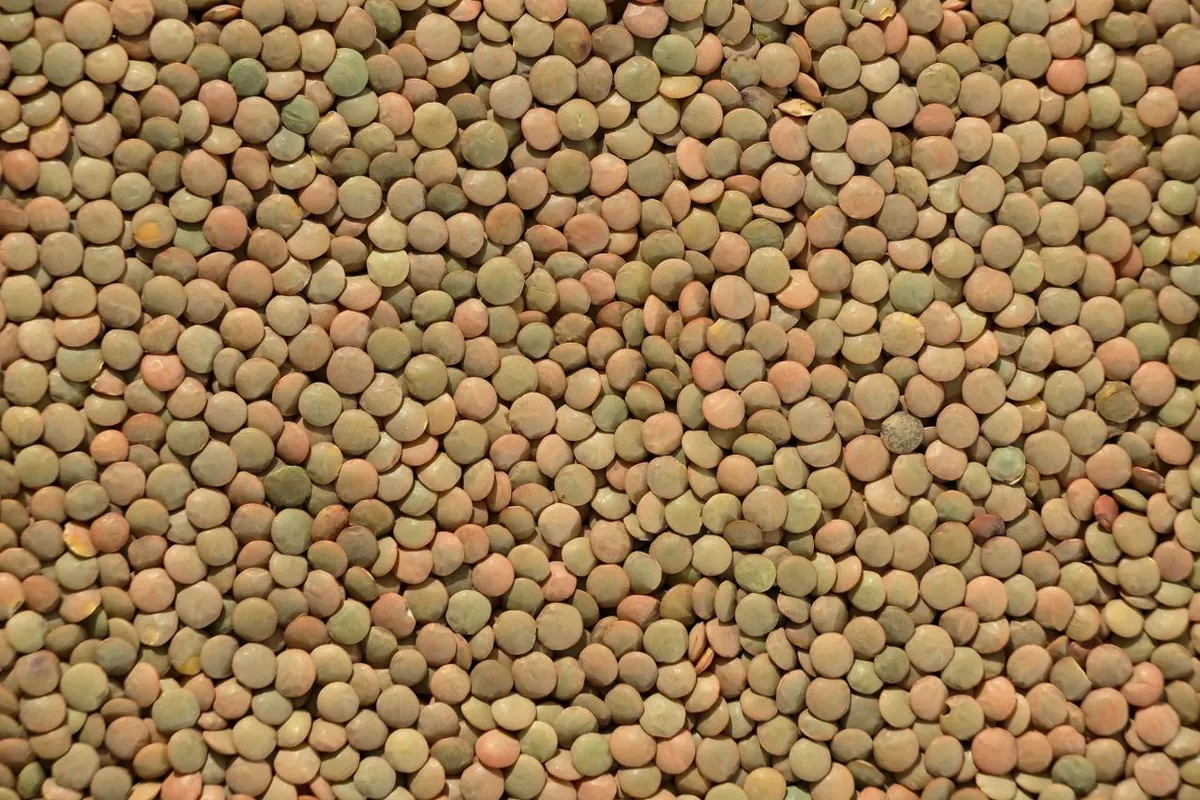
Red and green lentils are both Lens culinaris. The differences are in the seed and in how it is sold. Red lentils have an orange-red inside (cotyledon) and a brown seed coat. About 90–95% of red lentils are sold dehulled, either whole as “football” lentils or split as masoor dal. Green lentils have a green seed coat and a yellow inside, and they are almost always sold whole.
Origin differs too. India grows mainly red lentils (masoor) and is also one of the world’s largest lentil importers. Most of the world’s green lentils are grown in Canada, and green lentils are traded in Canadian size classes. Our guide to types of lentils covers other kinds, such as brown, black and French green lentils.
| Feature | Red lentils | Green lentils |
|---|---|---|
| Inside colour | Orange-red | Yellow |
| Usual form | Dehulled whole (football) or split (masoor dal) | Whole, seed coat on |
| Main origins | India, Canada, Australia | Mainly Canada |
| Size classes | Whole, football, split | Large (Laird type, 6–7 mm), medium (Richlea type), small (Eston type) |
| Texture when cooked | Soft, breaks down | Firm, keeps shape |
| HS code | 0713 40 00 | 0713 40 00 |
How Is Each Lentil Type Processed?
Red lentils go through more processing. After cleaning, the whole seed is dehulled in a mill that removes the brown seed coat. The dehulled seed is sold whole as football lentils, or it is split into two halves to make red split lentils (masoor dal or malka). The product is then sortexed by colour, graded and packed. Some whole red lentils, called whole masoor, are sold with the seed coat still on for Indian dal recipes.

Green lentils need less processing. They are cleaned, graded by size and colour, and packed whole. The seed coat stays on, which protects the seed and helps it hold its shape in cooking. Grading focuses on seed size, colour, damage and foreign material. Our export green lentils follow the Canadian No. 1–2 grades, with 99% purity and moisture of 13% maximum.
Moisture limits differ by form. FSSAI sets a legal maximum of 14% for whole lentils and 12% for dehusked or split lentils. Our red lentil specification is benchmarked to Codex CXS 171-1989, FSSAI and the Canadian No. 2 lentil grade. Extraneous matter is held at 1% maximum, with mineral matter at 0.25% and matter of animal origin at 0.10% maximum. Because dehulling exposes the inside of the seed, red lentils are also checked for peeled, split and broken seeds, which affect both appearance and cooking.
Green Lentils vs Red Lentils: How Does Nutrition Compare?
Red and green lentils have very similar energy, protein and fibre per 100 g. USDA FoodData Central has a separate entry for raw pink or red lentils. It has no separate entry for green lentils, so the table uses the general “lentils, raw” entry, which describes whole lentils with the seed coat on, the form green lentils are sold in.
| Per 100 g, raw | Red lentils (USDA) | Whole lentils (USDA, green/brown type) |
|---|---|---|
| Energy | 358 kcal | 353 kcal |
| Protein | 23.9 g | 24.6 g |
| Fat | 2.2 g | 1.0 g |
| Carbohydrate | 63.1 g | 63.4 g |
| Dietary fibre | 10.8 g | 10.7 g |
| Iron | 7.4 mg | 6.5 mg |
| Folate | 204 µg | 479 µg |
| Potassium | 668 mg | 676 mg |
| Magnesium | 59 mg | 47 mg |
| Zinc | 3.6 mg | 3.3 mg |
The largest difference in this data is folate, which is more than twice as high in whole lentils. The other values are close, and they vary by variety, growing area and lab method. For a nutrition label, use an analysis of your own lot rather than a database value.
What Does the Research Say?
Research shows that the seed coat is where most lentil polyphenols sit. A review by Ganesan and Xu in the International Journal of Molecular Sciences (2017) notes that lentil seed coats have higher amounts of flavan-3-ols, proanthocyanidins and some flavonols. The review suggests that lentils with green and grey seed coats may be more promising for a health-promoting diet.
Because red lentils are usually dehulled, they lose most of the seed coat and so most of these compounds. Whole green lentils keep them. This does not make red lentils a poor food. They still give similar protein, fibre and minerals, and they cook much faster. The evidence on polyphenols comes mostly from laboratory and composition studies, so it should not be read as a health claim for either product.
How Do Cooking Behaviour and Texture Differ?
Red lentils cook much faster and become soft. According to Saskatchewan Pulse Growers, split red lentils usually cook in about 5–7 minutes, while whole lentils take about 15–20 minutes. Neither needs soaking. Both use about three parts liquid to one part dry lentils.
Texture follows from the seed coat. Without it, red lentils absorb water quickly and break down into a smooth, thick purée. That is why they suit dal, soups and sauces. Green lentils keep their seed coat, so they stay whole and slightly firm, which suits salads, side dishes and canned products where the lentil must hold its shape. Large green lentils take a little longer than small ones.
What Are the Best Uses for Each Lentil?
Choose red lentils when you want speed and a smooth texture, and green lentils when you want whole, separate seeds.
- Red split lentils: masoor dal, lentil soups, sauces, baby food, ready meals and lentil flour for pasta and snacks.
- Red football lentils: Middle Eastern soups and retail packs where a whole, bright seed is wanted.
- Whole masoor: traditional Indian whole dal dishes.
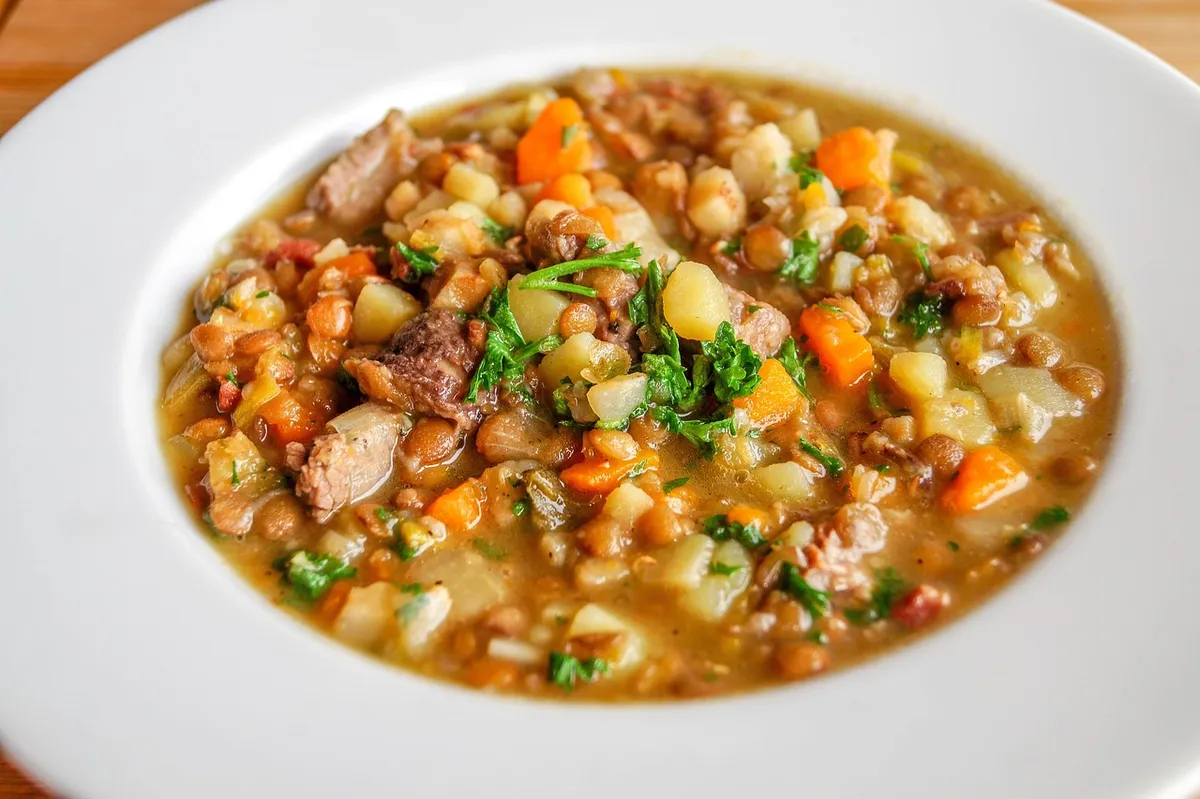
- Green lentils: salads, stews, side dishes, canned lentils and ready meals where seeds must stay intact.
For food manufacturers, the choice also affects the process. Red split lentils take up water quickly and are a common base for lentil flour, soups and ready meals made at scale. Green lentils need longer cooking but give the whole-seed look that shoppers expect in salads and canned products.
Can you substitute one for the other? Yes, in many recipes, but adjust the cooking time and expect a different texture. Red lentils will thicken a dish, while green lentils will stay separate. For Indian names of lentils and other pulses, see our guide to types of dal.
Related reading: Types of Urad Dal: Whole, Chilka, Gota and Dhuli Explained and Green Gram Nutrients: Moong Nutrition Facts per 100g.
How Do You Buy Red and Green Lentils in Bulk from India?
Start your green lentils vs red lentils decision with your end use, then write a clear specification. For red lentils, name the form (whole, football or split), moisture, broken and admixture limits, and the pesticide and heavy-metal tests you need. For green lentils, name the size class, grade and origin. India’s lentil exports, mostly milled red lentils, reached about 1.69 lakh tonnes in 2024.
Elysium Agri Corporation exports red lentils as whole masoor, football and split, cleaned, milled where needed, sortexed and tested for moisture, admixture, pesticides including glyphosate, and heavy metals. We also supply green lentils in large, medium and small classes, with the origin of every lot stated on the contract, and we can combine them with Indian pulses in one container. A 20 ft container holds about 24–25 MT; you can check loads with our container load calculator. Our lab testing page sets out the full test panel.
Tell us the lentil type, grade, quantity and destination port, and we will send a specification sheet and price. Request a lentils quote →
Frequently asked questions
What is the difference between red and green lentils?
Both are Lens culinaris, but red lentils have an orange-red inside and are usually sold dehulled, either whole as football lentils or split as masoor dal. Green lentils have a green seed coat and yellow inside and are sold whole. As a result, red lentils cook quickly and turn soft, while green lentils take longer and keep their shape.
Which lentils have more protein, red or green?
Their protein is almost the same. USDA FoodData Central lists raw red lentils at about 23.9 g of protein per 100 g and raw whole lentils, the green and brown type, at about 24.6 g. Values vary by variety, growing area and lab method, so the difference is too small to matter for most buyers or recipes.
Which lentils cook faster, red or green?
Red lentils cook faster because they have no seed coat and are often split. Saskatchewan Pulse Growers gives about 5 to 7 minutes for split red lentils and about 15 to 20 minutes for whole lentils such as green lentils. Neither type needs soaking. Red lentils break down into a purée, while green lentils stay whole.
Can you substitute red lentils for green lentils?
Yes, in many recipes, but the result will change. Red lentils cook faster and break down, so they thicken soups and stews and will not stay separate in a salad. Reduce the cooking time when using red lentils, and expect a softer texture. Green lentils are the better choice whenever the lentils must hold their shape.
Are red lentils just peeled and split lentils?
Mostly, yes. Red lentils have a brown seed coat over an orange-red inside. Removing the seed coat gives red football lentils, and splitting them gives red split lentils or masoor dal. About 90 to 95% of red lentils are sold dehulled. Whole masoor, with its seed coat still on, is also sold for traditional Indian dishes.
Related reads