

On this page
The main types of dal are toor dal (pigeon peas), chana dal (split desi chickpeas), moong dal (green gram), urad dal (black gram) and masoor dal (red lentils), with matar dal (split peas) as a sixth common type. Each is sold whole, split with the skin on, or split and dehusked, and each form cooks and tastes differently. “Dal” means both the split pulse and the dish made from it. This guide explains the types, forms, grades and markets for buyers of Indian dal.
Key takeaways
- Six pulses make up most of the dal trade: toor, chana, moong, urad, masoor and matar.
- The same pulse is sold in up to four forms: whole, split with skin (chilka), whole dehusked (gota) and split dehusked (dhuli dal).
- Toor dal is also sold unpolished, water-polished or oily. State the finish on your order and label.
- India is the world’s largest producer and consumer of pulses and exported about 6.3 lakh tonnes worth US$ 687 million in 2023-24 (APEDA).
What Is Dal?
Dal (also dhal or daal) is the Indian word for a dried pulse that has been split, usually after its outer husk has been removed. The same word is used for the thick, soupy dish cooked from it, eaten daily across South Asia with rice or flatbread.
Splitting and dehusking make pulses cook faster and digest more easily. A whole pulse may need soaking and long cooking, while a split, dehusked dal cooks in a fraction of the time. This is why most pulses consumed in India are eaten as dal, and why dal mills are found in every pulse-growing region.
India is the world’s largest producer and consumer of pulses. It is also a large importer, bringing in about 6 million tonnes in 2025-26. Exports are smaller and focused on dals and pulses for South Asian cooking, shipped mainly to Bangladesh, the Gulf, North America and the UK.
What Are the Main Types of Dal?
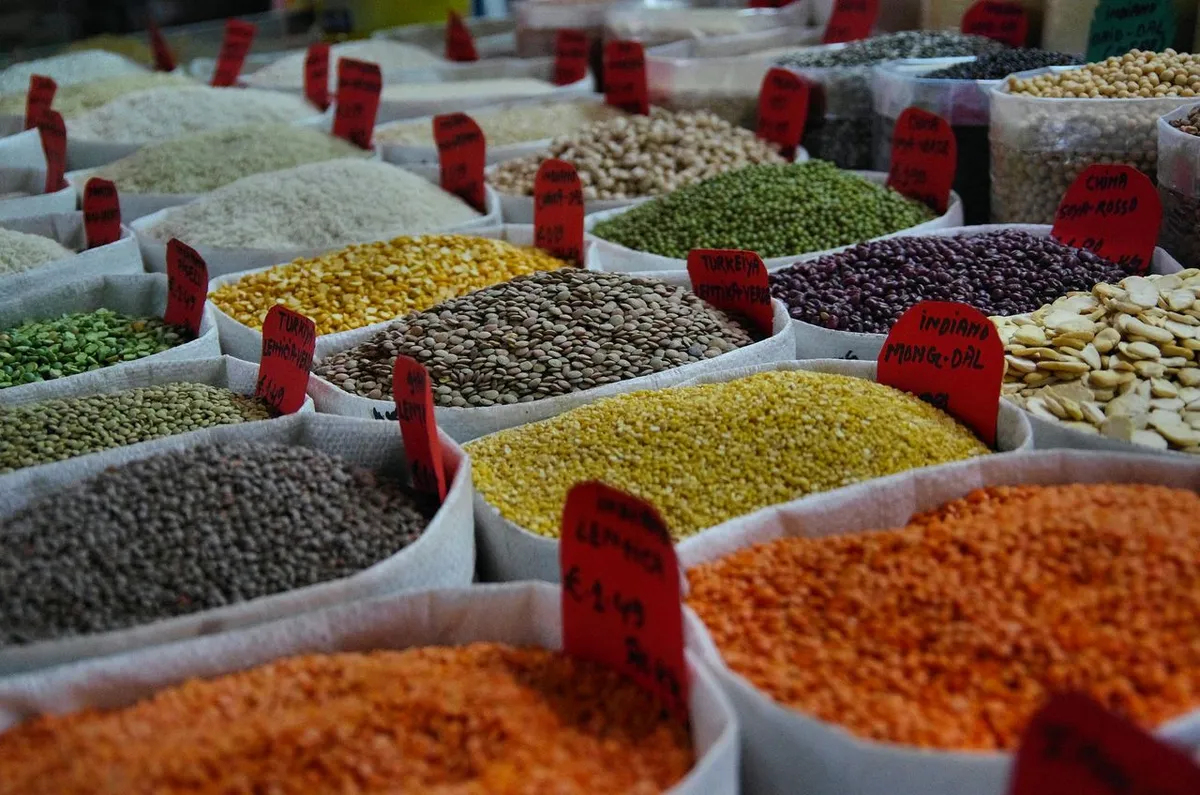
Six types of dal account for most of the trade. Each comes from a different pulse.
- Toor dal (arhar, tuvar): made from pigeon peas (Cajanus cajan). Yellow, split and dehusked. It is the base of sambar and everyday dal in much of India.
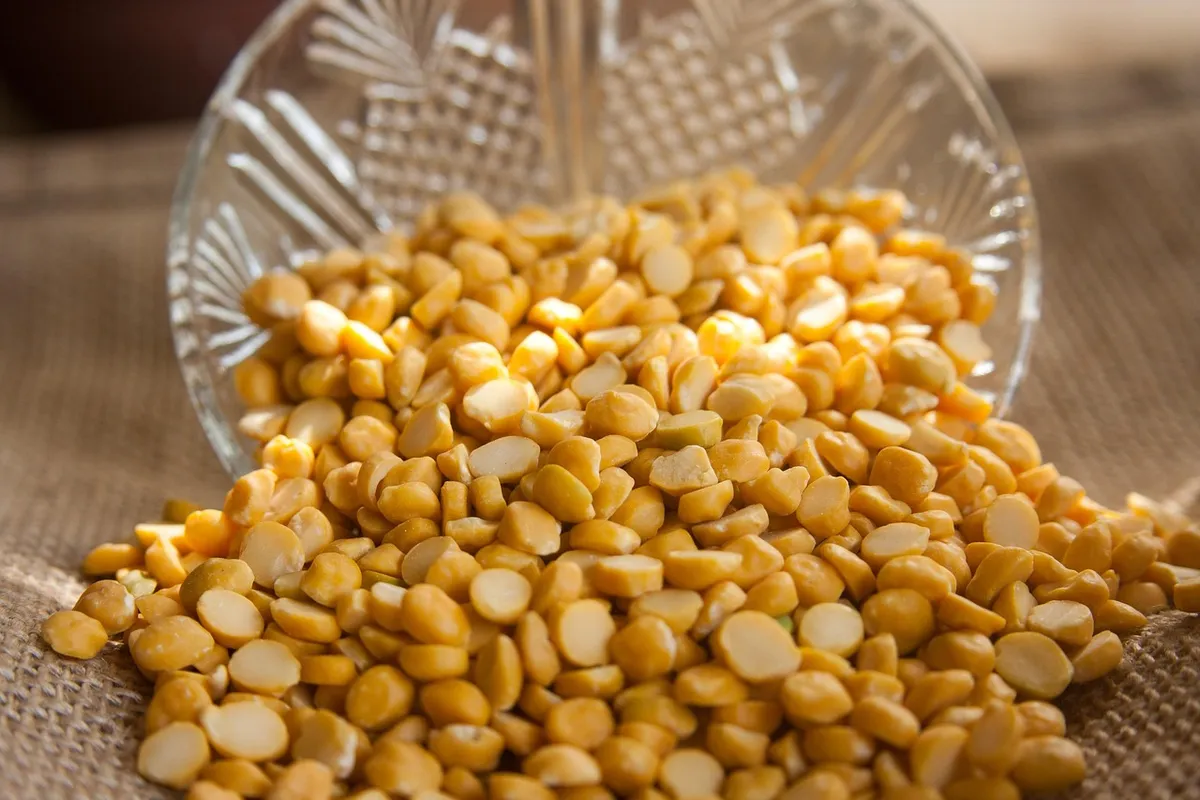
- Chana dal: made from desi chickpeas (Bengal gram). Yellow, split and dehusked, slightly sweet and nutty. It is also milled into besan (gram flour).
- Moong dal: made from green gram (Vigna radiata). Sold as yellow moong dal (moong mogar, dehusked) or green moong chilka (split with skin). Light and quick to cook.
- Urad dal: made from black gram (Vigna mungo). Sold whole black, as chilka, as white gota or as white split dal. It is the key pulse for idli, dosa, vada and dal makhani.
- Masoor dal: made from lentils (Lens culinaris). The brown whole lentil has an orange-red inside, so split masoor dal is red and cooks very quickly.
- Matar dal: made from dried peas, split. Used in soups, snacks and some regional dals.
Rajma (kidney beans), lobia (black-eyed beans) and kabuli chickpeas are pulses too, but they are usually cooked whole, so they are not normally called dal.
What Is the Difference Between Whole, Split and Washed Dal?
Whole dal keeps its skin and is not split. Split dal is cut in half, with or without the skin. Washed (dhuli) dal has had its skin removed, so it is pale and cooks fastest.
Urad shows all four forms clearly:
- Whole urad (sabut): black skin, not split. Used for dal makhani.
- Urad chilka: split, with the black skin left on.
- Urad gota: whole but dehusked, so it is white and round.
- Urad dal (dhuli): split and dehusked, white. Used for idli, dosa and vada batter.
Moong and masoor follow a similar pattern. Masoor also has a “football” form: whole, dehulled red lentils that keep their round shape. About 90–95% of red lentils are sold dehulled, as football or split.
Some dals also have a surface finish. Toor dal is sold unpolished, water-polished or oily. Oily toor dal is coated with a little edible oil to protect it from insects and moisture, and it is popular with South Asian shoppers in the USA and UK. Unpolished dal has no coating and is preferred by many EU and US food buyers. The finish should be declared on the label.
How Do the Dal Varieties Compare?
| Dal | Source pulse | Common forms | Colour (split, dehusked) | Typical dishes | Indian HS code |
|---|---|---|---|---|---|
| Toor dal | Pigeon peas | Whole tur; split, unpolished, water-polished or oily | Yellow | Sambar, dal tadka | 0713 60 00 |
| Chana dal | Desi chickpeas | Whole; split dehusked; besan | Yellow | Chana dal, snacks, besan dishes | 0713 20 |
| Moong dal | Green gram | Whole; chilka; mogar (yellow) | Yellow | Khichdi, light dals, sprouts (whole) | 0713 31 90 |
| Urad dal | Black gram | Whole; chilka; gota; split dal | White | Idli, dosa, vada, dal makhani | 0713 31 10 |
| Masoor dal | Lentils | Whole; split; football | Orange-red | Quick dals, soups | 0713 40 00 |
| Matar dal | Dried peas | Whole; split | Yellow or green | Soups, snacks, regional dals | 0713 10 |
Types of dal and their main trade forms. Confirm HS codes with your customs broker.
How Is Dal Graded and Cleaned Before Export?
Export dal is cleaned, graded by size, dehusked and split where needed, sortexed and then tested. The grade is set by defect limits in numbers, not by a single “purity” figure.
India’s FSSAI pulses standard sets the baseline: moisture of 14% max for whole pulses and 12% for dehusked dal, extraneous matter of 1% max, damaged grains of 7% max (broken 3%) and uric acid of 100 mg/kg max. Export buyers usually ask for tighter limits. Our pulses are sortexed to 98–99.9% purity, whole and split.
Food-safety tests matter just as much. Indian pulses are not under increased EU border checks, but every shipment must meet EU or destination limits for pesticide residues, lead (0.20 mg/kg) and cadmium (0.040 mg/kg). Lentils and peas are also tested for glyphosate. Our lab testing page lists the full panel.
One more check is origin. India imports lentils, tur and urad, so ask whether your lot is Indian-grown or milled in India from imported pulses.
Which Dal Suits Which Market?
Demand for each dal follows the cuisine of its buyers. According to WITS (UN Comtrade) data for 2024, the main export flows are:
- Lentils: about 1.69 lakh tonnes, mostly to Bangladesh (over 60%), then Iraq, Djibouti and the UAE.
- Moong and urad: about 77,000 tonnes, mainly to the USA, Bangladesh, Canada, the UAE and the UK.
- Dried peas: about 39,000 tonnes, mainly to Bangladesh, the UAE, the USA and China.
- Toor dal: about 35,000 tonnes, mainly to the USA, the UAE, Canada, Nepal and the UK.
Ethnic-grocery importers in North America, the UK and the Gulf usually want a full range: toor, moong, urad, chana and masoor, often in retail packs. Food manufacturers making ready meals or snacks usually buy one or two dals in bulk to tight specifications.
Related reading: Types of Lentils: Red, Green, Brown and Black Compared and Mung Beans Size and Grades Explained for Bulk Buyers.
How Can You Buy Dal in Bulk from India?
Buying the right types of dal starts with naming the pulse, the form, the finish and the defect limits on your order. A mixed container lets you take several dals in one shipment.
Timing also matters, because each pulse has its own harvest. New-crop green moong arrives in June (summer crop) and in September and October (kharif crop). Urad arrives mainly in October and November. Pigeon peas are a long, roughly 180-day kharif crop, so new tur arrives from January to March. Masoor and dried green peas are rabi crops that arrive in March and April. Our crop calendar shows each window, and our container load calculator helps you plan a mixed load.
Elysium Agri Corporation exports pulses and dals from Jamnagar, Gujarat: whole tur and toor dal, moong mogar, green moong, urad in every form, red and green lentils and dried green peas, plus desi chickpeas. All are sortexed and tested for pesticides, lead and cadmium, and glyphosate where relevant. Pulses are dense, so a 20 ft container holds about 24–26 MT. We pack in bulk bags or private label retail packs.
Tell us the dals, forms, quantities and destination port, and we will send a price and specification sheet. Request a dal quote →
Frequently asked questions
What are the main types of dal?
The main types of dal are toor dal from pigeon peas, chana dal from desi chickpeas, moong dal from green gram, urad dal from black gram, masoor dal from red lentils and matar dal from dried peas. Each is sold whole, split with skin, or split and dehusked, and each has its own taste and cooking time.
What is the difference between whole, split and washed dal?
Whole dal is the complete pulse with its skin. Split dal is cut into halves, with or without the skin; split with skin is called chilka. Washed or dhuli dal has had the skin removed, so it is pale and cooks fastest. Whole dehusked pulses, such as urad gota, keep their round shape.
Which dal is made from pigeon peas?
Toor dal, also called arhar or tuvar dal, is made from pigeon peas (Cajanus cajan). The peas are dehusked and split into yellow halves. Toor dal is the base of sambar and everyday dal in much of India, and it is sold unpolished, water-polished or lightly oil-coated, known as oily toor dal.
Which dals are most commonly exported from India?
By volume, lentils are India's largest dal-related pulse export, followed by moong and urad, dried peas and toor dal, according to 2024 trade data. Chickpeas are also a major export. Moong, urad and toor go mainly to the USA, the UAE, Canada and the UK, and lentils mainly to Bangladesh.
How is dal graded and cleaned before export?
Export dal is cleaned, size-graded, dehusked and split where needed, and sortexed by colour. Grades are set by limits on moisture, foreign matter, damaged and broken grains. Lots are then tested for pesticide residues, lead and cadmium, and lentils and peas for glyphosate, against the destination market's limits.
Related reads


