
On this page
Green gram (moong) is a high-protein, high-fibre pulse. According to USDA FoodData Central, 100 g of raw, dry moong beans gives about 347 kcal, 23.9 g of protein, 16.3 g of dietary fibre and only 1.2 g of fat, along with useful amounts of folate, potassium, magnesium and iron. These green gram nutrients make moong a staple in Indian kitchens and a growing ingredient for plant-based food makers. This fact sheet covers the full nutrient profile, what research says, and how whole, split and sprouted moong compare.
Key takeaways
- Raw moong beans contain about 24 g of protein and 16 g of fibre per 100 g, with very little fat.
- Moong is a strong source of folate, potassium, magnesium, phosphorus and iron.
- Sprouting adds water, so nutrients per 100 g fall, but research shows sprouting raises phenolic and flavonoid content.
- Most health research on moong comes from laboratory and animal studies; human trials are still few.
What Is Moong (Green Gram)?
Moong is the small, olive-green seed of Vigna radiata, a pulse also called green gram or mung bean. It is one of the most widely eaten pulses in India and across South and East Asia. The beans are eaten whole, split into dal, ground into flour, or sprouted.
India is the world’s largest moong grower. Rajasthan grows about 40% of India’s crop, followed by Madhya Pradesh and Maharashtra. There are two crops a year: a kharif crop sown in July and harvested in September and October, and a summer crop sown in March and April and harvested in June. Our crop calendar shows these harvest windows.
Moong appears under several trade names. Whole green moong is the unhulled bean. Moong dal can mean split moong with the green skin on, or dehusked yellow moong, also called moong mogar. Our guide to Indian dal names in English explains these terms.

Moong Nutrition Facts per 100g
The table below shows green gram nutrients for raw, dry, mature moong beans and for raw moong sprouts. All values are from USDA FoodData Central (SR Legacy records 174256 and 169957).
| Nutrient (per 100 g) | Raw moong beans (dry) | Raw moong sprouts |
|---|---|---|
| Energy | 347 kcal | 30 kcal |
| Water | 9.0 g | 90.4 g |
| Protein | 23.9 g | 3.0 g |
| Total fat | 1.2 g | 0.2 g |
| Carbohydrate | 62.6 g | 5.9 g |
| Dietary fibre | 16.3 g | 1.8 g |
| Total sugars | 6.6 g | 4.1 g |
| Folate | 625 µg | 61 µg |
| Potassium | 1,246 mg | 149 mg |
| Phosphorus | 367 mg | 54 mg |
| Magnesium | 189 mg | 21 mg |
| Calcium | 132 mg | 13 mg |
| Iron | 6.7 mg | 0.9 mg |
| Zinc | 2.7 mg | 0.4 mg |
| Thiamin (B1) | 0.62 mg | 0.08 mg |
| Sodium | 15 mg | 6 mg |
Moong nutrition facts per 100 g. Source: USDA FoodData Central, SR Legacy.
Remember that the dry-bean figures are for uncooked seed. Cooking and sprouting add a lot of water, so nutrients per 100 g of cooked dal or sprouts are much lower. The nutrients in the whole bean do not disappear; they are simply spread across more weight.
How Much Protein and Fibre Is in Moong?
Raw moong beans contain about 24 g of protein and 16 g of dietary fibre per 100 g. This puts moong among the more protein-rich pulses. A 2019 review in the journal Nutrients reports a protein range of about 21% to 33% across mung bean samples, depending on variety and growing conditions. The main storage proteins are globulins, with an 8S globulin structure similar to a soybean protein.
Like most pulses, moong protein is relatively low in the amino acid methionine and rich in lysine. Cereals have the opposite pattern. This is why moong and rice together, as in khichdi, give a more balanced protein mix. Food makers use the same idea when they blend pulse and grain proteins.
The fibre in moong is a mix of insoluble fibre, much of it in the green seed coat, and soluble fibre in the seed itself. Fibre adds bulk and helps people feel full. Moong is also low in fat, at about 1.2 g per 100 g of dry bean. If you compare pulses for a product, our article on chickpea protein and nutrition gives the same data for chickpeas.
Which Vitamins and Minerals Are in Moong?
Moong is a rich source of folate and several minerals. Per 100 g of raw dry beans, USDA lists:
- Folate: 625 µg. This is above the 400 µg DFE daily amount set for most adults by the US National Institutes of Health. Some folate is lost in cooking water.
- Potassium: about 1,246 mg.
- Phosphorus and magnesium: 367 mg and 189 mg.
- Iron: 6.7 mg. This is non-haem iron, which the body absorbs less easily than iron from meat. Eating moong with vitamin C-rich foods can help absorption.
- Zinc, copper and manganese: 2.7 mg, 0.9 mg and 1.0 mg.
- B vitamins: thiamin (0.62 mg), niacin (2.3 mg) and vitamin B6 (0.38 mg).
Moong is naturally low in sodium, at about 15 mg per 100 g. Any salt in a finished dish or snack comes from the recipe, not the bean. Like other pulses, moong also contains phytates, natural compounds that bind some iron and zinc and reduce how much the body absorbs. Soaking, sprouting and cooking lower phytate levels, which is one reason these traditional steps are so common in Indian cooking.
What Does the Research Say About Moong?
Research shows that moong contains several bioactive compounds, but strong human evidence is still limited. The 2019 Nutrients review by Hou and colleagues identifies the flavonoids vitexin and isovitexin as the main polyphenols in mung bean, concentrated in the seed coat. The bean also contains bioactive polysaccharides and small peptides.
Laboratory and animal studies have looked at effects on blood sugar, blood lipids and blood pressure. However, the same review notes that only a few clinical trials on mung bean are available, and most findings come from in vitro and animal work. So these results should not be read as proven health effects in people.
What is well established is the general value of pulses. Health authorities recommend pulses as part of a varied diet because they supply protein, fibre and minerals with little fat. Moong fits this pattern well.
Whole vs Split vs Sprouted Moong: What Is the Difference?
Whole, split and sprouted moong come from the same bean, but processing changes their use and some of their nutrients.
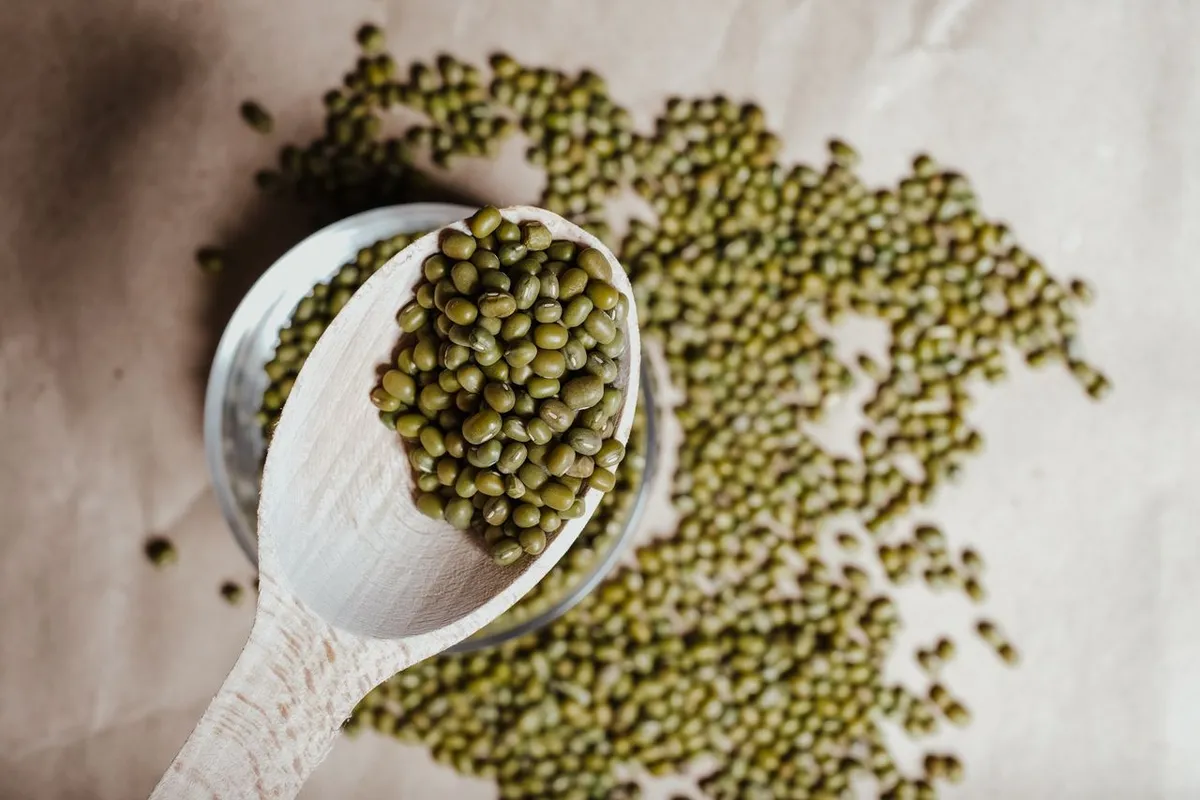
- Whole green moong: keeps the seed coat, so it holds the most fibre and the vitexin-rich outer layer. It needs longer cooking. We supply whole green moong beans in machine-cleaned, sortex and sprouting grades.
- Split, dehusked moong (moong mogar): the green hull is removed and the bean is split into yellow halves. It cooks in minutes without soaking and is easy to digest, but it has less fibre because the hull is gone. See our moong mogar page for grades.
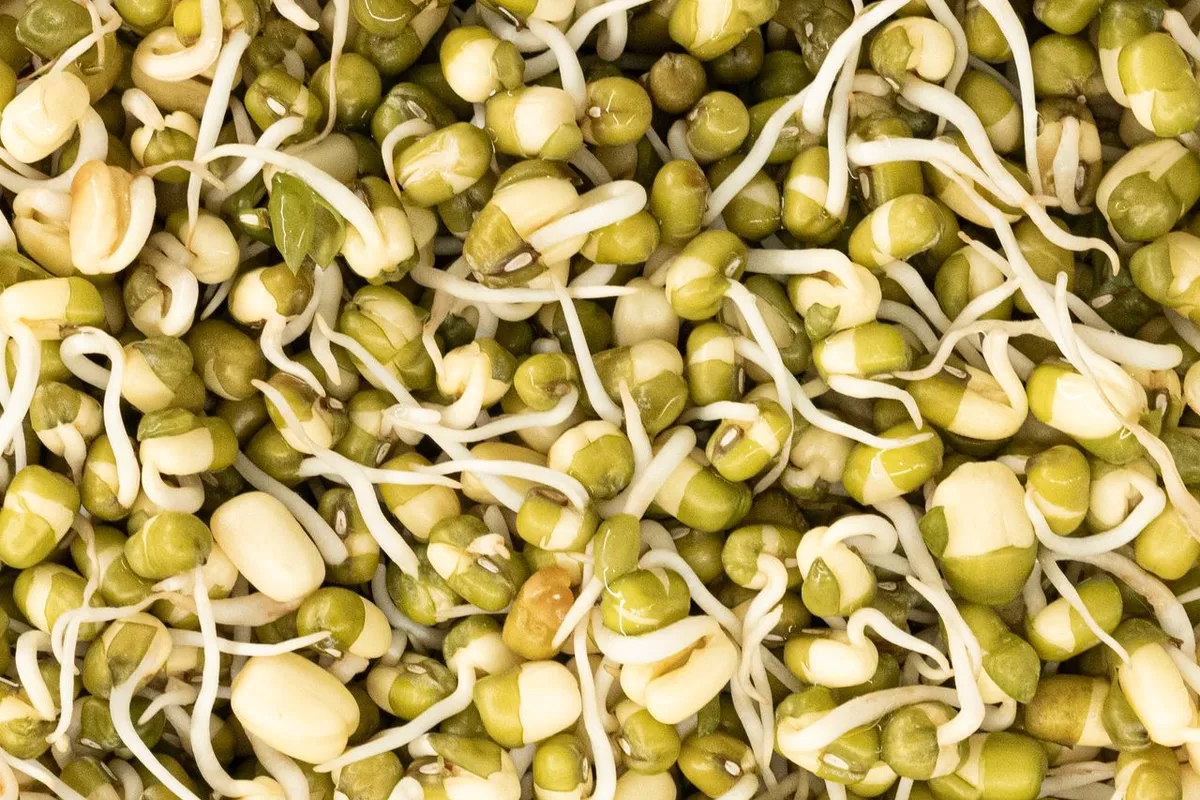
- Sprouted moong: the bean is soaked and germinated. The Nutrients review reports that total phenolic acids and flavonoids in mung bean sprouts rose up to 4.5 and 6.8 times compared with raw seeds. Per 100 g, sprouts show lower values because they are about 90% water.
Sprouts need good hygiene, because the warm, moist sprouting conditions can also allow bacteria to grow. For this reason, sprouting seed sold into the EU needs an import certificate under Regulation (EU) 211/2013 and traceability under Regulation (EU) 208/2013. Sprouting buyers also ask for germination data and microbiological tests, which we arrange through our lab testing process.
This article is for general information and is not medical or dietary advice.
Related reading: Urad Dal Nutrition Facts: Protein, Fibre and Minerals and Green Lentils vs Red Lentils: Processing, Nutrition and Uses.
Sourcing Green Moong from India
India’s exports of moong and urad (HS 0713 31) were worth about US$ 96 million in 2024, led by the USA, Bangladesh, Canada, the UAE and the UK. We export whole green moong in sizes from 3.25 to 4.5 mm, including a bold 3.5 mm+ sprouting grade for bean-sprout growers in Asia and the Gulf.
Every lot is tested for moisture, admixture, pesticide residues and heavy metals, and ships with a phytosanitary certificate, a certificate of origin and a Certificate of Analysis. We pack in 25 or 50 kg PP or BOPP bags, jute bags or 1 MT jumbo bags, with about 24 to 26 MT in a 20 ft container. For buyers who sell on the strength of green gram nutrients, we can share lot data and arrange independent inspection on request. Our wider guide to importing pulses from India covers documents and shipping.
Tell us the grade, size, packing and destination port, and we will send a price and samples. Request a green moong quote →
Frequently asked questions
What nutrients are in green gram (moong)?
Raw, dry green gram contains about 347 kcal, 23.9 g of protein, 62.6 g of carbohydrate, 16.3 g of fibre and 1.2 g of fat per 100 g, according to USDA FoodData Central. It is also rich in folate, potassium, magnesium, phosphorus and iron, and is naturally low in sodium.
How much protein is in moong dal?
Raw, dry moong beans contain about 24 g of protein per 100 g in USDA data, and research reports a range of about 21% to 33% depending on variety. Dehusked moong dal has a similar protein level by dry weight. Once cooked, the dal absorbs water, so protein per 100 g of cooked dal is much lower.
Is moong high in fibre?
Yes. Raw whole moong beans contain about 16.3 g of dietary fibre per 100 g, according to USDA FoodData Central. Much of the insoluble fibre sits in the green seed coat, so whole moong has more fibre than dehusked yellow moong dal. Sprouts show lower fibre per 100 g because they contain about 90% water.
Are sprouted moong beans more nutritious?
Sprouting changes moong in useful ways. A 2019 review in Nutrients reports that phenolic acids and flavonoids rose several times during sprouting, and sprouting also lowers phytates. However, sprouts are about 90% water, so protein, fibre and minerals per 100 g are lower than in dry beans. Sprouts also need careful hygiene.
What is the difference between whole and split moong?
Whole moong is the green bean with its seed coat on. It has more fibre and takes longer to cook. Split moong is the bean cut in half; when the hull is also removed, it becomes yellow moong dal or moong mogar, which cooks in minutes without soaking but has less fibre than the whole bean.
Related reads


