

On this page
Moong dal in English is split mung bean, also called split green gram. When the green skin is removed, the yellow dal is called split and dehusked mung bean, or yellow moong dal. Toor dal is split pigeon pea, urad dal is split black gram, masoor dal is split red lentil, and chana dal is split Bengal gram, a small brown chickpea. This glossary explains the most common Indian dal names in English, the plants they come from and the forms in which they are traded.
Key takeaways
- “Dal” means a split pulse, and also the cooked dish made from it.
- The same pulse can be sold whole, split with skin, or split and dehusked, each with its own name.
- Moong is mung bean (Vigna radiata), toor is pigeon pea (Cajanus cajan), urad is black gram (Vigna mungo) and masoor is lentil (Lens culinaris).
- Chana dal is split desi chickpea, which is not the same as split kabuli chickpea.
What Does Dal Mean?
Dal (also written daal or dhal) is the Hindi and Urdu word for a split pulse. It also means the soup or stew made by cooking those pulses with water and spices. The word comes from a Sanskrit root meaning “to split”, which describes how most dals are prepared: the dried seed is split into its two halves, and often the outer skin is removed.
In English, the closest terms are “split pulses”, “split peas” or “split lentils”, but none of these fits every case. That is why importers, retailers and food makers often keep the Indian names on labels, with the English name and the botanical name alongside. For a wider look at the varieties, see our guide to types of dal.
What Is Moong Dal in English?
Moong dal is split mung bean. The plant is Vigna radiata, and the whole bean is called mung bean or green gram. Moong is traded in three main forms:
- Whole green moong (sabut moong): the small, green, whole bean, used for cooking and for bean sprouts.
- Moong chilka: split moong with the green skin still on.
- Moong mogar or yellow moong dal: split and dehusked moong, which shows the yellow inside. It cooks in minutes without soaking.
India is the world’s largest moong grower. Rajasthan grows about 40% of India’s moong, followed by Madhya Pradesh and Maharashtra. Moong mogar is the everyday dal of North and West India and the base of khichdi, halwa and many snacks. See our green moong beans and moong mogar pages for export grades.
What Is Toor Dal in English?
The English name for toor dal is split pigeon pea. The plant is Cajanus cajan. The same pulse is called tur, toor or arhar in different parts of India, and red gram in some trade documents.
Toor dal is the split, dehusked yellow dal behind sambar and the everyday dal of much of South and West India. It is sold unpolished, water-polished or oil-polished. Oil-polished toor dal has a light coat of edible oil to improve shine and shelf life, while many health-focused brands prefer unpolished dal. Maharashtra and Karnataka grow about two-thirds of India’s tur, and Gulbarga tur dal carries a geographical indication (GI) tag. Read more on our pigeon peas page.
What Are Urad, Masoor and Chana Dal in English?
Urad dal is split black gram, masoor dal is split red lentil, and chana dal is split Bengal gram. Each has several trade forms.
- Urad (black gram, Vigna mungo): sold as whole black urad, urad chilka (split with skin), urad gota (whole and dehusked, white) and urad dal (split and dehusked, white). It is the pulse behind idli, dosa, vada, papad and dal makhani.
- Masoor (lentil, Lens culinaris): whole masoor is brown-skinned. Split and dehusked, it becomes orange-red masoor dal, also called malka. Whole dehulled red lentils are traded as “football” lentils.
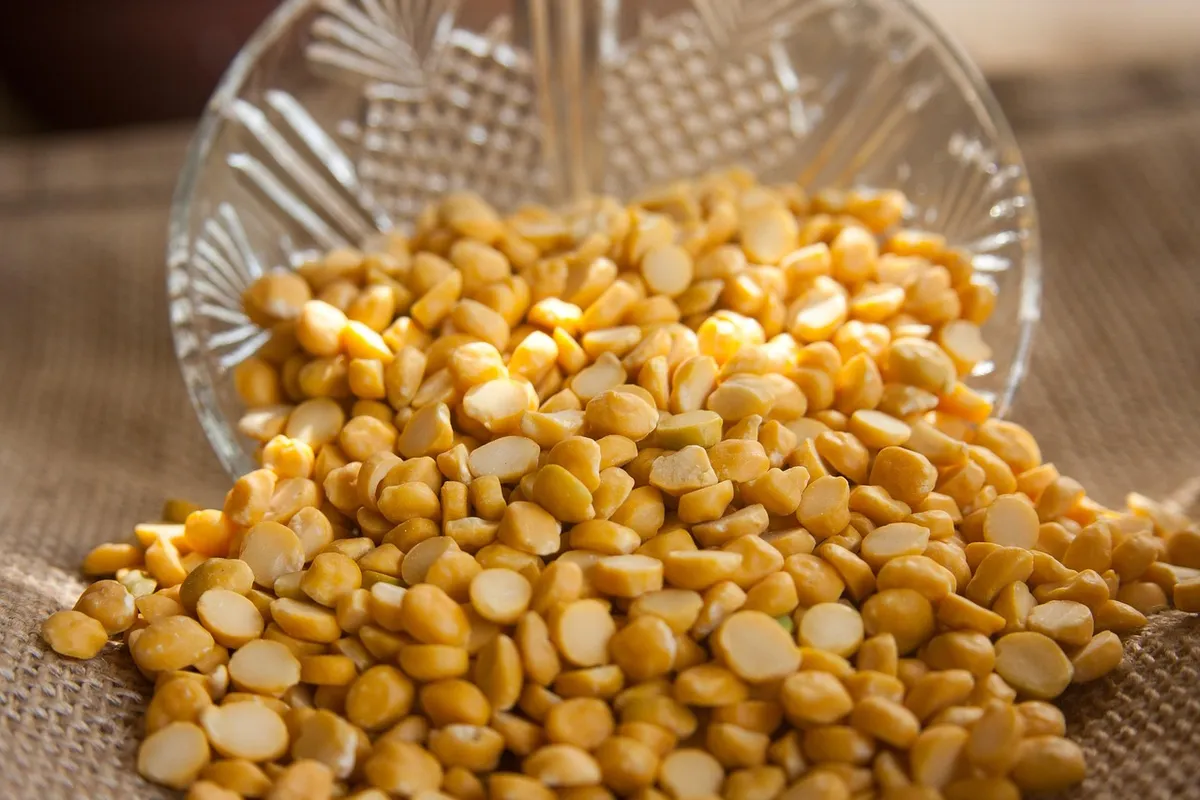
- Chana (Bengal gram, Cicer arietinum, desi type): chana dal is made from small, brown desi chickpeas, split and dehusked. It is sweeter and firmer than split kabuli chickpeas, and it is also ground into besan, or gram flour.
So is chana dal the same as split chickpeas? Not quite. Chana dal is split desi chickpea. The large, cream-coloured kabuli chickpeas used in hummus are a different type, and they are rarely sold as dal.

What Are the Dal Names in English and Hindi?
The table lists common dal names in Hindi, their English names and botanical names. Use it when you write labels, specifications or purchase orders.
| Hindi name | English name | Botanical name | Typical form |
|---|---|---|---|
| Moong dal (mogar) | Split dehusked mung bean, yellow moong dal | Vigna radiata | Split, dehusked, yellow |
| Moong chilka | Split mung bean with skin | Vigna radiata | Split, green skin on |
| Sabut moong | Whole mung bean, green gram | Vigna radiata | Whole, green |
| Toor / tur / arhar dal | Split pigeon pea, red gram | Cajanus cajan | Split, dehusked, yellow |
| Urad dal | Split black gram, white lentil | Vigna mungo | Split, dehusked, white |
| Urad chilka | Split black gram with skin | Vigna mungo | Split, black skin on |
| Masoor dal (malka) | Split red lentil | Lens culinaris | Split, dehusked, orange-red |
| Sabut masoor | Whole brown lentil | Lens culinaris | Whole, brown skin |
| Chana dal | Split Bengal gram, split desi chickpea | Cicer arietinum | Split, dehusked, yellow |
| Kala chana | Whole Bengal gram, brown chickpea | Cicer arietinum | Whole, brown |
| Matar dal | Split dried pea | Pisum sativum | Split, green or yellow |
Common Indian dal names in Hindi and English.
You may also see other Indian pulse names on menus and in shops. Rajma is red kidney bean (Phaseolus vulgaris), lobia or chawli is black-eyed pea (Vigna unguiculata), kulthi is horse gram (Macrotyloma uniflorum) and moth is moth bean (Vigna aconitifolia). These are more often cooked whole than sold as split dal. Spellings also vary widely: moong can be written mung or moog, toor can be tur or tuvar, and dal can be daal or dhal. When you compare offers, rely on the botanical name and the form, not just the spelling.
What Is the Difference Between Whole, Split and Washed Dal?
Whole dal is the complete seed with its skin. Split dal is cut into two halves and may keep its skin. Washed or dehusked dal has had the skin removed, which shows the lighter colour inside. In Hindi, whole is “sabut”, split with skin is “chilka”, and dehusked is often called “dhuli”, meaning washed.
The form changes how the dal cooks and tastes. Whole pulses take longest to cook and often need soaking. They hold their shape and have a stronger, earthier taste. Split dal with skin cooks faster and keeps some texture. Washed dal cooks fastest, breaks down into a smooth texture and has the mildest flavour. The skin also holds much of the fibre and colour, so whole and chilka dals usually contain more fibre than washed dals.
For buyers, the form also changes the specification. Split dals are checked for broken pieces, polish and skin remnants as well as purity and moisture. Always state the form, the polish (unpolished, water or oil) and the size in your order. Our container load calculator shows how many tonnes of each pulse fit in a container.

Related reading: Types of Lentils: Red, Green, Brown and Black Compared.
How Can You Buy Indian Pulses in Bulk?
Whether you search for moong dal in English or toor dal by its Hindi name, a clear specification is what matters in bulk buying. Name the pulse, the form, the grade, the polish, the purity, the moisture and your market’s residue limits, and ask for a sample and a lot-wise Certificate of Analysis.
Elysium Agri Corporation exports Indian pulses, including green moong, moong mogar, urad, toor dal, red and green lentils and dried green peas, as well as desi chickpeas. Our pulses are cleaned and sortexed to 98–99.9% purity and tested to EU limits before every shipment, as shown on our lab testing page. We also pack dals in retail and private-label packs for ethnic-grocery importers.
Tell us the pulses, forms, quantities and destination, and we will send a quote and specification sheets. Request a pulses quote →
Frequently asked questions
What is moong dal called in English?
Moong dal is called split mung bean or split green gram in English. When the green skin is removed, it is split dehusked mung bean, often sold as yellow moong dal or moong mogar. The whole bean is the mung bean, Vigna radiata. Split moong with the skin on is called moong chilka.
What is toor dal called in English?
Toor dal is called split pigeon pea in English, and sometimes red gram in trade documents. It comes from Cajanus cajan, which is also known as tur or arhar. It is the split, dehusked yellow dal used in sambar, and it is sold unpolished, water-polished or oil-polished.
What is urad dal called in English?
Urad dal is split black gram in English, from the plant Vigna mungo. Dehusked urad dal is white and is sometimes called white lentil. With the black skin on, it is urad chilka, and whole dehusked urad is urad gota. Urad is used for idli, dosa, vada, papad and dal makhani.
What is masoor dal called in English?
Masoor dal is split red lentil in English. It comes from Lens culinaris. Whole masoor has a brown skin; when split and dehusked, it shows an orange-red colour and is also called malka. Whole dehulled red lentils are traded as football lentils. Masoor dal cooks quickly and breaks down into a smooth texture.
Is chana dal the same as split chickpeas?
Chana dal is split desi chickpea, also called split Bengal gram. It is made from the small, brown desi type of Cicer arietinum, which is dehusked and split. It is not the same as split kabuli chickpeas, the large cream type used in hummus. Chana dal is firmer and sweeter, and is also ground into besan.
Related reads


