
On this page
- Is Garlic Powder Good for You?
- How Is Garlic Powder Made?
- How Does Garlic Powder Nutrition Compare with Fresh Garlic?
- What Happens to Allicin and Other Compounds During Dehydration?
- What Does the Research Say About Garlic Powder?
- Should You Use Fresh Garlic or Garlic Powder in Cooking?
- What Are the Right Serving Sizes and Substitutions?
- Where Can Bulk Buyers Source Garlic Powder?
- Frequently asked questions
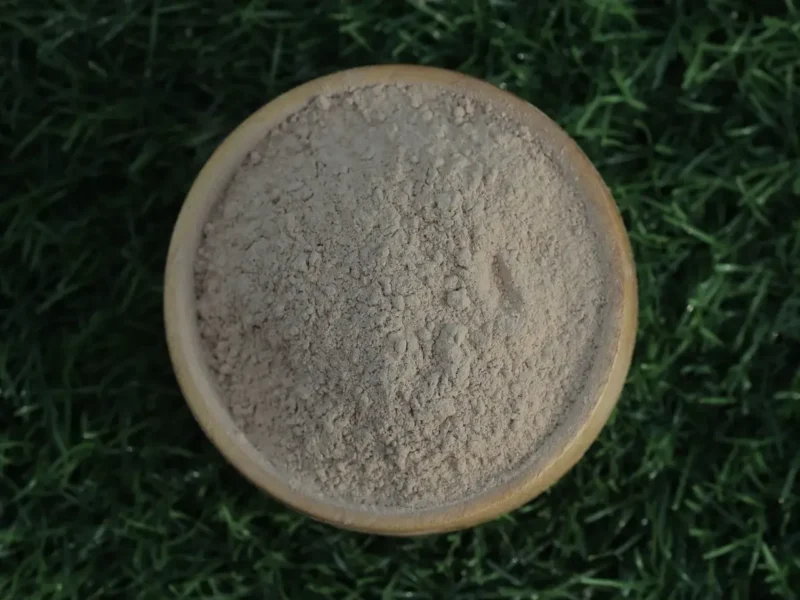
Yes, garlic powder is good for you as part of a normal diet. It is simply dried, milled garlic, so it keeps most of the minerals, fibre and sulphur compounds of fresh garlic in a concentrated, shelf-stable form, with almost no fat and very few calories per serving. This fact sheet compares garlic powder nutrition with fresh garlic, using data from USDA FoodData Central, and explains what the research does and does not show.
Key takeaways
- Per 100 g, garlic powder has about 331 kcal, 16.6 g protein, 9 g fibre and 1,193 mg potassium, according to USDA data.
- A teaspoon (about 3.1 g) adds only about 10 kcal, so its role in the diet is flavour with a small nutrient bonus.
- Drying removes water and most vitamin C, but low-temperature drying keeps the enzyme that forms allicin.
- Studies on blood pressure and cholesterol used garlic supplements at set doses, not kitchen amounts, so treat garlic powder as a food, not a medicine.
Is Garlic Powder Good for You?
Garlic powder is a healthy everyday ingredient. It brings strong flavour with almost no fat, sugar or salt, which helps cooks reduce added salt in sauces, rubs and snacks. Weight for weight, it is richer in protein, fibre, potassium and iron than fresh garlic, because the water has been removed.
The honest limit is serving size. Most people use one or two teaspoons in a dish, not 100 g. At that level, garlic powder adds flavour and small amounts of nutrients. It cannot replace vegetables, pulses or whole grains as a source of nutrition. Pure garlic powder should contain only garlic. Check the label for added salt, anticaking agents or fillers, which some retail blends contain.
How Is Garlic Powder Made?
Garlic powder is made by slicing peeled garlic cloves, drying the slices slowly at a controlled temperature, and milling the dry flakes into a fine powder. For our export powder, the cloves are split, peeled, washed and sanitised, then sliced to 1.5–2 mm. The slices are belt-dried to 4–6% moisture, milled, sieved to 80–100 mesh and passed through sortex, magnets and a metal detector.
Drying temperature matters for nutrition. Gentle drying protects alliinase, the enzyme that later forms allicin. Good exporters also test the powder for volatile organic sulphur compounds, which measure garlic strength. Codex standard CXS 347-2019 and FSSAI both set a minimum of 0.3% for dehydrated garlic. Our step-by-step guide on how garlic powder is made covers each stage of the process in more detail.
How Does Garlic Powder Nutrition Compare with Fresh Garlic?
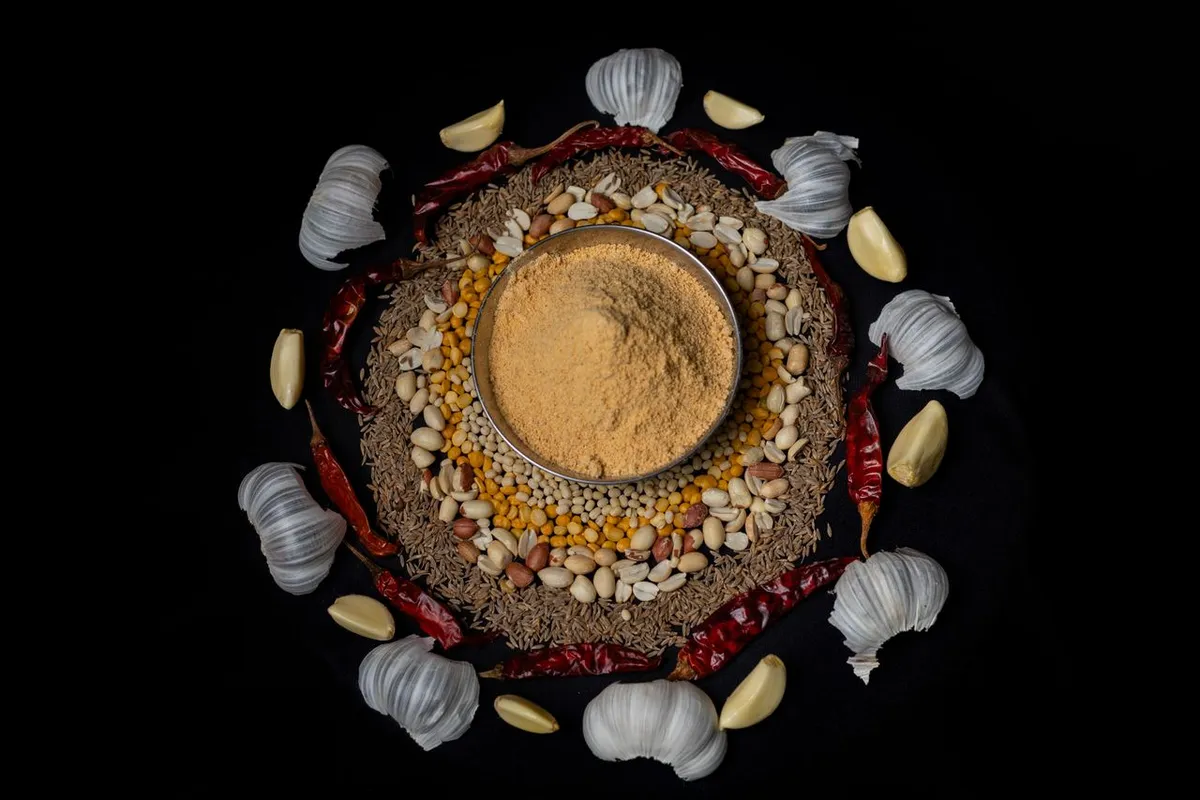
Per 100 g, garlic powder has more than twice the calories, protein, fibre, potassium and iron of fresh garlic, but far less vitamin C and calcium. The table below uses USDA FoodData Central values for garlic powder and raw garlic.
| Nutrient (per 100 g) | Garlic powder | Fresh (raw) garlic |
|---|---|---|
| Water | 6.4 g | 58.6 g |
| Energy | 331 kcal | 149 kcal |
| Protein | 16.6 g | 6.4 g |
| Fat | 0.7 g | 0.5 g |
| Carbohydrate | 72.7 g | 33.1 g |
| Dietary fibre | 9.0 g | 2.1 g |
| Potassium | 1,193 mg | 401 mg |
| Phosphorus | 414 mg | 153 mg |
| Iron | 5.7 mg | 1.7 mg |
| Calcium | 79 mg | 181 mg |
| Vitamin B6 | 1.65 mg | 1.24 mg |
| Vitamin C | 1.2 mg | 31.2 mg |
| Sodium | 60 mg | 17 mg |
Source: USDA FoodData Central, SR Legacy entries “Spices, garlic powder” and “Garlic, raw”.
Most of the difference comes from water. Raw garlic is about 59% water, while garlic powder is about 6%. So 100 g of powder holds the dry matter of a little over 200 g of peeled fresh garlic. Vitamin C does not follow this rule, because it breaks down with heat and air during drying. The lower calcium figure may reflect different samples in the USDA database, so treat single-mineral comparisons as indicative.
What Happens to Allicin and Other Compounds During Dehydration?
Garlic powder contains no ready-made allicin, but well-dried powder keeps both alliin and the enzyme alliinase, so allicin can form when the powder meets water. In an intact clove, alliin and alliinase are kept apart. When garlic is crushed, chopped or chewed, they mix and form allicin within seconds. Allicin is unstable and soon changes into other sulphur compounds.
The Linus Pauling Institute at Oregon State University notes that garlic for powder is usually sliced and dried at low temperature to avoid inactivating alliinase. It also notes that heat destroys the enzyme, so whole cloves cooked without crushing produce little allicin. A 2018 study by Lawson and Hunsaker measured how much allicin people actually absorb from garlic supplements and garlic foods. It found wide differences between products and preparation methods.
For the cook, this means two practical points. First, garlic powder stirred into a moist mix and left for a few minutes before heating releases more pungent compounds than powder added straight to hot oil. Second, a strongly flavoured powder with a high volatile sulphur value usually comes from careful drying.
What Does the Research Say About Garlic Powder?
Research on garlic is promising for some heart-health markers, but the evidence comes mostly from supplements at fixed doses and over short periods. The Linus Pauling Institute summarises meta-analyses that found garlic preparations lowered blood pressure in people with high blood pressure, and lowered total and LDL cholesterol in people with raised levels. Powdered garlic supplements of about 600–900 mg a day and aged garlic extract gave the most consistent results. The same review says long-term effects remain uncertain.
For colds, a Cochrane review found too little good-quality evidence to show that garlic prevents or treats the common cold. In short, garlic powder is a useful food ingredient, but no one should rely on it to treat a medical condition.
There is one safety note. Garlic may add to the effect of blood-thinning medicines such as warfarin. Normal cooking amounts are not usually a concern, but anyone on such medicines should speak to a doctor before taking garlic supplements.
Should You Use Fresh Garlic or Garlic Powder in Cooking?
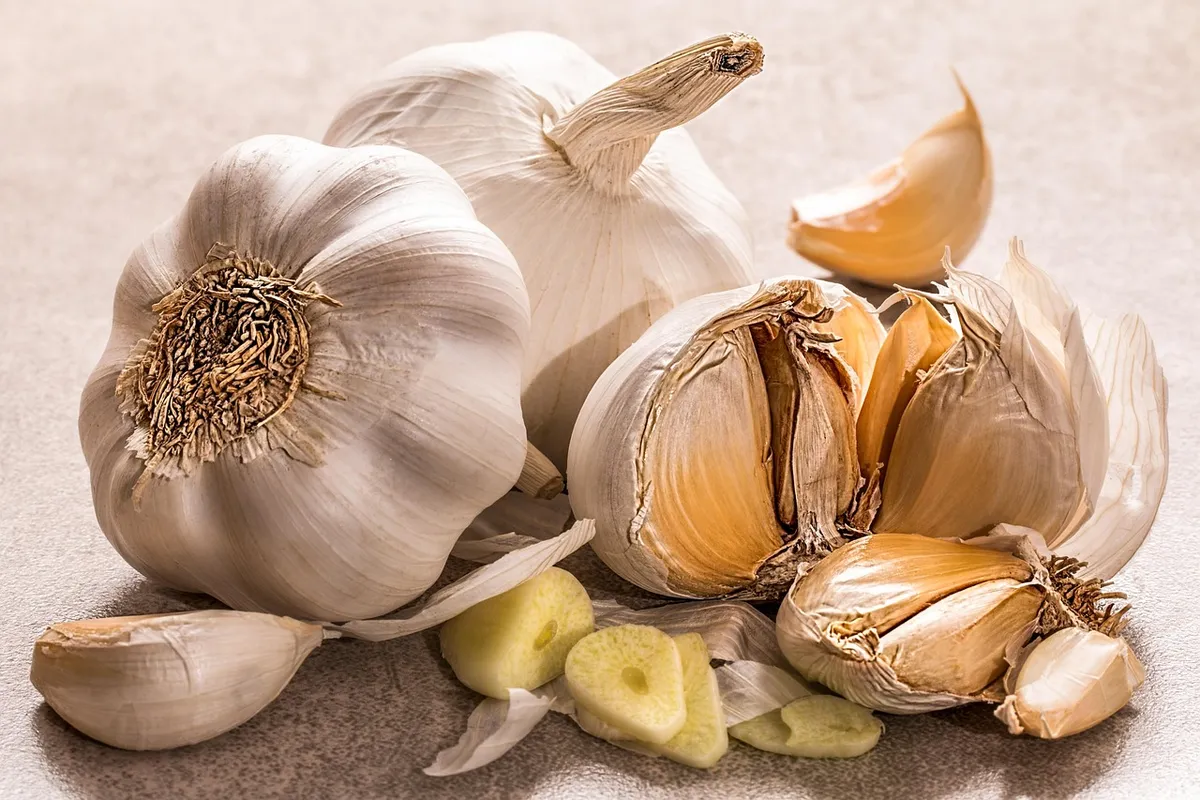
Use fresh garlic when you want a sharp, bright flavour and visible pieces. Use garlic powder when you need even flavour, a long shelf life and no moisture. Each has its place.
- Dry rubs and seasonings: powder spreads evenly and sticks to snacks, crisps and meat. Fresh garlic would burn or clump.
- Sauces, dips and dressings: powder dissolves smoothly and gives a consistent taste from batch to batch, which matters in factory production.
- Soups and bouillon: powder is easy to dose by weight and stores for months.
Particle size changes how the flavour comes out. Fine powder releases flavour quickly and suits instant products. Garlic granules are coarser, flow better and are less likely to cake in shakers. Our comparison of garlic powder vs granulated garlic explains the trade-offs, and the same logic applies to onion powder and granulated onion.
What Are the Right Serving Sizes and Substitutions?
A common kitchen rule is that about 1/8 teaspoon of garlic powder replaces one medium clove of fresh garlic. Taste and adjust, because clove size and powder strength both vary. A level teaspoon of garlic powder weighs about 3.1 g in the USDA database.
| Garlic powder | Approx. weight | Approx. energy | Fresh garlic equivalent |
|---|---|---|---|
| 1/8 teaspoon | 0.4 g | 1 kcal | 1 medium clove |
| 1/2 teaspoon | 1.6 g | 5 kcal | 4 cloves |
| 1 teaspoon | 3.1 g | 10 kcal | 8 cloves |
| 1 tablespoon | 9.3 g | 31 kcal | About 24 cloves |
Weights and energy calculated from USDA values (3.1 g and 331 kcal per 100 g). Clove equivalents are a kitchen guide only.
Garlic powder is hygroscopic, which means it absorbs moisture from the air. Keep it sealed, cool and dry, and away from steam when cooking. For food manufacturers, a fine 100–120 mesh suits instant soups and capsules, while 80–100 mesh suits most cooked applications.
This article is for general information and is not medical or dietary advice.
Related reading: What Is Potato Powder? Potato Flakes and Powder Explained.
Where Can Bulk Buyers Source Garlic Powder?
If you buy garlic powder for seasonings, sauces, snacks or supplements, the nutrition story on your label starts with a clean, consistent raw material. So whether garlic powder is good for you also depends on what is in the bag. Ask for pure garlic with no fillers, a stated mesh, low moisture and a lot-wise lab report.
Elysium Agri Corporation exports dehydrated garlic powder from India in 80–100 mesh, with 100–120 mesh on request. Our standard is moisture 5% max, volatile sulphur compounds 0.3% min and Salmonella absent in 25 g. Low-micro powder is steam-sterilised, and we never use ethylene oxide. Every lot is tested for moisture, ash, microbiology and pesticide residues, as set out on our lab testing page. We pack in 25 kg lined cartons or bags, about 13–14 MT in a 20 ft container; check your load with the container load calculator.
Tell us your mesh, micro grade, packing, quantity and destination port, and we will send an FOB, CFR or CIF price with the specification sheet. Request a garlic powder quote →
Frequently asked questions
Is garlic powder as healthy as fresh garlic?
Garlic powder keeps most of the minerals, fibre and protein of fresh garlic, and per gram it is more concentrated because the water has been removed. It loses most of its vitamin C during drying, and it releases allicin differently. Used in normal cooking amounts, both are healthy ingredients, and fresh garlic simply offers a sharper flavour.
Does garlic powder contain allicin?
Garlic powder does not contain ready-made allicin. Powder dried at low temperature keeps alliin and the enzyme alliinase, which form allicin when the powder is mixed with water. Very hot drying or adding the powder straight to hot oil can reduce how much allicin forms, so drying quality and cooking method both matter.
How many calories are in garlic powder?
According to USDA FoodData Central, garlic powder has about 331 kcal per 100 g. A level teaspoon weighs about 3.1 g, so it adds roughly 10 kcal. Because people use small amounts, garlic powder contributes very few calories to a meal while adding strong flavour without fat, sugar or much sodium.
Does dehydrating garlic reduce its nutrients?
Dehydration mainly removes water, so protein, fibre and minerals such as potassium, phosphorus and iron stay in the powder and become more concentrated by weight. Heat-sensitive nutrients are reduced, and vitamin C falls sharply, from about 31 mg in raw garlic to about 1 mg per 100 g in powder, based on USDA data.
How much garlic powder equals one clove of fresh garlic?
A common kitchen rule is that about 1/8 teaspoon of garlic powder equals one medium clove of fresh garlic. One teaspoon therefore replaces about eight cloves. Clove size and powder strength vary, so start with a little less, taste the dish and adjust, especially in sauces and dressings that are not cooked.
Related reads


