
On this page
- Onion Powder vs Granulated Onion: What Is the Short Answer?
- What Is Onion Powder?
- What Is Granulated Onion?
- How Do Onion Powder and Granulated Onion Compare?
- How Do Their Flavour and Texture Differ?
- Which One Should You Use in Seasonings, Sauces and Snacks?
- What Are the Substitution Ratios and Tips?
- How Do You Buy Dehydrated Onion Products in Bulk from India?
- Frequently asked questions
Onion powder vs granulated onion comes down to particle size: both are dehydrated onion, but onion powder is milled fine (about 80–100 mesh), while granulated onion is coarser, about 0.2–1 mm. Powder dissolves quickly and gives a strong, even flavour; granules flow freely, clump less and add a little texture. This guide compares the two for seasoning blenders, sauce makers and snack manufacturers.
Key takeaways
- Both products are made from the same dried onion. Only the grind size differs.
- Onion powder suits sauces, soups, dressings and snack coatings that need a smooth, fast-dissolving flavour.
- Granulated onion suits dry rubs and seasoning blends, because it flows freely and resists caking.
- By weight, the two swap roughly one for one. By volume, a spoon of powder holds more onion, so adjust and test.
Onion Powder vs Granulated Onion: What Is the Short Answer?
Onion powder is finely ground dehydrated onion. Granulated onion is the same dried onion, ground to a coarser, sand-like particle. They share the same flavour compounds, the same moisture limits and the same safety tests. The difference in size changes how fast the flavour is released, how the product flows and how it looks in the finished food.
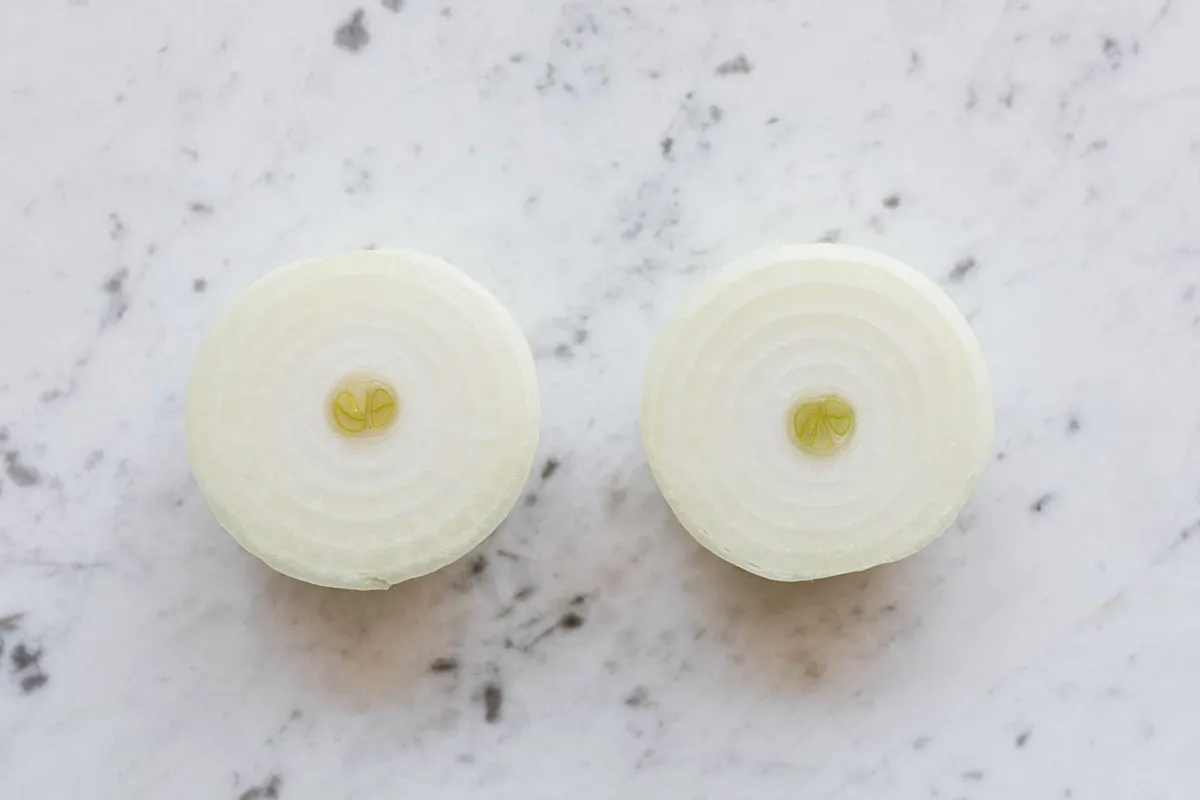
Both are made in the same way. Fresh white onions are peeled, washed in chlorinated water, sliced and belt-dried to low moisture. The dried flakes are then milled and sieved into size grades. The finest fraction becomes powder, and the coarser fractions become granules and minced onion. You can read more in how dehydrated onion is made.
What Is Onion Powder?
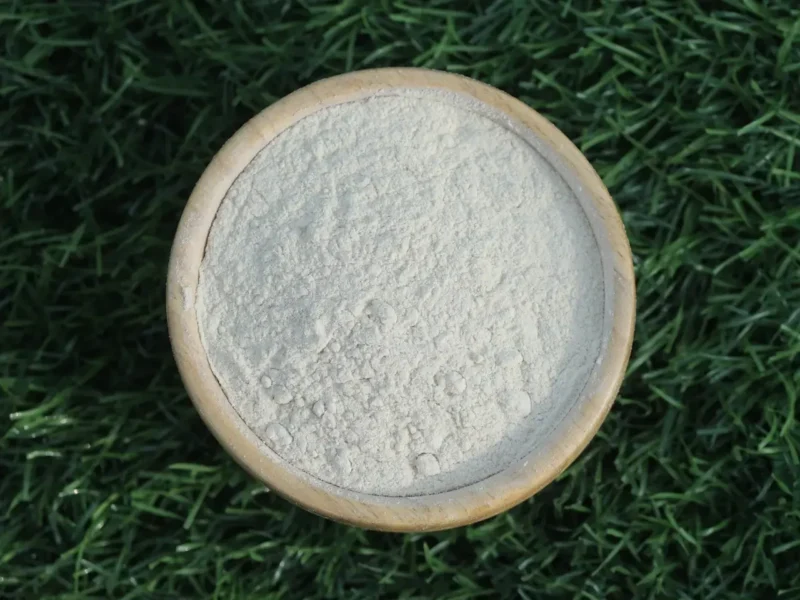
Onion powder is dehydrated onion milled to a fine, flour-like powder, usually 80–100 mesh, with finer 100–120 mesh grades available. It is creamy white, has a strong onion flavour and dissolves quickly in liquids. It is the most used form of dehydrated onion in seasonings, soups, sauces and snack coatings.
Export onion powder typically has moisture of 5% or less, total ash of 5% or less and acid-insoluble ash of 0.5% or less. Because the particles are so fine, powder has a large surface area. It picks up moisture from the air quickly, which is why it is packed in lined cartons and must be stored dry.
Mesh numbers describe the sieve the powder passes through. A US 80 mesh sieve has openings of about 180 µm, and a 100 mesh sieve about 150 µm. A specification such as “80–100 mesh, 95% through” means that at least 95% of the powder passes the stated sieve. Ask for a sieve analysis on the Certificate of Analysis, because a powder with too many coarse particles will not dissolve as smoothly.
What Is Granulated Onion?
Granulated onion, also called onion granules, is dehydrated onion milled to small granules. Common grades are 0.2–0.5 mm (about 40–80 mesh) and 0.5–1 mm (about 16–40 mesh). Coarser pieces of 1–3 mm are sold as minced onion.
Granules flow freely and spread evenly, which is why seasoning blenders and snack makers use them. They mix well with salt, sugar and other granular spices and do not separate as much in a blend. Typical export granules have moisture of 6% or less, with 5% typical, and the same ash and microbiology limits as powder.
Both products are also tested for hot-water-insoluble solids, usually 20% or less. This test shows how much of the product does not dissolve in hot water, and it helps detect excess skin, root or foreign plant material. A low figure means a cleaner product with better flavour per kilogram.
How Do Onion Powder and Granulated Onion Compare?
The table compares onion powder vs granulated onion on the points that matter to food manufacturers.
| Point | Onion powder | Granulated onion |
|---|---|---|
| Particle size | 80–100 mesh (100–120 fine) | 0.2–0.5 mm or 0.5–1 mm |
| Texture | Fine, flour-like | Sand-like granules |
| Flavour release | Fast, strong | Slower, more gradual |
| Dissolving in liquids | Quick and smooth | Slower; may show specks |
| Flow and caking | More prone to clumping | Free-flowing; less caking |
| Typical moisture (export) | 5% max | 6% max (5% typical) |
| Best uses | Sauces, soups, dressings, dips, snack coatings | Dry rubs, seasoning blends, toppings, meat products |
| Typical packing | 20–25 kg lined cartons | 20–25 kg lined cartons |
Onion powder vs granulated onion for food manufacturing.
How Do Their Flavour and Texture Differ?
Onion powder tastes stronger at first, while granulated onion gives a slightly milder, slower flavour. The onion itself is the same, so the difference comes from surface area.
Fine powder exposes more surface to moisture and heat, so its flavour reaches the tongue faster. A spoon of powder also packs more tightly and holds more onion than a spoon of granules. Granules release flavour more gradually as they hydrate, and in dry products they can give a light texture or visible specks. In a smooth sauce, granules may not fully dissolve unless the sauce is cooked for some time.
Which One Should You Use in Seasonings, Sauces and Snacks?
Choose onion powder when you need a smooth texture and fast flavour, and choose granulated onion when you need good flow and even mixing in a dry blend.
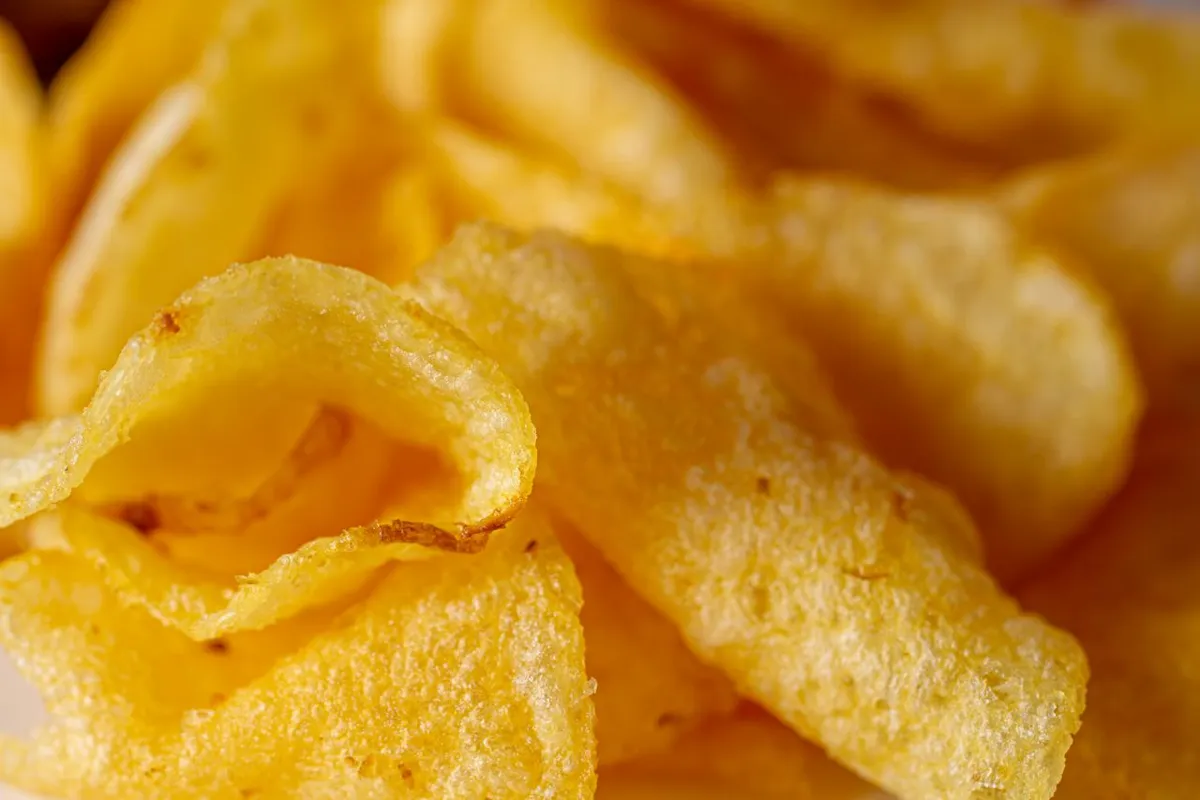
- Snack coatings: powder sticks evenly to chips, crackers and extruded snacks, and blends well with cheese and other fine powders.
- Sauces, soups and dressings: powder dissolves quickly and leaves no specks in a smooth product.
- Seasoning blends and rubs: granules match the size of salt and pepper, so the blend stays even and does not cake as easily.
- Meat products and burgers: granules or minced onion give a visible onion piece and gradual flavour.
- Retail spice jars: both are sold; granules pour more easily from a shaker.
Particle size also matters for blend stability. In a dry mix, fine and coarse particles can separate during transport and filling, with fine powder settling to the bottom. Blenders reduce this by matching the onion form to the size of the other ingredients. For a fine cheese or sour cream seasoning, choose powder. For a coarse steak rub, choose granules or minced onion.
What Are the Substitution Ratios and Tips?
By weight, onion powder and granulated onion can be swapped roughly one for one, because both are the same dried onion. By volume, they are not equal. A teaspoon of powder holds more onion than a teaspoon of granules, so when a recipe is written in spoons, you will usually need a little more granulated onion to replace powder, and a little less powder to replace granules.
- Use weight in production: food manufacturers should always dose by weight, not volume, to keep the flavour consistent.
- Allow time for granules: in liquids, give granules time to hydrate before you judge the flavour.
- Test in your product: run a small trial when you switch forms, because texture and colour can change.
- Control clumping: powder clumps because its fine particles take up moisture from the air. Keep cartons closed, store them in a cool, dry place and use the oldest stock first. An anticaking agent can be added on request, but it must be declared on the label.
Related reading: What Is Potato Powder? Potato Flakes and Powder Explained.
How Do You Buy Dehydrated Onion Products in Bulk from India?
When you compare onion powder vs granulated onion offers, ask for the mesh or size range, moisture, colour, hot-water-insoluble solids and microbiology limits, and whether you need steam-sterilised, low-micro product. Steam sterilisation lowers the microbial load and is often needed for ready-to-eat products, such as dips and snack seasonings that are not cooked after mixing. Also ask for pesticide residue results against the rules of your market, and for the crop and production date, because flavour fades slowly over a long storage period. India is the world’s largest dried onion exporter, and most of its white onion comes from the Mahuva cluster in Gujarat.
Elysium Agri Corporation exports white onion powder in 80–100 mesh and white onion granules in 0.2–0.5 mm, 0.5–1 mm and 1–3 mm minced grades, milled from Mahuva white onion. We also supply onion flakes and garlic powder, which can share a container. Every lot is sieved, tested for moisture, ash and microbiology and passed through magnets and a metal detector. A 20 ft container holds about 14–15 MT of powder. See our lab testing page for details.
Tell us the product, grade, quantity and destination port, and we will send a price with the specification sheet. Request a dehydrated onion quote →
Frequently asked questions
What is the difference between onion powder and granulated onion?
Both are dehydrated onion, but they are milled to different sizes. Onion powder is fine, about 80–100 mesh, and dissolves quickly with a strong flavour. Granulated onion is coarser, about 0.2–1 mm, flows freely, clumps less and releases flavour more gradually. The raw material and safety limits are the same.
Can I substitute granulated onion for onion powder?
Yes. By weight, the two can be swapped roughly one for one. By volume, a spoon of powder holds more onion than a spoon of granules, so you will usually need a little more granulated onion. In liquids, give granules time to hydrate, and test the swap in your product before production.
Which is stronger, onion powder or granulated onion?
Onion powder tastes stronger at first, especially by volume. Its fine particles have more surface area, so the flavour is released faster, and a spoon of powder packs more onion. Granulated onion has the same flavour by weight, but it releases it more slowly as the granules absorb moisture.
Why does onion powder clump more than granulated onion?
Onion powder clumps because its very fine particles have a large surface area and quickly absorb moisture from the air. Damp particles stick together and cake. Granules have less surface area and flow more freely. Keep powder in sealed, lined packs in a cool, dry place, or use a declared anticaking agent.
Which one is better for seasoning blends?
Granulated onion is usually better for dry seasoning blends and rubs. Its size matches salt, pepper and other granular spices, so the blend stays even and resists caking. Onion powder is better for snack coatings and blends that must stick to a surface or dissolve quickly in a sauce or dip.
Related reads


