

On this page
- What Is Potato Powder, and What Are Potato Flakes?
- How Are Potato Flakes Made: From Tuber to Flake?
- How Is Potato Powder Produced?
- How Do Potato Flakes and Potato Powder Compare?
- How Are Potato Flakes Used in Snacks, Soups, Bakery and Ready Meals?
- Which Quality Specifications and Storage Conditions Apply?
- How Do You Source Potato Flakes from India?
- Frequently asked questions
Potato powder, also called potato flour, is dehydrated cooked potato milled to a fine powder of about 80–120 mesh. It is made by grinding drum-dried potato flakes, which are thin sheets of cooked, mashed potato dried on a heated drum and broken into small pieces. Both are shelf-stable forms of potato used in snacks, instant mash, soups, bakery and ready meals. This guide explains how potato flakes and potato powder are made, how they differ, and what buyers check.
Key takeaways
- Potato flakes are drum-dried mashed potato. Potato powder is the same product milled finer.
- About 5 kg of fresh potato makes 1 kg of flakes, and flakes absorb about 4–5 times their weight of water.
- Flakes suit instant mash and fabricated chips; powder suits snack doughs, thickening and gluten-free baking.
- Key specifications are moisture, particle size, free starch, specks, microbiology and glycoalkaloids.
What Is Potato Powder, and What Are Potato Flakes?
Potato flakes and potato powder are dehydrated forms of cooked potato. Because the potato is cooked before drying, the starch is already gelatinised. When you add water, the product quickly turns back into a smooth mash or dough, without further cooking.
The main difference is particle size. Potato flakes pass through a 1.7 mm screen, about 10–20 mesh, and look like small, light, creamy-white flakes. Potato powder is milled to 80–120 mesh, so it is fine and free-flowing, like flour. They also have different HS codes: flakes, granules and pellets fall under 1105 20 00, while potato flour, meal and powder fall under 1105 10 00.
A third related product is potato granules. Granules are also dried cooked potato, but they are made by a gentler process that keeps most potato cells intact, which gives a fluffier mash.
How Are Potato Flakes Made: From Tuber to Flake?
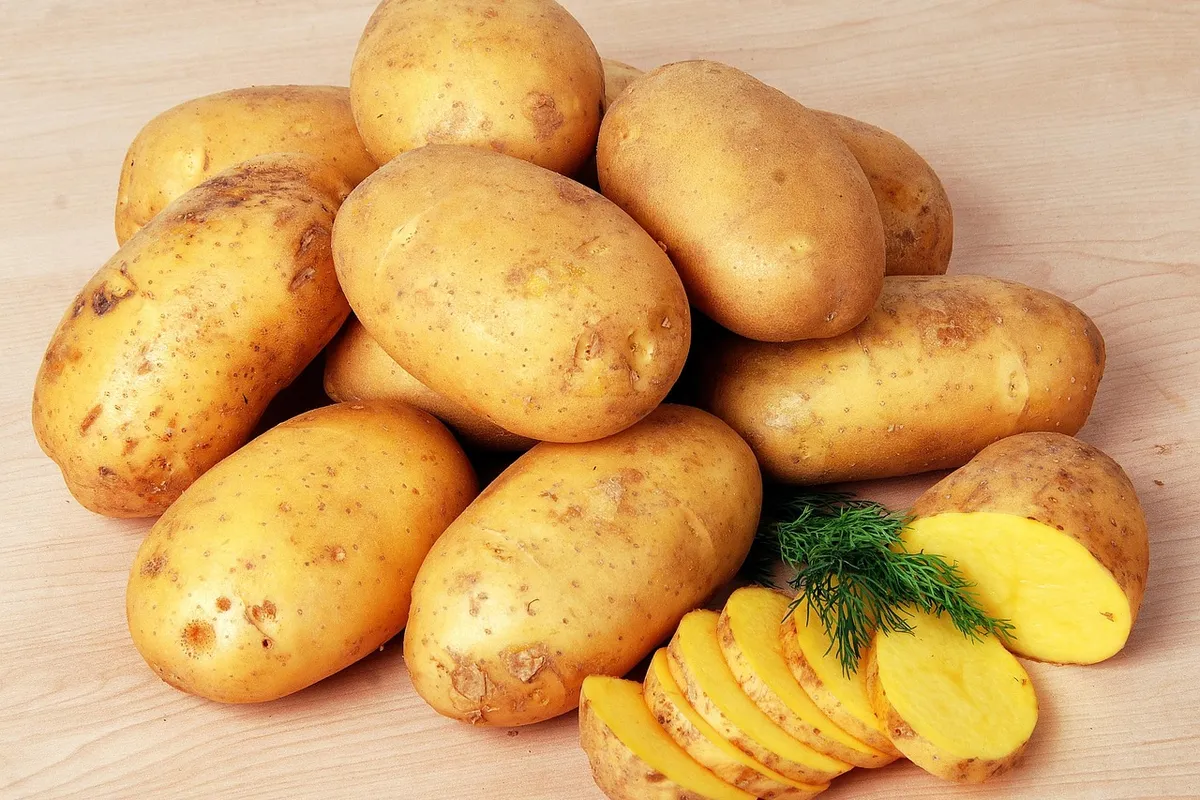
Potato flakes are made by washing, peeling, slicing and cooking fresh potatoes, mashing them, and drying the mash in a thin layer on a heated drum. The main steps are:
- Raw material: processing varieties with high dry matter are selected. In Gujarat these include Kufri Chipsona and Lady Rosetta, grown around Deesa and Mehsana.
- Washing and peeling: potatoes are washed and peeled, usually with steam, and trimmed to remove defects.
- Slicing: potatoes are cut into even slices so they cook evenly.
- Precooking and cooling: for standard flakes, slices are partly cooked in warm water and then cooled. This step controls how much free starch is released, which keeps the final mash from becoming sticky.
- Cooking and mashing: slices are fully cooked with steam and riced into a smooth mash. Permitted processing aids, such as emulsifiers, may be added, and sulphite-free options are available.
- Drum drying: the mash is spread as a thin sheet on a large steam-heated drum. It dries in seconds and is scraped off as a continuous sheet.
- Breaking and sieving: the sheet is broken into flakes, sieved to size, checked for specks and metal, and packed.
Potato is mostly water, so the yield is low: about 5 kg of fresh potato makes 1 kg of flakes. Drum drying also uses a lot of energy, about 10–14% of the production cost. Both factors drive the price of flakes.
How Is Potato Powder Produced?
Potato powder is produced by milling drum-dried potato flakes and sieving the result to a fine mesh, usually 80 mesh for standard grades and 100–120 mesh for fine grades. At least 95% of the powder should pass the stated sieve. Milling breaks more potato cells and releases more starch, so potato powder has the highest water absorption of all potato products.
The powder must be very dry, because fine particles absorb moisture from the air. FSSAI limits moisture to 5% for dehydrated vegetable powders, compared with 8% for flakes. Powder is milled and packed in dry conditions, in multi-wall paper or HDPE sacks with a PE liner.
How Do Potato Flakes and Potato Powder Compare?
| Point | Potato flakes | Potato powder | Potato granules |
|---|---|---|---|
| How it is made | Drum-dried cooked mash, broken into flakes | Milled drum-dried flakes | Add-back and air drying; cells stay intact |
| Particle size | About 10–20 mesh (100% through 1.7 mm) | 80–120 mesh | Small free-flowing granules |
| Free starch | Moderate (standard); high (LP/LL snack grades) | Highest | Low |
| Moisture (max) | 8% | 5% | By specification |
| Behaviour with water | Rehydrates into mash; absorbs 4–5 times its weight | Blends into doughs and dry mixes | Fluffy, non-sticky mash |
| Best for | Instant mash, fabricated chips, bakery | Snack doughs, soups, thickening, gluten-free baking | Food service mash |
| HS code | 1105 20 00 | 1105 10 00 | 1105 20 00 |
| Load per 20 ft | About 9.6 MT | About 12–14 MT | By packing |
The difference between drum-dried flakes and granules lies in the cells. Drum drying breaks many potato cells and releases starch, which gives a smooth texture and strong binding. The granule process keeps the cells whole, so the mash is fluffy and less sticky, but the product binds less in snack doughs.
How Are Potato Flakes Used in Snacks, Soups, Bakery and Ready Meals?
Potato flakes uses span many food categories, because the product adds potato flavour, binding and moisture without peeling or cooking.
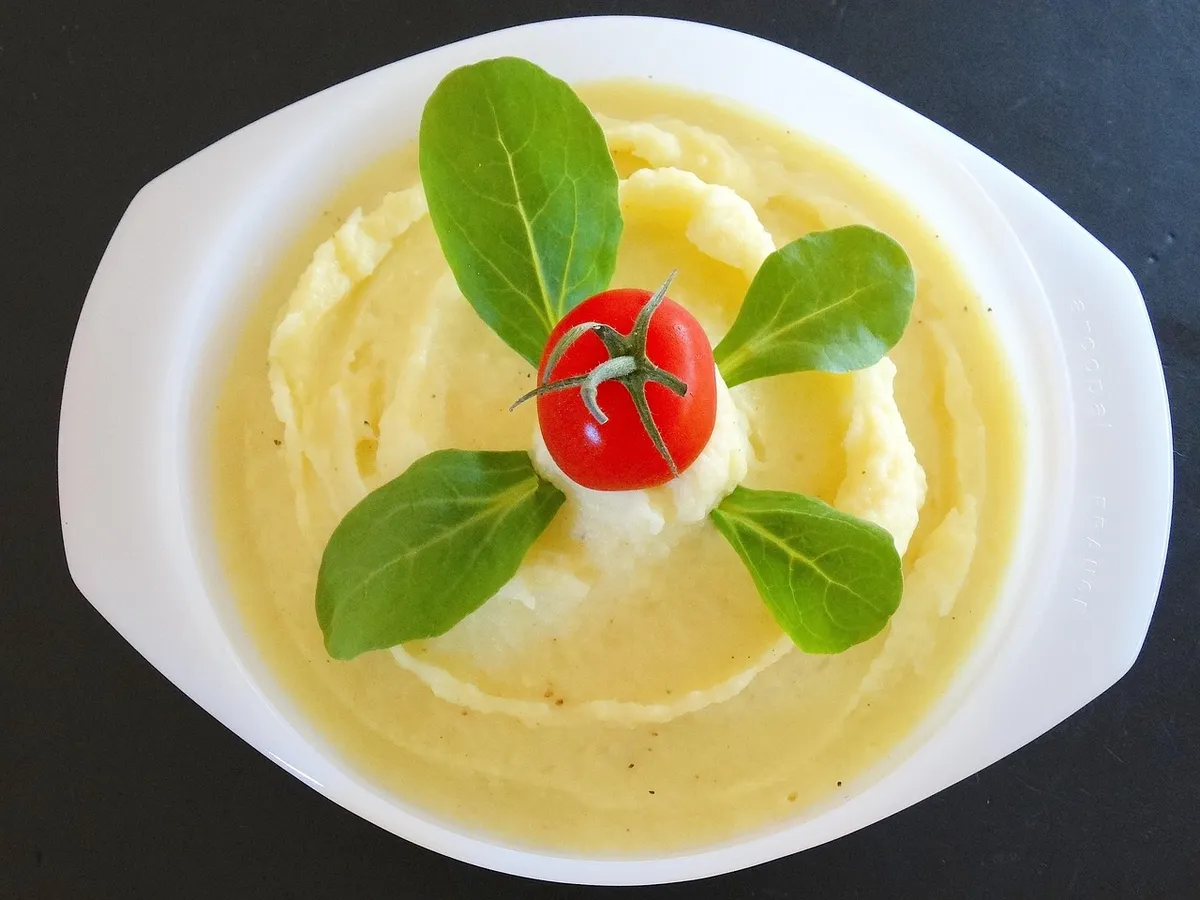
- Instant mashed potato: retail packs and food service, made from standard flakes.
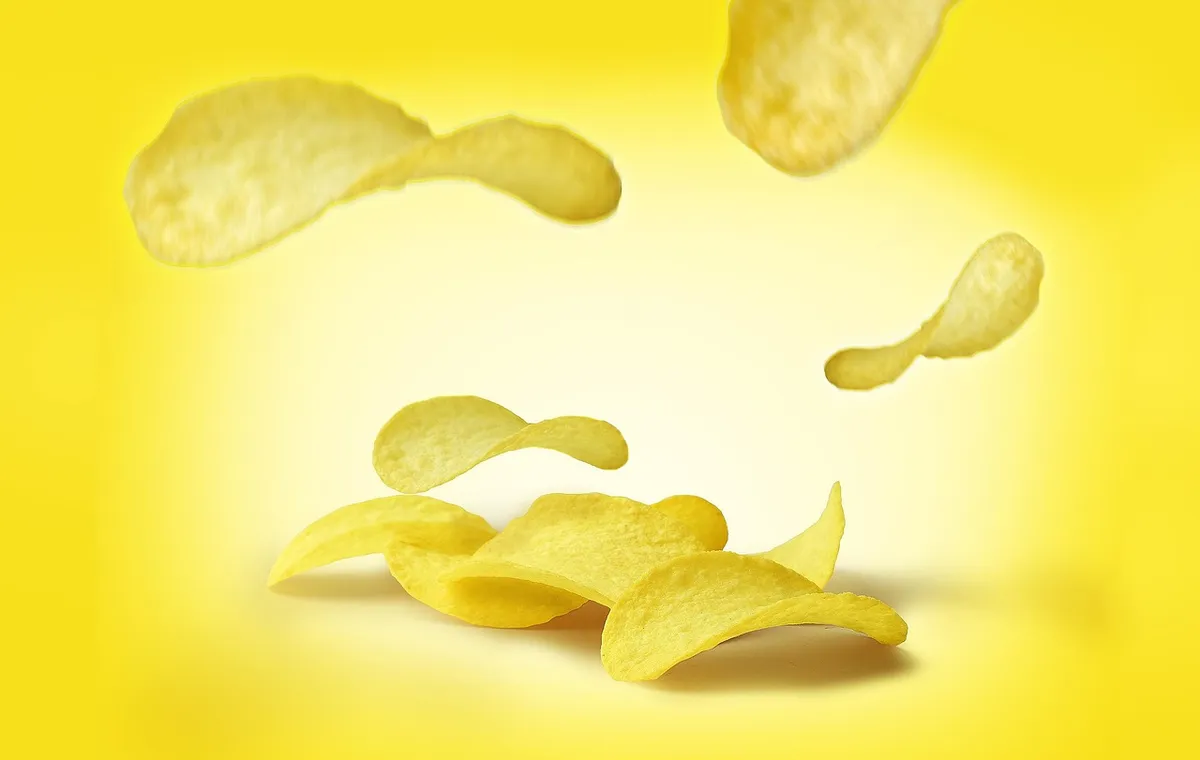
- Fabricated chips and extruded snacks: stackable chips and shaped snacks use high-free-starch (LP/LL) flakes or powder for dough strength and crisp expansion.
- Bakery: potato bread and rolls, where potato keeps the crumb soft and moist for longer.
- Soups and sauces: a natural thickener in dry soup mixes, sauces and gravies.
- Ready meals: fillings, croquettes, potato cakes and toppings.
- Meat and plant-based foods: a binder and extender in burgers, sausages and meat alternatives.
- Coatings and batters: crisp coatings for fried foods.
- Gluten-free products: potato powder binds and thickens without gluten.
For instant mash, the usual starting point is the water absorption: potato flakes take up about 4–5 times their weight of water. A food service kitchen mixes flakes into hot water or milk and stirs briefly, so there is no peeling, boiling or draining. In snack doughs, manufacturers blend flakes or powder with starch and other ingredients, then sheet, cut and fry or bake the dough.
Which Quality Specifications and Storage Conditions Apply?
Buyers check moisture, particle size, colour, specks, free starch, microbiology and contaminants on every lot. Typical export specifications for potato flakes are:
- Moisture: 8% maximum, 6–7% typical (powder 5% maximum).
- Bulk density: about 0.25–0.40 g/ml.
- Free starch (blue value): about 15–25% for standard flakes.
- Peel and scorched specks: 25 per 100 g maximum.
- Acid-insoluble ash: 0.5% maximum, and peroxidase negative, which shows correct cooking.
- Microbiology: total plate count 10⁴ cfu/g maximum, coliforms 100 cfu/g maximum, E. coli below 10 cfu/g and Salmonella absent in 25 g.
- Glycoalkaloids: 100 mg/kg maximum, in line with the EU indicative level in Commission Recommendation (EU) 2022/561.
- Residues: pesticides within destination limits, and no ethylene oxide.
Dehydrated potato flakes and powder last about 12 months when stored below 30 °C and 65% relative humidity, in sealed, lined packs away from odours. Moisture and heat are the main risks, because they cause caking, off-flavours and browning.
Related reading: What Is Dried Onion? Forms, Uses and Quality Explained.
How Do You Source Potato Flakes from India?
Now that you know what potato powder is and how flakes are made, define your grade by end use: standard flakes for mash and bakery, high-free-starch flakes for snacks, or 80–120 mesh powder for doughs and thickening. India exported about 35,000 tonnes of potato flakes and granules worth US$ 62 million in 2024, mainly to Malaysia, the Philippines, Japan and Indonesia. Germany, Belgium, the Netherlands and the USA lead world trade, and Indian flakes compete on price, with India’s 2024 exports averaging about US$ 1,760/MT. The process is close to that used for other dried vegetables; see how dehydrated onion is made.
Elysium Agri Corporation supplies potato flakes and potato powder made from Gujarat potatoes, with sulphite-free options, and tests every lot for moisture, microbiology and residues. Flakes are packed in 20 kg HDPE or paper sacks with a PE liner, and a 20 ft container holds about 9.6 MT; plan yours with our container load calculator. Private label packing is available on request, and our lab testing page explains the test panel. Share your grade, quantity and destination port for a price and specification sheet. Request a potato flakes quote →
Frequently asked questions
What is potato powder and how is it different from potato flakes?
Potato powder, or potato flour, is drum-dried cooked potato milled to a fine 80 to 120 mesh. Potato flakes are the same dried mash broken into larger pieces of about 10 to 20 mesh. Powder has the highest water absorption and blends into doughs, while flakes rehydrate into mash and suit instant potato and snacks.
How are potato flakes made from fresh potatoes?
Fresh potatoes are washed, peeled and sliced, then precooked, cooled and fully cooked with steam. The cooked potato is mashed and spread as a thin sheet on a heated drum, where it dries in seconds. The dried sheet is broken into flakes, sieved, checked for specks and metal, and packed in lined sacks.
What are potato flakes used for in food manufacturing?
Potato flakes are used for instant mashed potato, fabricated and stackable chips, extruded snacks, potato bread and rolls, dry soups and sauces, ready meals, croquettes, coatings and batters. They also act as a binder and extender in meat products and plant-based foods, adding potato flavour and moisture without peeling or cooking.
What is the difference between drum-dried and granulated potato flakes?
Drum-dried flakes are made by drying a thin sheet of mash on a heated drum, which breaks many potato cells and releases starch, giving smooth texture and strong binding. Potato granules are made by add-back and air drying, which keeps cells intact, so the mash is fluffier and less sticky but binds less in doughs.
How long do dehydrated potato flakes last in storage?
Dehydrated potato flakes and powder typically last about 12 months when kept below 30 °C and 65 percent relative humidity, in sealed, lined packs away from strong odours. Moisture and heat are the main risks, because they cause caking, off-flavours and browning, so reseal opened sacks quickly and store them off the floor.
Related reads


