
On this page
- Granulated Garlic vs Garlic Powder: What Is the Short Answer?
- How Is Each Form Made and Milled?
- How Do Particle Size and Mesh Compare?
- How Do Flavour, Solubility and Flow Behaviour Differ?
- What Are the Best Uses in Food Manufacturing?
- How Do You Choose Between the Two?
- How Do You Buy Garlic Powder in Bulk from India?
- Frequently asked questions
In the granulated garlic vs garlic powder comparison, both are made from the same dried garlic, and the main difference is particle size: garlic powder is milled fine to 80–100 mesh, while granulated garlic is coarser, at about 0.2–2 mm (8–80 mesh). Powder dissolves quickly and gives an instant, even flavour, while granules flow freely, cake less and release flavour a little more slowly. Flavour strength per gram is broadly similar. This guide explains how each is made, compares sizes and behaviour, and shows which suits each food application.
Key takeaways
- Garlic powder and granulated garlic are the same product milled to different sizes.
- Powder is 80–100 mesh and dissolves fast. Granules range from 8–16 to 40–80 mesh and flow freely.
- Granules are the usual choice for dry seasoning blends because they mix evenly and cake less.
- Swap them by weight rather than by spoon, and confirm the dose in a small trial.
Granulated Garlic vs Garlic Powder: What Is the Short Answer?
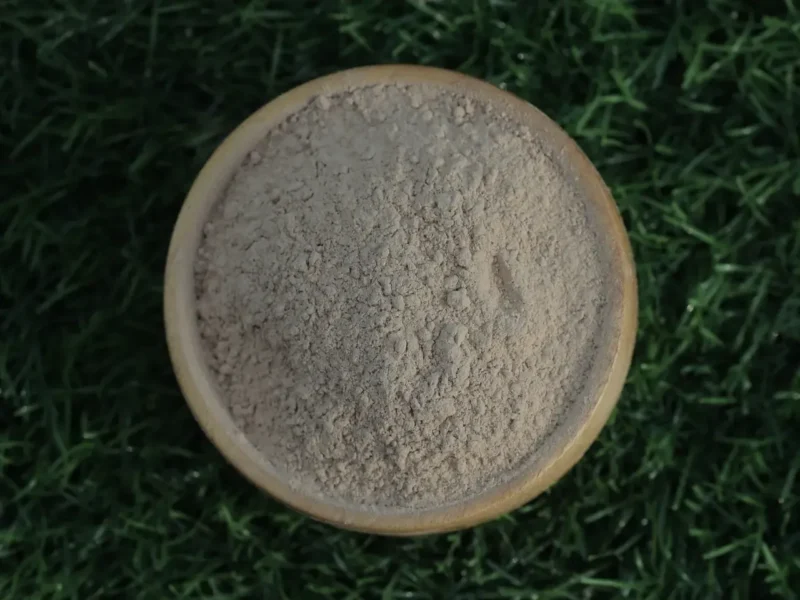
Garlic powder is fine and floury. Granulated garlic looks like coarse sand. Both start as dehydrated garlic flakes, and both carry the strong, pungent taste of dried garlic. The difference in particle size changes how they behave in food:
- Garlic powder blends into liquids and batters almost at once, gives a smooth texture and an immediate garlic flavour. It picks up moisture easily and can form lumps.
- Granulated garlic pours and mixes easily, spreads evenly through dry blends, gives a slight texture and is less likely to cake in humid conditions.
For most cooked foods, either can be used. The choice matters most in industrial seasonings, snack coatings and products where texture, flow or appearance must be controlled.

How Is Each Form Made and Milled?
Both products follow the same first steps. Garlic bulbs are broken into cloves, peeled, washed and sliced. The slices are dried in hot-air driers to low moisture, which gives dehydrated garlic flakes. India grows most of its garlic in Madhya Pradesh, while China supplies most of the world’s dehydrated garlic.
The dried flakes are then milled and sieved:
- Granulated garlic: flakes are broken in a mill, then sieved into size fractions such as 8–16, 16–26, 26–40 and 40–80 US mesh. Each fraction is sold as a separate grade.
- Garlic powder: flakes, or the fine fraction from granule production, are milled further until about 95% passes an 80–100 mesh screen. Finer 100–120 mesh is also available.
Both pass through magnets and metal detectors before packing. For foods that are not cooked after seasoning, both can be supplied as low-micro, steam-sterilised grades. International quality rules for dried garlic are set out in the Codex standard for dried or dehydrated garlic (CXS 347), and India’s own standard is IS 5452.
How Do Particle Size and Mesh Compare?
Mesh numbers describe how many openings a sieve has per inch. A higher mesh number means a finer particle. The table compares the two forms.
| Feature | Granulated garlic | Garlic powder |
|---|---|---|
| Mesh (US) | 8–16, 16–26, 26–40 or 40–80 | 80–100 (100–120 on request) |
| Approximate size | About 0.2–2 mm by grade | Below about 0.18 mm |
| Look and feel | Coarse, sandy, free-flowing | Fine, floury |
| Moisture (max) | 6% (Codex 8%) | 5% (Codex 7%) |
| Caking risk | Lower | Higher in humid conditions |
| Flavour release | Slightly slower | Immediate |
| Pungency (VOSC) | ≥ 0.3% | ≥ 0.3% |
| Load per 20 ft | About 13–14 MT | About 13–14 MT |
Granulated garlic vs garlic powder: typical export specifications from India.
VOSC means volatile organic sulphur compounds, the main measure of garlic pungency. Both forms are specified to the same minimum, because they come from the same dried garlic. Indian exporters ship dehydrated garlic under ITC-HS 0712 90 20, although some file granules under 0712 90 90, so confirm the code with your customs broker or our HS code finder.
How Do Flavour, Solubility and Flow Behaviour Differ?
Flavour. Gram for gram, the two forms have similar flavour strength. In use, powder can seem stronger at first, because its fine particles dissolve and release flavour at once. Granules release flavour more gradually as they hydrate, especially in coarse grades. Overheating during drying or milling can reduce pungency in either form, so a pungency test is useful for both.
Solubility. Powder disperses quickly in water, oil and batters, which suits soups, sauces, dressings and marinades. Granules disperse more slowly and may stay visible as small specks, which some products want and others do not.
Flow and caking. Garlic powder clumps more than granules because fine particles have a much larger surface area. They absorb moisture from the air and stick together, especially in humid storage. Garlic also contains natural sugars that become sticky when damp. Granules have fewer contact points and less surface area, so they flow freely through dosing equipment and seasoning drums. To limit caking, keep powder in lined, sealed packs, store it cool and dry, and close part-used bags tightly.
What Are the Best Uses in Food Manufacturing?
Food manufacturers usually choose by process and product format:
- Dry seasoning blends and rubs: granules, because they mix evenly with salt and other spices and do not separate or clump.
- Snack coatings: fine granules (40–80 mesh) or powder, depending on how well the coating needs to stick.
- Soups, sauces, gravies and dressings: powder, for fast and even dispersion.
- Marinades and batters: powder, which blends smoothly into wet mixes.
- Meat products, burgers and sausages: granules or powder; granules can give a visible garlic speck.
- Garlic bread and toppings: coarse granules for texture and appearance.
- Instant noodles and ready-meal sachets: powder or fine granules, often low-micro.
Many seasoning houses buy both and use each where it performs best. Garlic and onion are often bought together; see our comparison of onion vs onion powder and our guide to dehydrated onion forms.
How Do You Choose Between the Two?
Ask four questions. First, is the product wet or dry? Wet products favour powder; dry blends favour granules. Second, should the garlic be seen? If yes, choose granules. Third, how humid is your factory and storage? In humid conditions, granules are easier to handle. Fourth, how is the seasoning dosed? Free-flowing granules suit automatic dosing better.
If you need to swap one for the other, convert by weight, not by volume. A spoonful of fine powder and a spoonful of granules do not weigh the same, because the particles pack differently. Weigh the amount in your current recipe, use the same weight of the new form, and adjust after a taste trial. Check moisture, colour and pungency on the first lot of any new grade.
Price is another factor. Dehydrated garlic is priced per kilo or per tonne FOB, and the main cost driver is the price of fresh garlic at harvest. China supplies most of the world’s dehydrated garlic, so Chinese prices also set the market. Between the two forms, the difference is mainly milling and sieving cost. Finer powders and narrow granule ranges need more processing and can cost a little more, while a wide granule range is usually the cheapest cut.
Origin can matter too. Indian garlic is valued for its strong pungency, which carries through into both powder and granules. If you blend garlic from different origins, agree a minimum VOSC level and a reference sample, so the flavour of your finished product stays the same from lot to lot. Ask for a Certificate of Analysis that shows mesh distribution, moisture, VOSC, total plate count, yeast and mould, and Salmonella for each lot.
Related reading: What Is Dried Onion? Forms, Uses and Quality Explained.
How Do You Buy Garlic Powder in Bulk from India?
Whichever side of the granulated garlic vs garlic powder choice you land on, fix the mesh, moisture, pungency and microbiology limits in your specification. Elysium Agri Corporation exports garlic powder in 80–100 mesh and garlic granules from 8–16 to 40–80 mesh, milled from Indian garlic. Every lot is tested for volatile sulphur compounds, moisture, microbiology and pesticide residues, and steam-sterilised low-micro grades are available. Dried garlic from India is not under increased EU border checks, but it must meet EU pesticide and contaminant limits; see our lab testing page. A 20 ft container holds about 13–14 MT, and garlic and onion products can share one load.
Tell us the form, mesh, quantity and destination port, and we will send a quote and specification sheet. Request a garlic powder quote →
Frequently asked questions
What is the difference between garlic powder and granulated garlic?
Both are dehydrated garlic, milled to different sizes. Garlic powder is fine, about 80–100 mesh, and dissolves almost at once. Granulated garlic is coarser, about 0.2–2 mm or 8–80 mesh, flows freely and cakes less. Powder suits sauces, soups and batters, while granules suit dry seasoning blends, rubs and toppings.
Is granulated garlic stronger than garlic powder?
Not by weight. Both come from the same dried garlic and are usually specified to the same pungency, measured as volatile sulphur compounds. Powder can taste stronger at first because it dissolves and releases flavour immediately, while granules release flavour more gradually. By volume, results differ because the particles pack differently.
Which is better for seasoning blends, garlic powder or granulated?
Granulated garlic is usually better for dry seasoning blends and rubs. It mixes evenly with salt and other spices, flows freely through dosing equipment and is less likely to cake or form lumps. Fine 40–80 mesh granules or powder are used where the seasoning needs to cling closely, such as some snack coatings.
Can granulated garlic replace garlic powder one for one?
By weight, yes, roughly, because both are the same dried garlic. By volume, no, because a spoon of fine powder and a spoon of granules do not weigh the same. Weigh the amount used in your recipe, replace it with the same weight of the other form, then adjust after a small taste trial.
Why does garlic powder clump more than granulated garlic?
Garlic powder has very fine particles with a large total surface area, so it absorbs moisture from the air quickly. Garlic's natural sugars become sticky when damp, and the particles bind into lumps. Granules have less surface area and fewer contact points. Sealed, lined packs and cool, dry storage reduce caking.
Related reads


