
On this page
- What Are the Forms of Dehydrated Onion?
- What Are Onion Flakes?
- What Are Kibbled and Minced Onion?
- What Are Onion Granules and Powder?
- How Do Dehydrated Onion Forms Compare?
- How Do Particle Size, Colour and Flavour Intensity Differ?
- Which Form Suits Which Application?
- How Do You Buy Dehydrated Onion in Bulk?
- Frequently asked questions
The difference between minced onion vs onion flakes is size: onion flakes (also called kibbled onion) are large pieces of about 8–25 mm, while minced onion is milled down to about 1–3 mm. Both are made from the same dried white onion, but minced onion rehydrates faster and spreads more evenly, while flakes give visible onion pieces. Dehydrated onion comes in five main forms, from flakes to powder, and each suits different foods. This guide explains every form, compares them in one table, and shows which one fits which application.
Key takeaways
- All dehydrated onion forms start as dried flakes, which are then milled and sieved into smaller cuts.
- The main forms are flakes (kibbled), chopped, minced, granules and powder.
- Smaller particles rehydrate faster and blend more evenly, while larger pieces give texture and visible onion.
- About 8–9 kg of fresh onion is needed to make 1 kg of dehydrated onion.
What Are the Forms of Dehydrated Onion?
Dehydrated onion is fresh onion that has been sliced, dried to a low moisture content, and then cut to size. The trade recognises five main forms:
- Flakes or kibbled onion: 8–25 mm pieces.
- Chopped onion: 3–5 mm, with a large chopped grade of 5–8 mm.
- Minced onion: 1–3 mm.
- Granules: 0.2–0.5 mm and 0.5–1 mm.
- Powder: fine enough to pass an 80–100 mesh sieve.
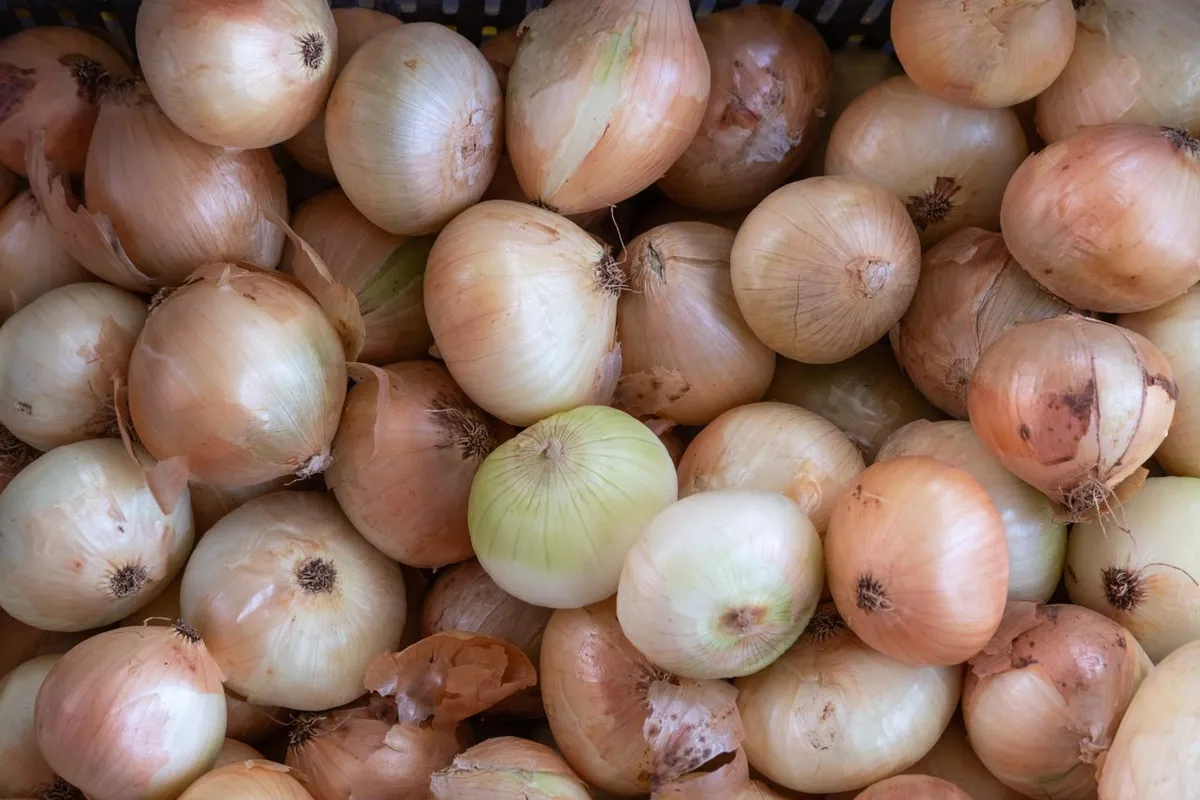
Most dehydrated onion is made from white onion, which has high solids and a strong, pungent flavour. India is the world’s largest exporter of dried onion. In 2024 it shipped about 1.13 lakh tonnes worth US$ 221 million, mainly to the USA, Brazil, Germany and Indonesia, according to World Bank WITS data. Most Indian dehydration units are in Gujarat, around Mahuva in Bhavnagar district, in the country’s white-onion belt.
What Are Onion Flakes?
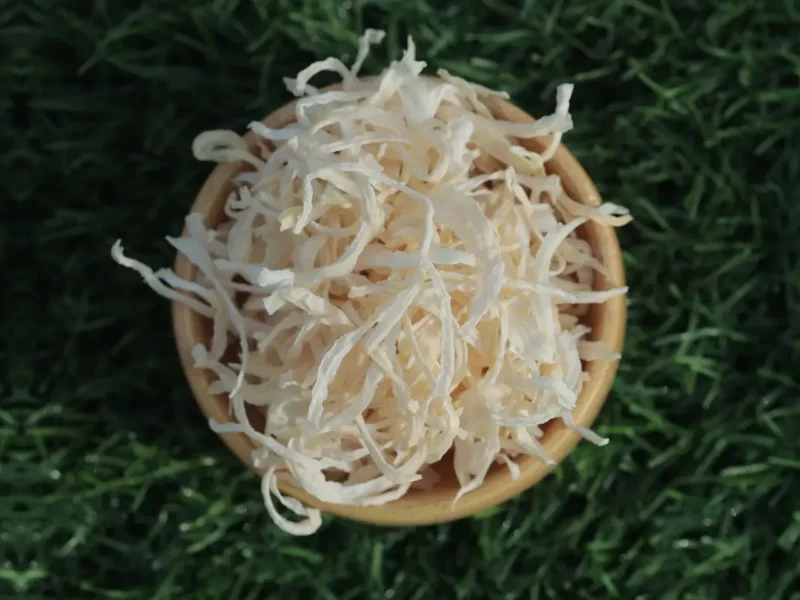
Onion flakes are the first product of the drying process. Peeled onions are sliced and dried in belt driers, and the dried slices break into irregular pieces of about 8–25 mm. In the trade, these are often called kibbled onion. A smaller 8–15 mm flake is also available.
Flakes are creamy white and hold their shape when cooked. They are used where the onion should be seen, such as in soups, stews, sauces and fried onion toppings. They take longer to rehydrate than smaller cuts, so they work best in foods that cook for some time or contain plenty of liquid. Flakes are also the raw material that processors mill into chopped, minced, granules and powder.
Because flakes are light and bulky, fewer tonnes fit into a container. To make the smaller forms, processors pass the dried flakes through mills, then sieve the milled product into size fractions. Each fraction becomes a separate product: the coarsest is chopped, then minced, then granules, and the finest is powder. Magnets and metal detectors are used on the line, and every lot is checked for moisture and microbiology. Because one batch of flakes gives several cuts at once, a processor can usually supply mixed orders of different forms from the same crop.
A 20 ft container holds only about 6–7 MT of flakes, compared with about 14–15 MT of onion powder.
What Are Kibbled and Minced Onion?
Kibbled onion is another name for onion flakes: large, broken pieces of dried onion. Minced onion is a much smaller cut, made by milling flakes and sieving the result to a range of about 1–3 mm. Between the two sits chopped onion, at 3–5 mm or 5–8 mm for large chopped.
So when buyers compare minced onion vs onion flakes, they are comparing the smallest “piece” cut with the largest. Minced onion still gives small visible specks and a light bite, but it rehydrates in a short time and disperses evenly through a mix. That makes it a good choice for rubs, dressings, dips, meat products and burger patties. Chopped onion gives visible pieces and rehydrates faster than flakes, so it suits sauces, ready meals and toppings.
Terms are not used the same way everywhere. Some suppliers call 1–3 mm pieces “minced” and others call them “small chopped”. Always define the size range in millimetres or mesh in the specification, not just the name.
What Are Onion Granules and Powder?
Onion granules and onion powder are the finest forms. They are milled from flakes and sieved to tight ranges.
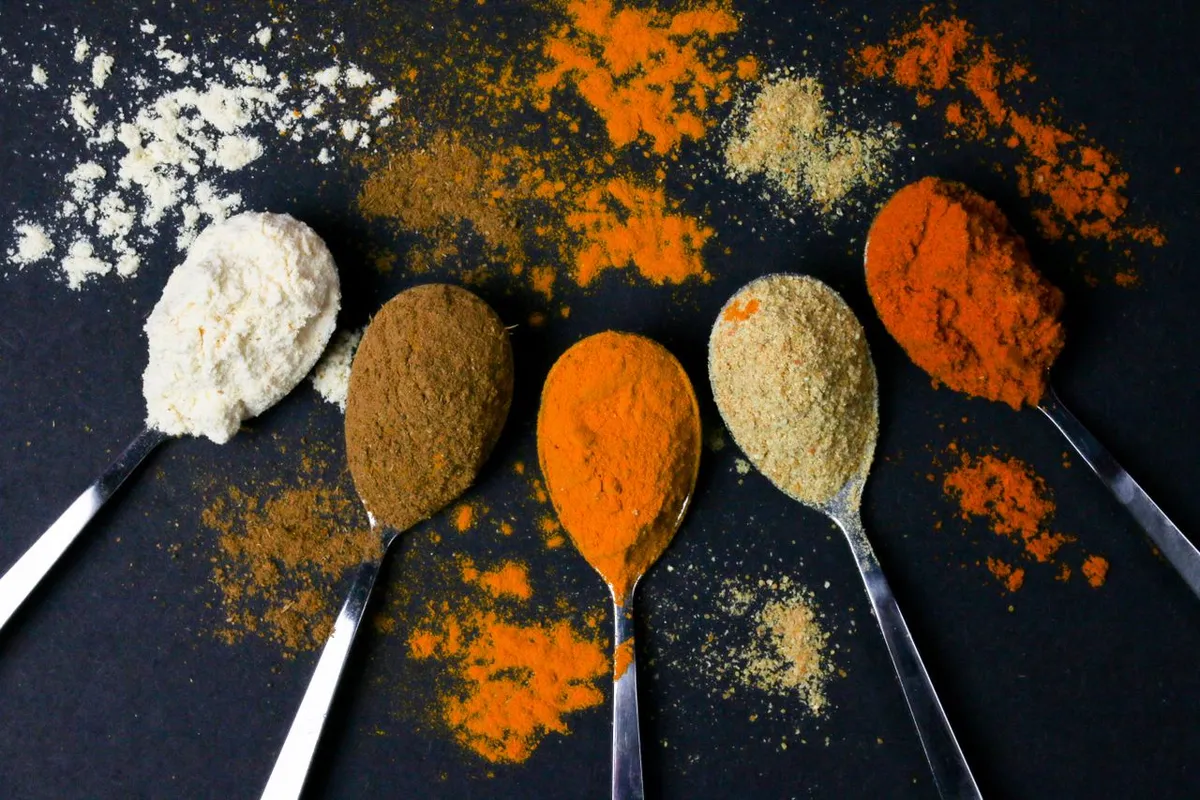
Granules are sold in 0.2–0.5 mm and 0.5–1 mm grades, roughly 40–80 mesh and 16–40 mesh. They look like coarse sand. Granules flow freely and do not clump easily, so they blend evenly in seasoning mixes and coat snacks well.
Powder is milled to 80–100 mesh, with finer 100–120 mesh on request. It dissolves into sauces, soups and batters almost at once and gives the most even flavour. Powder has a stricter moisture limit of 5%, compared with 6% for other forms in our specifications. Because of its large surface area, powder picks up moisture from the air and can cake, so it needs good packing and dry storage. Low-micro, steam-sterilised powder is available for foods that are not cooked after seasoning.
How Do Dehydrated Onion Forms Compare?
The table compares the five forms by size, moisture, behaviour and container load.
| Form | Typical size | Moisture (max) | Rehydration | Load per 20 ft | Typical uses |
|---|---|---|---|---|---|
| Flakes (kibbled) | 8–25 mm | 6% | Slowest | About 6–7 MT | Soups, stews, frying, milling |
| Chopped | 3–5 mm; large 5–8 mm | 6% | Faster than flakes | About 9–11 MT | Sauces, ready meals, toppings |
| Minced | 1–3 mm | 6% | Fast | About 12–13 MT | Rubs, dressings, meat products |
| Granules | 0.2–0.5 / 0.5–1 mm | 6% | Very fast | About 12–13 MT | Seasoning blends, snack coatings |
| Powder | 80–100 mesh | 5% | Dissolves almost at once | About 14–15 MT | Seasonings, soups, sauces |
Dehydrated white onion forms compared. Values are typical export specifications from Gujarat.
All forms share the same HS code, 0712 20 00, and the same Indian standard, IS 4452:2009, which is aligned with ISO 5559. You can check codes with our HS code finder and plan loads with the container load calculator.
How Do Particle Size, Colour and Flavour Intensity Differ?
Particle size changes how fast flavour is released. Smaller particles have more surface area, so they release flavour quickly and spread it evenly. Powder gives an instant, uniform onion taste. Flakes release flavour more slowly as they soften, which suits long cooking.
The flavour strength per gram is broadly similar across forms, because they all come from the same dried onion. In practice, though, fine forms often taste stronger at the same dose because they dissolve fully. When switching between forms, run a small trial and adjust the dose to taste.
Colour should be white to creamy white for all forms. Browning points to overheating during drying or to old stock. Check colour against an approved sample, and ask that every lot is free of burnt or off-odours.
Which Form Suits Which Application?
Choose the form by what the consumer should see and how the food is made:
- Visible onion pieces in soups, stews and ready meals: flakes or chopped.
- Fast-cooking sauces, dressings and dips: chopped or minced.
- Meat products, burgers and sausages: minced or granules.
- Dry seasoning blends and snack coatings: granules, because they flow freely and mix evenly.
- Smooth soups, gravies, batters and instant mixes: powder.
- Foods not cooked after seasoning: low-micro granules or powder.
If you are replacing fresh onion, remember that 1 kg of dehydrated onion equals about 8–9 kg of fresh onion, because fresh onion is 85–90% water. Dehydrated onion also keeps for 18–24 months in cool, dry storage, compared with weeks for fresh onion. You can read more about the basics in our article what is dried onion.
Related reading: Onion vs Onion Powder: Conversion Ratios and Key Differences and Granulated Garlic vs Garlic Powder: Differences and Uses.
How Do You Buy Dehydrated Onion in Bulk?
Start with the form, then fix the size range, moisture, colour and microbiology limits in your specification. Settle the minced onion vs onion flakes question by testing both in your recipe, and order the one that gives the texture you need. Onion is dried mainly during the Gujarat harvest, about February to May, and finished stock ships all year.
Elysium Agri Corporation exports dehydrated white onion and garlic from Gujarat in every cut: flakes, chopped, minced, granules and powder. Every lot is tested for moisture, ash, microbiology and pesticide residues, and low-micro grades are steam-sterilised, never treated with ethylene oxide. Our lab testing page lists the panel. Several cuts can share one container.
Tell us the forms, sizes, quantities and destination port, and we will send a quote with specification sheets. Request a dehydrated onion quote →
Frequently asked questions
What is the difference between minced onion and onion flakes?
Both are dried white onion, but they differ in size. Onion flakes, or kibbled onion, are large pieces of about 8–25 mm that hold their shape and rehydrate slowly. Minced onion is milled and sieved to about 1–3 mm, so it rehydrates faster and spreads evenly through rubs, dressings and meat products.
What are the main forms of dehydrated onion?
The five main forms are flakes or kibbled onion (8–25 mm), chopped (3–5 mm or large 5–8 mm), minced (1–3 mm), granules (0.2–0.5 mm and 0.5–1 mm) and powder (80–100 mesh). All are made by drying sliced onion into flakes, then milling and sieving the flakes to the required size.
What is kibbled onion?
Kibbled onion is the trade name for dehydrated onion flakes: irregular broken pieces of dried onion, usually about 8–25 mm. They are the first product of the drying process. Kibbled onion is used in soups, stews and fried toppings, and it is also milled into smaller cuts such as chopped, minced, granules and powder.
Which dehydrated onion form rehydrates fastest?
Onion powder is fastest, because its fine particles dissolve into liquid almost at once. Granules come next, followed by minced and chopped onion. Flakes take the longest because the pieces are large. In general, the smaller the particle, the larger its surface area and the faster it absorbs water and releases flavour.
Which onion form is best for seasoning blends?
Onion granules are usually best for dry seasoning blends and snack coatings. They flow freely, resist clumping and mix evenly with salt and other spices. Onion powder is preferred where a smooth texture and instant flavour matter, such as soups and sauces, but it picks up moisture more easily and can cake.
Related reads


