
On this page
- What Is Chana Dal?
- What Are Chana Dal Nutrition Facts per 100g?
- How Much Protein and Fibre Is in Chana Dal?
- Which Vitamins and Minerals Are in Chana Dal?
- What Does the Research Say?
- How Does Chana Dal Compare with Other Pulses?
- How Do You Source Chickpeas and Chana Dal from India?
- Frequently asked questions
The nutritional value in chana dal is high for a plant food: 100 g of raw chana dal gives about 21.6 g of protein, 15.2 g of dietary fibre, 5.3 g of fat and around 329 kcal, according to India’s national food composition tables. It is also a useful source of folate, magnesium, phosphorus, potassium and iron. This fact sheet explains what chana dal is, gives its full nutrition per 100 g, compares it with other dals, and summarises what research says about pulses in the diet.
Key takeaways
- Chana dal is desi chickpea (Bengal gram) with the outer skin removed and the seed split in two.
- Per 100 g raw it has about 21.6 g protein and 15.2 g total dietary fibre, the highest fibre among common Indian dals.
- Cooking adds water, so cooked dal has far lower values per 100 g than the dry dal.
- Research links regular pulse intake with modest falls in LDL cholesterol, but chana dal is a food, not a treatment.
What Is Chana Dal?
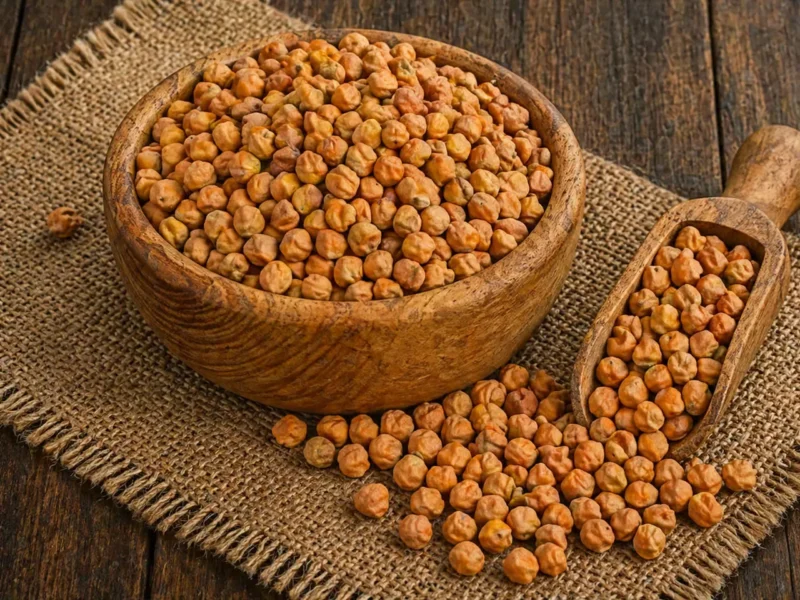
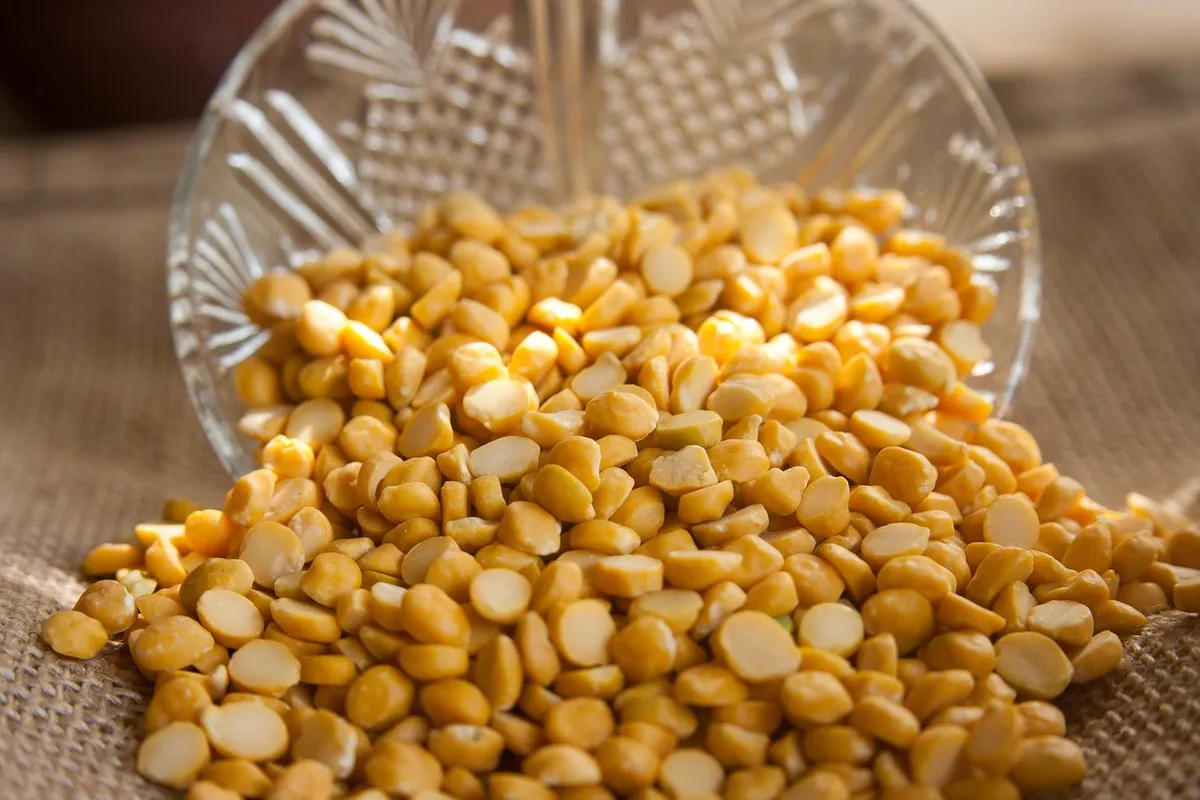
Chana dal is split, dehulled desi chickpea. Desi chickpeas (Cicer arietinum), also called Bengal gram or kala chana, are the small, brown-skinned type grown widely in India. Dal mills remove the tough outer skin and split each seed into two halves. The result is a yellow, slightly flat, lens-shaped pulse with a sweet, nutty taste.
Chana dal is not the same as split kabuli chickpeas. Kabuli chickpeas are the larger, cream-coloured type used for hummus and canning, and they are rarely split for dal. Chana dal is also the raw material for besan (gram flour) and for roasted chana dal, a popular snack. In Indian kitchens it is cooked as a dal, added to vegetable dishes, soaked and ground into batters, and used in sweets. Our page on desi chickpeas explains the whole seed that dal millers start from.
What Are Chana Dal Nutrition Facts per 100g?
Per 100 g of raw, dry chana dal you get roughly 329 kcal, 21.6 g protein, 15.2 g fibre, 46.7 g available carbohydrate and 5.3 g fat. The table uses the Indian Food Composition Tables 2017 (IFCT) from the National Institute of Nutrition, Hyderabad, which tested Indian samples of both chana dal and whole Bengal gram.
| Nutrient (per 100 g, raw) | Chana dal (split, dehulled) | Whole desi chickpea |
|---|---|---|
| Energy | 1,377 kJ (about 329 kcal) | 1,201 kJ (about 287 kcal) |
| Moisture | 9.2 g | 8.6 g |
| Protein | 21.6 g | 18.8 g |
| Total fat | 5.3 g | 5.1 g |
| Total dietary fibre | 15.2 g | 25.2 g |
| Available carbohydrate | 46.7 g | 39.6 g |
| Folate (total) | 182 µg | 233 µg |
| Thiamine (vitamin B1) | 0.35 mg | 0.37 mg |
| Magnesium | 118 mg | 160 mg |
| Phosphorus | 325 mg | 267 mg |
| Potassium | 957 mg | 935 mg |
| Iron | 6.1 mg | 6.8 mg |
| Calcium | 46 mg | 150 mg |
| Zinc | 3.7 mg | 3.4 mg |
Source: Indian Food Composition Tables 2017 (NIN), mean values for raw samples. Values vary by variety and crop.
Two points stand out. First, removing the skin raises protein and energy per 100 g but lowers fibre and calcium, because much of the fibre and calcium sit in the seed coat. Second, these figures are for dry dal. Dal absorbs a lot of water when cooked, so a 100 g portion of cooked dal contains much less of everything. As a guide, USDA FoodData Central lists boiled chickpeas at about 164 kcal, 8.9 g protein and 7.6 g fibre per 100 g. The exact figure for cooked chana dal depends on how much water you use.
How Much Protein and Fibre Is in Chana Dal?
Raw chana dal has about 21.6 g of protein and 15.2 g of total dietary fibre per 100 g. That makes it one of the better plant sources of both nutrients. A typical serving of 30–40 g of dry dal, before cooking, provides roughly 6–9 g of protein and 5–6 g of fibre.
Like most pulses, chickpea protein is rich in the amino acid lysine but lower in methionine. Cereals have the opposite pattern. This is why dal is traditionally eaten with rice or roti: together they give a more complete protein. Of the 15.2 g fibre in chana dal, IFCT measured about 12.7 g as insoluble and 2.5 g as soluble fibre. Insoluble fibre adds bulk, while soluble fibre forms a gel in the gut. For a deeper look at the whole seed, see our guide to chickpea protein and nutrition.
Which Vitamins and Minerals Are in Chana Dal?
Chana dal is a good source of folate and several minerals, especially potassium, phosphorus, magnesium and iron. Per 100 g raw it supplies about 182 µg of folate, 957 mg of potassium, 325 mg of phosphorus, 118 mg of magnesium, 6.1 mg of iron and 3.7 mg of zinc.
Some of these minerals are less available to the body than the numbers suggest. Pulses contain phytate, which binds iron and zinc in the gut. Soaking, sprouting and cooking reduce phytate, and eating dal with a source of vitamin C, such as tomato, lemon or fresh vegetables, can help the body absorb plant iron. Chana dal contains very little vitamin C or vitamin B12 of its own, and its calcium content is modest once the skin is removed.
What Does the Research Say?
Research on chana dal itself is limited, but there is good evidence on pulses as a food group. A 2014 systematic review and meta-analysis in the Canadian Medical Association Journal pooled 26 randomised controlled trials. It found that eating about one serving of pulses a day lowered LDL (“bad”) cholesterol by a small but significant amount compared with control diets. Chickpeas were among the pulses studied.
Pulses are also slowly digested because of their fibre and resistant starch. As a result, they tend to raise blood glucose less sharply than many refined cereal foods. Dietary guidelines in many countries, including those from India’s National Institute of Nutrition, recommend pulses as a regular source of protein, especially in vegetarian diets.
There are limits. Most studies look at pulses in general, not chana dal in particular. Effects are modest and depend on the whole diet. Some people find pulses cause gas or bloating, because certain carbohydrates in them ferment in the large intestine. Soaking and thorough cooking usually help. Chana dal should be seen as a nutritious food, not as a remedy for any condition.
How Does Chana Dal Compare with Other Pulses?
Chana dal has slightly less protein than moong, masoor and urad dal, but it has the most fibre and the most fat of the common Indian dals. The higher fat, about 5 g per 100 g, gives chana dal its richer, nuttier taste. The table compares raw dals using the same IFCT 2017 source.
| Dal (raw, per 100 g) | Protein | Total fibre | Fat | Energy |
|---|---|---|---|---|
| Chana dal (Bengal gram) | 21.6 g | 15.2 g | 5.3 g | about 329 kcal |
| Toor dal (red gram, pigeon pea) | 21.7 g | 9.1 g | 1.6 g | about 331 kcal |
| Moong dal (green gram) | 23.9 g | 9.4 g | 1.4 g | about 326 kcal |
| Masoor dal (lentil) | 24.4 g | 10.4 g | 0.8 g | about 322 kcal |
| Urad dal (black gram) | 23.1 g | 11.9 g | 1.7 g | about 324 kcal |
Source: Indian Food Composition Tables 2017 (NIN). Energy converted from kJ and rounded.
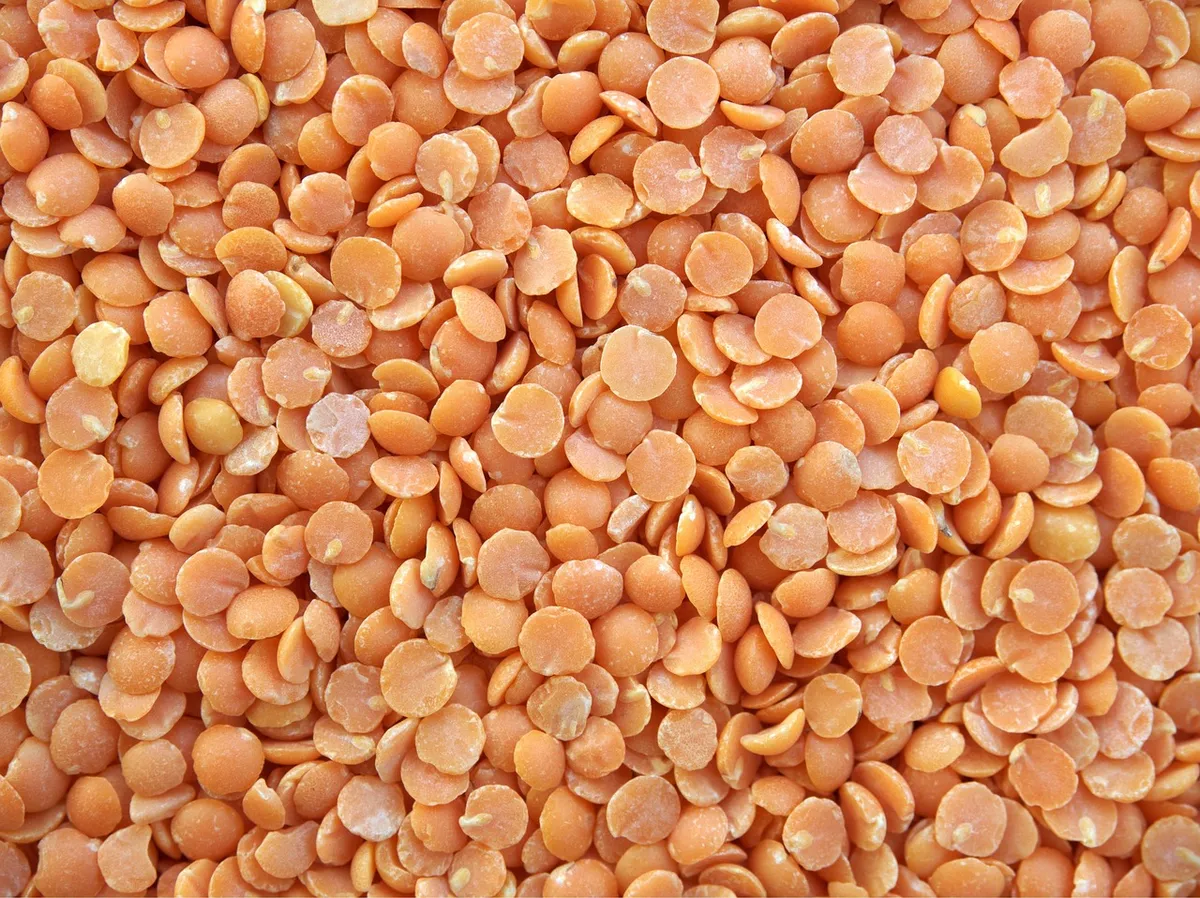
For a food manufacturer, the choice is usually about function as well as nutrition. Chana dal holds its shape when cooked and gives body to snacks, batters and besan. Masoor and moong dal cook faster and break down into a smooth texture. If you buy several pulses, our guide to importing chickpeas and pulses from India covers grades, documents and shipping.
This article is for general information and is not medical or dietary advice.
Related reading: How Roasted Chana Is Made: Sand Roasting, Dehulling and Splitting and Toor Dal vs Chana Dal: Pigeon Peas vs Chickpeas Compared.
How Do You Source Chickpeas and Chana Dal from India?
The nutritional value in chana dal starts with the quality of the desi chickpeas it is milled from. We export whole desi chana, machine-cleaned and sortexed, to dal millers, besan makers, roasters and importers. We also supply roasted chana with skin, without skin and split (roasted chana dal). See the full range on our chickpeas page.
Every lot is tested before shipment, and you receive a lot-wise report through our lab testing programme. A 20 ft container holds about 24–25 MT of desi chickpeas. Use our container load calculator to plan a mixed or full load, then send us your specification and destination.
Frequently asked questions
How much protein is in chana dal?
Raw chana dal contains about 21.6 g of protein per 100 g, according to India's Indian Food Composition Tables 2017. A typical serving of 30–40 g dry dal gives roughly 6–9 g of protein. Cooked dal has much less protein per 100 g because it absorbs water. Eating dal with rice or roti improves the overall protein quality of the meal.
What are the nutrition facts of chana dal?
Per 100 g raw, chana dal provides about 329 kcal, 21.6 g protein, 15.2 g dietary fibre, 46.7 g available carbohydrate and 5.3 g fat. It also supplies about 182 µg folate, 957 mg potassium, 325 mg phosphorus, 118 mg magnesium, 6.1 mg iron and 3.7 mg zinc. These IFCT 2017 values vary with variety and growing conditions.
Is chana dal high in fibre?
Yes. Raw chana dal has about 15.2 g of total dietary fibre per 100 g, the most among common Indian dals such as toor, moong, masoor and urad. Most of it is insoluble fibre, with about 2.5 g soluble fibre. Whole desi chickpeas with the skin on contain even more fibre, about 25 g per 100 g.
Is chana dal the same as split chickpeas?
Chana dal is split chickpea, but specifically the small desi chickpea, or Bengal gram, with its brown skin removed. It is not the same as splitting the large, cream-coloured kabuli chickpea used for hummus. Desi and kabuli chickpeas differ in size, skin, taste and cooking texture, so recipes and specifications should name the type.
How many calories are in cooked chana dal?
Cooked chana dal has far fewer calories per 100 g than dry dal, because it absorbs water. The exact figure depends on the water used and any added oil or ghee. As a guide, USDA lists boiled chickpeas at about 164 kcal per 100 g. Plain boiled chana dal falls in a similar range, compared with about 329 kcal for raw dal.
Related reads


