
On this page
- How Is Roasted Chana Made?
- How Are the Chickpeas Selected and Cleaned?
- What Happens in Conditioning and Sand Roasting?
- How Is Roasted Chana Dehulled and Split?
- How Are Sorting, Grading and Polishing Done?
- What Are the Stages of the Roasted Chana Process?
- Which Quality Checks and Packing Are Used?
- How Do You Source Roasted Chana from India?
- Frequently asked questions
Roasted chana is made by cleaning and grading desi chickpeas, heat-conditioning them, roasting them for a short time in very hot sand until the skin cracks, and then sieving, dehulling, splitting and sorting the roasted seed. The result is a crisp, low-moisture, ready-to-eat product. This guide follows each stage of how roasted chana is made in India, explains the quality checks at each step and shows what buyers should ask for when they import it.
Key takeaways
- Roasted chana starts as bold, clean desi chana, not kabuli chickpeas.
- A process report from the Rajasthan Agricultural Competitiveness Project describes conditioning at about 140 °C and sand roasting at about 240 °C for about 2 minutes.
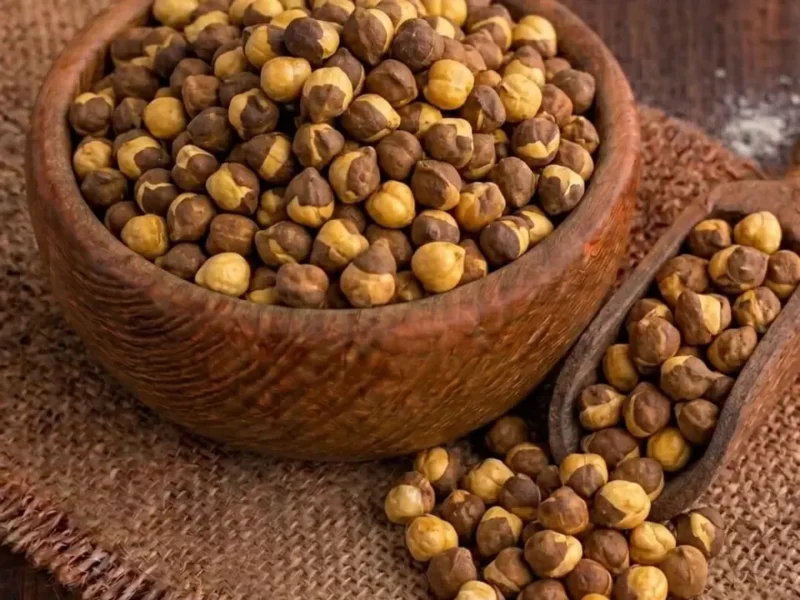
- The same roast gives three products: with skin, without skin (peeled) and split (roasted chana dal or dalia).
- Because roasted chana is eaten without further cooking, every lot should be tested for moisture, Salmonella and aflatoxin.
How Is Roasted Chana Made?
Roasted chana is made in five main stages: selection and cleaning, conditioning, sand roasting, dehulling and splitting, and final sorting and packing. Most commercial units in India follow the same basic method, whether they are small roasters or larger mechanised plants. In Gujarat, much of the trade is centred on the Rajkot–Gondal roasting belt.
The core idea is simple. Hot sand passes heat very evenly to every seed. In about two minutes, moisture inside the chickpea turns to steam, the seed puffs slightly and becomes crisp, and the brown skin cracks. That cracked skin can then be rubbed off to make peeled roasted chana, and the peeled seed can be split into halves to make roasted chana dal. A useful public reference is the roasted chana project report prepared under the Rajasthan Agricultural Competitiveness Project, which we draw on below.
How Are the Chickpeas Selected and Cleaned?
Roasters start with bold, sound desi chickpeas. Desi chana has a thick brown seed coat and a firm kernel, which crack cleanly in hot sand and peel well. Bold seed also roasts more evenly and gives a better-looking finished product, so it usually costs more. Kabuli chickpeas, the large cream-coloured type, have a thin skin and are generally not used for traditional roasted chana; our guide to white vs brown chickpeas explains the difference between the two types.
Cleaning removes everything that should not be roasted. The Rajasthan report lists the removal of foreign material and of undeveloped, damaged, shrunken and broken seeds. Typical equipment includes:
- Round or vibrating screens to remove dust, straw and undersized seeds.
- Magnetic separators to remove metal pieces.
- Gravity separators to remove light, hollow or insect-damaged seeds and stones.
- Size grading so that each roasting batch holds seeds of a similar size, which roast at the same rate.
Even sizing matters. Small seeds burn while large seeds stay under-roasted if the two are mixed in one batch.
What Happens in Conditioning and Sand Roasting?
Conditioning prepares the seed so that it roasts and cracks evenly. In the method described in the Rajasthan report, the cleaned chickpeas are heated for about 2 minutes at around 140 °C and then rested in a wooden bunker for about 2 hours to cool slowly. This tempering step balances the moisture inside each seed.
Sand roasting follows. The conditioned chickpeas are mixed with pre-heated sand at about 240 °C for about 2 minutes, until the outer skin breaks. The sand is then sieved off and reused, and the hot chana is spread out to cool. Some roasters roast a second time to improve crispness and peeling. Hot-air roasting is also used as an alternative to sand in some plants.
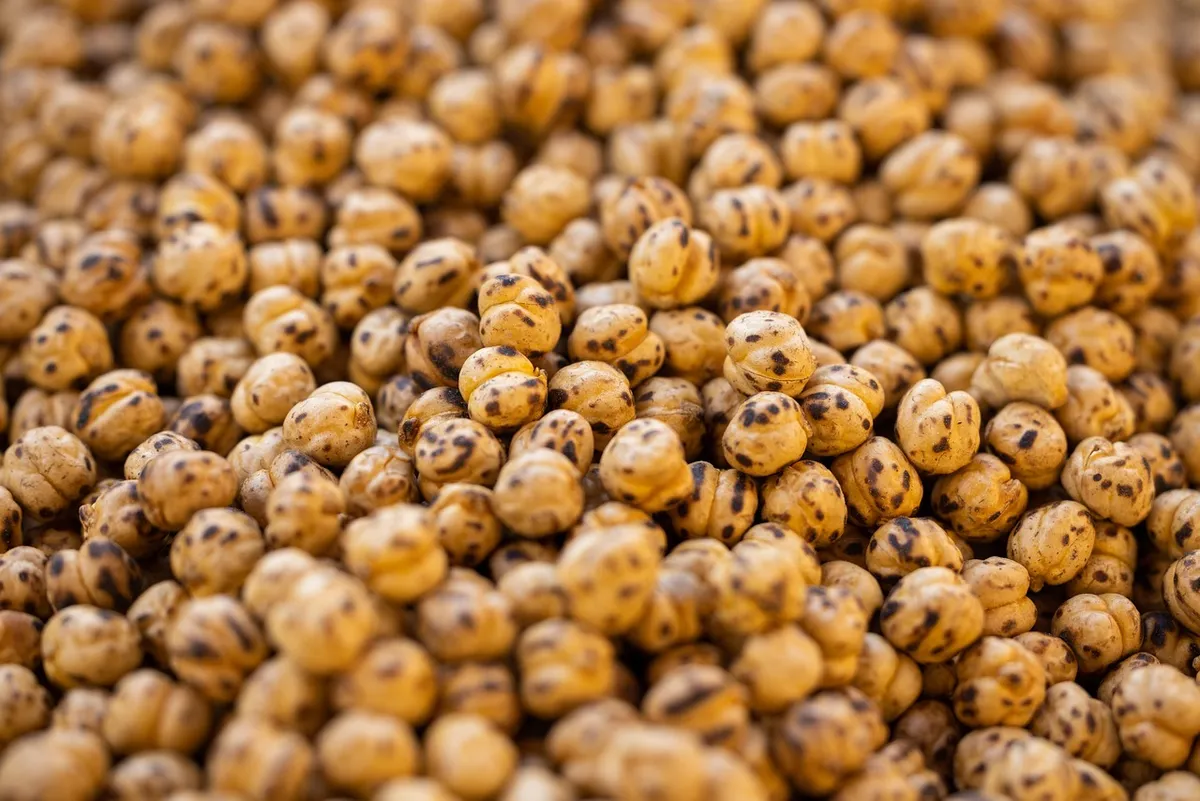
Sand roasting is used because sand holds a lot of heat and touches the whole surface of every seed. This gives fast, even roasting without oil, so roasted chana stays a dry-roasted product. The key controls are sand temperature, time in the roaster and the ratio of sand to seed.
How Is Roasted Chana Dehulled and Split?
After roasting, part of the output is sold with the skin on. The rest is dehulled. The roasted seed passes over emery rollers, which have a rough, abrasive surface that rubs off the cracked skin. The Rajasthan report notes that this gives a mix of whole peeled seeds, some seeds that still have skin, broken pieces, husk and powder.
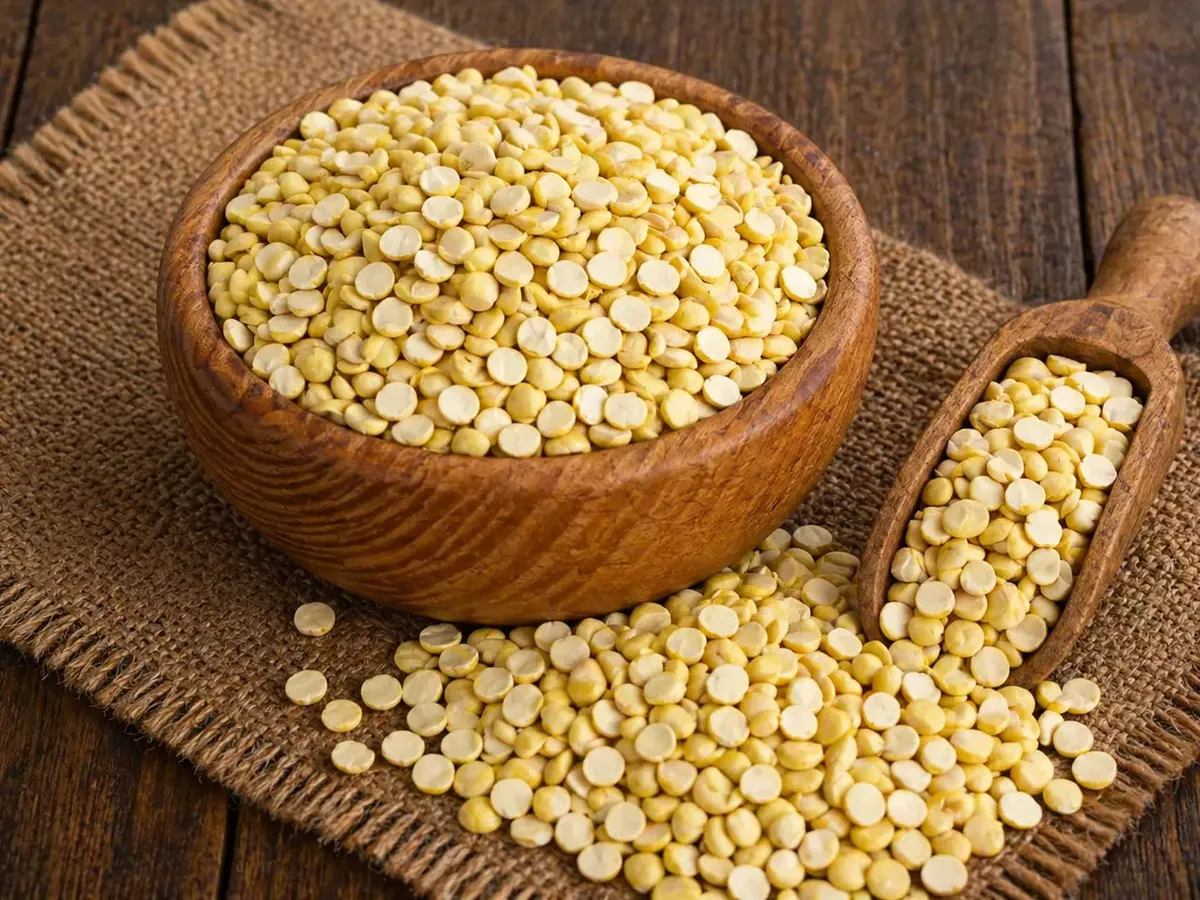
Aspirators blow off the light husk, and sieves separate the whole peeled seeds from splits and fines. Peeled whole seeds are sold as roasted chana without skin, also called phutana. When the peeled seeds are split into two halves, they become roasted chana dal, known as dalia in Gujarat and pottukadalai in Tamil Nadu. The husk and powder are sold as cattle feed, so very little is wasted.
The name dalia can confuse buyers outside India. In the roasted chana trade, dalia means roasted chana dal: peeled, roasted and split desi chickpeas. It is not the same as wheat dalia, which is broken wheat. Roasted chana dal is also different from raw chana dal, which is split desi chickpeas that have not been roasted and must be cooked before eating. Our list of Indian dal names in English covers these trade terms.
How Are Sorting, Grading and Polishing Done?
Final sorting gives the product its grade. Seeds are graded by size, and the processor removes burnt, unroasted, discoloured and part-peeled seeds. Larger plants use optical colour sorters; smaller units also hand-pick. Some roasters also polish the peeled seed to remove fine dust and loose skin.
Typical export limits for our peeled roasted chana are bold seed of 9–10 mm, broken seeds at 1% maximum and remaining skin at 1% maximum. For roasted chana with skin, broken seeds are held at 2% maximum and unroasted or burnt seeds at 1% maximum. Moisture for all forms is 5% maximum, usually around 3%. India’s standard for roasted Bengal gram is IS 18140:2023.
What Are the Stages of the Roasted Chana Process?
The table sums up each stage, its purpose and the main quality control point.
| Stage | What happens | Main control point |
|---|---|---|
| 1. Selection | Bold, sound desi chana is chosen | Seed size, damage, moisture |
| 2. Cleaning | Screens, magnets and gravity separators remove impurities | Stones, metal, damaged seed |
| 3. Conditioning | Heated at about 140 °C, then rested about 2 hours | Even moisture inside the seed |
| 4. Sand roasting | Mixed with sand at about 240 °C for about 2 minutes | Temperature, time, sand ratio |
| 5. Cooling | Sand sieved off; chana cooled | Crispness, no condensation |
| 6. Dehulling | Emery rollers remove the skin; husk aspirated | Skin remaining, broken seed |
| 7. Splitting | Peeled seed split into halves (dalia) | Whole seeds and fines |
| 8. Sorting and grading | Size grading, colour sorting, hand-picking | Burnt, unroasted and discoloured seed |
| 9. Testing and packing | Lab tests; lined bags or cartons | Moisture, Salmonella, aflatoxin |
Which Quality Checks and Packing Are Used?
Roasted chana is a ready-to-eat food, so its safety checks are stricter than those for raw pulses. We test every lot at an NABL-accredited lab for moisture, Salmonella, E. coli, yeast and mould, and aflatoxin. Salmonella must be absent in 25 g. Our lab testing page sets out the full panel.
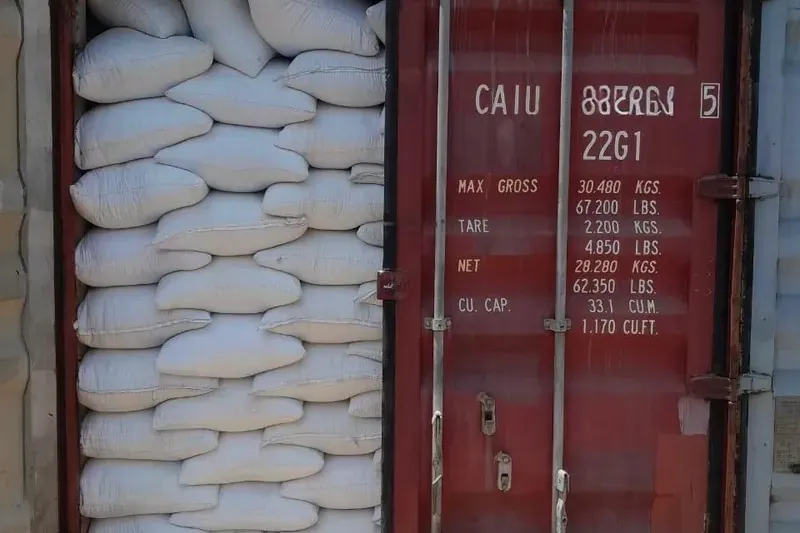
Packing keeps the product crisp. Roasted chana picks up moisture from the air and turns soft, so it is packed in 25 kg PP bags with a PE liner or in 10–15 kg cartons. Retail and private-label packs can be nitrogen-flushed for a longer shelf life. Because roasting makes the seed lighter and more porous, a 20 ft container holds less roasted chana than raw chickpeas: about 10–15 MT depending on the form. You can plan a load with our container load calculator.
Related reading: Nutritional Value in Chana Dal: Protein, Fibre and Minerals and Toor Dal vs Chana Dal: Pigeon Peas vs Chickpeas Compared.
How Do You Source Roasted Chana from India?
Once you know how roasted chana is made, you can write a clear specification. Name the form (with skin, without skin or split), the seed size, moisture, broken and skin limits, and the micro and aflatoxin limits for your market. Ask for a pre-shipment sample and a lot-wise certificate of analysis, and agree the bag and liner type.
Elysium Agri Corporation, based in Jamnagar, Gujarat, exports roasted chickpeas in all three forms from bold desi chana roasted in the Rajkot–Gondal belt. Each lot is tested for moisture, micro and aflatoxin before loading and shipped with a certificate of analysis and certificate of origin. We also pack under your brand through our private label service, and our registrations are listed on the certificates page on our site.
Tell us the form, grade, quantity and destination port, and we will send a specification sheet and price. Request a roasted chana quote →
Frequently asked questions
How is roasted chana made?
Roasted chana is made from bold desi chickpeas. The seed is cleaned and graded, heat-conditioned, then roasted in hot sand at about 240 °C for about two minutes until the skin cracks. The sand is sieved off and the chana is cooled. It is then sold with skin, or dehulled on emery rollers and split, sorted, tested and packed.
What is sand roasting and why is it used?
Sand roasting means mixing chickpeas with very hot sand, about 240 °C, for a short time. Sand holds plenty of heat and touches the whole surface of each seed, so the chana roasts quickly and evenly without oil. The heat turns inner moisture to steam, making the seed crisp and cracking the skin so it can be removed easily.
How is roasted chana dehulled and split?
After roasting, the chana passes over emery rollers with a rough, abrasive surface that rubs off the cracked skin. Aspirators blow away the light husk, and sieves separate whole peeled seeds from broken pieces and powder. Peeled seeds are then split into two halves to make roasted chana dal. Husk and powder are usually sold as cattle feed.
What is the difference between roasted chana and dalia?
Roasted chana is the whole roasted desi chickpea, with or without its skin. Dalia, also called roasted chana dal or pottukadalai, is roasted chana that has been peeled and split into halves. Both are ready to eat. In this trade, dalia is not wheat dalia, which is broken wheat, and it differs from raw chana dal, which needs cooking.
What chickpea variety is used for roasted chana?
Roasted chana is made from desi chickpeas, the small brown type of Cicer arietinum, not the large cream kabuli type. Desi chana has a thick seed coat and firm kernel that crack cleanly in hot sand and peel well. Roasters prefer bold, sound, well-dried seed of even size, because it roasts evenly and gives fewer burnt or broken seeds.
Related reads


