
On this page
- What Are Ragi, Bajra and Jowar?
- Where Do Millets Grow in India?
- What Climate and Soil Do Millet Plants Need?
- How Does the Ragi Plant Grow?
- How Do Bajra and Jowar Grow?
- How Do the Main Millet Crops Compare?
- How Are Millets Harvested, Threshed and Handled After Harvest?
- How Can You Source Millets from India?
- Frequently asked questions
The ragi plant (finger millet) is a short, tufted cereal grass that is sown or transplanted at the start of the monsoon and is ready to harvest in about 95 to 120 days, when its finger-like ear heads turn brown. Bajra (pearl millet) and jowar (sorghum) grow in a similar way but are taller and even more tolerant of heat and dry soil. This guide explains how each millet crop grows in India, from sowing to the cleaned grain that importers buy.
Key takeaways
- India is the world’s largest millet producer, at about 18 million tonnes in 2024-25.
- Ragi comes mainly from Karnataka, bajra from Rajasthan and Gujarat, and jowar from Maharashtra and Karnataka.
- Most millets are kharif (monsoon) crops harvested from September to November. Gujarat also grows a summer bajra crop harvested in May and June.
- Millets grow well on poor soils with little rain, which makes them a reliable crop and a steady export supply.
What Are Ragi, Bajra and Jowar?
Ragi, bajra and jowar are the three most important millets grown in India. They are all small-seeded cereal grasses, but they belong to different species and look quite different in the field.
- Ragi (finger millet, Eleusine coracana): a low, bushy plant with an ear head that splits into several “fingers”. The small round grain is usually reddish-brown. Ragi is also called nachni.
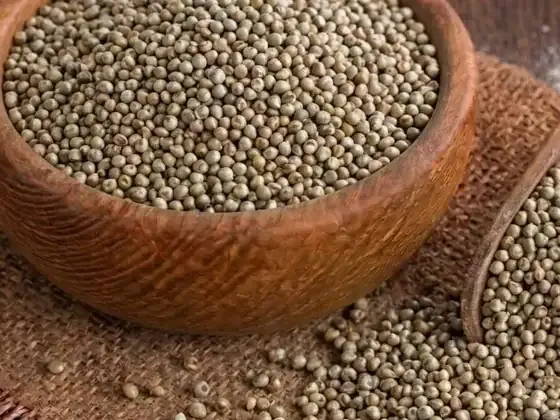
- Bajra (pearl millet, Pennisetum glaucum): a tall plant with a single, dense, candle-shaped spike. The grain is greenish-grey, which is why the trade calls bright Gujarat bajra “green millet”.
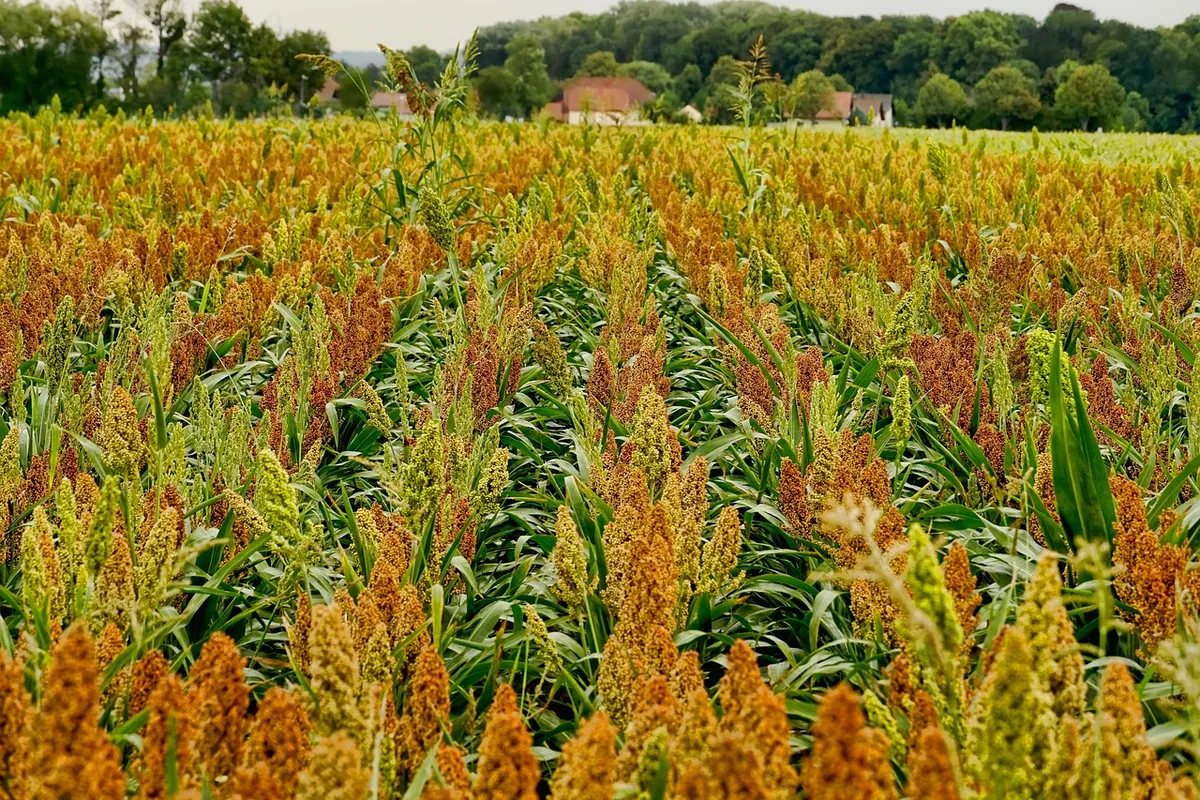
- Jowar (sorghum, Sorghum bicolor): a tall, cane-like plant with a loose or compact head of round grains. It is also known as milo or cholam.
India also grows small millets such as foxtail, proso, little, kodo and barnyard millet. You can see the full range of grades we export on our millet grain page.
Where Do Millets Grow in India?
Millets grow mostly in the dry and semi-dry parts of western and southern India. Each millet has its own main belt.
- Bajra: Rajasthan, Gujarat, Uttar Pradesh and Haryana. Western Rajasthan, on the edge of the Thar desert, is the largest single area.
- Jowar: Maharashtra and Karnataka, with smaller areas in Telangana, Madhya Pradesh and Tamil Nadu.
- Ragi: Karnataka is the leading state. Tamil Nadu, Andhra Pradesh, Telangana, Uttarakhand, Jharkhand and Odisha also grow it.
Gujarat is important for exporters because it grows two bajra crops a year. The kharif crop is harvested in September and October, and a summer crop, grown on irrigated land, is harvested in May and June. The summer crop often gives the bright, clean grain that bird-feed and food buyers prefer.

What Climate and Soil Do Millet Plants Need?
Millet plants need warm weather, modest rain and well-drained soil. They do not need rich land or heavy irrigation, which is their main advantage over rice and wheat.
Pearl millet is the toughest. Research published in Frontiers in Plant Science notes that it is grown in areas with less than 400 mm of rain a year and tolerates high temperatures at both the seedling and the flowering stage. Like maize and sorghum, it uses C4 photosynthesis, which turns sunlight and water into plant growth more efficiently in hot conditions.
Finger millet needs a little more moisture. The TNAU Agritech Portal gives an optimum of about 450–500 mm of well-distributed rain for a rainfed ragi crop. Sorghum sits between the two. All three grow on light sandy or red soils as well as on medium black soils, as long as water does not stand in the field.
Millets are called drought tolerant for three reasons. Their roots are deep and fibrous, they complete their life cycle quickly, and they can pause growth during a dry spell and recover when rain returns. This makes the harvest more stable than many other cereals in a poor monsoon year.
How Does the Ragi Plant Grow?
The ragi plant grows from seed to harvest in about three to four months. Farmers either sow it directly in lines or raise it in a nursery and transplant it.
- Sowing: the main crop is sown in June and July with the monsoon. A rabi crop is sown in September and October, and an irrigated summer crop in January and February in some southern states.
- Nursery and transplanting: where farmers transplant, seedlings are pulled from the nursery about 17 to 20 days after sowing and planted in rows. Transplanting needs less seed than direct sowing.
- Tillering: each plant sends up several side shoots (tillers) from its base. This gives the finger millet crop its bushy look and adds more ear heads per plant.
- Flowering and ear head formation: each stem ends in an ear head with four to seven spikes arranged like the fingers of a hand. Grains form in two rows along each finger.
- Ripening: the ear heads turn from green to brown as the grain dries. Depending on the variety, TNAU lists durations of about 95 to 120 days.
How Do Bajra and Jowar Grow?
Bajra and jowar are sown directly in the field, grow tall quickly and form a single large head on each main stem. Neither is usually transplanted.
Bajra is sown in June and July after the first good rain. In Gujarat, the summer crop is sown in February and March on irrigated land. The plant can reach two metres or more. Each stem ends in a spike packed with grain, and the crop is usually ready in about three months.
Jowar is grown in two seasons. Kharif jowar is sown in June and July and harvested from September to November. Rabi jowar, grown mainly in Maharashtra and Karnataka on stored soil moisture, is sown in September and October and harvested in February and March. Rabi jowar is valued for food because it ripens in dry weather and the grain is usually bright and free of mould.
How Do the Main Millet Crops Compare?
The table sets out the main differences between the three millet plants. Seasons and states follow our crop calendar.
| Feature | Ragi (finger millet) | Bajra (pearl millet) | Jowar (sorghum) |
|---|---|---|---|
| Plant form | Short, bushy, many tillers | Tall, single spike per stem | Tall, cane-like, loose or compact head |
| Main Indian states | Karnataka, Tamil Nadu, Andhra Pradesh | Rajasthan, Gujarat, Uttar Pradesh, Haryana | Maharashtra, Karnataka |
| Main sowing | Jun–Jul (also Sep–Oct, Jan–Feb) | Jun–Jul; Feb–Mar (Gujarat summer) | Jun–Jul (kharif); Sep–Oct (rabi) |
| Main harvest | Sep–Nov | Sep–Oct; May–Jun | Sep–Nov; Feb–Mar |
| Rain need | About 450–500 mm | Can grow below 400 mm | Moderate |
| Grain colour | Mostly reddish-brown | Greenish-grey | White to cream, some red |
| Main export uses | Flour, baby food, health foods | Food, flour, bird feed, poultry feed | Flour, gluten-free foods, feed |
| Indian HS code | 1008 29 30 | 1008 29 20 | Usually 1007 90 00 |
Typical growing patterns in India. Seasons vary by state and by year.
Always confirm the HS code with your customs broker. Our HS code finder lists the codes for each millet.
How Are Millets Harvested, Threshed and Handled After Harvest?
Millets are harvested when the heads turn brown and the grain is hard. The heads are then dried, threshed, cleaned and stored dry before sale.
For ragi, farmers often cut the brown ear heads first and return a week later for the rest. The heads are heaped in shade, dried in the sun and threshed by beating, by tractor or by a mechanical thresher. Bajra and jowar heads are cut by hand or by machine, dried on a threshing floor and threshed. TNAU advises drying ragi grain to about 12% moisture before grading and lower for long storage.
Grain from the farm still holds dust, stones, chaff, broken grains and other seeds. Export processors clean it in stages: pre-cleaning, size grading, de-stoning and, for food grades, sortex (optical colour) sorting. Our standard millet specification is moisture of 12% max, foreign matter of 1% max, damaged grain of 2% max and ergot of 0.05% max. Sortex-cleaned grain reaches 99.9% purity. The grain is fumigated before loading and tested for aflatoxins, ochratoxin A and pesticide residues.
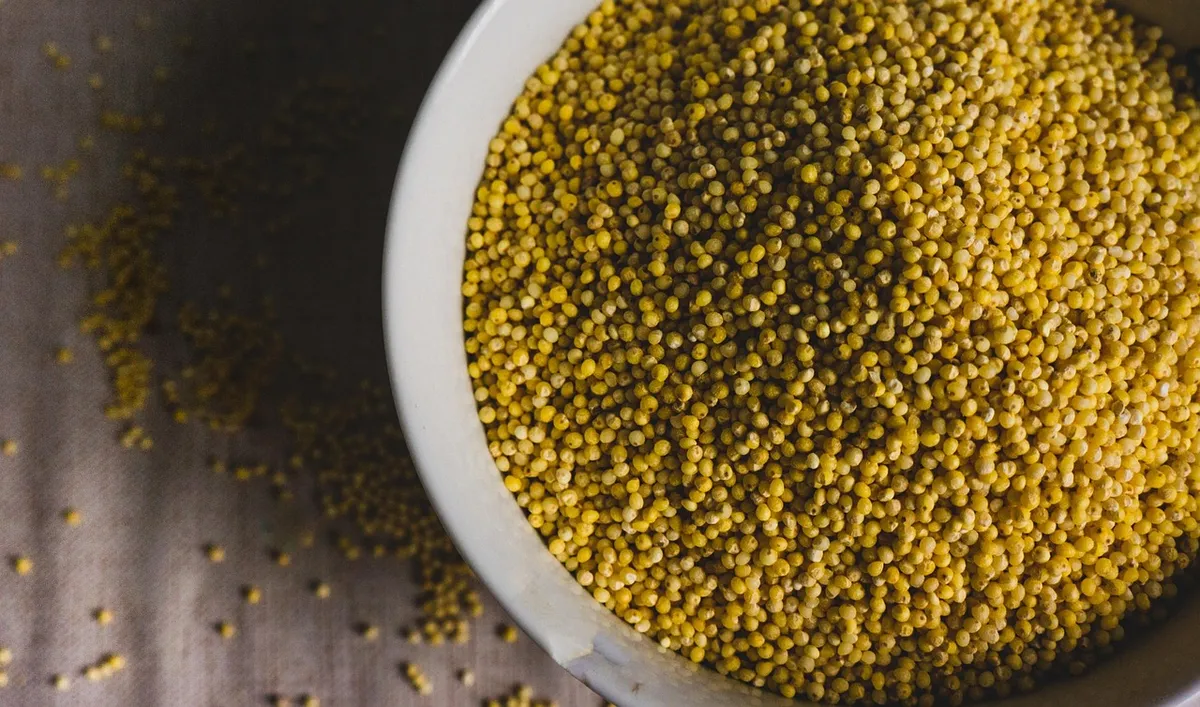
Correct drying and storage matter as much as the field crop. Damp grain can grow mould and mycotoxins in a closed container, so we check moisture on every lot. See our lab testing page for the tests we run.
Related reading: What Is Wheat Flour? Types, Protein and Uses Explained and Processing of Corn: How Maize Is Milled into Grits, Meal and Flour.
How Can You Source Millets from India?
Knowing how the ragi plant and other millets grow helps you time your purchases. New-crop bajra arrives in October and again in June from Gujarat, new jowar in October and November and again in March, and new ragi from late in the year. Buying soon after harvest gives the widest choice of lots.
Elysium Agri Corporation exports green bajra, jowar, ragi and small millets from Jamnagar, Gujarat. We supply sortex food grades and machine-cleaned feed and bird-feed grades in 25 kg or 50 kg PP bags, jute bags or jumbo bags. A 20 ft container holds about 24–25 MT of millet; you can plan your order with our container load calculator. Every lot ships with a phytosanitary certificate, a certificate of origin and a certificate of analysis, and our registrations are on the certificates page.
Tell us the millet type, grade, quantity and destination port, and we will send a price and specification sheet. Request a millet quote →
Frequently asked questions
How does the ragi plant grow?
Ragi is sown directly or raised in a nursery and transplanted after about 17 to 20 days. The plant sends up several tillers, and each stem forms an ear head with four to seven finger-like spikes. The heads turn brown as the grain ripens, and the crop is harvested about 95 to 120 days after sowing.
Which season are millets grown in India?
Most Indian millets are kharif crops, sown with the monsoon in June and July and harvested from September to November. Jowar also has a rabi crop harvested in February and March, and Gujarat grows a summer bajra crop on irrigated land that is harvested in May and June.
How long does finger millet take to mature?
Finger millet usually takes about 95 to 120 days from sowing to harvest, depending on the variety and season. Varieties released in Tamil Nadu, for example, range from roughly 95 to 120 days. Farmers often harvest the brown ear heads first and return about a week later for the rest.
Why are millets considered drought tolerant?
Millets have deep, fibrous roots, a short life cycle and an efficient C4 photosynthesis system. They can slow their growth during a dry spell and recover when rain returns. Pearl millet is grown in areas with less than 400 mm of rain a year, where most other cereals would fail.
Which Indian states grow the most bajra and jowar?
Rajasthan is the largest bajra-growing state, followed by Gujarat, Uttar Pradesh and Haryana. Jowar is grown mainly in Maharashtra and Karnataka, with smaller areas in Telangana, Madhya Pradesh and Tamil Nadu. Gujarat is also notable for its summer bajra crop, which supplies bright green millet for export.
Related reads


