
On this page
- Millet Names: A Quick Answer
- What Is the Scientific Name of Pearl Millet (Bajra)?
- What Are the Names of Sorghum, Finger Millet and Foxtail Millet?
- Millet Names in English, Hindi and Botanical Terms
- What Are the Regional and Trade Names of Millets?
- Why Do Correct Millet Names Matter in Trade Documents?
- How Do You Source Millets from India?
- Frequently asked questions
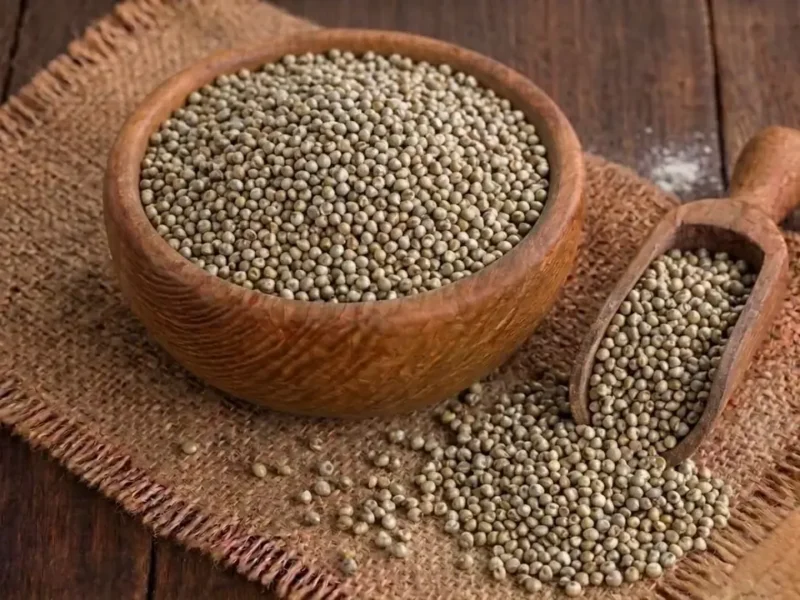
The scientific name of pearl millet is Pennisetum glaucum (L.) R.Br., the name still used in most trade, food and Indian standards. Botanists now place the crop in the genus Cenchrus, as Cenchrus americanus (L.) Morrone, so you may see either name. Pearl millet is the grain known in India as bajra. This glossary gives the English, Hindi and botanical names of the main millets, so that your contracts, labels and customs documents describe the right grain.
Key takeaways
- Bajra is pearl millet in English. Its scientific name is Pennisetum glaucum, now also classified as Cenchrus americanus.
- Jowar is sorghum (Sorghum bicolor) and ragi is finger millet (Eleusine coracana).
- The same millet can have five or more regional names in India, so always add the botanical name to trade documents.
- Each millet has its own HS code. Using the correct name avoids customs queries and wrong duty rates.
Millet Names: A Quick Answer
“Millet” is not one plant. It is a trade and food term for a group of small-seeded cereal grasses. They belong to several different genera. Because of this, each millet has its own botanical name, its own English name and, in India, several local names.
The millets most often traded from India are:
- Pearl millet (bajra): Pennisetum glaucum, also Cenchrus americanus.
- Sorghum (jowar): Sorghum bicolor.
- Finger millet (ragi): Eleusine coracana.
- Foxtail millet (kangni): Setaria italica.
- Proso millet (chena): Panicum miliaceum.
Pearl millet and sorghum are the “major” millets, grown on large areas. Finger millet, foxtail, proso, kodo, little, barnyard and browntop millets are often grouped as “small” or “minor” millets. The Government of India also promotes millets under the name Shree Anna, and the United Nations declared 2023 the International Year of Millets.
What Is the Scientific Name of Pearl Millet (Bajra)?
Pearl millet’s long-standing scientific name is Pennisetum glaucum (L.) R.Br. Older texts also use Pennisetum americanum and Pennisetum typhoides. In 2010 botanists moved the Pennisetum species into the related genus Cenchrus. Kew’s Plants of the World Online now lists the accepted name as Cenchrus americanus (L.) Morrone, with Pennisetum glaucum as a synonym.
In practice, both names refer to the same plant. Codex standard CXS 169-1989 for whole and decorticated pearl millet grains, and India’s FSSAI millet standard, use the Pennisetum name, and most trade documents follow them. If your laboratory or regulator uses the newer name, write both, for example “pearl millet (Pennisetum glaucum syn. Cenchrus americanus)”.
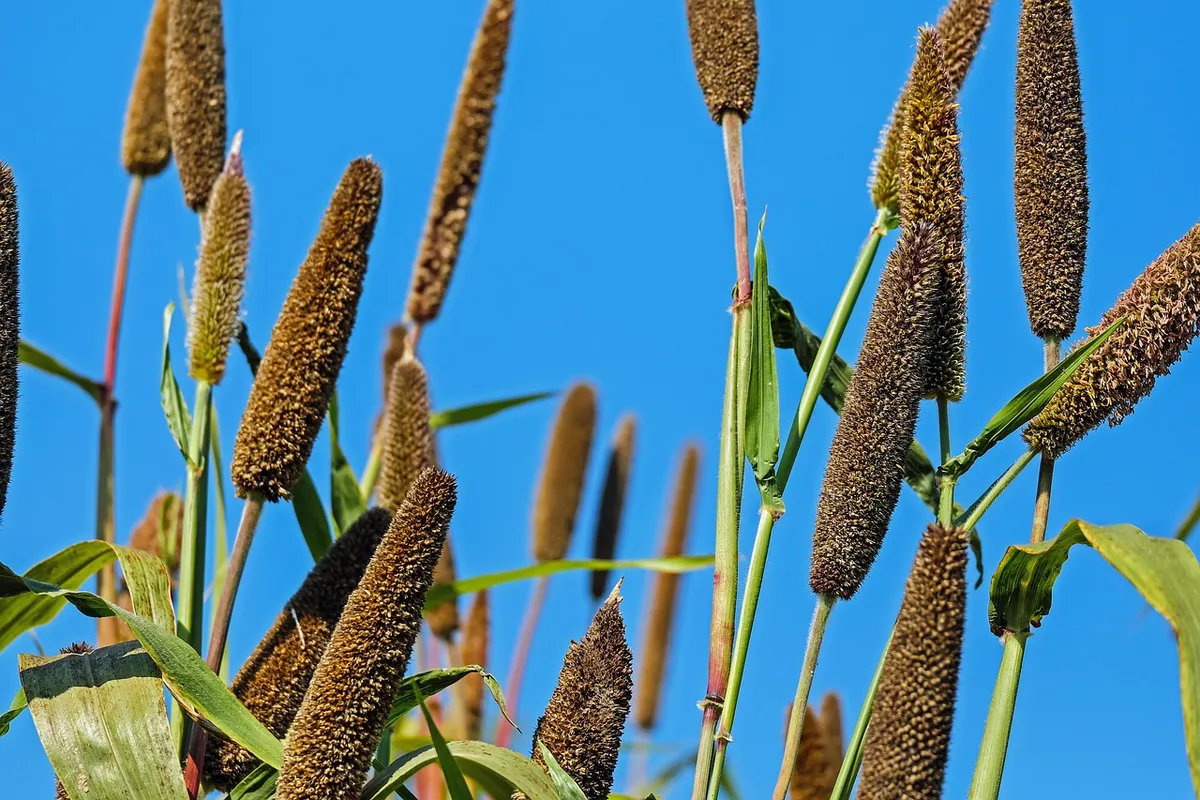
In English, bajra is called pearl millet, after its small, round, pearl-like grains packed on a long candle-shaped spike. In trade it is also called bulrush millet, cattail millet or, for the greenish-grey Indian grain, “green millet”. India is the world’s largest pearl millet grower, mainly in Rajasthan, Gujarat, Uttar Pradesh, Haryana and Maharashtra. Our guide on how millets grow explains its seasons and growing areas.
What Are the Names of Sorghum, Finger Millet and Foxtail Millet?
Sorghum, finger millet and foxtail millet each come from a different genus, so their scientific names are quite different from pearl millet’s.
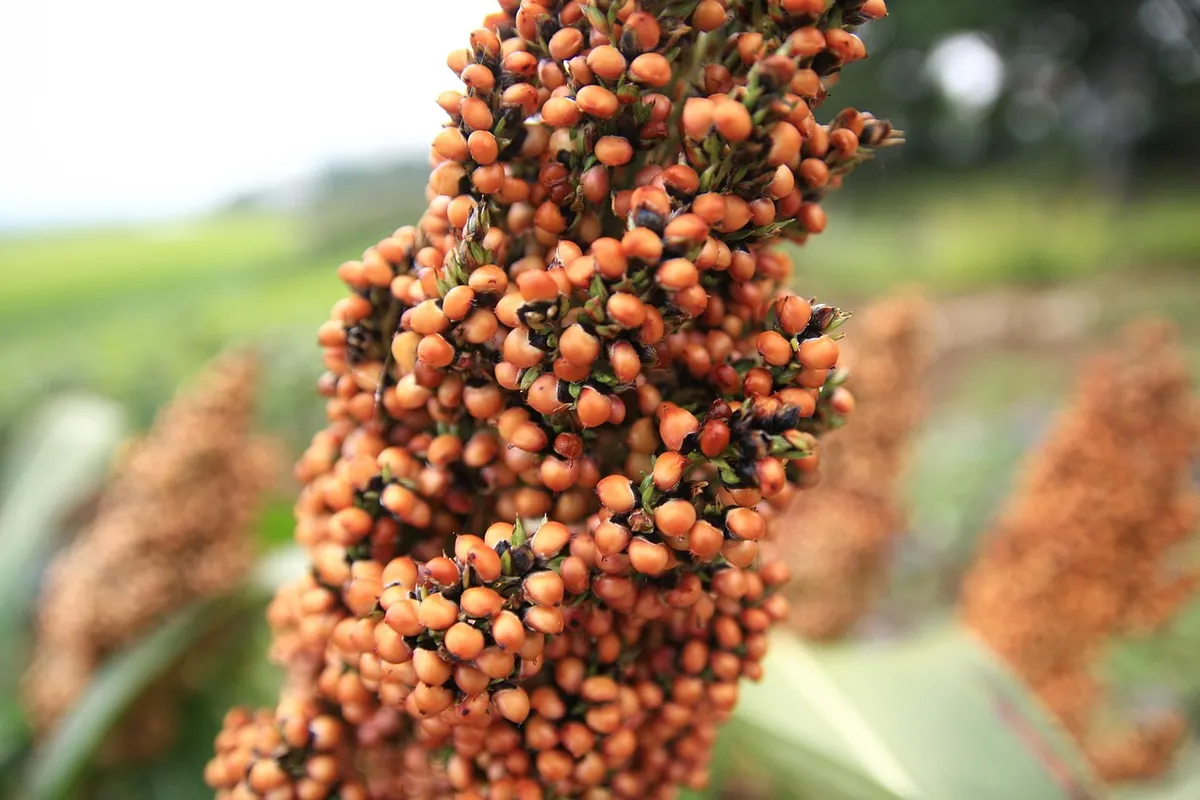
Sorghum is Sorghum bicolor (L.) Moench. In Hindi it is jowar, and in the USA the grain types are often called milo. It is a larger grain than the other millets and is grown in India mainly in Maharashtra and Karnataka. It is widely used for gluten-free flour and in animal feed.
Finger millet is Eleusine coracana (L.) Gaertn. In Hindi it is ragi or mandua, and in Marathi nachni. The name comes from the head, which splits into several finger-like spikes. Karnataka is the largest grower. Its reddish-brown grain is used in flours, porridge and baby foods.
Foxtail millet is Setaria italica (L.) P.Beauv. It is called kangni or kakun in Hindi, thinai in Tamil and navane in Kannada. The bristly head looks like a fox’s tail. Other small millets include proso millet (Panicum miliaceum), kodo millet (Paspalum scrobiculatum), little millet (Panicum sumatrense), barnyard millet (Echinochloa frumentacea) and browntop millet (Brachiaria ramosa, now also listed as Urochloa ramosa).
Millet Names in English, Hindi and Botanical Terms
The table lists millet names in English alongside the common Hindi names and botanical names. It also gives the Indian HS code where a separate code exists.
| English name | Hindi name | Botanical name | Indian HS code |
|---|---|---|---|
| Pearl millet | Bajra | Pennisetum glaucum (syn. Cenchrus americanus) | 1008 29 20 |
| Sorghum | Jowar | Sorghum bicolor | 1007 (grain sorghum) |
| Finger millet | Ragi, mandua | Eleusine coracana | 1008 29 30 |
| Foxtail millet | Kangni, kakun | Setaria italica | 1008 29 60 |
| Proso millet | Chena, barri | Panicum miliaceum | 1008 29 50 |
| Kodo millet | Kodo | Paspalum scrobiculatum | Under 1008 29; confirm |
| Little millet | Kutki | Panicum sumatrense | Under 1008 29; confirm |
| Barnyard millet | Sanwa, jhangora | Echinochloa frumentacea | Under 1008 29; confirm |
| Browntop millet | Korale (Kannada) | Brachiaria ramosa | Under 1008 29; confirm |
Common millet names and codes. Confirm the HS code with your customs broker before shipment.
You can look up these and other grain codes with our HS code finder.
What Are the Regional and Trade Names of Millets?
India has many languages, and each millet has a name in most of them. A supplier in Tamil Nadu and a supplier in Gujarat may use different words for the same grain. The most common ones are:
- Pearl millet: bajra (Hindi), bajri (Gujarati and Marathi), kambu or cumbu (Tamil), sajje (Kannada), sajjalu (Telugu).
- Sorghum: jowar (Hindi), jowari (Marathi), cholam (Tamil), jola (Kannada), jonna (Telugu).
- Finger millet: ragi (Hindi, Kannada and Telugu), nachni (Marathi), kezhvaragu or kelvaragu (Tamil), mandua (Uttarakhand).
- Foxtail millet: kangni (Hindi), thinai (Tamil), navane (Kannada), korra (Telugu).
International trade adds more names. Proso millet is often sold as “white millet” or “red millet” for bird feed. Pearl millet from India may be quoted as “green millet” or “green bajra”. In Africa, pearl millet has local names such as mahangu in Namibia and dukhn in Sudan. These names are useful in conversation, but they are not precise enough for a contract.
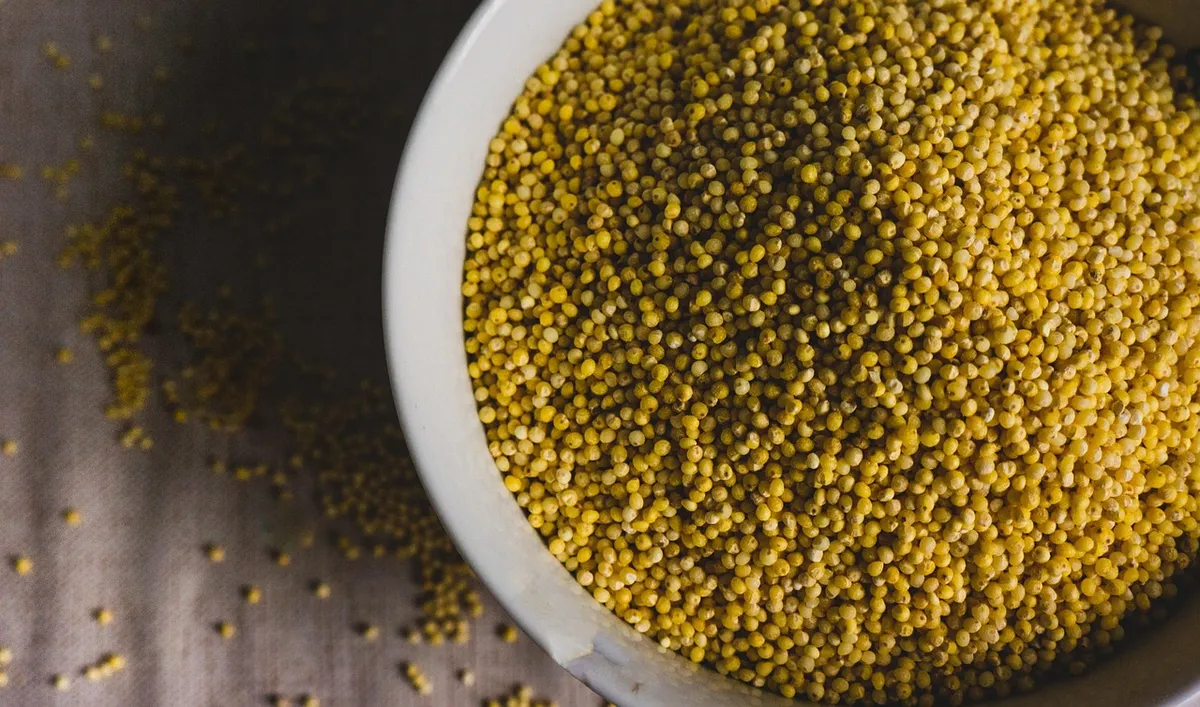
Some names also overlap between grains. “Kodo” and “kodra” are used for kodo millet, while “chena” and “barri” both describe proso millet in different regions. Ragi is used for finger millet in several languages. When you receive a quote that uses only a local name, ask the supplier to confirm the English and botanical names in writing, and to send a sample before you sign.
Why Do Correct Millet Names Matter in Trade Documents?
Correct names protect you at customs, in the laboratory and on the shelf. Cleaned small millets can look very similar, and a local name alone can be misread. A clear description avoids three common problems.
- Customs classification: pearl millet, finger millet, foxtail and proso each have their own HS sub-heading, and sorghum sits under a different heading. A wrong name can lead to a wrong code, a delay or a different duty rate.
- Phytosanitary rules: plant health authorities list import conditions by botanical name. The phytosanitary certificate should show the same botanical name as your import permit.
- Specifications and labels: food safety limits, such as the EU limits for ergot and tropane alkaloids in millet and sorghum, apply to named grains. Retail labels in many markets must use the common name of the food.
Our advice is simple. In the contract, the invoice and the certificate of analysis, write the English name, the botanical name and the grade together, for example “pearl millet (bajra), Pennisetum glaucum, sortex 99.9%”. Make sure every document uses the same wording. Our guide to export documentation lists the documents that need to match.
Related reading: Yellow Maize Grades: Maize Quality Parameters for Feed and Food and Corn Grits Uses: Brewing, Snacks and Breakfast Cereals.
How Do You Source Millets from India?
Once you know the scientific name of pearl millet and the other millets, you can write a clear enquiry. State the millet by English and botanical name, the purity grade, the end use (food, flour or bird feed), the packing and the destination port. If you need a specific crop, such as the Gujarat summer bajra harvested in May and June, say so in the enquiry.
Elysium Agri Corporation exports millet grain from Gujarat, including green bajra, jowar, ragi and small millets such as foxtail and proso. We supply machine-cleaned grades of 98–99% and sortex grades of 99.9%, with moisture of 12% or less. Each lot is tested for mycotoxins and pesticide residues, and a 20 ft container holds about 24–25 MT. Our registrations are listed on the certificates page.
Send us your specification and we will reply with a quote and a spec sheet. Request a millet quote →
Frequently asked questions
What is the scientific name of pearl millet?
The scientific name of pearl millet is Pennisetum glaucum (L.) R.Br., the name used in Codex, FSSAI and most trade documents. Botanists have since moved it to the genus Cenchrus, and Kew's Plants of the World Online lists the accepted name as Cenchrus americanus (L.) Morrone. Both names refer to the same plant, known in India as bajra.
What is bajra called in English?
Bajra is called pearl millet in English, after its small, round grains that look like pearls on a long spike. In trade it is also known as bulrush millet, cattail millet and, for the greenish-grey Indian grain, green millet or green bajra. In Tamil it is kambu, in Kannada sajje and in Gujarati and Marathi bajri.
What is the botanical name of finger millet or ragi?
The botanical name of finger millet, known as ragi, is Eleusine coracana (L.) Gaertn. The name finger millet comes from its head, which splits into several finger-like spikes. It is also called nachni in Marathi and mandua in Uttarakhand. Karnataka is India's largest grower, and the grain is used in flours, porridge and baby foods.
What is jowar called in English?
Jowar is called sorghum in English, and its botanical name is Sorghum bicolor (L.) Moench. Grain sorghum is also known as milo in the USA, cholam in Tamil and jola in Kannada. In India it is grown mainly in Maharashtra and Karnataka and is used for flatbreads, gluten-free flour and animal feed.
What are the Hindi names of common millets?
The common Hindi names are bajra for pearl millet, jowar for sorghum, ragi or mandua for finger millet, kangni or kakun for foxtail millet, chena or barri for proso millet, kodo for kodo millet, kutki for little millet and sanwa or jhangora for barnyard millet. Always add the English and botanical names on trade documents.
Related reads


