
On this page
- What Are the Yellow Maize Grades?
- What Is the Yellow Maize Specification for Feed Grade?
- What Is the Yellow Maize Specification for Food Grade?
- How Do Feed Grade and Food Grade Maize Compare?
- What Are the Moisture, Aflatoxin and Foreign Matter Limits for Maize?
- How Is Maize Tested, Sampled and Inspected?
- How Do You Source Yellow Maize from India?
- Frequently asked questions
The main maize quality parameters are moisture, foreign matter, broken kernels, damaged kernels, test weight and aflatoxin. Feed grade yellow maize is usually traded at 14% moisture or less, up to 2% foreign matter and aflatoxin B1 of 20 ppb or less, while food grade needs lower moisture, cleaner grain and much tighter aflatoxin limits. Maize is sold by end use rather than by variety, so the grade you choose depends on whether the grain goes to a feed mill, a starch plant or a food miller. This guide explains each grade, the limits behind it and how a lot is tested before loading.
Key takeaways
- Yellow maize is graded by end use: feed, starch or industrial, and food grade.
- Moisture, foreign matter, broken and damaged kernels and aflatoxin are the core parameters in every contract.
- Aflatoxin is the biggest difference between grades and the most common reason a maize lot is rejected.
- Ask for a lot-wise Certificate of Analysis from an accredited lab and name the test method in the contract.
What Are the Yellow Maize Grades?
In international trade, yellow maize is usually sold in three commercial grades: feed grade, starch or industrial grade, and food grade. Food grade is often split again into maize for further sorting or processing and maize for direct human use.
Several published standards sit behind these grades. The Codex Alimentarius standard for maize (Codex CXS 153-1985) sets a maximum moisture of 15.5% and limits for defects such as broken and blemished kernels. In the United States, the US Standards for Corn define numbered grades. U.S. No. 2 yellow corn, the most traded grade, needs a test weight of at least 54 lb per bushel, no more than 3.0% broken corn and foreign material and no more than 5.0% total damaged kernels. India has its own food standards under FSSAI.
Indian maize is also non-GMO, because no genetically modified maize is approved for cultivation in India. This matters to many food and feed buyers in Europe and Asia. For a wider look at dent, flint, sweet and other maize types, see our guide to types of corn.
What Is the Yellow Maize Specification for Feed Grade?
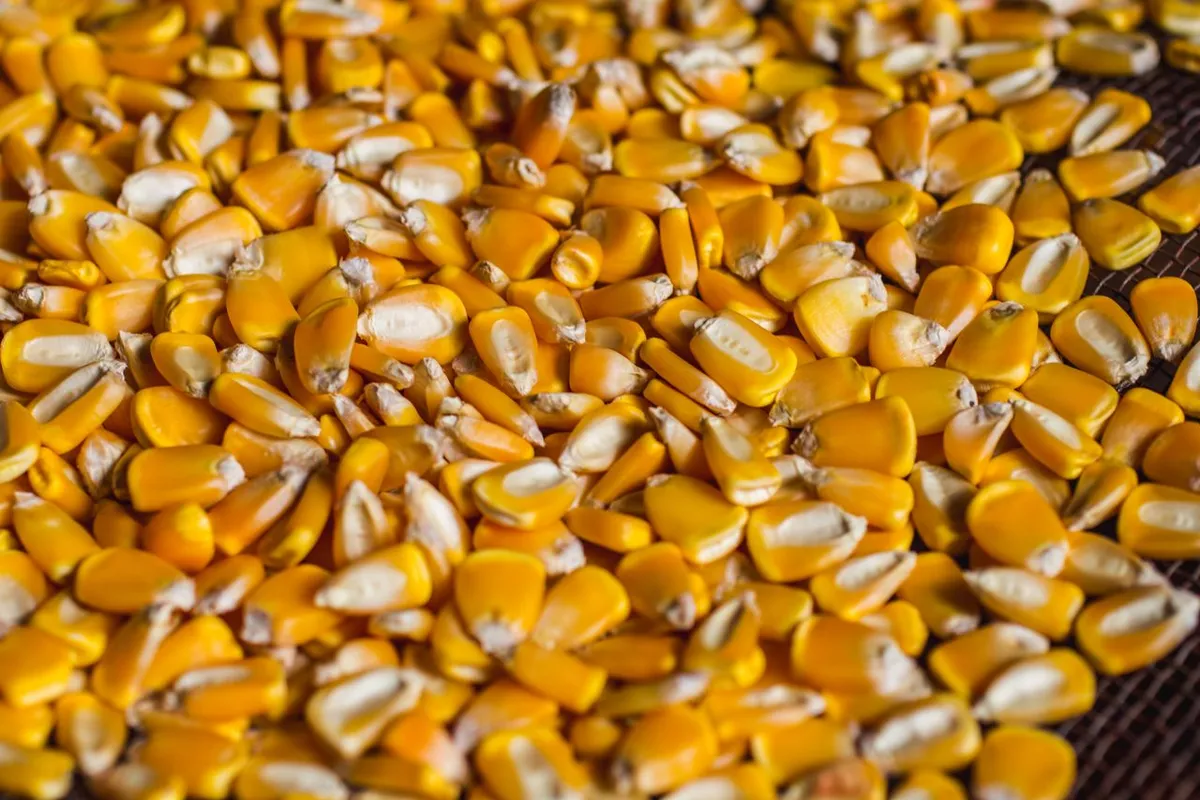
Feed grade yellow maize is bought mainly on moisture, aflatoxin and damaged grains. A typical export specification is moisture at or below 14%, foreign matter at or below 2%, broken kernels at or below 3–4% and damaged kernels at or below 2–3%. Aflatoxin B1 is usually held at 20 ppb or less, which matches the EU limit for feed materials.
Feed mills value maize as an energy grain. It makes up about 55% of a typical Indian poultry diet. Crude protein in Indian feed maize is usually around 7–9%, with high starch and a low fibre content.
Some markets accept higher aflatoxin levels in feed for certain animals. For example, the US FDA sets different action levels for maize used in feed for different livestock. Even so, poultry and dairy feed buyers usually want the lower limit, because aflatoxin harms young birds and can pass into milk. Our guide to aflatoxin in animal feed explains these risks in more detail. Our full feed specification is on the feed maize page.
What Is the Yellow Maize Specification for Food Grade?
Food grade yellow maize is cleaner, drier and much lower in aflatoxin than feed grade. A typical food grade specification is moisture of 12–13%, foreign matter at or below 1%, broken kernels at or below 3% and damaged kernels at or below 2%. The grain is usually machine-cleaned and often colour-sorted before packing.
The aflatoxin limit depends on how the maize will be used. Under EU Regulation 2023/915, maize that will be sorted or physically treated before human use may contain up to 5 µg/kg of aflatoxin B1 and 10 µg/kg of total aflatoxins. Maize for direct human use is limited to 2 µg/kg B1 and 4 µg/kg total. The same regulation also limits fumonisins, deoxynivalenol (DON) and zearalenone in unprocessed maize.
Food grade maize goes to millers of corn grits, corn flour and snack makers, breakfast cereal plants and some starch plants. These buyers often add their own limits for other-colour kernels, insect-damaged kernels and pesticide residues. Starch and industrial buyers sit between the two grades. They usually want food-grade cleanliness, at or below 1% foreign matter, but set aflatoxin limits to suit their own process.
How Do Feed Grade and Food Grade Maize Compare?
The table below compares the typical export grades of Indian yellow maize. These are commercial benchmarks. Your own contract can set tighter or different limits.
| Parameter | Feed grade | Starch / industrial | Food grade (sorting / processing) | Food grade (direct use) |
|---|---|---|---|---|
| Moisture | ≤ 14% | ≤ 14% | ≤ 13% | 12–13% |
| Foreign matter | ≤ 2% | ≤ 1% | ≤ 1% | ≤ 1% |
| Broken kernels | ≤ 3–4% | ≤ 3–4% | ≤ 3% | ≤ 3% |
| Damaged kernels | ≤ 2–3% | ≤ 2–3% | ≤ 2% | ≤ 2% |
| Aflatoxin | B1 ≤ 20 ppb (EU feed) | Per buyer | B1 ≤ 5, total ≤ 10 µg/kg (EU) | B1 ≤ 2, total ≤ 4 µg/kg (EU) |
| Typical buyers | Poultry, cattle and aqua feed mills | Starch and ethanol plants | Grits, flour and snack millers | Direct human consumption |
What Are the Moisture, Aflatoxin and Foreign Matter Limits for Maize?
For export, maize moisture is usually capped at 14%, foreign matter at 1–2% and aflatoxin at the limit of the destination market. These three maize quality parameters decide whether a lot is accepted at the port, so they deserve the most attention in the contract.
Moisture. Codex allows up to 15.5% and FSSAI up to 16%, but export contracts are usually tighter. Moisture above 14% raises the risk of mould, heating and aflatoxin growth during a sea voyage of several weeks. Food buyers often ask for 12–13%. Moisture is measured by oven drying under ISO 6540 or by a calibrated moisture meter.
Aflatoxin. Aflatoxins are toxins made by Aspergillus moulds, which grow on maize in hot, humid conditions in the field and in storage. The EU sets the strictest food limits. The US FDA uses an action level of 20 ppb for maize fed to young or dairy animals, or when the end use is not known, and allows higher levels for some finishing livestock. Many Asian and Middle Eastern buyers use 20 ppb as a contract limit.
Foreign matter, broken and damaged kernels. Foreign matter covers stones, soil, stalks, cob pieces and other seeds. Broken kernels are pieces that pass through a set sieve. Damaged kernels include heat-damaged, mouldy, insect-bored and sprouted grains. Export contracts for Indian maize are usually tighter: foreign matter at or below 1% for food and 2% for feed, broken kernels at or below 3–4% and damaged kernels at or below 2–3%.
Test weight and other parameters. Test weight, measured in grams per litre or pounds per bushel, shows how sound and well-filled the grain is. We supply maize with a test weight of at least 680 g/l. Yellow maize should also have no more than 5% kernels of other colours under Codex. Live insects must be nil, and lots are fumigated before loading.
How Is Maize Tested, Sampled and Inspected?
Maize is tested on a representative sample drawn from the whole lot, not from one bag. The sampler takes small amounts from many bags or points in the stack, mixes them into a composite sample and divides it for the lab, the buyer and a sealed reserve. Sampling is critical for aflatoxin, because the toxin is often found in a few highly contaminated kernels rather than spread evenly.
A typical maize Certificate of Analysis covers moisture, foreign matter, broken and damaged kernels, test weight, aflatoxin B1 and total aflatoxins. Food buyers often add fumonisins, DON, zearalenone and a pesticide residue screen. Aflatoxin is tested by HPLC or LC-MS/MS in an accredited lab.
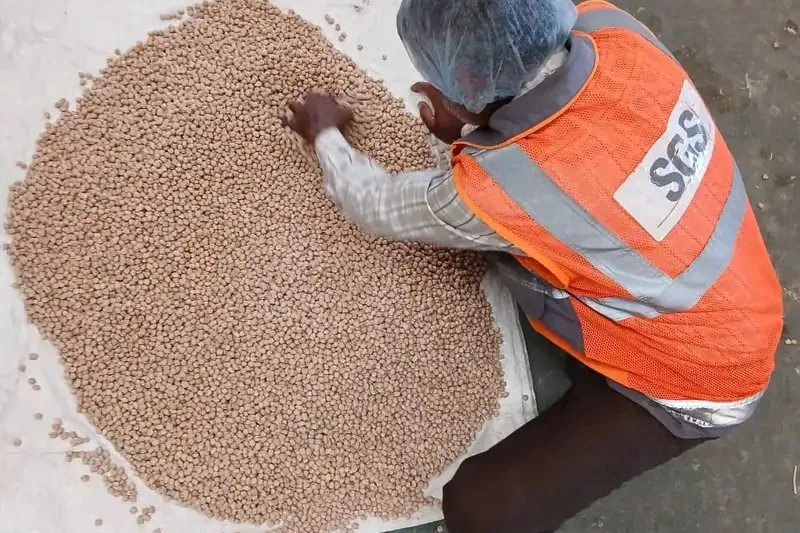
Many buyers also appoint an independent inspection company, such as SGS, Intertek or Bureau Veritas, to check quality, weight and packing at loading. The shipment then travels with a phytosanitary certificate, a certificate of origin, the Certificate of Analysis and, where required, a fumigation certificate. Our lab testing page lists the tests we run and the labs we use.
Related reading: Scientific Name of Pearl Millet and Other Millet Names and Corn Grits Uses: Brewing, Snacks and Breakfast Cereals.
How Do You Source Yellow Maize from India?
To source yellow maize from India, agree the grade and the key maize quality parameters first, then the packing, the container load and the documents. India produced a record 46 million tonnes of maize in 2025-26, according to government estimates, and exports are rising again, mainly to Nepal, Vietnam, Sri Lanka and Bangladesh. The main kharif crop is harvested from September to November, with a smaller rabi crop from March to May.
Elysium Agri Corporation exports non-GMO Indian yellow maize from Jamnagar, Gujarat, in feed and food grades. Our maize ships at 14% moisture or less, and every lot is tested for aflatoxin before loading. We pack in 50 kg PP bags or 1 MT jumbo bags, and a 20 ft container holds about 24–26 MT. You can plan your order with our container load calculator.
Tell us the grade, quantity and destination port, and we will send a current FOB, CFR or CIF price with a specification sheet. Request a yellow maize quote →
Frequently asked questions
What are the quality parameters for yellow maize?
The main quality parameters for yellow maize are moisture, foreign matter, broken kernels, damaged kernels, test weight, other-colour kernels and aflatoxin. Food buyers often add fumonisins, deoxynivalenol, zearalenone and pesticide residues. Each parameter should be written into the contract with a clear limit and test method, and confirmed on a lot-wise Certificate of Analysis from an accredited laboratory.
What is the difference between feed grade and food grade maize?
Feed grade maize is sold to animal feed mills and usually allows 14% moisture, up to 2% foreign matter and aflatoxin B1 up to 20 ppb. Food grade maize is cleaner and drier, with about 12–13% moisture, up to 1% foreign matter and much lower aflatoxin, such as the EU limit of 2 µg/kg B1 for direct human use.
What moisture level is acceptable for yellow maize?
Most export contracts cap yellow maize moisture at 14%, and food buyers often ask for 12–13%. Codex allows up to 15.5% and FSSAI up to 16%, but grain above 14% is more likely to heat, grow mould and develop aflatoxin during a long sea voyage. Moisture is measured by oven drying under ISO 6540 or a calibrated meter.
What is aflatoxin testing in maize and why does it matter?
Aflatoxin testing measures toxins made by Aspergillus moulds, which can grow on maize in the field or in storage. It matters because aflatoxins are harmful to people and animals and are strictly limited in most markets. Labs test a representative composite sample by HPLC or LC-MS/MS. Aflatoxin is the most common reason maize lots are rejected at destination ports.
What foreign matter and broken kernel limits apply to maize?
Codex allows up to 1.5% organic and 0.5% inorganic extraneous matter and up to 6% broken kernels in maize. Export contracts are usually tighter. Indian food grade maize is typically sold with foreign matter at or below 1%, and feed grade at or below 2%, with broken kernels at or below 3–4% and damaged kernels at or below 2–3%.
Related reads


