
On this page
- What Is Soybean Meal?
- How Is Soybean Meal Made?
- What Do Solvent Extraction and Toasting Do?
- What Is the Protein and Nutrient Profile of Soybean Meal?
- What Are the Types of Soybean Meal?
- How Is Soybean Meal Used in Poultry, Dairy and Aquafeed?
- Which Quality Parameters Do Buyers Check?
- How Do You Source Soybean Meal from India?
- Frequently asked questions
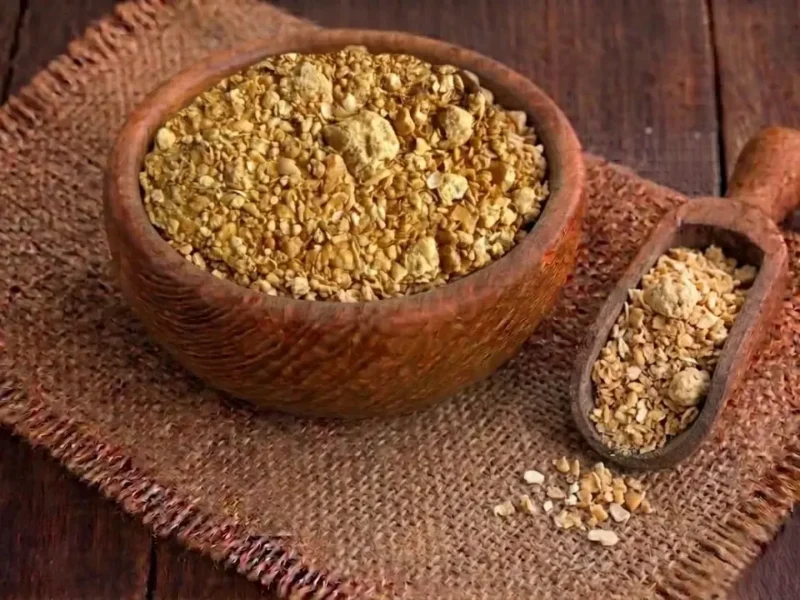
Soybean meal is the high-protein material left after oil is extracted from soybeans. It is toasted, ground and sold as a feed ingredient, usually with 44–49% crude protein, and it is the main protein source in poultry, pig, dairy and fish feed worldwide. In India it is traded as soya DOC (de-oiled cake). This guide explains what soybean meal is, how it is made, its nutrient profile, the main types and the quality checks that buyers use.
Key takeaways
- Soybean meal is a by-product of soybean oil extraction. Most is made by hexane solvent extraction followed by toasting.
- Toasting destroys anti-nutritional factors. Urease activity and KOH protein solubility show whether the meal was heated correctly.
- Grades range from standard meal at about 44–46% protein to dehulled hi-pro meal at 47–49%.
- Indian soybean meal is non-GMO, because India does not permit GM soybean cultivation.
What Is Soybean Meal?
Soybean meal is the protein-rich solid that remains after soybean oil is removed. A soybean is roughly one-fifth oil and well over one-third protein. When the oil is taken out, the protein becomes more concentrated, which gives a meal with nearly half its weight as crude protein. The meal is light tan to light brown, with a fresh, toasted smell.
The trade uses several names for the same product. “Soybean meal”, “soymeal” and “SBM” are common internationally. In India, it is called soya DOC, which stands for de-oiled cake. It is exported under HS code 2304, which covers oil-cake and other solid residues from soybean oil extraction. Indian exports use ITC-HS 2304 00 30 for solvent-extracted meal.
Soybean meal is valued because its protein has a good amino acid balance for animals, especially lysine. Argentina, Brazil and the USA dominate supply, and their meal sets world prices. India is one of the few large sources of non-GMO meal.
How Is Soybean Meal Made?
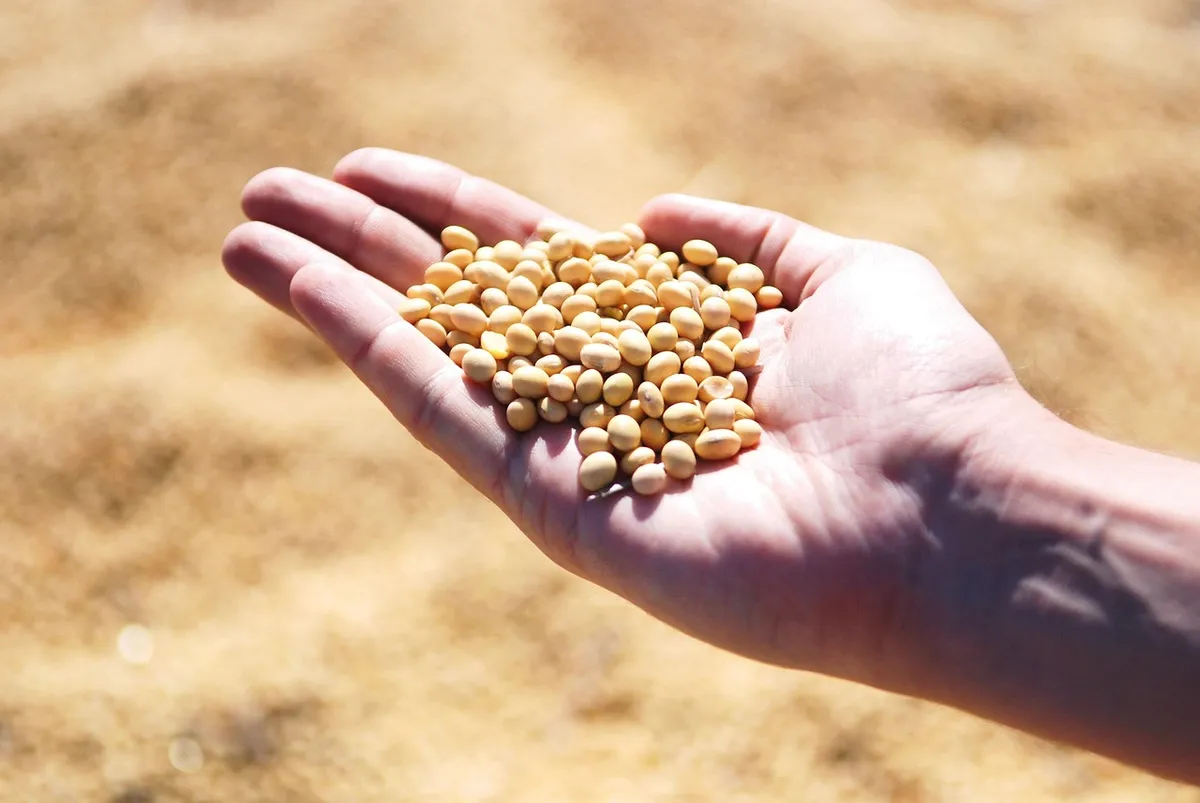
Soybean meal is made by cleaning and preparing the beans, extracting the oil, then removing the solvent and toasting the remaining flakes. According to Feedipedia, the feed resources database run by FAO, INRAE, CIRAD and AFZ, the main stages are as follows.
- Cleaning and drying: stones, stems and dust are removed, and the beans are dried if needed.
- Cracking and dehulling: the beans are cracked into pieces. For hi-pro meal, the hulls are removed at this stage.
- Conditioning and flaking: the cracked beans are warmed and rolled into thin flakes, which lets the solvent reach the oil.
- Solvent extraction: the flakes are washed with hexane, which dissolves the oil.
- Desolventising and toasting: the oil-free “spent flakes” are heated with steam to drive off the solvent and to toast the meal.
- Drying, cooling and grinding: the meal is brought to a safe moisture level, cooled and ground to meal or grits.
What Do Solvent Extraction and Toasting Do?
Solvent extraction removes almost all of the oil, and toasting makes the protein safe and digestible for animals. Both steps decide the final quality of the meal.
Hexane extraction is very efficient. It leaves only about 0.5–2% residual oil in the meal, compared with 5% or more in meal made by mechanical pressing alone. This is why solvent meal has the highest protein.
Toasting is the step buyers watch most closely. Raw soybeans contain trypsin inhibitors and other anti-nutritional factors that reduce growth, especially in young poultry and pigs. Moist heat destroys them. Too little heat leaves them active. Too much heat damages the protein and lowers lysine availability. Two lab tests show where a meal sits:
- Urease activity: urease is destroyed by heat along with trypsin inhibitors, so it is used as an indicator. A result of about 0.05–0.3 ΔpH is usually accepted. A high value means under-toasting.
- Protein solubility in KOH: a result of about 75–85% is usually accepted. A low value means the meal was over-heated.
What Is the Protein and Nutrient Profile of Soybean Meal?
Soybean meal typically contains 44–49% crude protein, 1–2% fat, 3–7% crude fibre and about 12% moisture, as fed. Protein depends mostly on whether the hulls are removed. The INRAE-CIRAD-AFZ feed tables list a common grade at 46.2% crude protein, 1.5% fat, 6% crude fibre and 88% dry matter, with 28.8 g/kg lysine and 6.6 g/kg methionine.
Those amino acid figures explain how the meal is used. Lysine is high, so soybean meal pairs well with maize and wheat, which are low in lysine. Methionine is limiting, so poultry diets usually add synthetic methionine. The meal is also a fair source of phosphorus, though much of it is bound as phytate and is poorly available to poultry and pigs unless phytase is added. For a closer look at grades and test methods, see our guide to soybean meal protein content.
What Are the Types of Soybean Meal?
The main types differ in how the oil is removed and whether the hulls stay in. The table compares typical as-fed values. Actual figures vary by crop, plant and contract.
| Type | How it is made | Crude protein | Fat | Crude fibre |
|---|---|---|---|---|
| Hi-pro dehulled soybean meal | Solvent extracted, hulls removed | 47–49% | About 1.5–2% | Below 3–3.5% |
| Standard soybean meal | Solvent extracted, hulls kept or returned | About 44–46% | About 1.5% | About 6% |
| Indian soya DOC (export grade) | Solvent extracted, toasted, non-GMO | 46–48% | 0.5–1.5% | 6% max |
| Expeller soybean meal or cake | Mechanical pressing, no solvent | About 44–46% | 5% or more | Similar to standard meal |
| Full-fat soybean (extruded) | Whole beans cooked by extrusion, oil kept | About 36% | About 18% | About 5.6% |
Sources: Feedipedia for hi-pro and expeller meal; INRAE-CIRAD-AFZ feed tables for standard meal and extruded full-fat soybean; Elysium specification for Indian soya DOC.
Expeller meal keeps more oil, so it carries more energy and is popular in organic feed, where solvent use is not allowed. Full-fat soybean is not a meal in the strict sense, but it is often grouped with it in feed formulation. Soybean meal is also sold as fine meal or as grits, which are coarser particles. State the form you need on the order.
How Is Soybean Meal Used in Poultry, Dairy and Aquafeed?
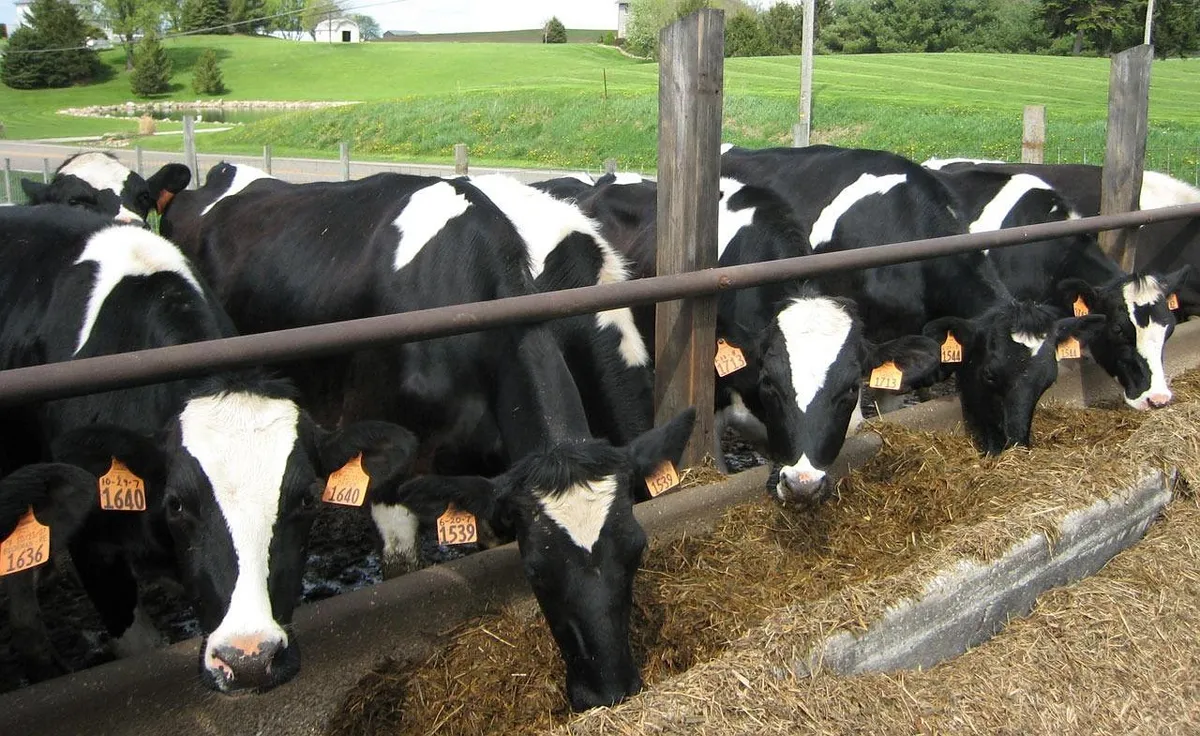
Soybean meal is used as the main protein ingredient in poultry feed and as a protein supplement in dairy, pig and fish diets. Feedipedia gives typical inclusion levels of about 25–40% in poultry diets, 20–30% in pig diets and 20–35% in cattle and sheep diets.
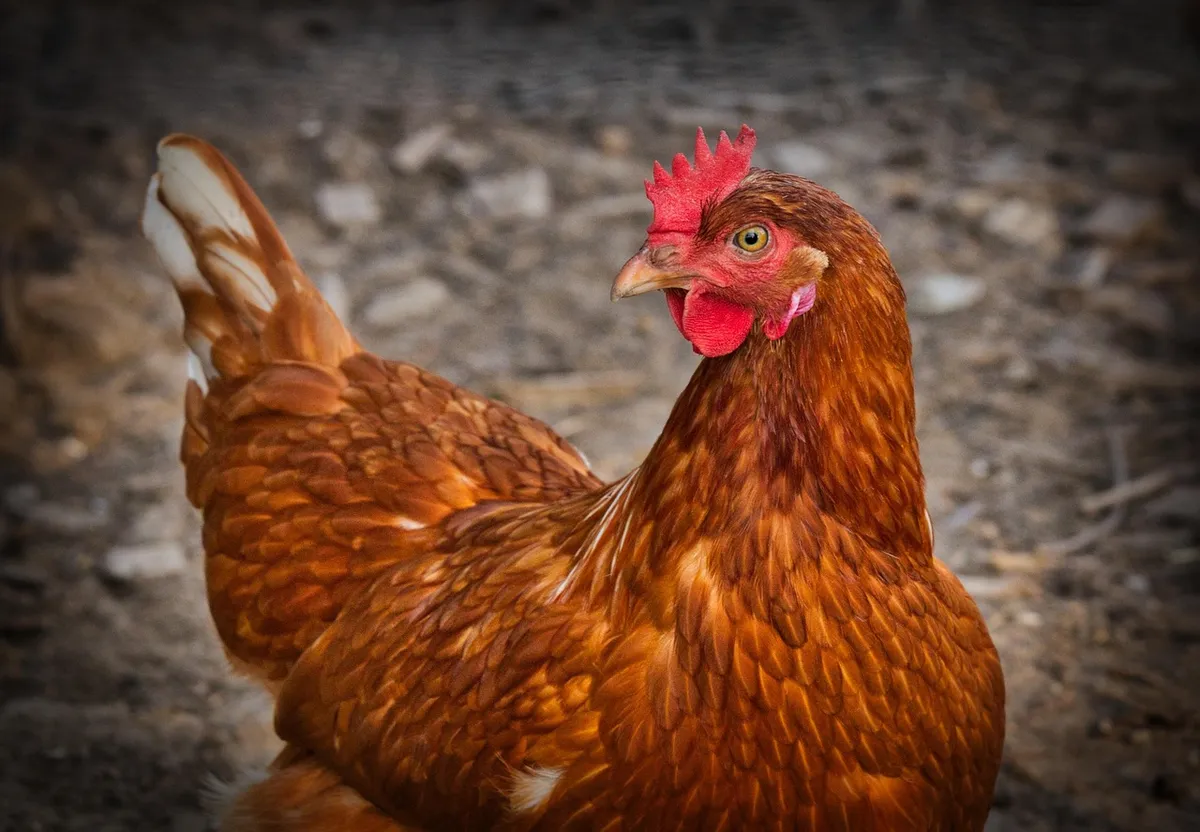
- Poultry: broilers and layers rely on soybean meal for most of their protein. Broiler feed uses the highest share, because fast growth needs high protein and lysine.
- Dairy and beef cattle: soybean meal supplies rumen-degradable protein. Expeller meal gives more bypass protein and is often preferred for high-yielding dairy cows.
- Aquafeed: fish and shrimp feed makers use soybean meal to replace part of the fishmeal. Feedipedia describes it as one of the most relevant plant alternatives to fishmeal.
Soybean meal is often compared with cheaper protein meals. Rapeseed meal and DDGS can replace part of it in some diets. Our comparison of DDGS vs soybean meal explains the trade-offs.
Which Quality Parameters Do Buyers Check?
Buyers check protein, moisture, fibre, sand and silica, toasting, mycotoxins and GMO status. Each test should be written into the contract with its limit and method.
- Crude protein: the main price driver. State the basis (as is, or protein plus fat) and the method, such as Kjeldahl or Dumas.
- Moisture: usually 12% maximum. Higher moisture raises the risk of mould and caking in transit.
- Crude fibre: shows how much hull is present.
- Sand and silica: an export grade such as 48/2.5 allows at most 2.5% sand and silica.
- Urease and KOH solubility: confirm correct toasting.
- Aflatoxin B1: the EU sets a maximum of 20 µg/kg for feed materials. Our article on aflatoxin in animal feed covers the limits by market.
- GMO status and Salmonella: checked where the buyer’s market or contract requires them.
Related reading: Mustard Cake for Cattle: A Guide to Rapeseed Meal in Rations and Poultry Feed Formulation: Ingredients and Nutrient Basics.
How Do You Source Soybean Meal from India?
To source soybean meal from India, agree the grade, protein basis, toasting limits, aflatoxin limit, packing and port before you book. Indian meal usually costs more than South American meal, but it is non-GMO and close to South Asia and the Gulf. That makes it a strong choice for non-GMO feed chains and nearby markets. If you are testing a new soybean meal source, ask for a sample and a full certificate of analysis first.
Elysium Agri Corporation exports non-GMO soyabean meal at 46–48% protein from Kandla, with hi-pro 48% and standard 46% grades. We pack in 50 kg PP bags, jumbo bags or bulk in containers with liner bags, and a 20 ft container holds about 20–22 MT in bags. Every lot is sampled at loading and tested for protein, fat, fibre, moisture, sand and silica and aflatoxin B1, with urease and KOH solubility checks. Our lab testing page lists the full panel, and our animal feed range includes rapeseed meal, DDGS and de-oiled rice bran.
Send us your grade, quantity and destination port for a current FOB, CFR or CIF price. Request a soybean meal quote →
Frequently asked questions
What is soybean meal?
Soybean meal is the protein-rich material left after oil is extracted from soybeans. It is toasted, ground and used as a feed ingredient, usually with 44–49% crude protein. It is the main protein source in poultry feed and is also used for dairy cattle, pigs, fish and shrimp. In India it is traded as soya DOC, meaning de-oiled cake.
How is soybean meal made?
Soybeans are cleaned, cracked, often dehulled, conditioned and rolled into thin flakes. The flakes are washed with hexane to dissolve the oil. The oil-free flakes then pass through a desolventiser-toaster, where steam removes the solvent and the heat destroys anti-nutritional factors. Finally the meal is dried, cooled and ground to meal or grits.
What is the protein content of soybean meal?
Most soybean meal contains 44–49% crude protein as fed. Standard meal with hulls is usually about 44–46%, while dehulled hi-pro meal reaches 47–49%. Indian export soya DOC is traded at 46–48%, with the SEA 48/2.5 grade meaning 48% protein and no more than 2.5% sand and silica. Always state the protein basis and test method in the contract.
What is the difference between soybean meal and soybean cake?
Soybean meal usually means solvent-extracted meal, with about 0.5–2% residual oil and the highest protein. Soybean cake, or expeller meal, is made by mechanical pressing without solvent, so it keeps 5% or more oil and slightly less protein. In India, the term soya DOC, de-oiled cake, is used for the solvent-extracted meal, which can cause confusion in contracts.
Which animals are fed soybean meal?
Soybean meal is fed to broilers, layers, pigs, dairy and beef cattle, sheep, fish, shrimp and pets. Poultry is the largest user, with typical inclusion of about 25–40% of the diet. Dairy cattle use it as a protein supplement, and aquafeed makers use it to replace part of the fishmeal in fish and shrimp diets.
Related reads


