
On this page
- What Is Moisture Content and Why Does It Matter?
- How Is Moisture Content in Grains Measured?
- What Are Safe Moisture Levels for Grains, Pulses and Oilseeds?
- What Are the Risks of Excess Moisture: Mould, Insects and Aflatoxin?
- Which Drying and Conditioning Methods Are Used?
- How Do Storage and Packing Help Maintain Moisture?
- Do Purchase Contracts Include Moisture Clauses?
- Where Can You Buy Moisture-Tested Commodities from India?
- Frequently asked questions
Moisture content in grains is the share of a grain’s weight that is water. Most cereals and pulses store safely at about 12–14% moisture, while oilseeds such as peanuts and sesame need much lower levels, usually 5–7%. Above these levels, moulds, insects and aflatoxin can damage a lot within weeks. For an importer, moisture is also a price question, because you pay for every kilo of water in the bag. This guide explains how moisture is measured, the safe levels by commodity and how to write moisture into a purchase contract.
Key takeaways
- Cereals and pulses are usually dried to 12–14% moisture for safe storage; oilseeds need 5–7%.
- The reference method is oven drying, such as ISO 712 for cereals and ISO 24557 for pulses. Quick meters must be calibrated against it.
- Excess moisture causes mould, insect growth, aflatoxin and “container rain” during sea transit.
- Every export contract should state the moisture limit, the test method and where the sample is taken.
What Is Moisture Content and Why Does It Matter?
Moisture content is the amount of water in a grain, given as a percentage of its weight. Trade figures are almost always on a “wet basis”, which means water as a share of the total weight, including the water. A lot of 1,000 kg wheat at 12% moisture holds 120 kg of water.
Moisture matters for three reasons. First, it decides how long the grain will keep. Dry grain is almost inactive; damp grain respires, heats and gives moulds and insects the conditions they need. Second, it affects processing. Millers, splitters and roasters set their machines for a narrow moisture range. Third, it affects value. Water adds weight but no food value, so a buyer who receives 14% moisture instead of 12% gets less dry matter for the same price.
Grain also exchanges moisture with the air around it. In humid air it slowly takes up water, and in dry air it loses water. This is why the same lot can test differently at the farm gate, after cleaning, at loading and on arrival. A clear contract states which result counts.
How Is Moisture Content in Grains Measured?
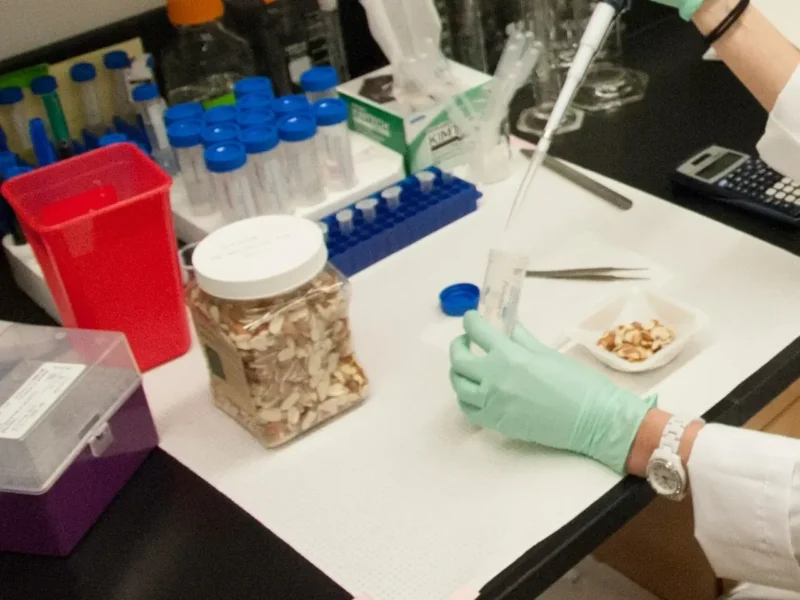
Moisture is measured either by oven drying, which is the reference method, or by quick electronic meters that are calibrated against it. Laboratories use the oven method for certificates and disputes. Warehouses and buying points use meters for speed.
- Air-oven method: a ground or whole sample is weighed, dried in an oven at a set temperature and time, and weighed again. The weight lost is the moisture. Cereals follow ISO 712, and pulses follow ISO 24557. Oilseeds and spices have their own methods.
- Capacitance and resistance meters: these read the electrical properties of the grain, which change with water content. They give a result in about a minute but need the right grain setting and regular calibration.
- Near-infrared (NIR) analysers: these measure how the sample absorbs light. They can report moisture, protein and oil together and are common at large mills and ports.
A meter reading is only as good as its sample. Grain in one bag or one part of a silo can be drier or wetter than the rest. Take several small samples from across the lot and combine them, as we explain in our guide to pre-shipment samples and inspections.
What Are Safe Moisture Levels for Grains, Pulses and Oilseeds?
Safe moisture depends on the commodity. The FAO advises that harvested grain should be dried to 12–14% for safe storage with minimal deterioration. Oilseeds need lower figures. Their oil holds no water, so all the moisture sits in the non-oil part of the seed, and a low overall percentage is already a high level there. The table shows the maximum moisture in our standard export specifications.
| Commodity | Group | Export moisture limit | Note |
|---|---|---|---|
| Wheat grain | Cereal | 12% max | Test weight 76 kg/hl min |
| Corn (maize) | Cereal | 14% max | 12–13% for food use |
| Millet grain | Cereal | 12% max | FSSAI limit 13% |
| Urad, red lentils, chickpeas | Pulses | 12% max | FSSAI 14% whole, 12% split |
| Peanut kernels | Oilseed | 7% max | 8% max on request |
| Natural sesame | Oilseed | 6% max | Hulled sesame 5% max |
| Cumin seeds | Seed spice | 8% max | Codex limit 10% |
| Coriander seeds | Seed spice | 9% max | – |
| Soybean meal | Feed | 12% max | – |
| Onion powder | Dehydrated | 5% max | FSSAI powder limit |
These are maximums at loading. For long voyages through hot or humid regions, ask for a lower figure, especially for oilseeds and powders. For pulses, our urad specification shows how moisture sits alongside other limits.
What Are the Risks of Excess Moisture: Mould, Insects and Aflatoxin?
Excess moisture leads to four main problems: mould, insect growth, mycotoxins and loss of quality. They often happen together and build on each other.
- Mould: storage moulds such as Aspergillus and Penicillium grow on damp grain. They cause musty smells, caking and discoloured kernels.
- Aflatoxin and other mycotoxins: some Aspergillus moulds produce aflatoxin, a toxin with strict legal limits in the EU and other markets. FAO notes that high-moisture crops, especially maize, can be contaminated within 48 hours in warm, wet conditions. Peanuts, maize and some spices are most exposed. Our guide to aflatoxin in peanuts explains the limits.
- Insects: weevils and other storage pests breed faster in warm, damp grain. Their activity creates more heat and moisture, which helps mould grow.
- Oilseed spoilage: in peanuts and sesame, moisture speeds up the breakdown of oil. Free fatty acids rise and the product turns rancid.
At sea there is one more risk. When a container moves between warm and cool climates, moisture from the cargo and the air condenses on the cold steel roof and drips back onto the bags. Traders call this “container rain”. It can wet the top layer even when the lot was dry at loading. Liners and container desiccants reduce the risk.
Which Drying and Conditioning Methods Are Used?
Grain is dried by sun or by machine, and then held under conditions that keep it dry. The aim is to reach safe moisture quickly after harvest, because the risk of mould is highest in the first days.
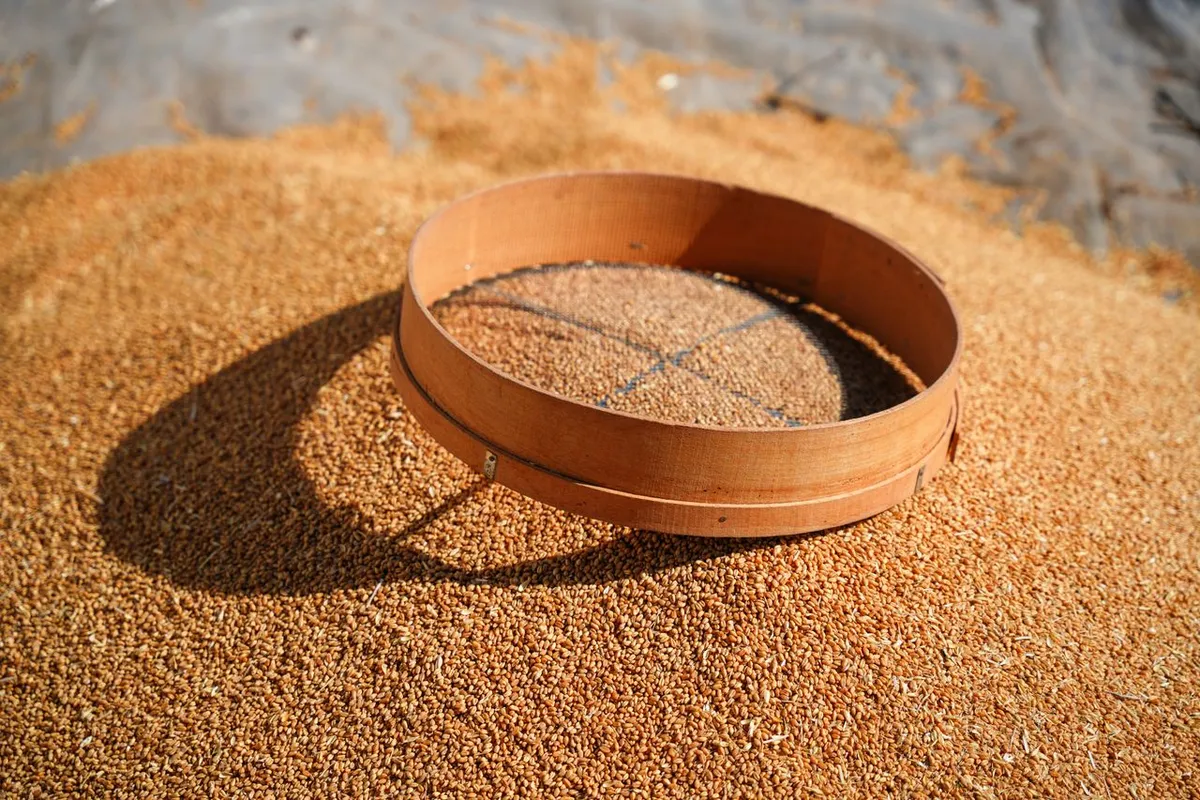
- Sun drying: grain is spread in a thin layer on clean, raised surfaces or tarpaulins. FAO notes it takes 2–3 days, depending on layer thickness and weather. It is cheap but depends on dry weather and can add dust and stones.
- Mechanical drying: heated air is blown through the grain in batch or continuous dryers. Temperature must be controlled. For peanuts, FAO advises keeping the drying air only moderately warmer than the outside air.
- Aeration: fans push ambient air through stored grain to cool it and even out moisture. It does not dry wet grain fast, but it keeps dry grain stable.
- Conditioning: some processors add a measured amount of water before milling or splitting, then let it rest. This is a controlled process step and is different from storage moisture.
How Do Storage and Packing Help Maintain Moisture?
Good storage keeps dry grain dry. Store bags on pallets, away from walls, in a clean, ventilated and rain-proof warehouse. Keep different crop years apart and use older stock first. Check temperature and moisture regularly, because a warm spot in a stack is often the first sign of trouble.
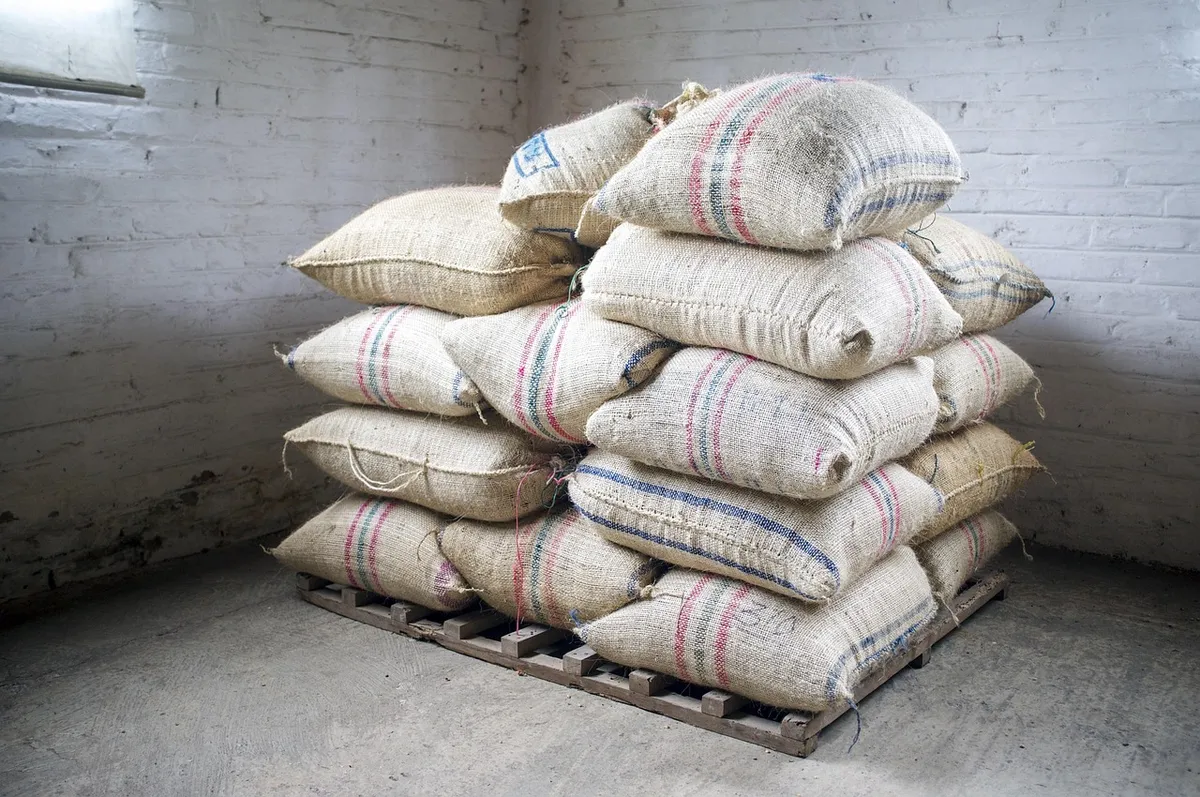
Packing choice also matters. PP bags with an inner liner give more moisture protection than plain woven bags. Jute bags breathe, which suits some products, while vacuum packs suit peanut kernels on long or warm routes. For the container, use a clean, dry box, a kraft paper liner and desiccants. Our packaging options page sets out each choice.
Do Purchase Contracts Include Moisture Clauses?
Yes. Almost every agri-commodity contract sets a maximum moisture, and good contracts say much more than a single number. A clear moisture clause should cover:
- The limit: for example, “moisture 12% max”.
- The method: the oven standard that decides disputes, such as ISO 712 or ISO 24557.
- The sampling point: at loading in India, or on arrival at destination. Most FOB and CIF contracts use loading.
- Who tests: the exporter’s lab, an independent surveyor such as SGS, or both.
- The remedy: a price allowance for each 0.1% above the limit, or the right to reject above a set figure.
The certificate of analysis should report the moisture result together with the method used, so both sides can compare like with like.
Related reading: Heavy Metals in Spices and Seeds: Limits, Testing and Sourcing and FSSAI Licence for Export: What Food Exporters Need.
Where Can You Buy Moisture-Tested Commodities from India?
Elysium Agri Corporation checks moisture in grains, pulses, oilseeds and spices at three points: before we buy, after processing and again before loading. We pack at the right moisture level, use clean, dry containers with kraft liners and desiccants, and share loading photos with you. Our quality process and lab testing pages list the full test panel for each product, and an independent survey is available on request.
Send us your specification, including the moisture limit and test method, and we will quote against it. Request a moisture-tested commodity quote →
Frequently asked questions
What is a safe moisture content for storing grains?
Most cereals store safely at about 12–14% moisture, and FAO advises drying harvested grain to this range. Wheat and millet are usually exported at 12% maximum and maize at 14% maximum, or 12–13% for food use. Lower moisture is safer for long storage or for shipping through hot, humid regions.
What moisture level is safe for storing pulses?
Pulses such as urad, lentils and chickpeas are usually stored and exported at 12% moisture or less. India's FSSAI sets a legal maximum of 14% for whole pulses and 12% for split or dehusked pulses. Split dals need extra care because the protective seed coat has been removed.
How is moisture content in grains measured?
The reference method is oven drying. A weighed sample is dried at a set temperature and time and weighed again, following standards such as ISO 712 for cereals and ISO 24557 for pulses. Electronic capacitance meters and NIR analysers give faster results but must be calibrated against the oven method.
Why does high moisture cause mould in stored oilseeds?
Oil holds no water, so all the moisture in an oilseed sits in its non-oil part. A figure that looks low, such as 9% in peanuts, is high for the seed itself. This damp tissue lets moulds such as Aspergillus grow, which can produce aflatoxin and speed up rancidity. Peanuts are therefore kept at 7% or below.
Do importers set moisture limits in contracts?
Yes. Almost every agri-commodity contract states a maximum moisture. A good clause also names the test method, the sampling point (loading or arrival), who carries out the test and the remedy, such as a price allowance for each 0.1% over the limit or a right to reject above a set level.
Related reads


