
On this page
- Why Does the Sampling of Grains and Bulk Commodities Matter?
- What Is Representative Sampling?
- Which Sampling Tools and Equipment Are Used?
- How Are Samples Drawn from Bags, Bulk and Containers?
- How Do the Main Sampling Methods Compare?
- How Does a Primary Sample Become a Lab Sample?
- How Do Sampling and Testing Work Before Shipment?
- How Does Elysium Sample and Test Before Shipment?
- Frequently asked questions
Sampling of grains and other bulk commodities means drawing many small portions from all parts of a lot, combining them and reducing them to a lab sample that truly represents the whole shipment. A lab result is only as good as the sample behind it, so poor sampling can make a good lot fail or a bad lot pass. This guide explains representative sampling, the tools used, how samples are drawn from bags, bulk and containers, and how a field sample becomes a lab sample.
Key takeaways
- A representative sample is built from many small incremental samples taken from across the whole lot, not from the top of a few bags.
- Probes, spears and stream (flow) samplers are the main tools. Stream sampling during loading is the most reliable for bulk grain.
- Aflatoxin is found in a small number of highly contaminated kernels, so sampling is the largest source of error in aflatoxin testing.
- Agree the sampling method, sample size and lab in the contract before loading.
Why Does the Sampling of Grains and Bulk Commodities Matter?
Sampling matters because a lab tests a few grams, but the decision applies to many tonnes. A single 20 ft container can hold well over 10 tonnes of grain, seeds or spices, yet the lab analyses only a small portion. If the sample does not reflect the whole lot, the result is wrong, however good the lab is.
Bulk commodities are rarely uniform. Moisture can vary between the top and bottom of a stack. Broken grains, dust and foreign matter tend to settle. Insects collect in some bags and not others. Contaminants such as aflatoxin are often concentrated in a few kernels. An FAO manual on aflatoxin control warns that analyses of samples from good lots may show the lots are bad, and the reverse. This creates risk for both the exporter and the importer.
What Is Representative Sampling?
Representative sampling means every part of the lot has an equal chance of being included in the sample. In practice, the sampler takes many small portions from different positions and times, then combines them. The Codex General Guidelines on Sampling (CAC/GL 50-2004) use a standard set of terms that most trade contracts follow:
- Lot: a defined quantity of a commodity, produced and handled under uniform conditions, such as one container or one batch.
- Incremental sample: one small portion taken from one point in the lot.
- Aggregate (bulk) sample: all the incremental samples combined.
- Laboratory sample: the portion of the aggregate sample sent to the lab, after mixing and reduction.
- Test portion: the small quantity the lab actually analyses.
Random selection matters as much as the number of samples. Taking every sample from the easiest bags to reach biases the result. A sampling plan sets in advance how many increments to take and from where.
Which Sampling Tools and Equipment Are Used?
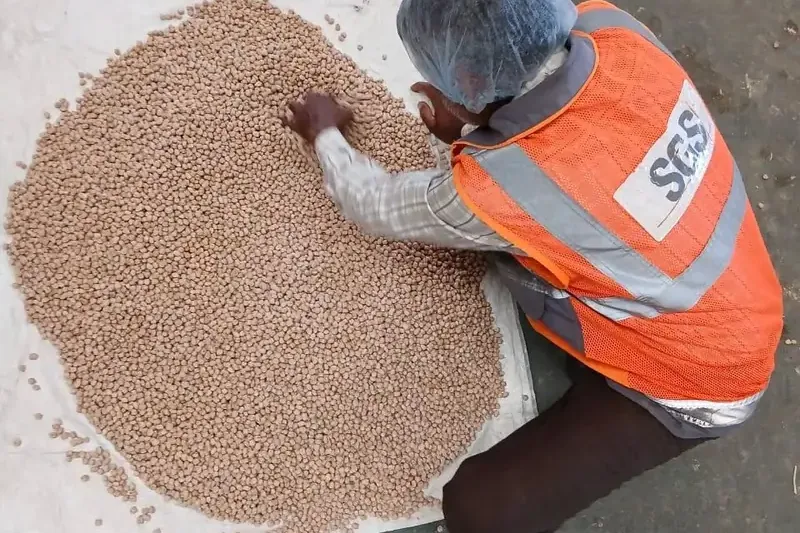
The main sampling tools are probes and spears for bags, long probes for bulk, and automatic or manual stream samplers for moving grain. Each suits a different form of cargo.
- Bag spear (trier): a hollow, pointed tube pushed into a bag to remove a core of product. It is quick and leaves only a small hole.
- Compartmented probe: a long double tube with openings along its length. It takes product from several depths in one action, used for bulk heaps, trucks and bins.
- Stream sampler (cup or diverter): takes a cross-section of a falling or moving stream of grain at fixed intervals, during loading or unloading.
- Sample dividers: riffle dividers or Boerner-type dividers split an aggregate sample into equal, representative parts.
Tools must be clean and dry. For microbiological tests, such as Salmonella in sesame or spices, the tools and sample bags must be sterile so that the sampler does not contaminate the sample.
How Are Samples Drawn from Bags, Bulk and Containers?
Samples are drawn from many bags spread across the lot, from several points and depths in bulk cargo, and ideally from the product stream as it is loaded. The method depends on how the goods are packed.
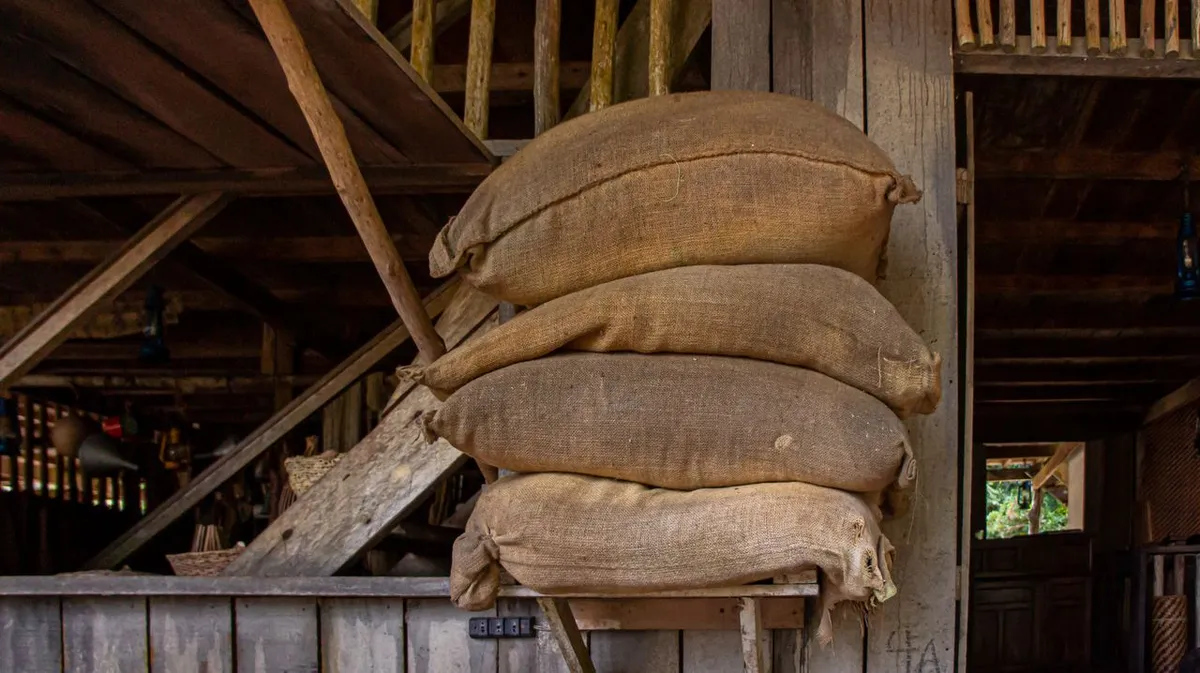
Bagged goods. The sampler selects bags at random from the whole stack, including bags at the bottom and middle, not only the top layer. A spear takes a core from each selected bag, often from the top, middle and bottom of the bag. Sampling is easiest before the bags are loaded, when the stack can be reached from all sides. Our packaging page explains the bag types we use.
Bulk goods. For grain in a heap, truck or bin, a long probe takes increments from a grid of points and from several depths. Fine material and broken grain settle in bulk, so surface samples alone are not reliable.
Moving product. Stream sampling takes a full cross-section of the flow at regular intervals as grain moves on a conveyor or through a spout. The FAO manual describes it as taking small portions from a moving stream at periodic intervals and combining them into a sample. It is the preferred method because every part of the lot passes the sampling point.
Containers. Once a container is stuffed, only the door end can be reached. Samples drawn there do not represent the far end. For this reason, pre-shipment samples should be drawn during cleaning, bagging or stuffing, not after the doors are closed.
How Do the Main Sampling Methods Compare?
Each method trades speed for accuracy. The table compares the four methods most used for grains, seeds and spices.
| Method | Best for | Strengths | Limits |
|---|---|---|---|
| Bag spear (trier) | Bagged grains, pulses, seeds and spices | Fast, low cost, little damage to bags | Needs access to many bags across the stack |
| Compartmented probe | Bulk heaps, trucks, bins and silos | Takes product from several depths at once | May miss layers near the floor; hard in very large lots |
| Stream (flow) sampling | Grain moving on conveyors or spouts during loading | Most representative; every part of the lot passes the sampler | Only possible while the product is moving |
| Grab (hand) sampling | Quick visual checks, small lots | Simple, no special tools | Biased to the surface; not suitable for contract or mycotoxin tests |
Formal sampling standards set the details. ISO 24333 covers sampling of cereals and cereal products, and ISO 948 covers spices and condiments. For mycotoxins in food sold in the EU, Regulation (EU) 2023/2782 sets the number of incremental samples and the aggregate sample weight by lot size.
How Does a Primary Sample Become a Lab Sample?
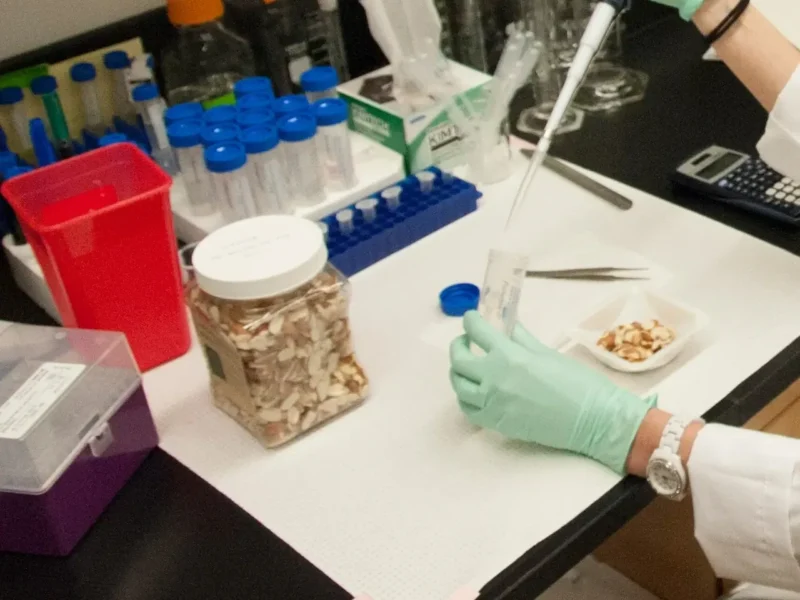
The incremental samples are combined, mixed thoroughly and divided down to a lab sample of the size the method requires. Each step must keep the sample representative.
- Combine: all incremental samples go into one clean container to form the aggregate sample.
- Mix: the aggregate sample is mixed well, by hand or by machine.
- Reduce: a riffle or rotary divider splits it into equal parts. One part becomes the lab sample. Others are kept as reference and dispute samples.
- Grind (for mycotoxins): because aflatoxin is concentrated in a few kernels, the whole lab sample is ground finely before a test portion is taken. The FAO manual describes grinding a large sample, subdividing it, grinding again and taking 50 g analytical portions.
- Seal and label: each sample is sealed and labelled with the product, lot, container number, date and sampler, and a chain of custody is kept.
Aflatoxin shows why this matters. A handful of contaminated peanuts or maize kernels can carry most of the toxin in a lot. A small sample may miss them or catch too many. Larger aggregate samples and fine grinding reduce this error, as our article on aflatoxin in peanuts explains.
How Do Sampling and Testing Work Before Shipment?
Before shipment, the lot is sampled by the exporter, an approved lab or an independent inspector, tested, and reported on a Certificate of Analysis that names the lot and container. Buyers should agree four points in the contract before loading:
- Who samples: the exporter’s team, an official lab or a third party such as SGS, Intertek or Bureau Veritas.
- How: the sampling standard or regulation to follow, such as EU 2023/2782 for mycotoxins.
- Which lab: an ISO 17025 or NABL-accredited lab, and the tests and limits to apply.
- What to keep: sealed reference samples held by both sides in case of a dispute.
Our guide to pre-shipment samples and inspections covers the inspection itself, and our article on the certificate of analysis explains what a good report should show.
Related reading: Heavy Metals in Spices and Seeds: Limits, Testing and Sourcing and PP Bags vs Jute Bags vs Vacuum Packs for Food Exports.
How Does Elysium Sample and Test Before Shipment?
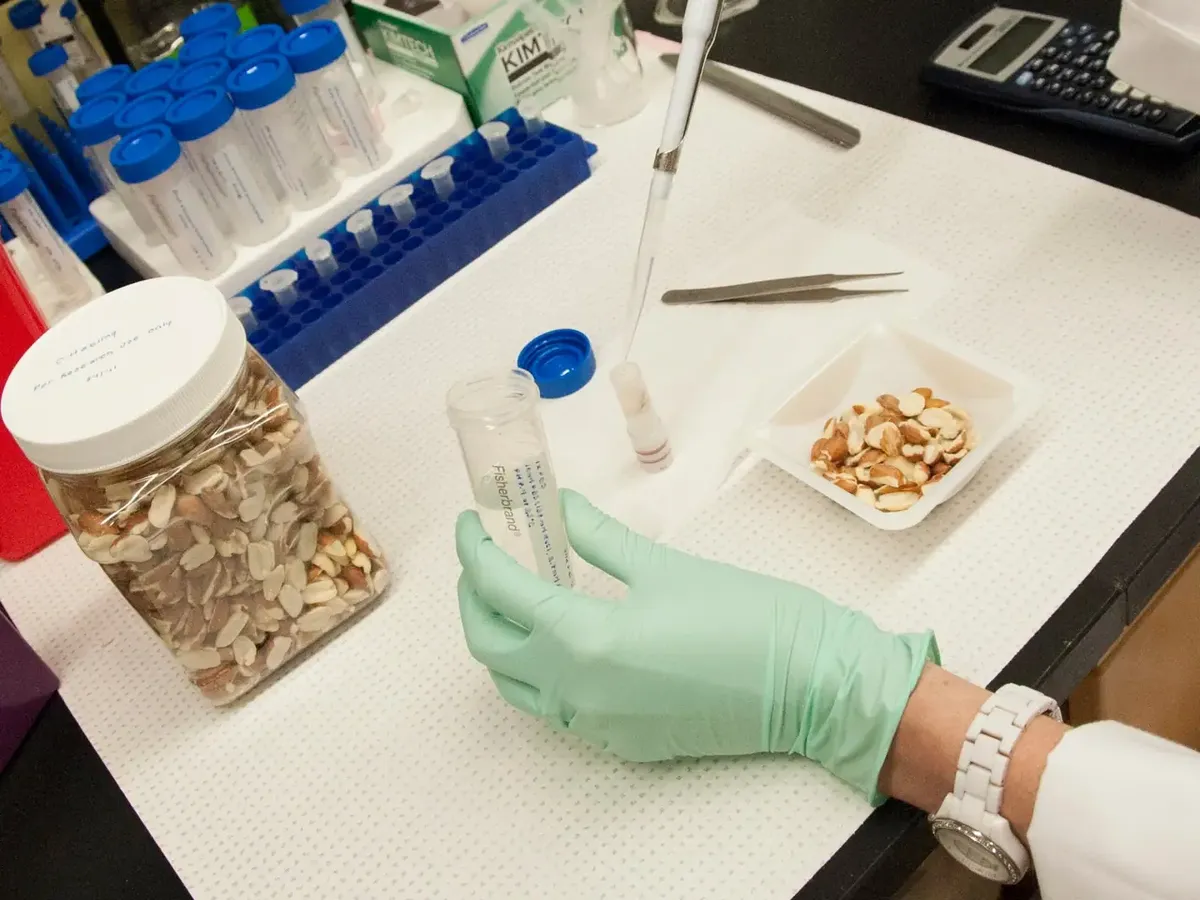
At Elysium Agri Corporation, every lot is sampled before we commit to it and again before loading. For groundnuts to the EU, an approved ISO 17025 lab draws and seals the samples under Regulation (EU) 2023/2782, within APEDA’s Peanut.Net system. Other products are tested by NABL-accredited labs, and independent sampling by SGS, Intertek or Bureau Veritas can be arranged at loading. Our lab testing page lists the full test panel, and our quality page sets out each check from farm gate to sealed container.
Good sampling of grains, seeds and spices is the first step to a result you can trust. Tell us the product, your specification and the sampling method you need, and we will quote with a matching test plan. Request a tested-lot quote →
Frequently asked questions
How are grain samples drawn from bulk cargo?
Grain samples are drawn as many small incremental samples from across the whole lot. For bulk heaps, trucks and bins, a long compartmented probe takes product from a grid of points and several depths. During loading, a stream sampler takes a cross-section of the moving grain at fixed intervals. The increments are combined into one aggregate sample.
What is representative sampling?
Representative sampling means every part of a lot has an equal chance of being included in the sample. The sampler takes many small portions from different positions, depths and times, and combines them. The result is a sample whose quality matches the whole lot, so the lab result can be applied to the full shipment with confidence.
What tools are used to sample bulk commodities?
The main tools are bag spears or triers for bagged goods, long compartmented probes for bulk heaps and bins, and stream samplers for grain moving on conveyors or spouts. Riffle or rotary dividers split the combined sample into equal parts. For microbiological tests, the tools and sample bags must be sterile to avoid contaminating the sample.
How many samples are taken from a shipment?
The number depends on the lot size, the product and the standard used. Sampling plans such as ISO 24333 for cereals, ISO 948 for spices and EU Regulation 2023/2782 for mycotoxins set how many incremental samples to take and the aggregate sample weight. Larger lots need more increments. Agree the plan in the contract before loading.
Why is sampling important for aflatoxin testing?
Aflatoxin is usually concentrated in a small number of highly contaminated kernels, so a small or badly drawn sample can miss them or catch too many. Sampling is therefore the largest source of error in aflatoxin testing. Large aggregate samples, fine grinding of the whole lab sample and accredited labs make the result far more reliable.
Related reads


