

On this page
- How Do You Choose Export Packaging for Food Commodities?
- What Are the Strengths and Limits of PP Bags?
- What Are the Strengths and Limits of Jute Bags?
- What Are the Strengths and Limits of Vacuum Packs?
- PP Bags vs Jute Bags vs Vacuum Packs: How Do They Compare?
- How Do You Match Packaging to Commodity and Route?
- How Should You Handle Labelling, Palletising and Container Loading?
- Which Packaging Options Are Available for Your Export Order?
- Frequently asked questions
In the PP bags vs jute bags choice, PP bags are the cheaper, stronger and more moisture-resistant option for most grains, pulses and seeds, while jute bags breathe better and suit products such as peanuts that need airflow. Vacuum packs cost the most but give the longest protection for oil-rich kernels on long or warm routes. The right answer depends on the commodity, the transit time and the buyer’s market. This guide compares the three options and explains how to match packing to your order.
Key takeaways
- PP woven bags are strong, light and economical, and a liner adds moisture protection. They are the default for pulses, grains and feed.
- Jute bags are natural and breathable. For food, ask for food-grade jute made with vegetable-based batching oil.
- Vacuum packs remove air, which slows rancidity and stops insects. They suit peanut kernels and other high-value products.
- Common export sizes are 25 and 50 kg bags, 10–25 kg vacuum packs and 1 MT jumbo bags.
How Do You Choose Export Packaging for Food Commodities?
Choose export packaging by asking five questions: what the product is, how long it will travel, how hot and humid the route is, how the buyer will unload and use it, and what the destination’s food-contact rules require. Price comes after these. A cheap bag that lets in moisture or insects costs far more in a rejected container.
Each product has its own needs. Dense pulses and grains need strength. Oil-rich kernels such as peanuts and sesame need protection from air, heat and moisture, which speed up rancidity. Fine powders need a sealed inner layer. Delicate products such as diced or roasted peanuts need a rigid outer, such as a carton. Before you decide, check the moisture of the goods at packing. Our guide to moisture content in grains sets out the safe levels.
What Are the Strengths and Limits of PP Bags?
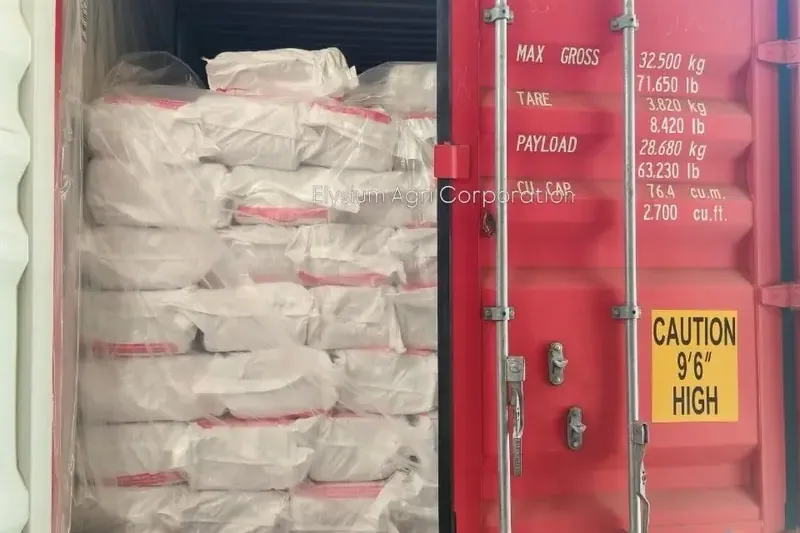
PP (polypropylene) woven bags are the most common export bag for food commodities. They are made from woven plastic tape and come in 25 and 50 kg sizes. BOPP laminated bags are a printed, glossy version used for branded or distributor packs from 5 to 50 kg.
- Strengths: high tensile strength, light weight, low cost and good resistance to tearing. They resist water splashes better than jute, and an inner PE liner adds a real moisture barrier. They can be printed with marks and brands.
- Limits: they do not breathe well, so warm or slightly damp goods can sweat inside them. They are slippery, so stacks need careful building. Long exposure to sunlight weakens the plastic, so bags should not stand outdoors for weeks.
What Are the Strengths and Limits of Jute Bags?
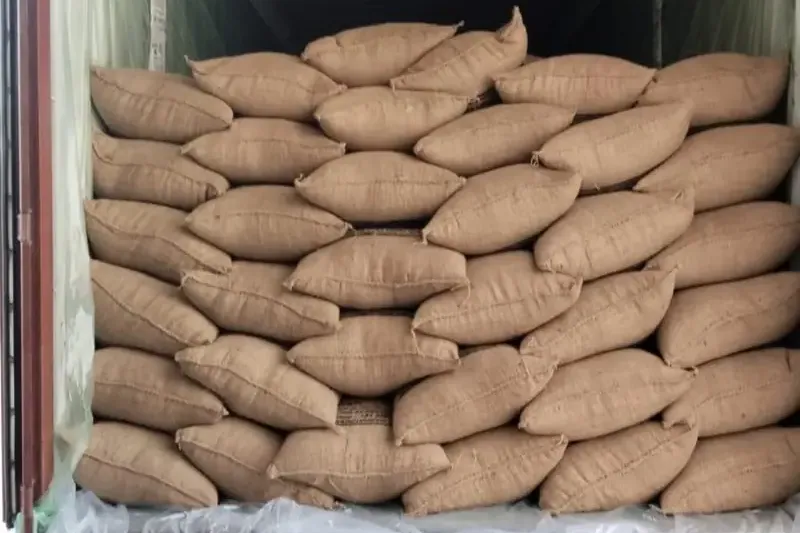
Jute bags are woven from natural jute fibre, mostly grown in India and Bangladesh. They have been used for centuries to ship coffee, cocoa, peanuts, rice and spices, and many buyers still prefer them for certain products.
- Strengths: they breathe, so air moves through the bag and heat and moisture from the product can escape. Their rough surface grips, so stacks are stable. They are strong, reusable and biodegradable, which suits buyers with sustainability goals.
- Limits: they cost more and weigh more than PP bags. They do not keep out humid air or water, and insects can enter through the weave. They can also shed fibres into the product.
Food buyers should ask for food-grade jute. Ordinary jute is softened with a batching oil during spinning, and mineral-based oils can leave hydrocarbon residues in the food. Research on cocoa shipments has shown that mineral oil residues can transfer from jute bags into the beans. The International Jute Organisation standard IJO 98/01 covers food-grade bags made with vegetable-based batching oil. We supply hydrocarbon-free food-grade jute on request.
What Are the Strengths and Limits of Vacuum Packs?
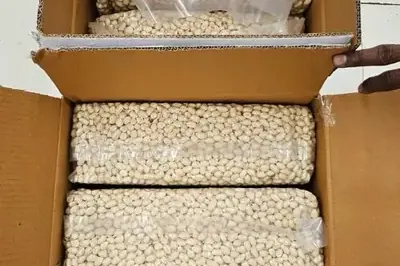
Vacuum packs are thick plastic bags, usually 10–25 kg, from which the air is drawn out before sealing. The pack becomes a hard block, which is then placed in a PP bag or carton outer for protection.
- Strengths: with little oxygen left, oil-rich kernels go rancid more slowly and insects cannot survive. The sealed film also keeps out humid air. This extends shelf life, which is why vacuum packing is preferred for peanut kernels on long transit or to warm destinations.
- Limits: they cost more than bags, and a single pinhole lets air back in. Packs must be handled with care and checked on arrival. Blocks are rigid, so loading takes more planning.
PP Bags vs Jute Bags vs Vacuum Packs: How Do They Compare?
The table compares the three options on the points that matter most to importers. For most pulses and grains, PP is the practical choice. For peanuts, the choice is between jute for short, cool routes and vacuum for long, warm ones.
| Factor | PP woven bag | Jute bag | Vacuum pack |
|---|---|---|---|
| Common sizes | 25 / 50 kg | 25 / 50 kg | 10–25 kg in PP or carton outer |
| Relative cost | Lowest | Medium | Highest |
| Strength | High | High | Depends on outer |
| Breathability | Low | High | None (sealed) |
| Moisture protection | Medium; good with liner | Low | High while seal holds |
| Insect protection | Medium | Low | High |
| Stacking | Slippery; needs care | Stable | Rigid blocks |
| Typical products | Pulses, grains, seeds, feed | Peanuts, some spices | Peanut kernels, blanched peanuts |
| Main risk | Sweating if goods are warm | Humidity, insects, fibre | Punctures |
Other formats complete the range. Multi-wall kraft paper bags with a PE liner, in 20–25 kg or 50 lb sizes, are preferred by EU and US food processors for sesame, powders, psyllium and chia. Cartons with a PE liner protect fragile products such as dehydrated onion and diced peanuts. Jumbo bags (FIBC) of 500–1,000 kg suit industrial buyers who unload by forklift.
How Do You Match Packaging to Commodity and Route?
Match packaging to the product’s sensitivity and to the conditions on the voyage. A short, cool route to a nearby market allows simpler packing. A long route through the tropics, or a warm destination, calls for more protection.
- Pulses and grains: 25 or 50 kg PP bags, with a liner for humid routes, or jumbo bags for mills.
- Peanut kernels: jute or PP bags for most buyers; vacuum packs for long transit or warm destinations.
- Sesame and seed spices: PP bags or kraft paper bags with a liner, depending on the buyer’s line.
- Powders and dehydrated vegetables: kraft bags or cartons, always with a sealed PE liner.
- Retail and private label: printed packs from 100 g to 5 kg, packed to the destination’s labelling rules.
Food-contact packaging must also meet the rules of both countries. In India, the FSS (Packaging) Regulations 2018 apply. For the EU, ask for materials with a declaration of compliance. Packing choice also changes the price and sometimes the load, so ask for each option to be quoted separately.
How Should You Handle Labelling, Palletising and Container Loading?
Every export bag should carry clear marks: product and grade, net and gross weight, lot code, crop year, packing date, country of origin, the exporter name or neutral packing, and the buyer’s shipping marks. Retail packs need full labels for the market, including allergen statements for peanuts and sesame.
If you need pallets, ask for wooden pallets that are ISPM-15 treated and marked, or plastic pallets. Bags are usually floor-loaded to use the full container. Peanut kernels fill a 20 ft container by volume at about 19 MT, whether in jute, PP or vacuum packs, while pulses load at about 24–26 MT. Our container load calculator and guide to 20 ft vs 40 ft containers help you plan.
Inside the container, the goal is to stop “container rain”, the condensation that forms when a box moves between warm and cool climates. Use a clean, dry, odour-free container, a kraft paper liner and container desiccants. Fumigate where the buyer or destination requires it.
Related reading: Sampling of Grains: Methods for Bulk Commodities and Heavy Metals in Spices and Seeds: Limits, Testing and Sourcing.
Which Packaging Options Are Available for Your Export Order?
Whatever you decide on PP bags vs jute bags, Elysium Agri Corporation packs every order to suit the product, the route and your line. We offer PP and BOPP bags, food-grade jute bags, kraft paper bags, vacuum packs, cartons, jumbo bags and retail packs, in neutral packing, with your shipping marks or under your brand through our private label service. Food-contact bags and liners meet FSSAI packaging rules, and EU-grade materials are available on request. We inspect each container before loading and share loading photos and seal numbers with you. See all options on our export packaging page.
Tell us the product, the packing you prefer and the destination port, and we will quote each packing option side by side. Request a packaging quote →
Frequently asked questions
Which is better for export, PP bags or jute bags?
PP bags are better for most exports of pulses, grains, seeds and feed, because they are cheaper, lighter, strong and resist moisture better, especially with a liner. Jute bags are better where airflow matters, such as for peanuts on shorter routes, or where the buyer prefers a natural, biodegradable bag. For food, choose food-grade jute.
What are vacuum packs used for in food exports?
Vacuum packs are used for high-value, oil-rich products such as peanut kernels and blanched peanuts. Removing the air slows rancidity, stops insects and keeps out humid air, which extends shelf life on long or warm routes. Packs of 10–25 kg are placed in a PP bag or carton outer for protection during handling.
What bag sizes are common for agro commodity exports?
The most common sizes are 25 kg and 50 kg PP, BOPP or jute bags. US buyers often use 22.68 kg (50 lb) multi-wall paper bags. Vacuum packs are usually 10–25 kg, cartons 10–25 kg and jumbo bags 500–1,000 kg. Retail and private-label packs range from 100 g to 5 kg.
Do jute bags protect food commodities from moisture?
Not on their own. Jute breathes, so it lets heat and moisture escape from the product, but it also lets humid air and water in. For humid routes, protect jute-bagged cargo with dry goods at packing, a container liner and desiccants. Where moisture is the main risk, a lined PP bag or a vacuum pack gives better protection.
Are jute bags accepted for food-grade exports?
Yes, if they are food-grade. Ordinary jute is processed with batching oil, and mineral-based oils can leave hydrocarbon residues in food. Food-grade jute bags are made with vegetable-based batching oil, as set out in the International Jute Organisation standard IJO 98/01. Ask your exporter for hydrocarbon-free jute and supporting documents.
Related reads


