
On this page
- Why Does Moisture Damage Agro Cargo in Containers?
- What Is Container Rain?
- How Do You Control Cargo Moisture Before Loading?
- How Should You Prepare the Container and Choose a Liner?
- Desiccants, Ventilation and Packing Methods Compared
- How Do Stowage Position and Route Affect Condensation?
- What Should You Record for Inspection and Claims?
- Which Export Packaging Options Help with Moisture Control?
- Frequently asked questions
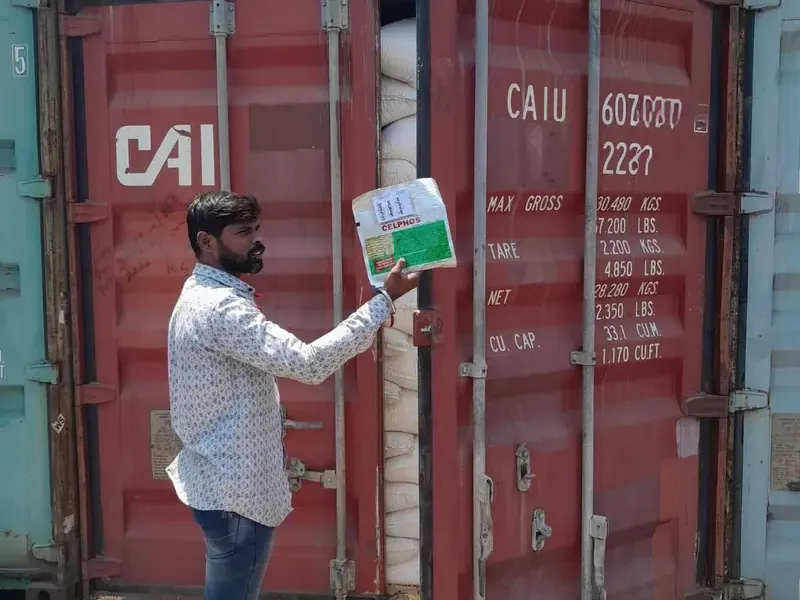
A container desiccant is a pouch, bag or strip of moisture-absorbing material, usually calcium chloride, clay or silica gel, that is hung or placed inside a shipping container to absorb water vapour and reduce condensation. It works best as one part of a moisture plan that starts with dry cargo and a clean, dry container. Agro commodities such as grains, seeds, spices and pulses hold and release moisture, so they are at high risk of mould and caking at sea. This checklist explains why moisture damages cargo and how to control it at every step.
Key takeaways
- Container rain is condensation that forms on the roof and walls and drips onto the cargo.
- Cargo moisture is the main source of water in a sealed container, so load goods at or below the contract moisture limit.
- Desiccants, kraft liners and good stowage reduce the risk; they cannot rescue wet cargo.
- Record moisture readings, photos and seal numbers at loading to support any claim.
Why Does Moisture Damage Agro Cargo in Containers?
Moisture damages agro cargo because the goods themselves contain water and release it into the air inside a sealed box. Grains, oilseeds, spices and pulses are hygroscopic: they take up and give off moisture until they balance with the air around them. When that air cools, the water condenses on cold surfaces and can return to the cargo as liquid.
The Transport Information Service of the German insurers (TIS) explains that condensation forms when air is cooled below its dew point, for example by cold container walls. It also notes that the higher the cargo’s water content, the greater the risk of condensation, so cargo should be loaded as dry as possible. TIS treats about 75% relative humidity as the key threshold for mould growth in container transport.
The results include mould, musty odours, caked bags, stained packaging, sprouting and higher aflatoxin risk in products such as peanuts and maize. Damaged lots may be rejected, downgraded or destroyed at the destination.
What Is Container Rain?
Container rain is water that condenses on the inside of the container roof and walls and then drips onto the cargo. It usually happens when warm, humid air inside the container meets steel that has been cooled by night air, cold seas or a cooler destination climate.
A typical case is a container loaded in a warm, humid Indian port and shipped towards Northern Europe. As the voyage moves into cooler water, the walls and roof cool down. Moisture from the cargo and the trapped air condenses on the steel, and drops fall onto the top layer of bags. The reverse problem, often called cargo sweat, happens when cold cargo is opened in a warm, humid place and water condenses on the goods themselves. Both are forms of condensation, and both are reduced by keeping the cargo and the air inside the box dry.
How Do You Control Cargo Moisture Before Loading?
You control cargo moisture by drying and testing the goods before they go into the container. This is the most important step, because a desiccant can only absorb a limited amount of water. Use this checklist:
- Agree a maximum moisture level in the contract and test each lot against it before loading.
- Do not load goods straight from a damp warehouse or after rain. Let them stabilise in dry storage.
- Avoid loading in the rain, or keep the loading bay covered.
- Reject wet, torn or stained bags.
- Do not load warm goods straight from a dryer or roaster. Let them cool first.
Typical export limits show how dry the cargo needs to be. Our sesame is shipped at 6% moisture or less, bold peanuts at 7% or less, fenugreek at 8% or less and maize at 14% or less. Your exact limit should be written in the contract and confirmed by the Certificate of Analysis. Our lab testing page lists the moisture tests we run.
How Should You Prepare the Container and Choose a Liner?
Start with a clean, dry, odour-free container with no holes. Inspect it before loading: check the floor for damp patches, look for light through the roof and walls, and check that the door seals close properly. A container that smells of chemicals or a previous cargo should be rejected for food products.
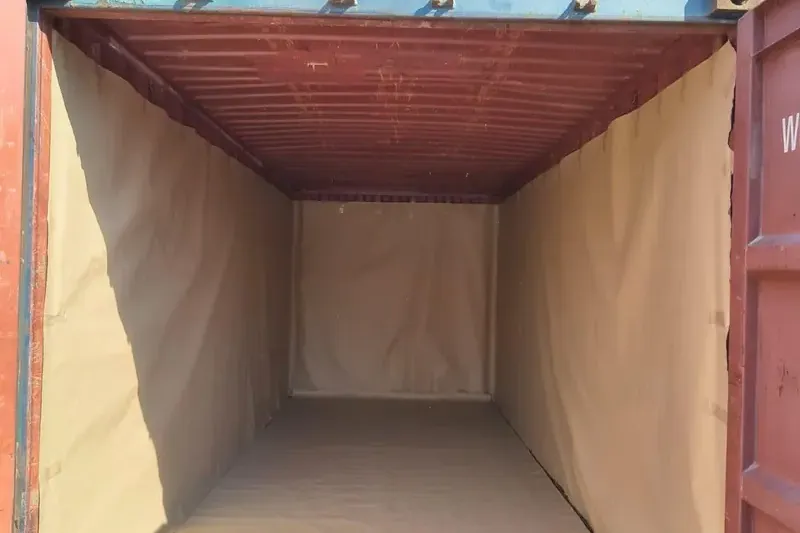
A liner adds a second layer of protection. A kraft paper liner covers the walls and roof and absorbs condensation before it can drip onto the bags. A plastic liner separates the cargo from the steel, but it can trap moisture if the goods are not dry. Many shippers combine kraft paper on the roof and walls with corrugated board on the floor.
Desiccants, Ventilation and Packing Methods Compared
No single method suits every cargo and route. The table compares the common options for agro shipments.
| Method | How it works | Best for | Limits |
|---|---|---|---|
| Container desiccant (calcium chloride) | Absorbs water vapour and holds it as a gel or liquid in a sealed pouch | Long voyages and climate changes | Fixed capacity; cannot dry wet cargo |
| Clay or silica gel bags | Adsorb moisture from the air | Cartons and smaller spaces | Lower capacity than calcium chloride |
| Kraft paper liner | Absorbs drips on walls and roof | Bagged grains, seeds and spices | Becomes less effective once soaked |
| Passive ventilation | Vents exchange humid air with outside air | Coffee, cocoa and some tropical cargo | Depends on outside air; special containers |
| Vacuum or barrier packs | Seals product from the air | Blanched peanuts, high-value kernels | Higher cost; lower load per container |
| PP bags with PE liner | Inner liner slows moisture uptake | Spices, powders, dehydrated foods | Goods must be dry when packed |
Desiccants are usually hung in the corrugations along the side walls or placed at the door end. The number of units depends on the cargo, the voyage and the product used, so follow the desiccant maker’s guidance for your route. Keep the pouches away from direct contact with food bags, because a full calcium chloride pouch holds liquid brine. Check the pouches on arrival as well. Full, heavy pouches show that the desiccant has done its work, while wet bags next to dry pouches may point to water entering through a damaged roof, wall or door seal.
How Do Stowage Position and Route Affect Condensation?
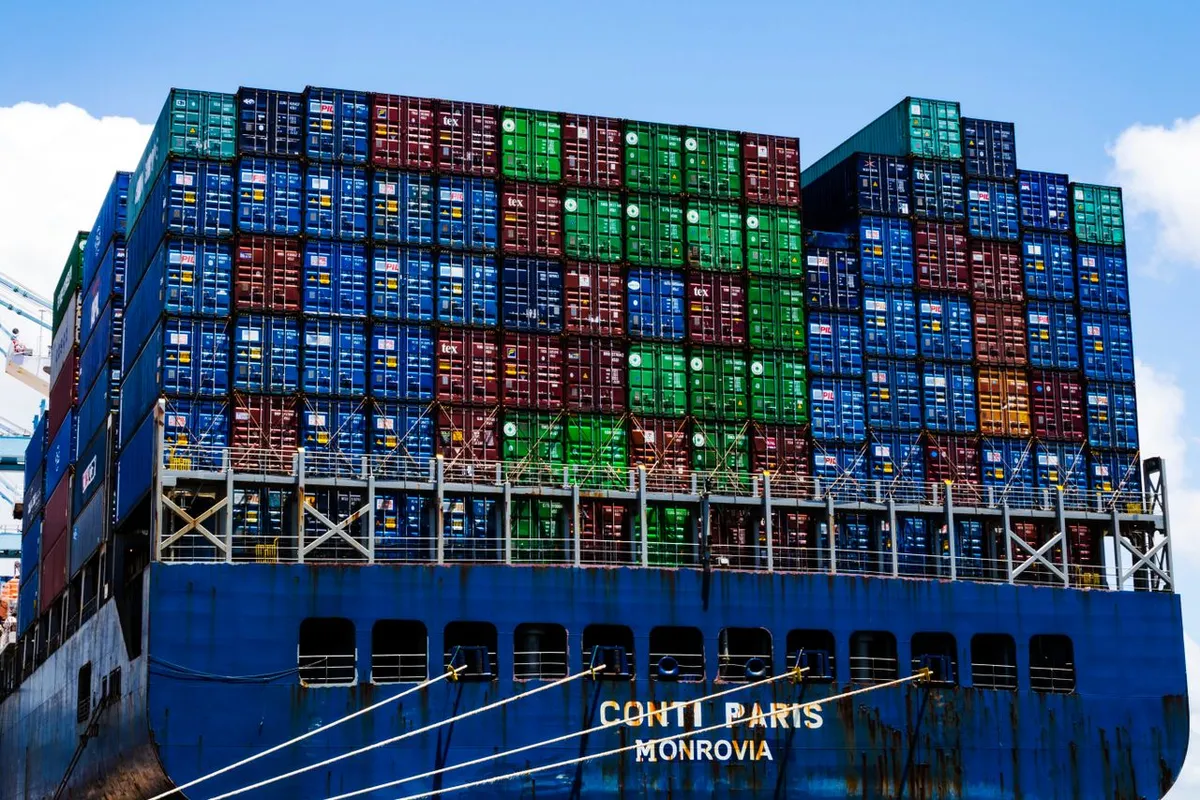
Stowage position and route change how much the container heats and cools. Containers on deck, especially on the top tier, face sun by day and cold by night, which drives repeated cycles of condensation. Below-deck stowage gives a more stable temperature.
Routes that cross from warm to cold climates carry the highest risk, for example India to Northern Europe in winter. Long transhipment waits in hot ports add to the risk. Where possible, ask the forwarder for below-deck stowage, avoid long dwell times and plan shipments around the season.
What Should You Record for Inspection and Claims?
Good records at loading show that the cargo left in sound condition. Without them, a moisture claim is hard to settle. Record the following for every container:
- Moisture results for each lot, on the Certificate of Analysis.
- Photos of the empty container, the liner, the desiccants, the loaded cargo and the closed doors.
- The container number and seal number.
- Any independent survey report, if you appoint a surveyor.
On arrival, photograph the seal and the cargo before unloading, and note any wet bags on the delivery receipt. Inform your insurer and the carrier quickly. For more on surveys, see our guide to quality control and the traceability records we keep for each lot.
Related reading: SGS Inspection and Pre-Shipment Samples: How They Work and Food Traceability Explained: From Farm Lot to Container.
Which Export Packaging Options Help with Moisture Control?
The right packaging and a container desiccant together give the best protection. At Elysium Agri Corporation, we load clean, dry, odour-free containers that are inspected before loading. We use kraft paper liners and desiccants against container rain, pack goods at the right moisture level and fumigate when the buyer or destination requires it. We share loading photos and seal numbers with you for every shipment.
Our packaging options include PP woven bags with or without liners, jute bags, multi-wall kraft paper bags with a PE liner, vacuum packs and cartons. Food-contact bags and liners meet FSSAI packaging rules. To see how packing affects your load, try the container load calculator.
Tell us your product, destination and preferred packing, and we will advise on liners and desiccants in our offer. Request a packed export quote →
Frequently asked questions
What causes condensation inside shipping containers?
Condensation forms when warm, humid air inside a container cools below its dew point, usually on the steel roof and walls. Most of the water comes from the cargo itself, because grains, seeds and spices release moisture into the air. Large day and night temperature swings and voyages from warm to cold climates make condensation more likely.
What is container rain?
Container rain is condensation that collects on the inside of the container roof and walls and then drips onto the cargo. It is common when goods loaded in a warm, humid port travel towards cooler regions. It can cause mould, caking, stained bags and odours, and it often damages the top layer of bags first.
How do desiccants protect cargo in containers?
Container desiccants absorb water vapour from the air inside the container, which keeps relative humidity lower and reduces condensation. Calcium chloride pouches are common for long voyages and are hung along the side walls. Desiccants have a fixed capacity, so they work only when the cargo is already dry and the container is clean and sound.
How can mould in agro containers be prevented?
Prevent mould by loading cargo at or below its agreed moisture limit, using a clean, dry, odour-free container, and adding a kraft paper liner and desiccants. Avoid loading in rain, reject wet bags and ask for below-deck stowage on risky routes. Keep moisture reports and loading photos so any problem can be traced.
What moisture level is safe for shipping grains and seeds?
Safe moisture depends on the product and is set in the contract. As examples, export sesame is usually shipped at 6% or less, bold peanuts at 7% or less, fenugreek at 8% or less and maize at 14% or less. Each lot should be tested before loading and the result stated on the Certificate of Analysis.
Related reads


