
On this page
- Where Does India Export Peanuts?
- Which Regions Are the Key Importers of Indian Peanuts?
- What Are the Market Requirements by Region?
- What Does the European Union Require for Indian Peanuts?
- What Do Middle East and GCC Buyers Need for Certification and Labelling?
- Which Grades and Packing Do Southeast and South Asian Buyers Prefer?
- What About Africa and Other Emerging Markets?
- How Do You Export Peanuts from India to Your Market?
- Frequently asked questions
Groundnut export from India runs mainly to Southeast and East Asia, with Indonesia, Vietnam, Malaysia, China and the Philippines as the largest buyers. Every export lot must pass APEDA’s aflatoxin testing system, and each importing region then adds its own limits, certificates and packing preferences. India shipped about 6.64 lakh tonnes of groundnuts worth US$ 691 million in 2025-26. This guide explains what each major market expects, so you can plan your specification before you order.
Key takeaways
- India exported about 663,800 tonnes of groundnuts worth US$ 690.9 million in 2025-26, according to APEDA.
- Indonesia, Vietnam, Malaysia, China and the Philippines are the top five destinations.
- The EU sets the strictest aflatoxin limits: B1 ≤ 2 µg/kg and total ≤ 4 µg/kg for peanuts sold for direct consumption.
- Every Indian export lot is sampled and tested through APEDA’s Peanut.Net system before a Certificate of Export is issued.
Where Does India Export Peanuts?
India exports peanuts to many countries, but most of the volume goes to Asia. According to APEDA, India exported 663,809 tonnes of groundnuts worth US$ 690.93 million in 2025-26. The main buyers were Indonesia, Vietnam, Malaysia, China and the Philippines. India is the second-largest groundnut producer in the world, with production estimated at 130.74 lakh tonnes in 2025-26.
Most export peanuts come from Gujarat, and especially from the Saurashtra region around Rajkot, Jamnagar, Junagadh and Amreli. India has two crops a year. The main kharif crop arrives from October to December, and a smaller summer crop arrives from April to June. Our crop calendar shows the arrival months for each crop.
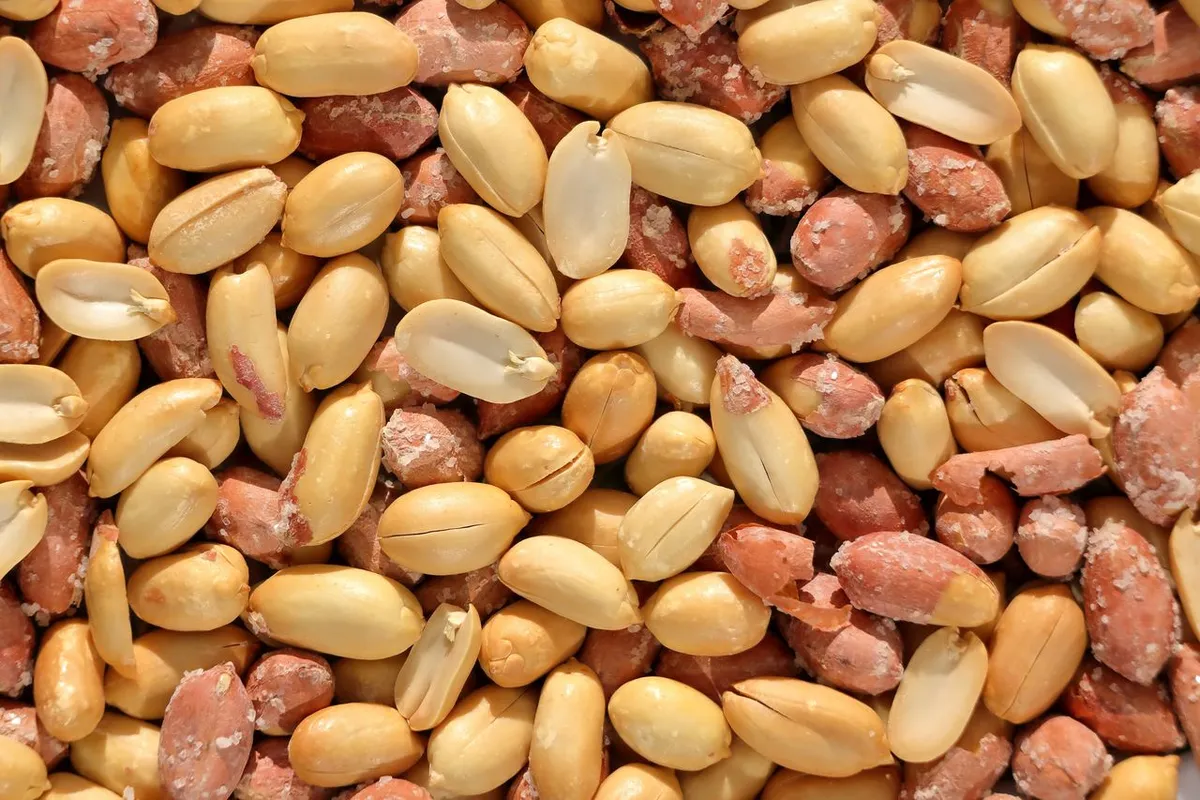
Indian exporters ship three main grades of raw kernel. Bold peanuts are large and long. Java peanuts are small and round. TJ peanuts sit between the two. Each grade is sold by count, which is the number of kernels in one ounce. Blanched, roasted, diced and in-shell peanuts are also exported in smaller volumes.
Which Regions Are the Key Importers of Indian Peanuts?
Southeast Asia is the largest importing region for Indian peanuts, followed by East Asia, the Middle East and Europe. Each region buys for different end uses, and this changes the grade, count and test panel it asks for.
- Southeast Asia: Indonesia, Vietnam, Malaysia and the Philippines buy large volumes for snack, confectionery, peanut sauce and oil use.
- East Asia: China buys raw kernels for processing and re-export, and its demand changes with its own crop.
- Middle East and GCC: the UAE, Saudi Arabia and other Gulf states buy kernels and roasted peanuts for retail packing, roasteries and re-export.
- European Union and UK: smaller volumes, but strict limits. Buyers are mainly snack makers, nut processors and peanut butter plants.
- Africa and other markets: buyers in North and East Africa, Russia and Central Asia buy on price and often take mixed counts.
What Are the Market Requirements by Region?
Market requirements differ mostly in three areas: aflatoxin limits, documents and packing. The table gives a general picture. Your importer and your own food authority have the final word, so always confirm the current rules before you sign a contract.
| Region | Aflatoxin focus | Typical extra documents | Common grades and packing |
|---|---|---|---|
| European Union | B1 ≤ 2 µg/kg, total ≤ 4 µg/kg (direct use) | Official certificate, lab results, health certificate | Bold and Java in fixed counts; jute, PP or vacuum packs |
| Middle East and GCC | National or GSO limits; buyer’s specification | Health certificate, certificate of origin, Arabic labels for retail packs | Bold for roasting and in-shell; 25–50 kg bags |
| Southeast Asia | National limits; buyer’s specification | Phytosanitary certificate, certificate of origin (for trade agreement duty) | Java and TJ in mid to high counts; 50 kg jute or PP |
| China | National limits | Phytosanitary certificate; registration rules for foreign food suppliers | Bold and Java; bulk bags |
| Africa and emerging markets | National limits, often price-led | Phytosanitary certificate, certificate of origin, pre-shipment inspection in some countries | Mixed counts; jute or PP bags |
A general guide to market requirements for Indian peanuts. Always confirm current rules with your importer.
All Indian peanut lots carry an APEDA Certificate of Export and a lab Certificate of Analysis, whatever the destination. These two documents come from India’s own control system. They are not extra requests from the buyer.
What Does the European Union Require for Indian Peanuts?
The EU requires the lowest aflatoxin levels of any major market and checks Indian peanuts more often at the border. Under Regulation (EU) 2023/915, peanuts for direct human consumption must not exceed 2.0 µg/kg of aflatoxin B1 and 4.0 µg/kg of total aflatoxins. Peanuts that will be sorted or processed before use may carry up to 8.0 µg/kg B1 and 15.0 µg/kg total.
Indian groundnuts are also listed for increased official controls under Regulation (EU) 2019/1793. This means EU border posts sample a share of consignments on arrival. A lot that passed in India can still be tested again in Rotterdam or Hamburg. For this reason, buyers should ask for a pre-shipment result with a clear margin below the limit, not a result right at it.
In India, each EU lot is sampled at a registered warehouse using the EU sampling method. It is then tested at an APEDA-approved lab by HPLC or LC-MS/MS. The official sampling and the health certificate run through Peanut.Net. Our lab testing page lists the full test panel we use.
What Do Middle East and GCC Buyers Need for Certification and Labelling?
GCC buyers usually need a health certificate, a certificate of origin and labels that meet Gulf standards. The six Gulf Cooperation Council states follow common rules for imported food, set out in the GCC Guide for Control on Imported Foods. Each country then applies its own registration and inspection steps, such as Dubai Municipality in the UAE or the SFDA in Saudi Arabia.
Labelling is the area where most problems arise. Retail packs must carry Arabic text, either alone or with English. Labels also show the production and expiry dates, origin and storage conditions. Bulk bags for repacking need fewer details, but the bag marks should still match the invoice and packing list. If you plan to sell under your own brand, our private label service can print approved artwork at source.
Gulf roasteries commonly buy large Bold kernels and in-shell peanuts for roasting. Dubai also works as a regional trading hub, so some cargo is re-exported to nearby markets.
Which Grades and Packing Do Southeast and South Asian Buyers Prefer?
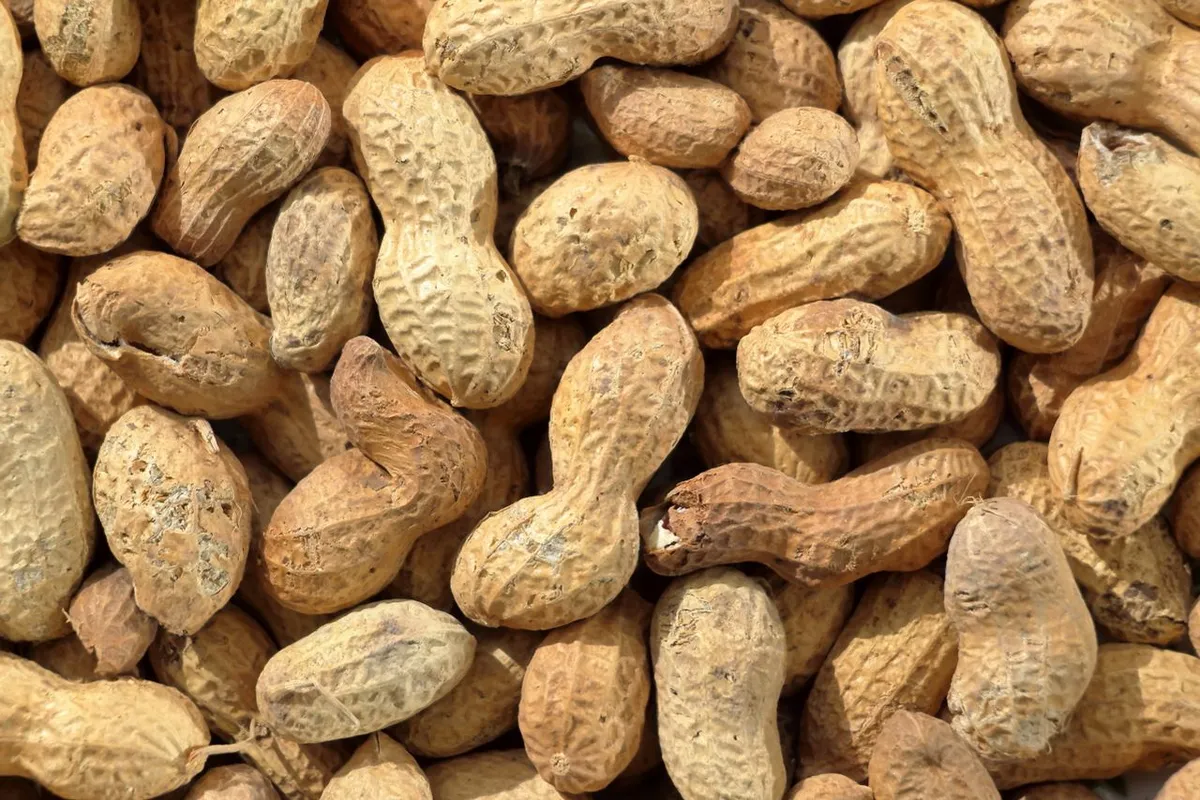
Southeast Asian buyers mostly take Java and TJ kernels in mid to high counts, packed in 50 kg jute or PP bags. These rounder, smaller kernels suit coated peanuts, confectionery, peanut sauce and peanut butter, which are large categories in Indonesia, Vietnam and the Philippines. Many buyers also take Bold kernels for salted snacks.
Price matters more in this region than in Europe, so buyers often agree on a slightly wider tolerance for broken kernels or admixture. Even so, they should state moisture, admixture and the aflatoxin limit in the contract. A certificate of origin under the ASEAN-India trade agreement can reduce import duty in some ASEAN countries, so ask your exporter to issue the correct form. Shipping time from Mundra or Pipavav to Southeast Asian ports is usually short compared with Europe.
What About Africa and Other Emerging Markets?
Africa, Russia and Central Asia buy smaller but growing volumes of Indian peanuts, mostly on price. Buyers here often accept mixed counts or TJ kernels, and they use them for snacks, oil and repacking. Some African countries ask for a pre-shipment inspection certificate from an approved agency before the cargo leaves India. Check this with your clearing agent early, because the inspection must be booked before the container is stuffed.
In these markets, the documents still matter. A phytosanitary certificate and a certificate of origin are standard. A fumigation certificate is often requested for bagged cargo. If you buy smaller volumes, a mixed container can combine peanuts with sesame, spices or pulses in one shipment.
Related reading: How Groundnuts Grow: From Sowing and Pegging to Harvest and Peanut Grades by Use: Peanuts Uses in Snacks, Butter and Oil.
How Do You Export Peanuts from India to Your Market?
For a smooth groundnut export from India, start with your market’s limits and work back to the specification. Tell your supplier the grade, count, tolerance, crop year, aflatoxin limit, packing and destination port. Ask for a lot-wise Certificate of Analysis from an APEDA-approved lab before loading. Then agree the Incoterm and payment terms. Our guide on how to import peanuts from India covers grades and counts in more detail.
Elysium Agri Corporation is a peanut exporter based in Jamnagar, in the middle of the Saurashtra groundnut belt. We ship Bold, Java and TJ kernels from 35/40 to 80/90 counts, as well as blanched, roasted, diced and in-shell peanuts. Every lot is processed at APEDA-registered units and tested for aflatoxin at an APEDA-approved lab to the limit of your market. Each shipment leaves with an APEDA Certificate of Export, Certificate of Analysis, phytosanitary certificate, fumigation certificate and certificate of origin. Our registrations are listed on the certificates page.
Kernels fill about 19 MT in a 20 ft container and about 26–27 MT in a 40 ft high cube. Plan your load with the container load calculator, then send us your grade, count, quantity and port. Request a peanut quote →
Frequently asked questions
Which countries import the most peanuts from India?
According to APEDA, the largest buyers of Indian groundnuts in 2025-26 were Indonesia, Vietnam, Malaysia, China and the Philippines. India exported about 663,800 tonnes worth US$ 690.9 million that year. The Gulf states, the EU, Russia and several African countries also buy Indian peanuts, though in smaller volumes.
What are the aflatoxin requirements for peanuts entering the EU?
Under Regulation (EU) 2023/915, peanuts for direct human consumption must not exceed 2.0 µg/kg aflatoxin B1 and 4.0 µg/kg total aflatoxins. Peanuts for sorting or further processing may carry up to 8.0 µg/kg B1 and 15.0 µg/kg total. Indian groundnuts also face increased border checks under Regulation (EU) 2019/1793.
Do Gulf countries require special certificates for Indian peanuts?
Gulf buyers usually need a health certificate, a certificate of origin and a phytosanitary certificate with the commercial documents. Retail packs must carry Arabic labelling with production and expiry dates. Each GCC state also has its own registration and inspection steps, so confirm the current list with your importer or clearing agent before shipment.
Which peanut grades are most popular in Southeast Asia?
Southeast Asian buyers mostly take Java and TJ kernels in mid to high counts, such as 50/60 to 80/90 per ounce. These smaller, rounder kernels suit coated peanuts, confectionery, peanut sauce and peanut butter. Bold kernels are also bought for salted snacks. Most cargo ships in 50 kg jute or PP bags.
Which documents are needed to export groundnuts from India?
A standard Indian peanut shipment carries a commercial invoice, packing list, bill of lading, APEDA Certificate of Export, lab Certificate of Analysis for aflatoxin, phytosanitary certificate and certificate of origin. A fumigation certificate and health certificate are added when the destination or the buyer requires them.
Related reads


