On this page
A mixed container carries two or more products in one box: for example cumin, sesame and chickpeas shipped together from Gujarat. It suits buyers who need a range of products but not a full container of each. Done well, it gives you the freight cost of a full container with the flexibility of a smaller order. Done badly, it leaves space unused or a truck over the road limit at your end.
Key takeaways
- Every container has two limits: weight (about 28 t of cargo in a 20 ft) and space (about 33 m³ in a 20 ft).
- Dense products such as pulses reach the weight limit first; light products such as spices and seeds fill the space first.
- Combining a dense and a light product lets one container use both limits, which lowers freight cost per tonne.
- In a mixed container each product is packed and labelled separately and has its own lines on the documents.
When a mixed container makes sense
A mixed load is worth considering when:
- You are testing a new supplier or product and want a few tonnes of each item rather than a full container.
- You distribute a range (spices, seeds, pulses) and need all of them on the shelf at the same time.
- Some items sell slowly, so a full container of each would sit in your warehouse for months.
- Your warehouse space is limited, and smaller quantities of several products are easier to handle.
Weight or volume: what fills the box first
Every container has a weight limit and a space limit, and agri cargo usually hits one of them first.
| 20 ft standard | 40 ft high cube | |
|---|---|---|
| Internal volume | ≈ 33 m³ | ≈ 76 m³ |
| Max payload | ≈ 28,100–28,200 kg | ≈ 28,600 kg |
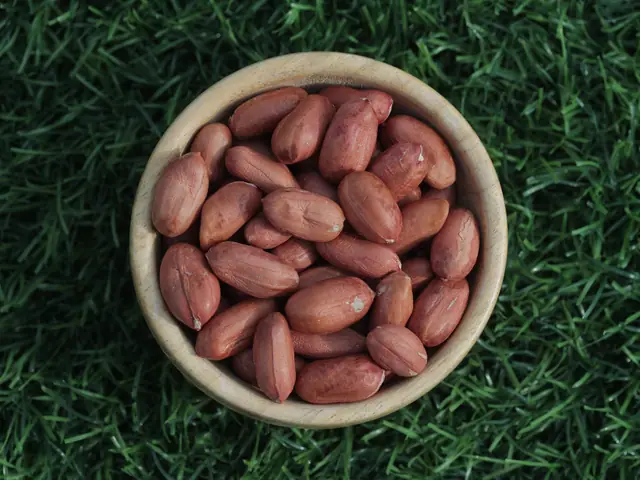
Pulses, wheat and maize are dense (about 750–850 kg/m³ in bags), so they reach the weight limit at 24–26 MT in a 20 ft before the box is full. Sesame, peanut kernels and spices are lighter and fill the space first, at 13–19 MT. Dehydrated onion flakes and psyllium husk are so light that a 20 ft holds only 6–10 MT.
Typical loads for a 20 ft container, each product on its own:
| Product | Typical 20 ft load | Limited by |
|---|---|---|
| Green moong beans | ≈ 24–26 MT | Weight |
| Kabuli chickpeas | ≈ 24–25 MT | Weight |
| Bold peanut kernels | ≈ 19 MT | Volume |
| Natural sesame seeds | ≈ 19 MT | Volume |
| Cumin seeds | ≈ 13–14 MT | Volume |
| Coriander seeds | ≈ 9–10 MT | Volume |
| White onion flakes | ≈ 6–7 MT | Volume |
This is why mixing works: a heavy, compact product and a light, bulky one can share a container that neither would use fully on its own.
How to plan a mixed load
A quick way to check whether your products fit in one container:
- List each product and the quantity you need.
- Work out each product's share of the container: divide your quantity by the amount of that product a 20 ft holds on its own.
- Add the shares. If the total is 100% or less, and the total weight stays under the payload and your road limit, the plan fits.
An illustration: 5 MT of cumin (5 ÷ 13.5 = 37% of a 20 ft), 7 MT of sesame (7 ÷ 19 = 37%) and 6 MT of kabuli chickpeas (6 ÷ 24.5 = 24%) add up to about 98% of one 20 ft container and 18 MT in total. Because chickpeas are weight-limited, their real share of the space is smaller than this, so the estimate errs on the safe side. We confirm the exact load plan on every quote.
Remember the road limit at your end. In the USA, for example, a 20 ft container is often limited to about 20 MT of cargo on a standard chassis, whatever the ship could take.
Packing, marking and loading
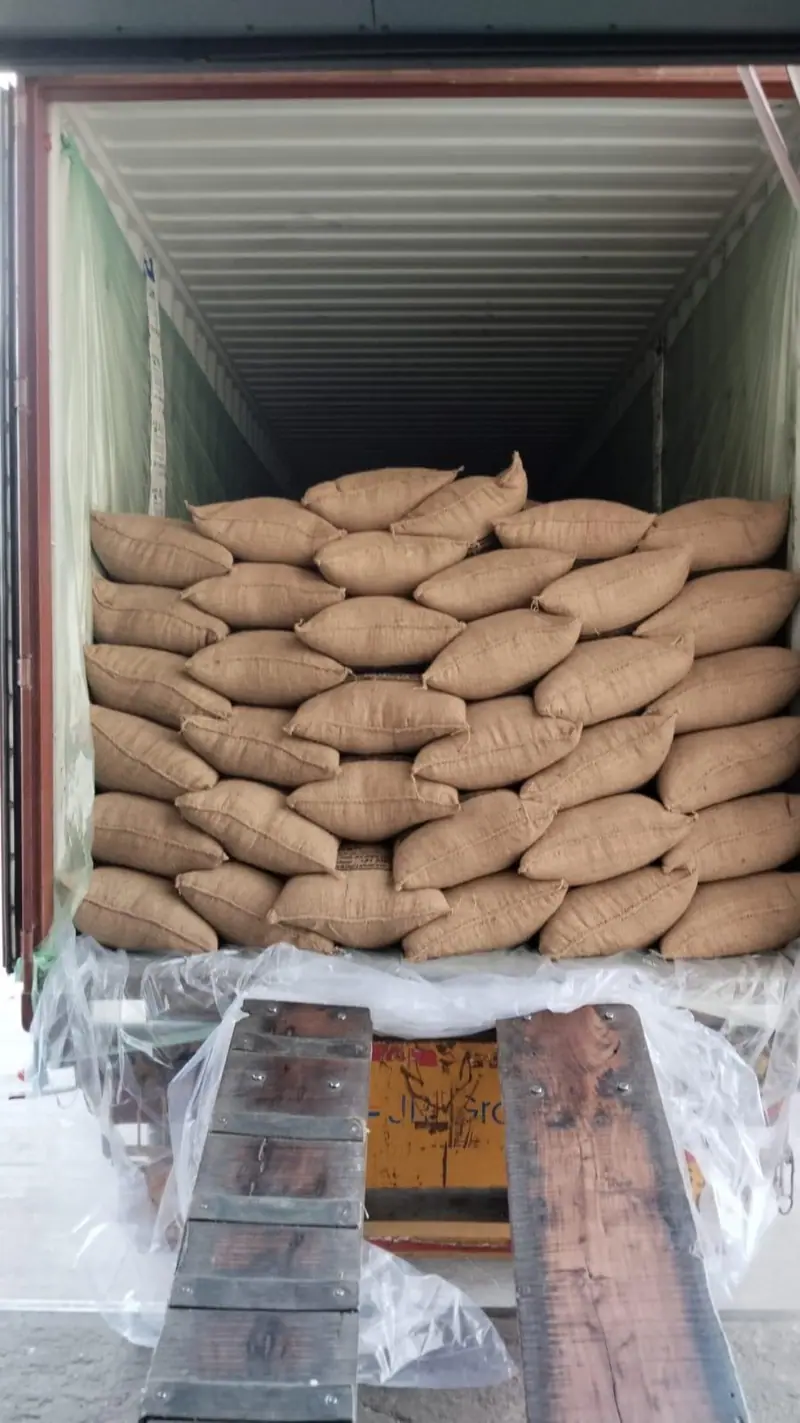
In a mixed container every product is packed and labelled separately, so it can be checked, cleared and stored on its own. Each bag carries its own marks: product and grade, net and gross weight, lot code, crop year, packing date, country of origin, exporter name or neutral packing, and your shipping marks.
Plan the stow so that dense, heavy bags sit low and the load is spread evenly along the container floor, with lighter bags on top. Protect the whole load the same way you would a single-product container: a clean, dry, odour-free container inspected before loading, kraft paper liners and desiccants against condensation, and loading photos and seal numbers shared with you.
See our Export Packaging page for bag types and labelling rules by market.
Documents for a mixed container
One bill of lading covers the container, but each product needs its own entries and certificates:
- Commercial invoice and packing list with a separate line, HS code and weight for each product.
- Certificate of Analysis for each product and lot.
- Phytosanitary certificate where the product and destination require it.
- Certificate of origin, listing every product.
- Health certificates where required, for example through APEDA's Peanut.Net system for groundnuts to the EU, or from the Spices Board for spices.
Check the HS code for each item before you order with our HS Code Finder. A wrong code on one line can hold up clearance for the whole container.
Timing: the slowest product sets the date
A mixed container ships when its last product is ready. If one item is out of season, or its lab result is late, the rest waits. Cumin and coriander arrive with the rabi harvest in spring, while new-crop groundnut and sesame arrive after the kharif harvest in autumn, so plan mixed orders around the Crop Calendar.
Frequently asked questions
Can I mix different products in one container?
Yes. We regularly load several products in one container, each packed and labelled separately with its own documents. Ask for a mixed-container quote.
Is a mixed container cheaper than shipping each product separately?
Usually, if together the products fill most of a container. You pay freight for one box instead of several part loads, and a light product paired with a dense one uses both the weight and the space you are paying for.
Do mixed containers need separate documents?
One bill of lading covers the container, but each product has its own lines on the invoice and packing list, its own Certificate of Analysis and any product-specific certificates, such as a health certificate.
How many products can go in one container?
There is no fixed limit. In practice the limits are the space and weight of the container, the paperwork for each product and the time it takes to have every item ready together.
The bottom line
A mixed container works best when you pair dense and light products, keep the total inside both the container payload and your road limit, and time the order so every item is ready together. Plan the shares first, then let the packing and documents follow product by product.