On this page
India is one of the world's main sources of groundnut kernels, and most of the peanuts it exports come from one state. If you are buying Indian peanuts for the first time, three things decide whether a container works for you: the grade, the count and the aflatoxin result. This guide explains each one, and the export process every lot goes through before it leaves India.
Key takeaways
- India's export peanuts come in three main grades: Bold (large, long kernels), Java (small, round kernels) and TJ (in between).
- Kernel size is sold as a count: the number of kernels per ounce. 40/50 means 40 to 50 kernels in 28.35 g, so a lower count means a bigger kernel.
- Aflatoxin decides acceptance in the EU: B1 ≤ 2 µg/kg and total aflatoxins ≤ 4 µg/kg for peanuts sold for direct consumption.
- Every Indian peanut export lot is sampled and tested through APEDA's Peanut.Net system before it can ship.
Where Indian export peanuts come from
Gujarat grows the largest share of India's groundnut crop, and most of it comes from Saurashtra: Rajkot, Jamnagar, Junagadh and Amreli. India exported 6.64 lakh tonnes of groundnuts worth US$ 691 million in 2025-26, mainly to Indonesia, Vietnam, Malaysia, China and the Philippines (APEDA).
India has two groundnut crops a year:
- Kharif crop: sown with the monsoon in June–July, with new crop arriving in the market from October to December. This is the main crop.
- Summer crop: a smaller crop grown on irrigation, arriving from April to June.
New-crop timing matters for price and quality, so check the Crop Calendar before you plan an order.
Bold, Java and TJ: the three main grades
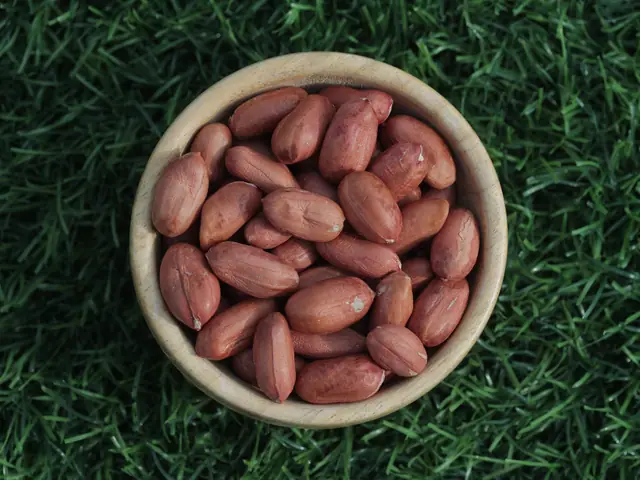
Indian peanut kernels are traded in three grades. They differ in shape, skin colour and the counts they are usually sold in.
| Bold | Java | TJ | |
|---|---|---|---|
| Shape | Large, long, oval kernel | Small to medium, round kernel | Medium, between Bold and Java |
| Skin colour | Tan to red | Light pink | Pink to light red |
| Common counts (per ounce) | 35/40, 38/42, 40/50, 50/60 | 50/60, 60/70, 70/80, 80/90 | 60/70, 70/80, 80/90 |
| Often used for | Salted and roasted snacks, whole-nut use, oil | Coated peanuts, confectionery, peanut butter | Blanching, snacks and butter where price matters |
The grade name tells you the type of kernel; the count tells you its size. You always need both in a contract.
What a count means
A count is the number of kernels in one ounce (28.35 g). A count of 40/50 means that an ounce of the lot contains between 40 and 50 kernels. The lower the numbers, the bigger the kernels: 38/42 Bold is a large, premium kernel, while 80/90 Java is small.
When you set the specification, agree these points in writing:
- Grade and count, with the tolerance you accept.
- Moisture, admixture and damaged or broken kernels, as maximum percentages.
- Crop year, since new-crop and old-crop kernels behave differently in roasting and storage.
- Aflatoxin limit, matched to the market you sell into (see below).
Ask for a sample from the lot that will actually ship, not a general sample of the grade.
Aflatoxin: the test that decides acceptance
Aflatoxins are toxins produced by moulds that can grow on groundnuts when they are dried or stored badly. They are the first thing a peanut buyer checks and the most common reason peanut shipments are rejected at the border.
The European Union sets the strictest widely used limits, under Regulation (EU) 2023/915:
| Market | Aflatoxin B1 | Total aflatoxins (B1+B2+G1+G2) |
|---|---|---|
| EU, direct human consumption | 2.0 µg/kg | 4.0 µg/kg |
| EU, for sorting or further processing | 8.0 µg/kg | 15.0 µg/kg |
| Other markets | As per destination rules or the buyer's contract | As per destination rules or the buyer's contract |
Indian groundnuts entering the EU are also subject to increased official controls under Regulation (EU) 2019/1793, which means EU border authorities sample a share of consignments on arrival. A lot that passed in India can still be checked again at the EU port, so the pre-shipment result needs a margin, not a result right at the limit.
Aflatoxin is measured by HPLC with fluorescence detection or by LC-MS/MS. Our Lab Testing page lists the full test panel and the limits we test to.
How the APEDA export process works
India controls peanut exports closely. Under APEDA's export procedure for peanuts and peanut products, each export lot goes through these steps:
- Registered processing: the peanuts are shelled, graded and stored at APEDA-registered units.
- Sampling: samples are drawn at a registered warehouse, following the EU sampling method.
- Lab testing: aflatoxin B1 and total aflatoxins are tested at an APEDA-approved laboratory, which issues a Certificate of Analysis.
- Certificate of Export: APEDA issues the Certificate of Export through its Peanut.Net system, and the phytosanitary certificate follows.
For the EU, the official sampling and the health certificate also run through Peanut.Net. Ask your supplier for the lot-wise Certificate of Analysis for your container, not a generic report.
Packing, loading and HS codes
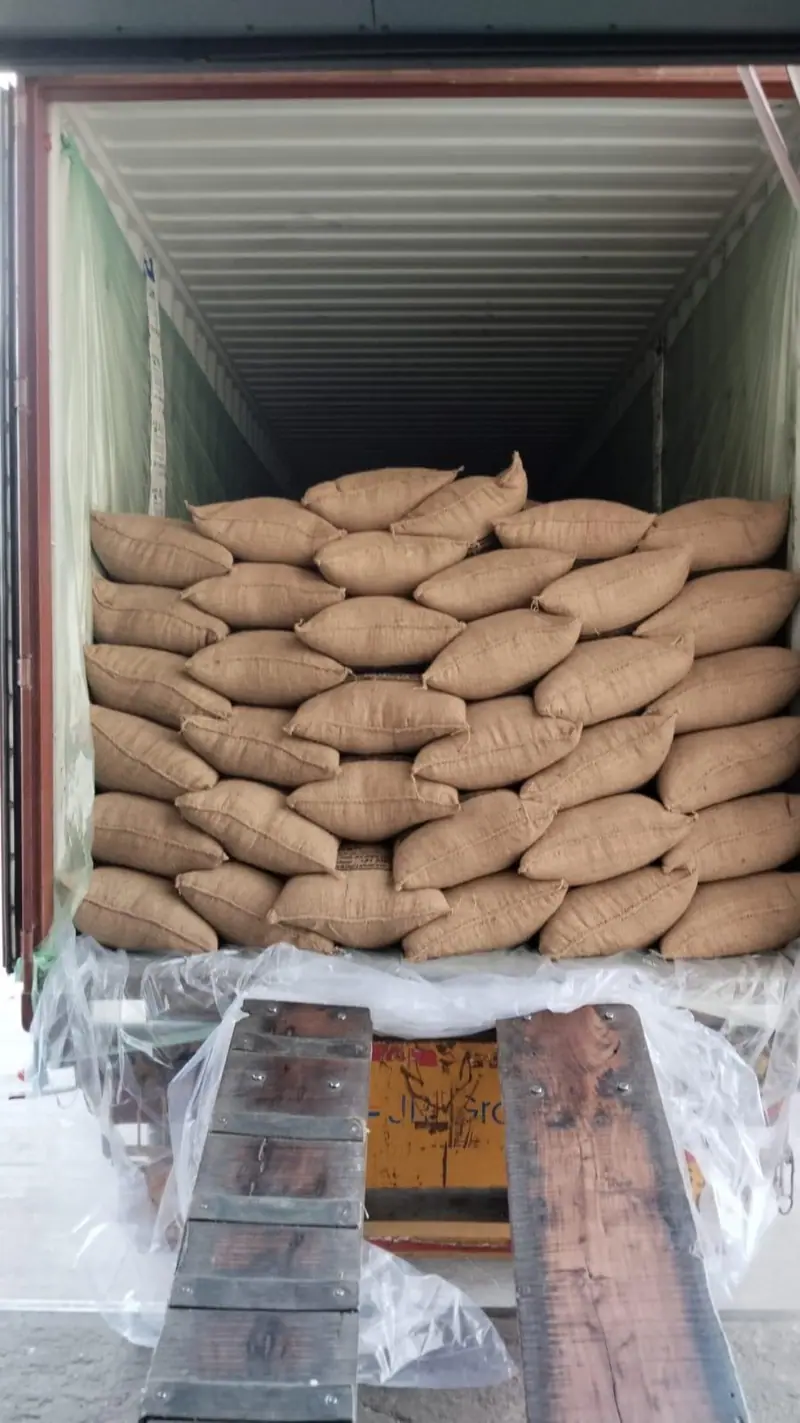
Peanut kernels usually ship in 25 kg or 50 kg jute or PP bags, 22.68 kg (50 lb) multi-wall paper bags, or vacuum packs in a PP or carton outer. Kernels fill a container by volume before weight: about 19 MT fit in a 20 ft container and about 26–27 MT in a 40 ft high cube. In-shell peanuts are much lighter per container.
The HS codes you will see on Indian shipping documents are:
- 1202.42: groundnuts, shelled, not roasted (raw kernels).
- 1202.41: groundnuts in shell.
- 2008.11: groundnuts roasted or otherwise prepared.
Check the full 8-digit code for your product in our HS Code Finder, and the load for your pack in the Container Load Calculator.
A buyer's checklist before you order
- The grade (Bold, Java or TJ) and the exact count range, with tolerance.
- Moisture, admixture and broken-kernel limits written into the contract.
- The aflatoxin limit for your market, with a margin below it.
- A lot-wise Certificate of Analysis from an APEDA-approved lab.
- A pre-shipment sample from the lot that will ship.
- Packing, bag marks and labelling agreed in advance.
- The Incoterm and port of loading (see FOB vs CIF).
Frequently asked questions
Which is bigger, Bold or Java peanuts?
Bold peanuts are bigger. Bold kernels are large, long and oval and are usually sold in counts from 35/40 to 50/60 per ounce, while Java kernels are small and round, usually 50/60 to 80/90 per ounce.
What does a peanut count like 50/60 mean?
It means an ounce (28.35 g) of the lot contains between 50 and 60 kernels. A lower count means bigger kernels.
What is the EU aflatoxin limit for peanuts?
For peanuts sold for direct human consumption the EU limit is 2.0 µg/kg for aflatoxin B1 and 4.0 µg/kg for total aflatoxins. For peanuts that will be sorted or processed further, the limits are 8.0 and 15.0 µg/kg.
How many tonnes of peanuts fit in a 20 ft container?
About 19 MT of shelled peanut kernels (Bold, Java or TJ) in 25 or 50 kg bags, and about 26–27 MT in a 40 ft high cube.
What is the HS code for Indian peanut kernels?
Raw shelled groundnuts are classified under HS 1202.42. In-shell peanuts are 1202.41 and roasted peanuts 2008.11.
The bottom line
Buy Indian peanuts by grade and count, set the aflatoxin limit for the market you sell into, and insist on a lot-wise Certificate of Analysis from an APEDA-approved lab. With those three agreed in writing, most of the risk in a first peanut order is gone.
Related reads