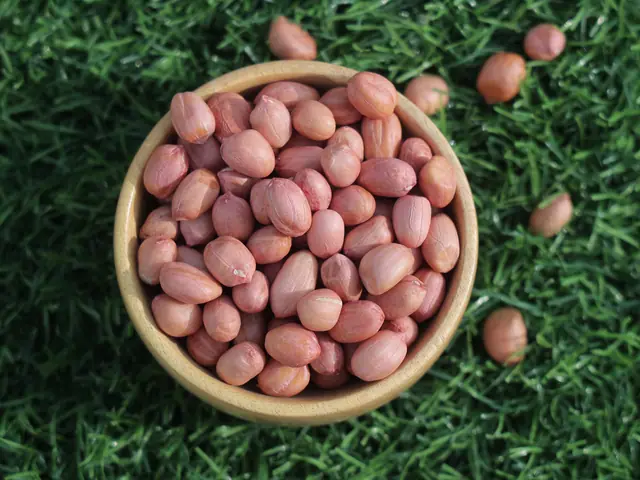
Java Peanut Kernels
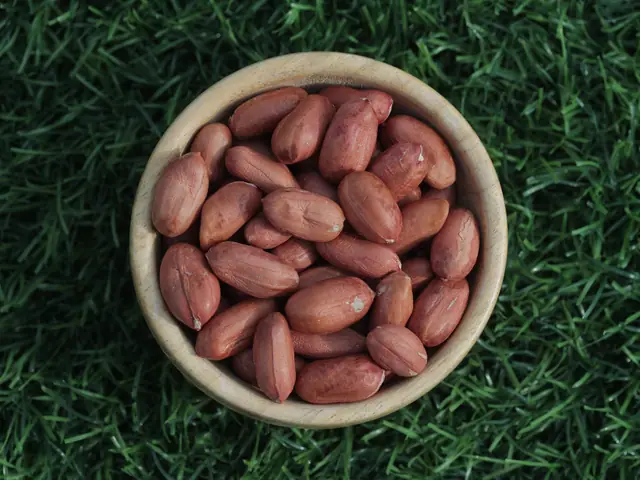
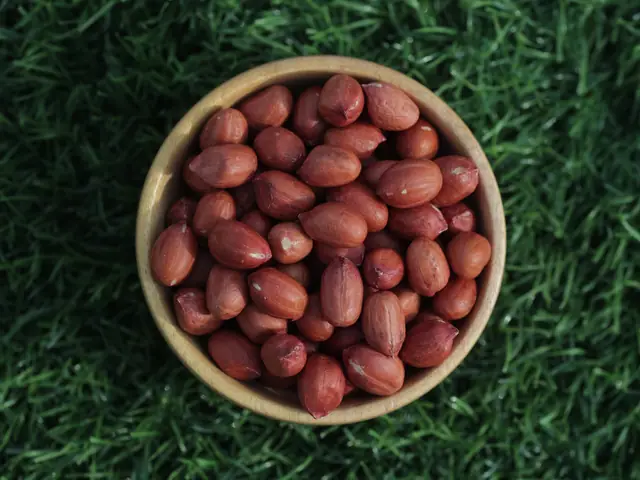
Java peanuts are small, round groundnut kernels with a light pink skin, from Spanish-type bunch varieties. Elysium Agri supplies Java groundnut kernels from Gujarat in counts 50/60 to 80/90 per ounce as standard, and up to 140/160 on request, hand-picked or sortex-cleaned and tested for aflatoxin before every shipment.
Java kernels are rounder and smaller than Bold, with a thinner skin and a naturally sweeter taste after roasting. That makes them the preferred kernel for peanut butter, coated and candied peanuts, confectionery and small salted snacks.
Java Peanuts Specification
Counts per Ounce
50/60, 60/70, 70/80, 80/90 · 90/100 to 140/160 on request
Moisture
7% max
Admixture
1% max · nil for sortex grade
Foreign Matter
0.5% max
Damaged Kernels
1–2% max
Aflatoxin
EU 2 / 4 ppb (B1 / total) or as per your market
Oil Content
45–50%
Origin & Crop
Gujarat, India · kharif Oct–Dec, summer Apr–Jun
Packing
25 / 50 kg jute or PP, 25 kg vacuum
Container Load
20 ft ≈ 19 MT · 40 ft HC ≈ 26–27 MT
Java Groundnut Kernels: Full Specification
The standard export specification for our Java peanut kernels. Send your own specification with your enquiry and we will match it.
| General | Specification | Note |
|---|---|---|
| Product | Java peanut kernels, raw, shelled (groundnut kernels, HPS) | HPS = hand picked selected |
| Botanical name | Arachis hypogaea L. (Spanish type, subsp. fastigiata) | — |
| Type | Spanish bunch, small-seeded | — |
| Origin | Gujarat, India | — |
| Crop / season | Kharif crop Oct–Dec; summer crop Apr–Jun | Crop year stated on each contract |
| GMO status | Non-GMO | India has not approved any GM groundnut for cultivation |
| Grades | HPS, sortex-cleaned, machine-cleaned | See Choose Your Grade |
| Physical | Specification | Test method / note |
|---|---|---|
| Count (kernels per ounce) | 50/60, 60/70, 70/80, 80/90 standard; 90/100, 100/120, 140/160 on request | Hand count of 28.35 g sample |
| Shape | Round to slightly oval, small | Visual |
| Skin colour | Light pink to pinkish-white | Visual |
| Moisture | 7% max | ISO 665; Codex max for kernels 9% |
| Admixture (Bold / other types) | 1% max; nil for sortex grade | Visual sort |
| Foreign matter | 0.5% max | Codex max 0.5% |
| Damaged kernels | 1–2% max | Codex: insect / mechanical / germinated 2% each |
| Mouldy, rancid or decayed kernels | Nil visible; 0.2% max | Codex max 0.2% |
| Live insects | Nil | Container fumigated |
| Taste and odour | Natural, mildly sweet; no sour, bitter or rancid taste | Sensory |
| Chemical | Specification | Test method / note |
|---|---|---|
| Oil content | 45–50% (Spanish types average about 49%) | ISO 659 |
| Peroxide valueOn request | As per buyer specification | On request |
| Food safety | Specification | Test method / note |
|---|---|---|
| Aflatoxin, EU (direct consumption) | B1 ≤ 2 µg/kg; total ≤ 4 µg/kg | HPLC at an APEDA-approved lab (EN ISO 16050); Certificate of Analysis per lot |
| Aflatoxin, EU (further processing) | B1 ≤ 8 µg/kg; total ≤ 15 µg/kg | As above |
| SalmonellaOn request | Absent in 25 g | ISO 6579-1; on request |
| Pesticide residuesOn request | Within EU / Codex MRLs | Multi-residue screen; on request |
| E. coli / total plate count / yeast and mouldOn request | As per buyer specification | ISO 16649-2 / 4833-1 / 21527; on request |
| Commercial | Specification | Note |
|---|---|---|
| HS code | 1202 42 10 (groundnut kernels, HPS, shelled, not roasted) | International heading 1202.42 |
| Packing | 25 / 50 kg jute · 25 / 50 kg PP · 25 kg vacuum with PP outer · jumbo bags on request | Buyer's marks on request |
| Container load | 20 ft: about 19 MT · 40 ft HC: about 26–27 MT | See Java Peanut Packing and Container Loading |
| Storage | Cool, dry, ventilated; long-term below 10 °C at 65–70% RH recommended | — |
| Documents | APEDA Certificate of Export · Certificate of Analysis (aflatoxin) · Phytosanitary Certificate · Fumigation Certificate · Certificate of Origin · Health Certificate (where required) | — |
What Java Peanut Counts Mean
A count is the number of kernels in one ounce (28.35 g). Java kernels are smaller than Bold, so Java counts start higher.
| Count per ounce | Kernels per 100 g | Weight per kernel | Typical use |
|---|---|---|---|
| 50/60 | 176–212 | 0.47–0.57 g | Salted snacks, coated nuts |
| 60/70 | 212–247 | 0.41–0.47 g | Coated and candied peanuts |
| 70/80 | 247–282 | 0.35–0.41 g | Confectionery, peanut butter |
| 80/90 | 282–317 | 0.32–0.35 g | Peanut butter, candy (most traded) |
| 90/100 | 317–353 | 0.28–0.32 g | Peanut butter, bars |
| 100/120 | 353–423 | 0.24–0.28 g | Butter, oil, bakery |
| 140/160 | 494–564 | 0.18–0.20 g | Oil milling, paste, economy grades |
Kernels per 100 g and weight per kernel are calculated from the count (1 ounce = 28.35 g). Uses are indicative.
Choose Your Grade
HPS (Hand Picked Selected)
Machine graded by size, then hand-picked to remove damaged, shrivelled and off-colour kernels.
Sortex Cleaned
Optical colour sorting after grading for the lowest admixture; preferred by EU and premium buyers.
Machine Cleaned
Graded and cleaned without hand-picking, for oil milling and paste.
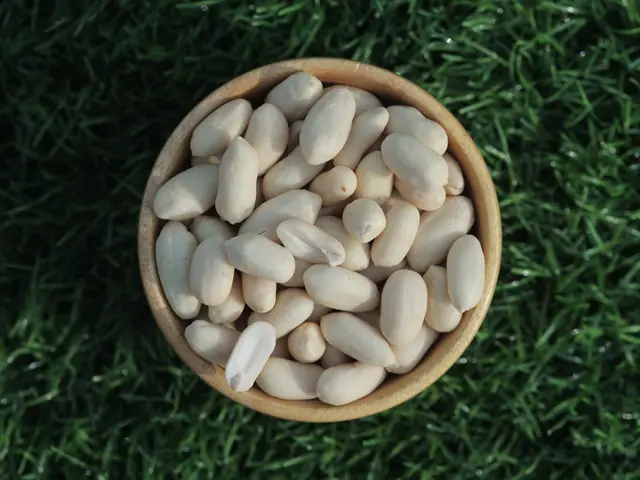
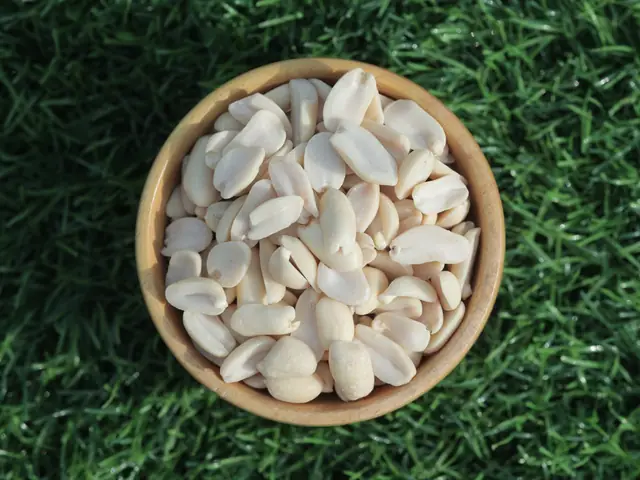
Also available blanched or split: Blanched Peanuts →Split Blanched Peanuts →Roasted Peanuts →
Java Peanut Packing and Container Loading
| Pack type | Net weight | Units per 20 ft | Net per 20 ft | Net per 40 ft HC |
|---|---|---|---|---|
| New jute bag | 50 kg | 380 | 19 MT | 26–27 MT |
| PP woven bag | 25 / 50 kg | 760 / 380 | 19 MT | 26–27 MT |
| Vacuum bag in PP outer | 25 kg | 760 | 19 MT | 26–27 MT |
| Jumbo bag | 1,000 kg | 18–19 | 18–19 MT | 26 MT |
Where Java Peanuts Are Used
Peanut Butter
Round kernels with high oil and a sweeter roast give a smooth, rich butter.
Coated and Candied Peanuts
Uniform round shape takes coatings evenly.
Confectionery and Chikki
Small kernels spread evenly through bars, brittles and chocolate.
Salted Snacks
50/60 and 60/70 counts for small roasted and salted nuts.
Bakery
Whole, split or diced in cookies, cakes and toppings.
Oil Milling
Higher counts with 45–50% oil for crushing.
Java Peanut Price: What Sets It
Java peanut prices are quoted per metric tonne, FOB an Indian port, and change with the crop and the market. In 2026 Java has at times traded above Bold, so always compare by count.
- Count: lower counts (50/60) usually cost more than 80/90 and above.
- Crop: the kharif crop (Oct–Dec) and summer crop (Apr–Jun) both set supply; prices usually ease after harvest.
- Grade: sortex and HPS cost more than machine-cleaned.
- Aflatoxin standard: EU-compliant lots carry a premium.
- Currency and freight: the rupee–dollar rate and freight to your port.
Prices move with the crop and the market, so we quote on the day. Tell us your grade, quantity and port for a current FOB, CFR or CIF price.
Tested, Certified and Traceable
APEDA then issues the Certificate of Export through Peanut.Net, so each shipment can be traced back to its lot.
- Sourcing
- Grading and hand-picking
- Sampling at an APEDA-registered warehouse
- Aflatoxin test at an APEDA-approved lab
- APEDA Certificate of Export
Documents with every shipment
Get a Java Peanut Quote
Share your count, quantity and destination, and we will send an FOB or CIF price with the spec sheet.
Thank you. Our peanut desk will send your price and spec sheet.
Frequently Asked Questions (FAQ)
What are Java peanuts?
Java peanuts are small, round groundnut kernels with a light pink skin, from Spanish-type bunch varieties. In India they are grown mainly in Gujarat and traded by count, from 50/60 to 140/160 kernels per ounce. They are preferred for peanut butter, coated peanuts and confectionery.
What is the difference between Java and Bold peanuts?
Java peanuts are small, round kernels with a light pink skin and a sweeter taste, from Spanish-type varieties. Bold peanuts are large, long, oval kernels with a red skin, from Virginia-type varieties. Java suits peanut butter and confectionery; Bold suits roasted and salted snacks where size matters.
What is the standard specification of Java peanuts?
Standard Indian Java peanut kernels have 7% max moisture, 1% max admixture, 0.5% max foreign matter, 1–2% max damaged kernels and 45–50% oil, in counts of 50/60 to 80/90 per ounce. Aflatoxin is tested per lot, for example to the EU limit of 2 µg/kg B1 and 4 µg/kg total.
What does 80/90 count mean in Java peanuts?
An 80/90 count means 80 to 90 kernels in one ounce (28.35 g), or about 282 to 317 kernels per 100 g. A higher count means smaller kernels. 80/90 is one of the most traded Java counts for peanut butter and candy.
What is the HS code for Java peanut kernels?
Shelled Java peanut kernels that are not roasted fall under HS heading 1202.42. India's 8-digit ITC-HS code is 1202 42 10 for groundnut kernels, HPS. Confirm the full national code with your customs broker.
Why are Java peanuts preferred for peanut butter?
Java kernels are small and round, roast evenly, carry 45–50% oil and have a naturally sweeter taste than Bold, which gives a smooth, well-flavoured butter. Higher counts such as 80/90 also cost less per tonne than large kernels.
When is the new Java peanut crop available?
India has two groundnut crops. The main kharif crop arrives from October to December, and a summer crop of Spanish-type groundnut arrives from April to June in Gujarat. Most export contracts are booked soon after each harvest.
How many tonnes of Java peanuts fit in a container?
A 20 ft container holds about 19 metric tonnes of Java peanut kernels, for example 380 jute bags of 50 kg or 760 vacuum bags of 25 kg.
Who supplies Java groundnut kernels in India?
Elysium Agri Corporation is a Java peanuts supplier in India, based in Jamnagar, Gujarat. We export Java groundnut kernels in counts 50/60 to 140/160, in HPS and sortex grades, with lot-wise aflatoxin testing and APEDA certification, in 20 ft and 40 ft containers.