

On this page
- Why Should Importers Visit Food Trade Shows?
- How Do Gulfood, SIAL and Anuga Compare?
- How to Prepare for a Trade Show Before You Go
- How Do You Build a Supplier Shortlist?
- How Do You Make the Most of Show Days?
- Which Questions Should You Ask Exhibitors?
- How Do You Follow Up After the Show?
- Where Can You Meet Elysium at Trade Shows?
- Frequently asked questions
To prepare for a trade show as a food importer, set clear buying goals, choose the right fair, shortlist and book meetings with exhibitors two to six weeks ahead, and bring your specifications and target volumes. Then follow up within a week with written enquiries and sample requests. A food fair can save months of email, because you can see products, meet the people behind a supplier and agree terms face to face. This guide explains how to prepare for a trade show step by step, from choosing between Gulfood, SIAL and Anuga to following up afterwards.
Key takeaways
- Pick the fair that fits your products and region. Gulfood is held every year in Dubai; SIAL Paris and Anuga in Cologne alternate every other year.
- Shortlist 10–20 exhibitors from the official catalogue and book meetings before you travel.
- Bring a one-page brief with your specifications, volumes, destination port and preferred Incoterms.
- Follow up within a week, request samples and verify each supplier before the first order.
Why Should Importers Visit Food Trade Shows?
Importers visit food trade shows to meet many suppliers in a few days, compare products side by side and build trust in person. For commodities such as pulses, spices, seeds and nuts, you can see and handle samples, discuss grades with the people who clean and pack the goods, and judge how well a supplier understands your market.
Shows also help you follow the market. You can hear about crop sizes, price trends, new rules and new products from many exporters at once. National pavilions, such as the India pavilion run with APEDA support at the major fairs, group many suppliers from one origin in one place. That makes comparison easier. The main limit is time: a big fair has thousands of stands, so a buyer without a plan sees only a small part of it.
How Do Gulfood, SIAL and Anuga Compare?
Gulfood, SIAL Paris and Anuga are the three largest general food fairs for international buyers. The main differences are timing, location and buyer mix. Gulfood is held every year in Dubai and is strong for Middle East, African and South Asian trade. SIAL Paris (even years) and Anuga in Cologne (odd years) are biennial and draw more European retail and food-industry buyers.
| Point | Gulfood | SIAL Paris | Anuga |
|---|---|---|---|
| City and venue | Dubai World Trade Centre and Dubai Exhibition Centre | Paris Nord Villepinte | Koelnmesse, Cologne |
| Frequency | Every year | Every two years (even years) | Every two years (odd years) |
| Next edition | 15–19 March 2027 | 17–21 October 2026 | 9–13 October 2027 |
| Main buyer regions | GCC, Middle East, Africa, South and Central Asia | Europe, with many global buyers | Europe, with many global buyers |
| Strengths for agri buyers | Pulses, grains, spices, nuts; large India pavilion | All food sectors; APEDA India pavilion | All food sectors; APEDA India pavilion |
| Best for | Bulk commodity sourcing for Gulf and African markets | European retail, private label and food service | European retail, ingredients and private label |
Specialist fairs can be more efficient for some buyers. Gulfood Manufacturing and Fi Europe focus on ingredients and processing, BIOFACH on organic food, PLMA on private label, and the INC Congress on nuts and dried fruit. Our trade show calendar lists confirmed dates for the main food fairs from October 2026 to October 2027.
How to Prepare for a Trade Show Before You Go
Start preparing two to three months before the show. Set your goals first, because they decide everything else. A buyer looking for a second supplier of sortexed sesame needs a different plan from a buyer exploring new product lines.

- Set two or three goals. For example: find a backup supplier for one product, compare prices for next season, or meet a current supplier’s management.
- Register early. Most fairs offer online visitor registration, and some have hosted-buyer programmes for qualified importers.
- Book travel and hotels early. Hotels near major fairs fill quickly and prices rise as the show approaches.
- Prepare a one-page buyer brief. List the products, grades, specifications, monthly or annual volumes, packing, destination port, preferred Incoterms and target delivery months.
- Plan the floor. Download the hall plan and the show app, and group meetings by hall to save walking time.
If you are sourcing from India for the first time, read our guide on how to find suppliers in India before the show. It explains the registrations an Indian exporter should hold, which you can then check at the stand.
How Do You Build a Supplier Shortlist?
Build your shortlist from the official exhibitor catalogue, filtered by product category and country. Then check each company’s website and registrations, and choose 10–20 exhibitors to contact before the show. This keeps your days focused on suppliers that can actually meet your needs.
Use simple criteria. Does the supplier make or clean the product itself, or only trade it? Does it show specifications, lab testing and export documents on its website? Is it close to the growing area? Does it already ship to your region? For Indian exporters, ask for the Import Export Code (IEC), APEDA or Spices Board registration and FSSAI licence numbers, and check them on the official portals. Our verification page shows how this works with our own numbers.
Email your shortlist two to six weeks before the show with your buyer brief and a request for a 30-minute meeting. Suppliers that reply quickly and clearly, with a proposed time and relevant samples, are already showing how they will handle your business.
How Do You Make the Most of Show Days?
Keep booked meetings at the core of each day and leave about a third of your time free for walking the halls. Plan no more than six to eight meetings a day, with gaps to travel between halls and write notes.
- Take notes straight after each meeting. Record the products, prices, minimum order, lead time and agreed next step. Photograph business cards and samples.
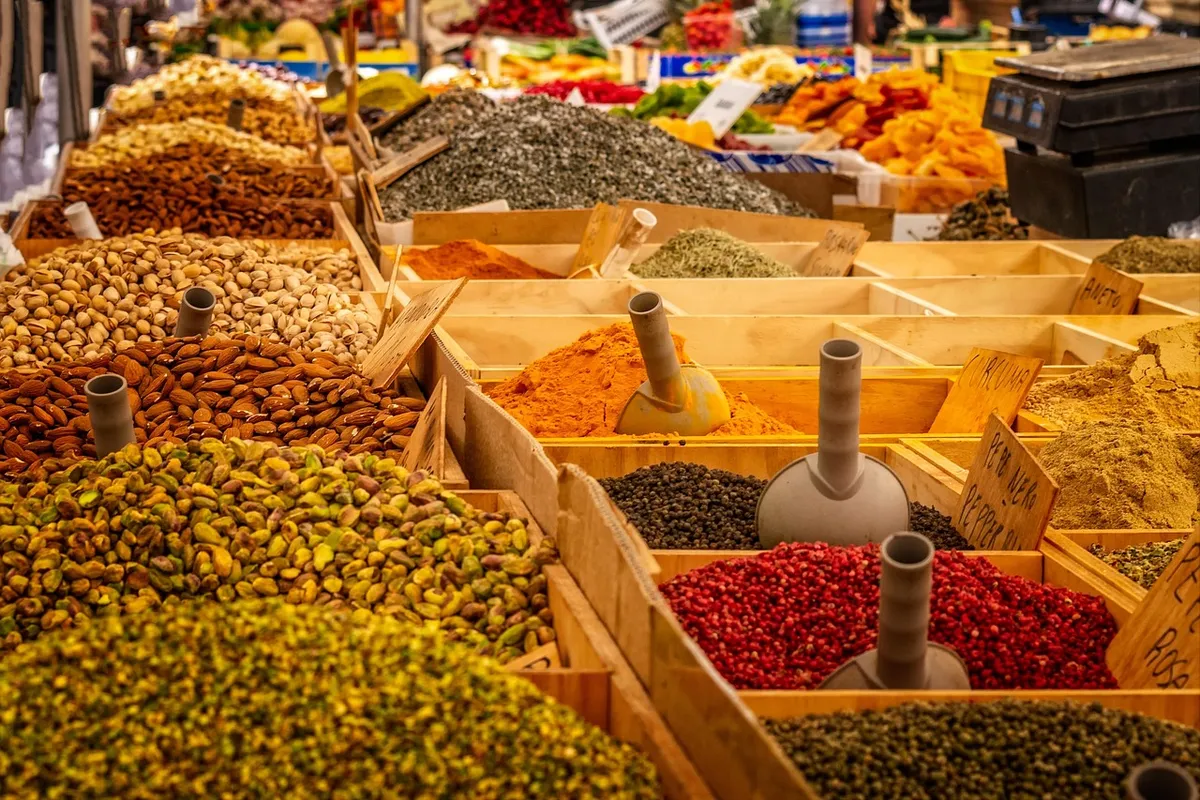
- Look at samples closely. Check colour, size, uniformity, broken seeds, foreign matter and smell. Ask whether the sample comes from a current lot.
- Visit the national pavilions. The India pavilion at Gulfood, SIAL or Anuga is the quickest way to compare many Indian exporters.
- Attend market sessions. Many fairs run talks on crops, prices and regulations that are useful for planning.
Which Questions Should You Ask Exhibitors?
Ask questions that test whether the supplier can meet your specification consistently, not just once. Good answers are specific, include numbers and refer to documents the supplier can share.
- Do you process the product yourselves? Where are your cleaning, sortexing and packing units?
- What is your standard specification for this grade, and can you quote against mine?
- Which lab tests do you run on every lot, and are the labs accredited? Ask to see a recent report; ours are described on our lab testing page.
- Which countries do you ship to now, and which documents and certificates do you provide?
- What is your monthly capacity, lead time and minimum order?
- Which Incoterms and payment terms do you offer?
- How do you handle a quality claim if a lot does not meet the contract?
Avoid agreeing a firm price at the stand. Commodity prices move daily, and a fair quote needs your exact grade, quantity, port and shipment month. Use the show to agree specifications and the next step instead.
How Do You Follow Up After the Show?
Follow up within five working days, while both sides still remember the conversation. Send each supplier a short email that recalls the meeting, attaches your specification and asks for a written quote and samples.
- Rank your contacts. Sort suppliers into strong, possible and not suitable, based on your notes.
- Compare quotes on the same basis. Use the same grade, quantity, packing, Incoterm and port for every supplier.
- Test samples. Have samples checked in your own lab or an independent one. Our guide to pre-shipment samples and inspections explains what to ask for.
- Verify before you pay. Check registrations, ask for references and review the supplier’s certificates.
- Start small. A trial container shows how the supplier handles quality, documents and communication.
Related reading: Indonesia Food Import Requirements: Vietnam and Malaysia Compared and Export Import Terms: A Glossary for Agro Commodity Buyers.
Where Can You Meet Elysium at Trade Shows?
We attend the main international food fairs, including Gulfood in Dubai, where our team met buyers in 2026. Our trade show page lists the upcoming fairs from SIAL Paris 2026 to Anuga 2027, and you can book a meeting at our stand or at the India pavilion through the form on that page. You are also welcome to visit our office in Jamnagar, Gujarat, by appointment, or to meet us at AAHAR in New Delhi.
Elysium Agri Corporation exports peanuts, sesame, spices, pulses, chickpeas, grains, dehydrated vegetables and animal feed. When you plan how to prepare for a trade show, send us your buyer brief in advance. We will bring relevant samples and specification sheets, so the meeting can move straight to grades, volumes and shipment months.
Not attending a fair this season? Send us your requirements and we will reply with a price and specification sheet. Request a product quote →
Frequently asked questions
How should an importer prepare for a food trade show?
Set two or three clear goals, register early and book travel. Shortlist 10 to 20 exhibitors from the official catalogue and request meetings two to six weeks ahead. Prepare a one-page brief with your products, specifications, volumes, packing, destination port and Incoterms. Plan meetings by hall and leave time to walk the show and visit national pavilions.
What is the difference between Gulfood, SIAL and Anuga?
Gulfood is held every year in Dubai and is strongest for Middle East, African and South Asian trade in pulses, grains, spices and nuts. SIAL Paris and Anuga in Cologne are each held every two years, SIAL in even years and Anuga in odd years. Both draw more European retail, private label and food-industry buyers.
How do you shortlist exhibitors before a trade show?
Filter the official exhibitor catalogue by product and country, then check each company's website for specifications, testing and export experience. Prefer suppliers that process the product themselves and already ship to your region. Check registrations such as an Indian exporter's IEC, APEDA and FSSAI numbers on official portals, then email 10 to 20 firms to book meetings.
What questions should buyers ask suppliers at a trade show?
Ask whether the supplier processes the product itself, what its standard specification is and whether it can quote against yours. Ask which lab tests it runs on every lot, which countries it ships to and which documents it provides. Also ask about capacity, lead time, minimum order, Incoterms, payment terms and how it handles quality claims.
How do you follow up with suppliers after a trade show?
Write to each supplier within five working days, recalling the meeting and attaching your specification. Ask for a written quote on the same grade, quantity, packing, Incoterm and port as other suppliers, plus samples. Test the samples, verify registrations and references, and place a small trial order before committing to larger volumes.
Related reads


