

On this page
- Why Learn Export Import Terms for Agro Trade?
- Which Trade and Payment Terms Should You Know?
- What Do Common Shipping and Logistics Terms Mean?
- Which Documentation Terms Appear on Export Shipments?
- What Do Quality and Testing Terms Mean?
- Which Certification and Compliance Terms Matter?
- What Do Commodity and Grading Terms Mean?
- How Do You Request a Quote from an Indian Exporter?
- Frequently asked questions
Export import terms are the short words and abbreviations that buyers and sellers use in quotes, contracts and shipping documents, such as FOB, CIF, LC, bill of lading and phytosanitary certificate. Knowing them lets you compare offers correctly and avoid costly misunderstandings. This glossary explains the terms you will meet most often when you buy agro commodities from India. They are grouped by stage: price and payment, shipping, documents, quality, certification and grading.
Key takeaways
- Incoterms such as FOB, CFR and CIF decide which costs and risks the seller covers. Always name the port and the Incoterms version.
- Payment terms such as advance TT, CAD and LC decide when money and documents change hands.
- Shipping documents, such as the bill of lading, phytosanitary certificate and certificate of origin, are needed for customs clearance.
- Quality and grading terms, such as purity, admixture, count and MRL, belong in the written specification.
Why Learn Export Import Terms for Agro Trade?
You should learn agro export terms because each one sets a cost, a risk or a quality promise. Two quotes for the same product can look different only because one is FOB and the other is CIF. A contract that says “machine cleaned” without a purity figure can lead to a dispute at arrival. A missing document can hold a container at the port for days.
Most terms are standard across the world. Incoterms are published by the International Chamber of Commerce, and the current version is Incoterms 2020. Documents such as the phytosanitary certificate follow international conventions. Grading terms vary more by product and market, so they need a clear written definition in each contract. For quick answers about how we work, see our buyer FAQ.
Which Trade and Payment Terms Should You Know?
Trade terms define where the seller’s costs and risks end. Payment terms define when the buyer pays. The table lists the ones used most in agro trade from India.
| Term | Full form | What it means |
|---|---|---|
| EXW | Ex Works | The buyer collects the goods at the seller’s premises and handles everything after that. |
| FOB | Free On Board | The seller clears the goods for export and loads them on the buyer’s vessel at the named port. Risk passes once the goods are on board. |
| CFR | Cost and Freight | FOB plus the sea freight to the named destination port. Risk still passes at loading. |
| CIF | Cost, Insurance and Freight | CFR plus minimum marine insurance for the buyer’s benefit. |
| DAP | Delivered At Place | The seller delivers to a named place in the buyer’s country, not cleared for import. |
| TT | Telegraphic Transfer | A bank wire. “Advance TT” means payment before shipment. |
| CAD | Cash Against Documents | The buyer pays through the bank to receive the shipping documents. |
| LC | Letter of Credit | The buyer’s bank promises payment when the seller presents documents that match the LC terms. |
| Proforma invoice | PI | A draft invoice that confirms price, quantity and terms before shipment. |
| MOQ | Minimum Order Quantity | The smallest order a supplier accepts, often one 20 ft container in bulk agro trade. |
Incoterm definitions follow Incoterms 2020. Always write the named port, for example “FOB Mundra, Incoterms 2020”.
Our guide to Incoterms types explains every rule in more detail. To compare payment options, read LC vs CAD vs TT. We quote FOB, CFR and CIF, and accept advance TT, part advance with balance against documents, CAD and irrevocable LC at sight.
What Do Common Shipping and Logistics Terms Mean?
Shipping terms describe the container, the space it uses and the timeline. These are the ones that appear on freight quotes and booking notes.
- FCL (Full Container Load): one buyer’s cargo fills a whole container. Most bulk agro orders ship FCL.
- LCL (Less than Container Load): cargo shares a container with other shippers. It suits small trial orders.
- 20 ft and 40 ft HC: the standard container sizes. HC means high cube, which is about 30 cm taller.
- POL and POD: port of loading and port of discharge. In Gujarat, the common POLs are Mundra, Kandla (Deendayal) and Pipavav.
- ETD and ETA: estimated time of departure and estimated time of arrival.
- Transit time: the days the vessel takes from POL to POD.
- Cut-off: the last time a loaded container can enter the port for a given vessel.
- Demurrage and detention: charges for keeping a container in the port, or outside it, beyond the free days.
- Stuffing: loading cargo into a container. A container liner or desiccant may be added to protect against moisture.
- Freight forwarder and CHA: the forwarder books space and arranges transport. The custom house agent clears goods through customs.
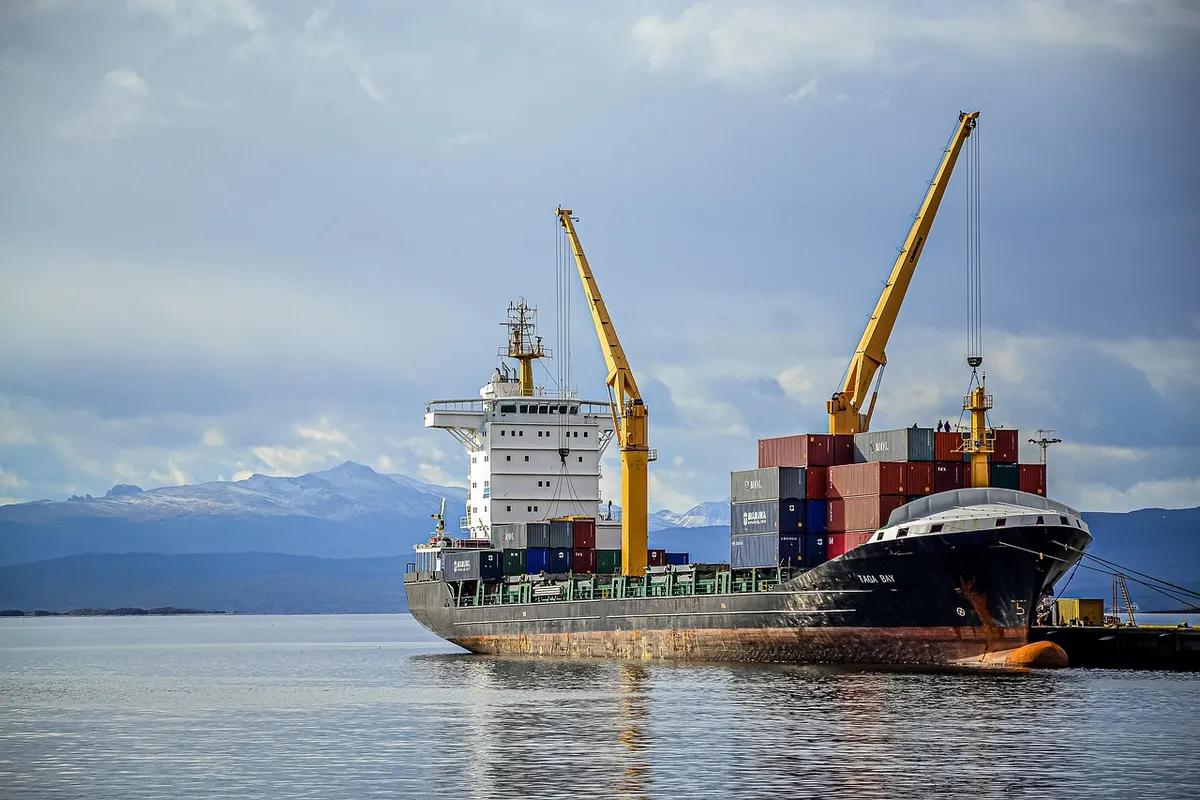
Which Documentation Terms Appear on Export Shipments?
Documentation terms name the papers that travel with the cargo. Customs, banks and food authorities check each one.
- Commercial invoice: the final bill showing the goods, price, Incoterm and total value.
- Packing list: the number of bags, net and gross weight and marks for each lot.
- Bill of lading (B/L): the carrier’s receipt for the goods, the contract of carriage and, if “original”, a document of title. See our guide to the bill of lading.
- Phytosanitary certificate: an official certificate from the exporting country’s plant protection authority. It confirms that plant products were inspected and are free from listed pests.
- Certificate of origin (COO): confirms the country where the goods were produced. A preferential version can lower import duty under a trade agreement.
- Fumigation certificate: confirms that the cargo or container was treated against insects before shipment.
- Health certificate: an official certificate some countries require for food products.
- Shipping bill: the Indian customs export declaration.
- HS code: the Harmonized System number that classifies the product for customs. Our HS code finder lists the codes for common agro products.
What Do Quality and Testing Terms Mean?
Quality terms describe what a lot must contain, and what it must not. They should appear with figures in every specification.
- COA (Certificate of Analysis): a laboratory report of test results for a specific lot.
- Moisture: water content as a percentage. Too much moisture can cause mould in transit.
- Purity: the share of the lot that is the named product, for example 99.95% for sesame.
- Admixture and foreign matter: other seeds, stones, dust or plant parts in the lot.
- Aflatoxin: a toxin made by moulds that can affect peanuts, spices and grains. Limits differ by market.
- MRL (Maximum Residue Limit): the highest legal level of a pesticide residue in a food.
- Microbiology: tests for bacteria such as Salmonella and E. coli.
- Pre-shipment inspection: an independent check of quality and quantity before loading, often by SGS or the buyer’s surveyor.

Our lab testing page explains which tests we run on each product before loading.
Which Certification and Compliance Terms Matter?
Certification terms show that the exporter and its facilities are registered and audited. Ask for scans and check them before your first order.
- IEC (Import Export Code): the basic licence every Indian exporter needs from the DGFT.
- APEDA RCMC: registration with the Agricultural and Processed Food Products Export Development Authority for scheduled agro products.
- Spices Board CRES: the certificate of registration as an exporter of spices.
- FSSAI licence: India’s food business licence from the Food Safety and Standards Authority of India.
- HACCP, ISO 22000 and FSSC 22000: food safety management systems that buyers often ask for.
- Halal, Kosher and organic: certifications for specific religious or production requirements.
- FDA registration and GACC registration: facility registrations for food shipped to the USA and China.
You can see our IEC, APEDA RCMC, FSSAI Central Licence and Spices Board CRES on our certificates page.
What Do Commodity and Grading Terms Mean?
Grading terms describe the size, cleaning level and form of a commodity. They differ by product, so confirm each one in writing.
- FAQ (Fair Average Quality): a basic commercial grade that reflects the average of the season’s crop.
- Machine cleaned and sortex: machine cleaning removes dust, stones and other seeds. Sortex uses colour sorters to remove discoloured grains, for a higher purity.
- Count: the number of kernels per ounce, used for peanuts, for example 40/50 or 50/60.
- Bold and Java: the two main types of Indian peanuts. Bold kernels are larger. Java kernels are smaller and rounder.
- HPS: hand-picked selected, a peanut grade with very low defects.
- Hulled and natural: sesame with the hull removed, or left on.
- Crop year: the harvest season the lot comes from. New crop is usually preferred.
- MT: metric tonne, or 1,000 kg. Bulk agro prices are usually quoted per MT.
Related reading: How to Prepare for a Trade Show: A Guide for Food Importers and Indonesia Food Import Requirements: Vietnam and Malaysia Compared.
How Do You Request a Quote from an Indian Exporter?
Once you know the main export import terms, a clear enquiry gets a fast and comparable quote. Include the product and grade, the quantity in MT or containers, packing, the Incoterm and destination port, your preferred payment term and any test or certificate you need.
At Elysium Agri, our minimum order is usually one 20 ft container per product, and mixed containers of several products are possible. We quote within 24 hours on working days, with a specification sheet. Loading usually takes two to three weeks from a confirmed order and payment terms. We ship from Mundra, Kandla and Pipavav, with a commercial invoice, packing list, bill of lading, certificate of analysis, phytosanitary certificate and certificate of origin.
Frequently asked questions
What does FOB mean in export?
FOB means Free On Board, an Incoterms 2020 rule. The seller clears the goods for export and loads them on the vessel the buyer has booked at the named port of loading. Risk passes to the buyer once the goods are on board. The buyer pays sea freight and insurance. Always write the port, for example FOB Mundra.
What is a bill of lading?
A bill of lading is the document a shipping line issues when it receives cargo. It acts as a receipt for the goods, evidence of the contract of carriage and, in its original negotiable form, a document of title. The buyer or its agent needs it to collect the container at the destination port, so banks often handle it under CAD or LC.
What is a phytosanitary certificate?
A phytosanitary certificate is an official document issued by the exporting country's plant protection authority. It confirms that plant products, such as seeds, pulses and spices, were inspected and meet the importing country's plant health rules. In India it is issued by the plant quarantine organisation. Most countries require it for customs clearance of plant products.
What does MOQ mean in international trade?
MOQ means minimum order quantity, the smallest order a supplier will accept for a product. In bulk agro trade from India, the MOQ is usually one 20 ft container per product, because freight and documentation costs are spread over the full load. Some exporters accept mixed containers or smaller trial orders by agreement.
What is a certificate of origin?
A certificate of origin is a document that states the country where the goods were produced. Customs uses it to apply the correct duty rate and trade rules. A non-preferential certificate simply proves origin, while a preferential certificate under a trade agreement can reduce or remove import duty. In India, it is issued by authorised agencies and chambers of commerce.
Related reads


