
On this page
- Where Are Peanuts Grown in India?
- Why Is Gujarat India’s Leading Groundnut Origin?
- How Do Rajasthan, Andhra Pradesh, Tamil Nadu and Karnataka Compare?
- How Do Groundnut Producing States Compare?
- When Are the Kharif and Rabi Crop Seasons?
- How Does Origin Affect Peanut Variety and Quality?
- How Can You Source Peanuts from Gujarat and Other Indian Origins?
- Frequently asked questions
Peanuts originated in South America, but today India is the world’s second-largest groundnut producer, and Gujarat is its leading origin, supplying about a third of the national crop. Rajasthan, Tamil Nadu, Karnataka, Andhra Pradesh, Madhya Pradesh and several other states make up the rest. For buyers, the Indian origin of a lot affects the variety, kernel type, harvest timing and quality. This guide explains where peanuts grow in India, how the seasons work and how origin shapes what you buy.
Key takeaways
- The peanut plant (Arachis hypogaea) was domesticated in South America and reached India centuries ago.
- Gujarat produced about 36% of India’s groundnuts in 2021-22, followed by Rajasthan at about 17%.
- Most Indian groundnut comes from the kharif crop, sown with the monsoon and harvested for October to December arrivals.
- Saurashtra, around Rajkot, Jamnagar, Junagadh and Amreli, is the heart of India’s export groundnut trade.
Where Are Peanuts Grown in India?
Peanuts are grown across western, southern and central India. According to APEDA, the major producing states are Gujarat, Rajasthan, Madhya Pradesh, Tamil Nadu, Uttar Pradesh, Andhra Pradesh, Maharashtra, Karnataka, West Bengal and Telangana. India’s production was estimated at 130.74 lakh tonnes in 2025-26, making it the second-largest groundnut producer in the world.
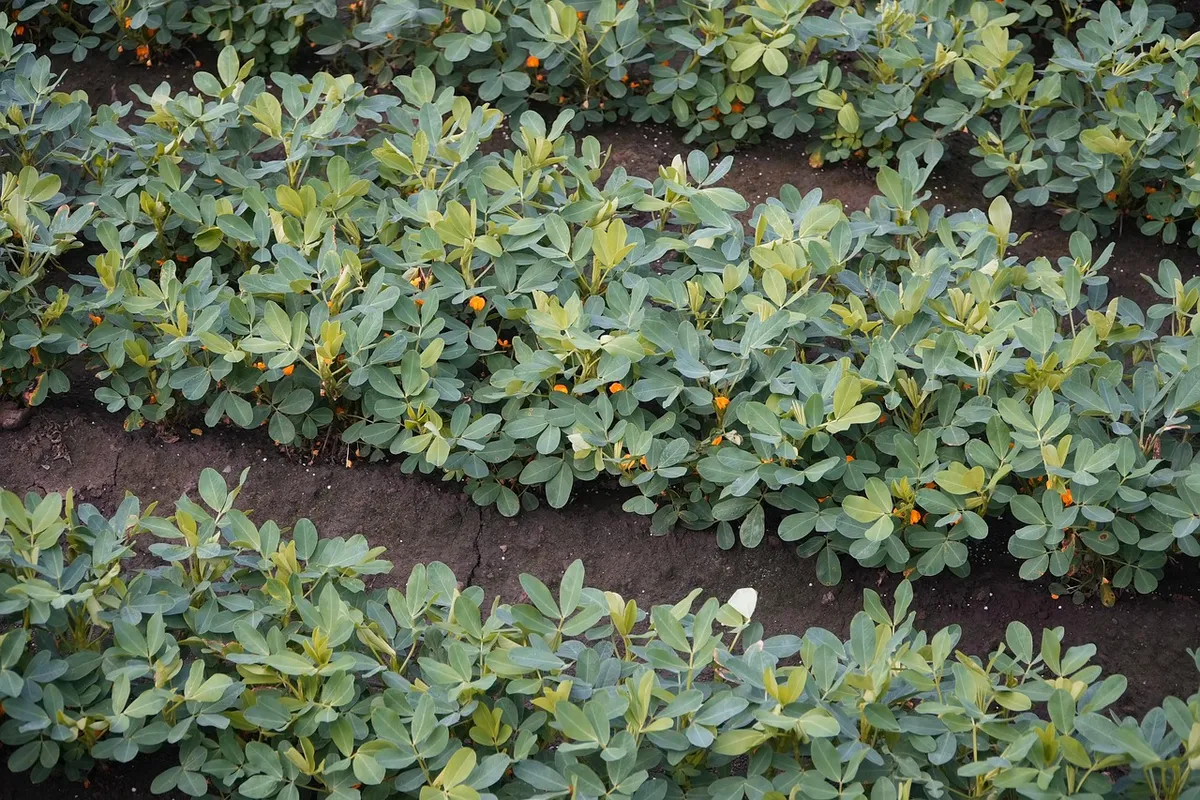
The crop is mostly rainfed. It grows best on light, well-drained sandy loam and red or medium black soils, where the pods can develop underground and be lifted easily at harvest. These conditions are common in Saurashtra, western Rajasthan and the drier parts of the Deccan plateau.
On peanuts origin more broadly: the plant, Arachis hypogaea, was first domesticated in South America, in the region of present-day Bolivia, Argentina and Paraguay. It spread to Africa and Asia through trade from the 16th century and is now one of India’s major oilseed crops.
Why Is Gujarat India’s Leading Groundnut Origin?
Gujarat is India’s largest groundnut producer by a wide margin. In 2021-22, it produced about 36.4 lakh tonnes, or roughly 36% of the national crop, according to Directorate of Economics and Statistics data summarised in an ANGRAU groundnut outlook report. Which state is the largest groundnut producer in India? Gujarat, in most years.
Within Gujarat, most groundnut grows in Saurashtra, the peninsula in the west of the state. The main districts are Rajkot, Jamnagar, Junagadh and Amreli, with neighbouring districts adding more. Why is Saurashtra known for groundnut cultivation? It has suitable soils, a reliable monsoon in most years and a long farming tradition with groundnut. Just as important, it has the full trade chain in one region: large market yards, shelling and grading units, oil mills, APEDA-registered export units, cold storage and nearby ports at Mundra, Kandla and Pipavav.
Gujarat also grows a summer groundnut crop under irrigation. Together with the main kharif crop, this gives exporters fresh supply in two windows each year.
Most of India’s export peanuts pass through this region. According to APEDA, India exported about 6.64 lakh tonnes of groundnuts worth US$ 691 million in 2025-26, mainly to Indonesia, Vietnam, Malaysia, China and the Philippines. A typical export lot from Saurashtra moves from the farm to a local market yard, then to an APEDA-registered unit for shelling, grading and sorting. It is sampled at a registered warehouse, tested for aflatoxin at an APEDA-approved lab and recorded in the Peanut.Net system before it is loaded at the port.
How Do Rajasthan, Andhra Pradesh, Tamil Nadu and Karnataka Compare?
These four states are the next most important groundnut origins in India.
- Rajasthan: the second-largest producer, with about 17% of India’s crop in 2021-22. Most groundnut grows in the west of the state on sandy soils, much of it under irrigation. Rajasthan kernels are traded widely within India and also reach export markets.
- Tamil Nadu: about 7.5% of production in 2021-22. The state grows groundnut in more than one season, including irrigated rabi and summer crops.
- Karnataka: about 6.4% of production in 2021-22, mostly rainfed kharif groundnut on red soils.
- Andhra Pradesh: about 5.1% of production in 2021-22. Much of it is rainfed groundnut in the dry Rayalaseema region, with a rabi crop in other districts.
Which Indian states grow groundnuts besides Gujarat? Rajasthan, Tamil Nadu, Karnataka, Andhra Pradesh, Telangana, Madhya Pradesh, Maharashtra, Uttar Pradesh and West Bengal all grow commercial quantities.
How Do Groundnut Producing States Compare?
The table shows the main producing states, using 2021-22 production data from the Directorate of Economics and Statistics. Shares change from year to year with the monsoon, so treat these as a guide.
| State | Production 2021-22 (lakh tonnes) | Share of India | Main crop pattern |
|---|---|---|---|
| Gujarat | 36.42 | About 36% | Kharif (main), summer crop under irrigation |
| Rajasthan | 17.53 | About 17% | Mainly kharif |
| Tamil Nadu | 7.62 | About 7.5% | Kharif, rabi and summer |
| Karnataka | 6.47 | About 6.4% | Mainly kharif, rainfed |
| Andhra Pradesh | 5.19 | About 5.1% | Kharif (rainfed) and rabi |
| Telangana | 3.27 | About 3.2% | Largely rabi |
| Other states | 24.56 | About 24% | Mixed |
| India | 101.06 | 100% |
Groundnut production by state, 2021-22. Source: Directorate of Economics and Statistics, via ANGRAU outlook report. India’s 2025-26 estimate is 130.74 lakh tonnes (APEDA).
When Are the Kharif and Rabi Crop Seasons?
India grows groundnut in two main seasons. The kharif crop is by far the largest.
- Kharif crop: sown with the monsoon in June and July and harvested from late September. New-crop kernels reach the market from October to December. This crop supplies most export contracts, which are usually booked between September and December.
- Rabi and summer crops: grown under irrigation in the cooler or dry months, mainly in the southern states, Telangana and Gujarat. Gujarat’s summer crop arrives from April to June.
When are the main groundnut seasons in India? For most buyers, the key window is the kharif arrival from October to December, with a second, smaller window from April to June. Our crop calendar shows arrivals month by month.
The monsoon decides each kharif crop. A good, well-spread monsoon in Saurashtra usually means a larger crop, a wider choice of counts and easier prices once new-crop arrivals build up. A weak or late monsoon can reduce yields, while heavy rain at harvest can raise moisture and quality risks. Buyers who plan their orders around the arrival season, and who confirm the crop year in the contract, usually get the best mix of quality and price. Old-crop kernels can still be good, but they should be checked more closely for moisture, free fatty acid and storage damage.
How Does Origin Affect Peanut Variety and Quality?
Origin affects which kernel types are available, how they look and how they behave in processing.
- Kernel type: Gujarat is the main source of large, long Bold peanuts from Virginia-type varieties. Smaller, round Java peanuts come from Spanish-type varieties grown in several states.
- Season: new-crop kharif kernels and summer-crop kernels can differ in size, colour and oil content.
- Weather: late monsoon rain at harvest can raise moisture and the risk of mould. That is why aflatoxin testing is essential for every lot, whatever the origin.
- Processing: regions with modern shelling, grading and sortex units, such as Saurashtra, can deliver tighter counts and lower admixture.
For export buyers, these differences mean that two lots with the same grade name can still behave differently in your roaster or mill. Count also matters. See our guide to peanut count sizes for how kernel size is traded.
Related reading: Aflatoxin in Peanuts: Limits, Testing and Control for Importers.
How Can You Source Peanuts from Gujarat and Other Indian Origins?
When you buy Indian peanuts, ask for the origin, crop year and season on the contract, along with grade, count, moisture and the aflatoxin limit for your market. Every Indian export lot must be processed at an APEDA-registered unit and tested at an APEDA-approved lab before APEDA issues a Certificate of Export.
Elysium Agri Corporation is based in Jamnagar, in the middle of the Saurashtra groundnut belt. We buy from farmers and market yards we know, check each lot for moisture and visible mould before purchase, and move it to APEDA-registered units for shelling, grading and storage. We export Bold, Java and TJ kernels and blanched, roasted, diced and in-shell peanuts, each lot tested for aflatoxin. Read our groundnut export guide for market requirements, and check our registrations on the certificates page.
Tell us your grade, count, quantity and destination port. Request a peanut quote →
Frequently asked questions
Which state is the largest groundnut producer in India?
Gujarat is the largest groundnut producer in India in most years. In 2021-22 it produced about 36.4 lakh tonnes, roughly 36% of the national crop, according to Directorate of Economics and Statistics data. Rajasthan was second with about 17%. Most of Gujarat's crop grows in the Saurashtra region.
Where are peanuts grown in Gujarat?
Most of Gujarat's peanuts grow in Saurashtra, the western peninsula of the state. The main groundnut districts are Rajkot, Jamnagar, Junagadh and Amreli, with neighbouring districts adding more. The region has suitable soils, a monsoon-fed kharif crop, an irrigated summer crop, large market yards, shelling units and nearby export ports.
Which Indian states grow groundnuts besides Gujarat?
Besides Gujarat, groundnuts are grown commercially in Rajasthan, Tamil Nadu, Karnataka, Andhra Pradesh, Telangana, Madhya Pradesh, Maharashtra, Uttar Pradesh and West Bengal. Rajasthan is the second-largest producer, with about 17% of India's crop in 2021-22, followed by Tamil Nadu, Karnataka and Andhra Pradesh.
Why is Saurashtra known for groundnut cultivation?
Saurashtra combines suitable light and medium soils, a reliable monsoon in most years and a long tradition of groundnut farming. It also has the full trade chain in one region: market yards, shelling and grading units, oil mills, APEDA-registered export units, storage and nearby ports such as Mundra, Kandla and Pipavav.
When are the main groundnut seasons in India?
India's main groundnut season is the kharif crop, sown with the monsoon in June and July, with new-crop kernels arriving from October to December. Smaller rabi and summer crops are grown under irrigation, mainly in southern states, Telangana and Gujarat, where the summer crop arrives from April to June.
Related reads


