
On this page
- What Is Peanut Count Size?
- How Is Peanut Count Measured?
- How Do Peanut Count Sizes Compare?
- What Are 38/42 and 40/50 Large Bold Kernels Used For?
- What Are 50/60 and 60/70 Mid-Size Kernels Used For?
- How Are 80/90 and Smaller Counts Used, and What Are Their Limits?
- How Do You Choose the Right Count for Your Product?
- How Can You Buy Bold Peanuts in Bulk from India?
- Frequently asked questions
Peanut sizes are traded as counts: the number of kernels in one ounce (28.35 g). A count of 38/42 means 38 to 42 kernels per ounce, so a lower count means bigger kernels and a higher count means smaller ones. Indian Bold peanuts usually run from 35/40 to 70/80, while Java and TJ kernels run from 50/60 to 80/90. This guide explains how counts are measured, how the main sizes compare and how to choose the right count for your product.
Key takeaways
- A peanut count is kernels per ounce. 40/50 means 40 to 50 kernels in 28.35 g.
- Lower counts (35/40, 38/42, 40/50) are large kernels for premium snacks; higher counts (70/80, 80/90) are small kernels for confectionery and peanut butter.
- Groundnut count and peanut count are the same thing; India uses both terms.
- Always state the grade, count range, tolerance and test method in the contract.
What Is Peanut Count Size?
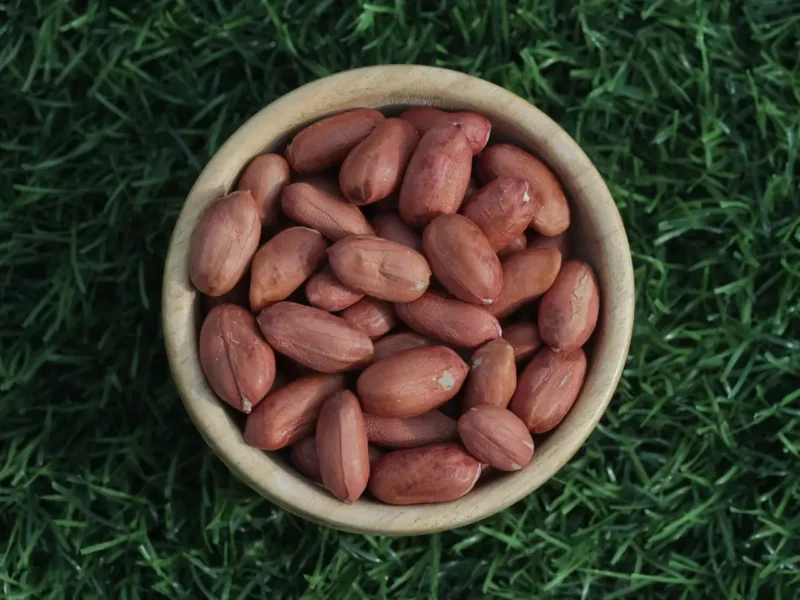
Peanut count size is the standard way to describe kernel size in the international peanut trade. Instead of measuring each kernel, traders count how many kernels fit in one ounce. The result is given as a range, such as 40/50 or 60/70, because kernels within a lot are never all the same size.
The count works the opposite way to most size scales. A low count means fewer, bigger kernels per ounce. A high count means more, smaller kernels. So 35/40 is a jumbo kernel, and 80/90 is a small kernel. Are groundnut count and peanut count the same thing? Yes. “Groundnut” is the common term in India and in many trade documents, while “peanut” is used in the USA and in retail. Both refer to kernels per ounce.
The count must always be read with the grade. Indian exporters ship three main grades: Bold peanuts, which are large and long; Java peanuts, which are small and round; and TJ peanuts, which sit between them. A 50/60 Bold and a 50/60 Java have similar sizes but different shapes, taste and uses.
How Is Peanut Count Measured?
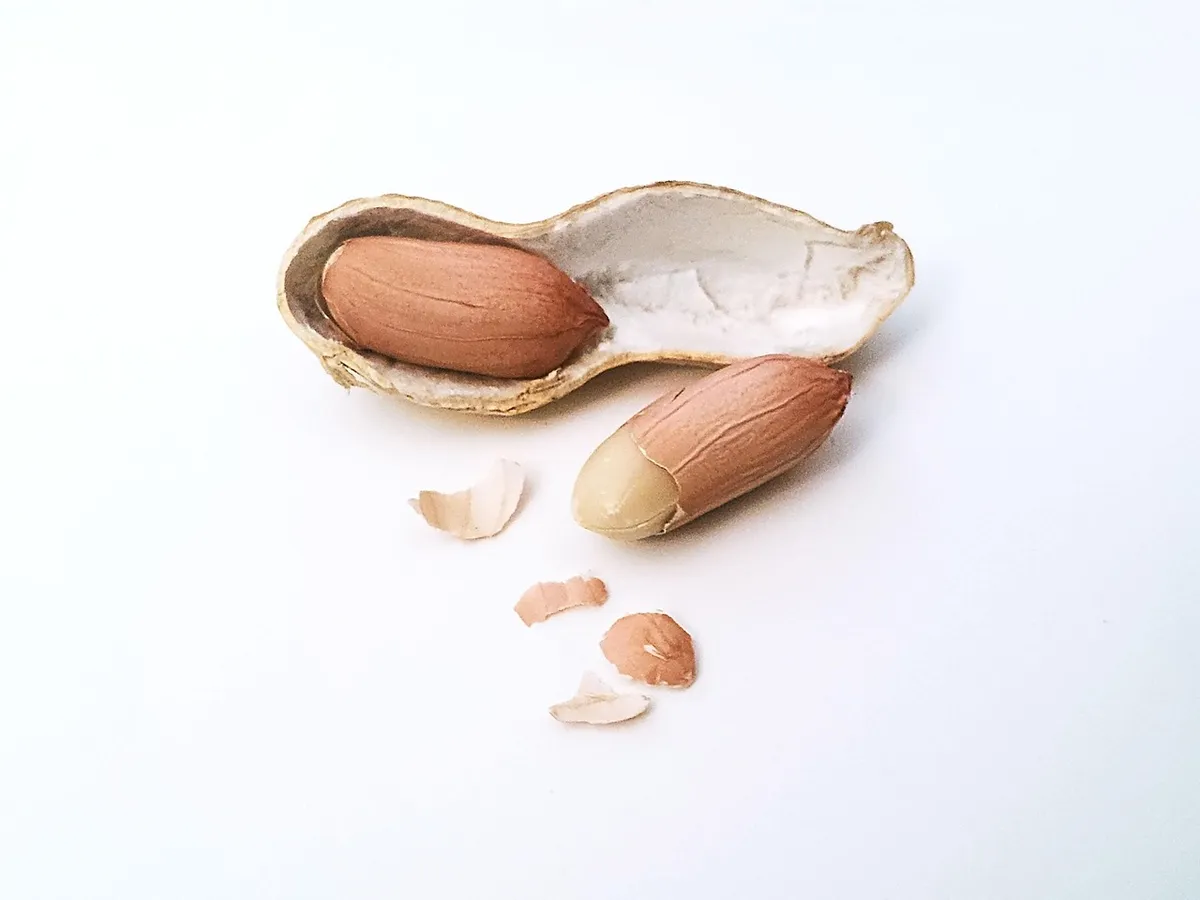
Peanut count is measured by hand. A representative sample is drawn from the lot, and a 28.35 g portion is weighed out. The kernels in that portion are counted. Most labs and inspectors repeat the count on several portions and use the average, because one portion can be misleading.
Before counting, the sample should be free of split kernels, shells and foreign matter, because these change the weight. Whole, sound kernels only are counted. The result is then checked against the contract range. For example, a lot sold as 40/50 should give 40 to 50 kernels per ounce on average.
Counts are linked to grading. After shelling, kernels pass over sieves or graders that separate them by size. Each size fraction becomes a count. Sortex (optical colour sorting) then removes discoloured or damaged kernels. Good grading gives a tight, even count. Poor grading gives a lot that technically fits the range but has a wide mix of sizes.
How Do Peanut Count Sizes Compare?
The table converts each count into metric terms. Kernels per 100 g and weight per kernel are calculated from the count, using 1 ounce = 28.35 g.
| Count per ounce | Kernels per 100 g | Weight per kernel | Size | Common grades | Typical use |
|---|---|---|---|---|---|
| 35/40 | 123–141 | 0.71–0.81 g | Jumbo | Bold | Premium whole roasted and salted |
| 38/42 | 134–148 | 0.67–0.75 g | Extra large | Bold | Roasted snacks, gift packs |
| 40/50 | 141–176 | 0.57–0.71 g | Large | Bold | Most traded: salted snacks, mixes |
| 50/60 | 176–212 | 0.47–0.57 g | Medium | Bold, Java | Snacks, coated nuts, confectionery |
| 60/70 | 212–247 | 0.40–0.47 g | Medium-small | Bold, Java, TJ | Coated peanuts, confectionery |
| 70/80 | 247–282 | 0.35–0.41 g | Small | Bold, Java, TJ | Confectionery, peanut butter, blanching |
| 80/90 | 282–317 | 0.32–0.35 g | Small | Java, TJ | Peanut butter, bakery, chikki |
Peanut count sizes in metric terms. Typical uses are indicative and vary by buyer.
What Are 38/42 and 40/50 Large Bold Kernels Used For?
38/42 and 40/50 are large Bold kernels, used where size and appearance matter most. What does 38/42 mean? It means 38 to 42 kernels per ounce, or roughly 0.67–0.75 g per kernel. It is an extra-large, premium size.
These counts roast evenly and look impressive in retail packs. They are the usual choice for whole roasted and salted peanuts, premium snack mixes and gift packs. 40/50 is one of the most traded Bold counts, because it balances size and price. 35/40 and 38/42 cost more, as fewer kernels reach that size in each crop. For a roasted or salted product, see our roasted peanuts.
What Are 50/60 and 60/70 Mid-Size Kernels Used For?
50/60 and 60/70 are mid-size kernels that suit many products at a lower price than large counts. They are offered in Bold, Java and TJ grades.
What is the difference between 50/60 and 80/90 peanuts? A 50/60 kernel weighs about 0.47–0.57 g, while an 80/90 kernel weighs about 0.32–0.35 g. That means 50/60 kernels are noticeably larger and work as whole snack nuts, while 80/90 kernels are better ground or used in sweets. Mid-size counts are widely used for coated peanuts, salted snacks, confectionery and bakery toppings. Java kernels at 50/60 and 60/70 are popular for coated peanuts, because their round shape takes a coating evenly.
How Are 80/90 and Smaller Counts Used, and What Are Their Limits?
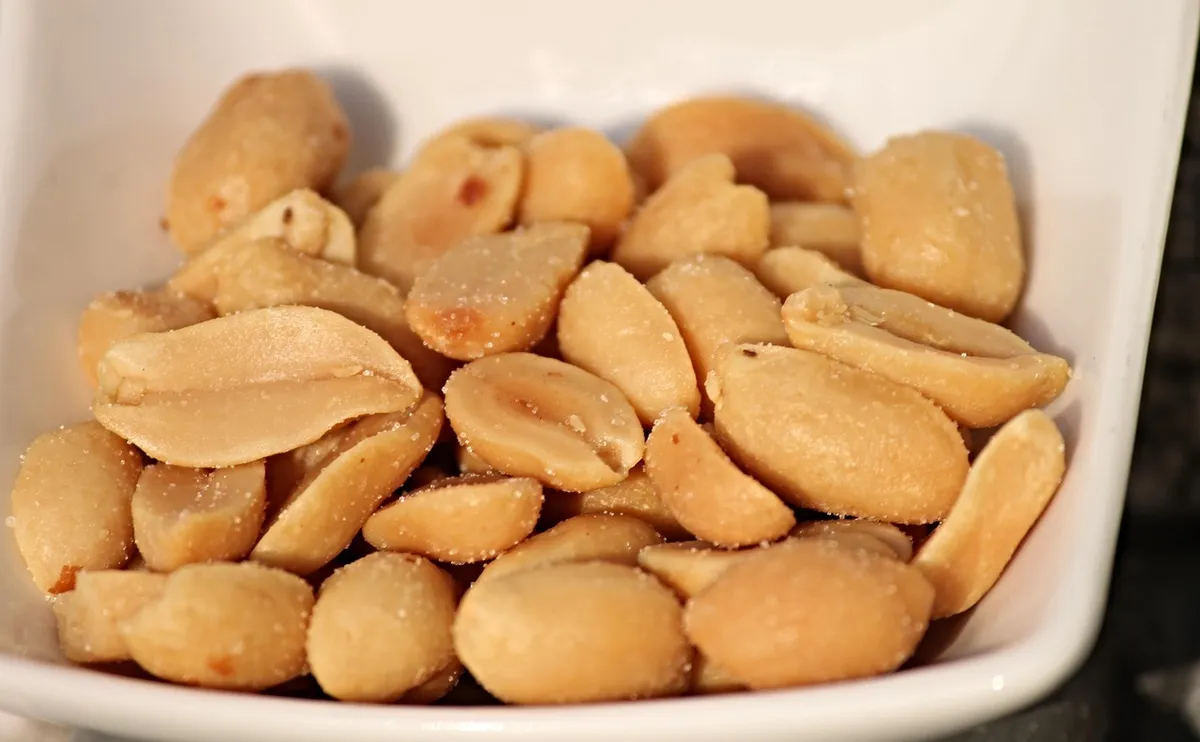
Small counts such as 70/80 and 80/90 are used where kernel size does not show in the final product. They are the usual raw material for peanut butter, peanut paste, chikki, bakery fillings and blanching. Because they cost less per tonne, they help manufacturers control recipe costs.
Small kernels also have limits. They are harder to roast evenly next to larger kernels, so lots must be well graded. They have more surface per kilogram, which can mean faster oil oxidation in storage. Buyers should therefore check moisture, damaged kernels, free fatty acid and aflatoxin just as closely as for large counts. Our peanut butter is made from blanched, roasted and colour-sorted kernels.
How Do You Choose the Right Count for Your Product?
Start with your end use, then match the grade and count. Which peanut count is best for roasting and snacks? For whole roasted and salted peanuts, most buyers choose Bold 38/42, 40/50 or 50/60. For coated peanuts, Java 50/60 or 60/70 works well. For peanut butter and confectionery, Java or TJ 70/80 or 80/90 gives good value.
Price also follows count. Bigger kernels, such as 35/40 and 40/50, cost more per tonne than higher counts such as 60/70 and 70/80, because each crop yields fewer large kernels. The size of the kharif crop in Saurashtra, set by the monsoon, moves prices for every count, and new-crop prices often ease from October to December. If your product can use two neighbouring counts, ask for quotes on both. A small change in count can save money without changing the finished product much. Use our landed cost calculator to compare options delivered to your port.
When you write the specification, include:
- Grade (Bold, Java or TJ) and count range, with the tolerance you accept.
- Moisture (typically 7% maximum), admixture (1% maximum, nil for sortex grades) and damaged kernels (1–2% maximum).
- Hand-picked or sortex-cleaned grading.
- Aflatoxin limit for your market, such as the EU limit of 2 µg/kg B1 and 4 µg/kg total for direct consumption.
- Crop year, packing and the count test method.
Our guide on how to import peanuts from India covers grades and testing, and groundnut export from India explains what each market expects.
Related reading: Peanuts Origin: Where Peanuts Grow in India, State by State and Aflatoxin in Peanuts: Limits, Testing and Control for Importers.
How Can You Buy Bold Peanuts in Bulk from India?
Elysium Agri Corporation ships raw Bold groundnut kernels from Saurashtra, Gujarat, in counts from 35/40 to 70/80 per ounce, hand-picked or sortex-cleaned. Java kernels run from 50/60 to 80/90, and TJ from 60/70 to 80/90. Every lot is tested for aflatoxin at an APEDA-approved lab before shipment, and you receive a pre-shipment sample and Certificate of Analysis for your lot. Choosing between peanut sizes is easier with a sample in hand, so ask us for type samples of two or three counts.
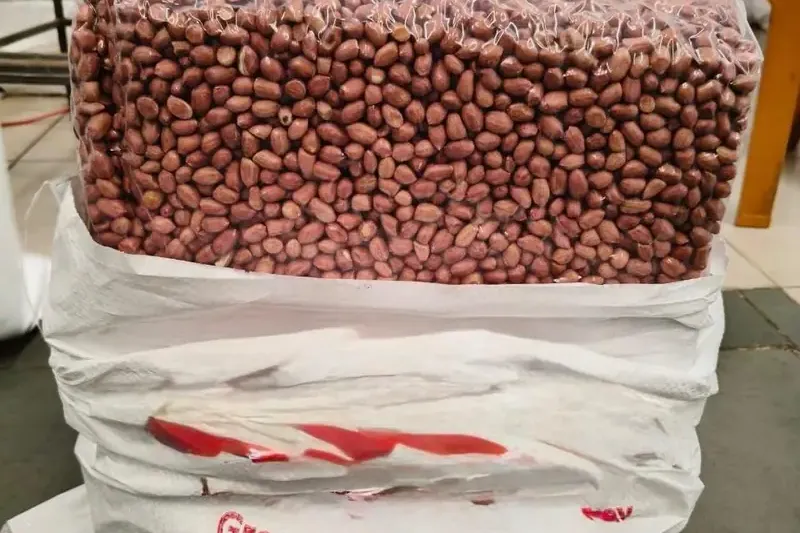
Bold kernels pack in 25 or 50 kg jute or PP bags, 50 lb paper bags or vacuum packs. About 19 MT fit in a 20 ft container; use the container load calculator to plan your order. Tell us your grade, count and quantity. Request a Bold peanut quote →
Frequently asked questions
What does 38/42 mean in peanut count sizing?
A 38/42 count means there are 38 to 42 peanut kernels in one ounce, which is 28.35 g. That works out to about 134 to 148 kernels per 100 g, or roughly 0.67 to 0.75 g per kernel. It is an extra-large Bold size used for premium roasted and salted peanuts and gift packs.
How is peanut count per ounce measured?
A representative sample is drawn from the lot, and a 28.35 g portion of whole, sound kernels is weighed out. The kernels are counted by hand. The count is usually repeated on several portions and averaged, then compared with the contract range. Split kernels, shells and foreign matter are removed before counting.
What is the difference between 50/60 and 80/90 peanuts?
A 50/60 count has 50 to 60 kernels per ounce, each weighing about 0.47 to 0.57 g. An 80/90 count has 80 to 90 kernels per ounce, about 0.32 to 0.35 g each. The 50/60 size suits snacks and coated peanuts, while the smaller 80/90 size is mainly used for peanut butter, bakery and confectionery.
Which peanut count is best for roasting and snacks?
For whole roasted and salted peanuts, most buyers choose Bold kernels in 38/42, 40/50 or 50/60 counts, because large, even kernels roast uniformly and look good in packs. For coated peanuts, round Java kernels in 50/60 or 60/70 work well. The right choice also depends on your price point.
Are groundnut count and peanut count the same thing?
Yes. Groundnut count and peanut count both mean the number of kernels in one ounce, or 28.35 g. Groundnut is the common term in India and on many trade documents, while peanut is more common in the USA and in retail. A 40/50 groundnut count and a 40/50 peanut count describe the same size.
Related reads


