
On this page
- How Are Peanuts Processed for Export?
- How Do Harvesting, Drying, Shelling and Kernel Separation Work?
- How Are Peanuts Graded by Size and Count?
- How Do Colour Sorting and Defect Removal Work?
- What Are Blanching, Splitting and Other Value-Added Steps?
- What Are the Peanut Processing Stages at a Glance?
- How Do Quality Checks, Packing and Shipping Work?
- How Do You Source Processed Peanuts from India?
- Frequently asked questions
How peanuts are processed for export: the pods are harvested and dried, shelled to separate the kernels, cleaned and graded by size (count), colour-sorted and hand-picked to remove defects, then optionally blanched, split, roasted or diced, tested for aflatoxin and packed for shipping. In India, every export lot must pass through an APEDA-registered unit and an APEDA-approved lab before it can ship. This guide explains each step of peanut processing, from the field in Gujarat to a sealed container, and what each step means for the quality you receive.
Key takeaways
- Fast, even drying after harvest is the first and most important control against aflatoxin.
- Kernels are graded by count, the number of kernels per ounce. A lower count means bigger kernels.
- Colour sorting, hand picking and blanching remove damaged kernels, which carry most of the aflatoxin.
- Every Indian export lot is sampled and tested through APEDA’s Peanut.Net system before shipment.
How Are Peanuts Processed for Export?
Peanut processing for export follows a fixed sequence. Each step removes something the buyer does not want: moisture, shells, stones, small or damaged kernels, skins or contamination. The basic stages are:
- Harvesting and field drying
- Shelling (decortication) and kernel separation
- Cleaning and size grading by count
- Colour sorting and hand picking
- Optional value-added steps: blanching, splitting, roasting, dicing
- Sampling, aflatoxin testing and certification
- Packing, container loading and shipping
In India, this work is concentrated in Gujarat, which grows the largest share of the country’s groundnut crop. Most of it comes from Saurashtra: Rajkot, Jamnagar, Junagadh and Amreli. India exported 6.64 lakh tonnes of groundnuts worth US$ 691 million in 2025-26, according to APEDA.
How Do Harvesting, Drying, Shelling and Kernel Separation Work?
Peanuts grow underground. At maturity, the plants are lifted from the soil with the pods still attached. In Gujarat, the main kharif crop is sown with the monsoon in June and July, and new crop reaches the market from October to December. A smaller irrigated summer crop arrives from April to June.
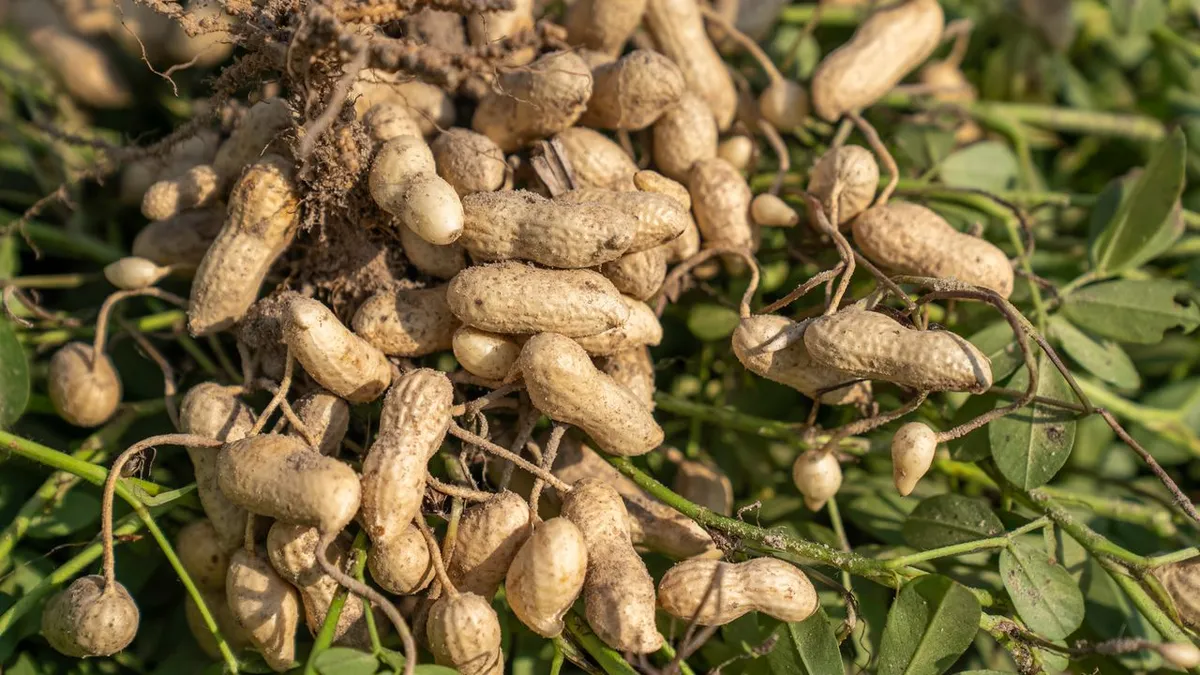
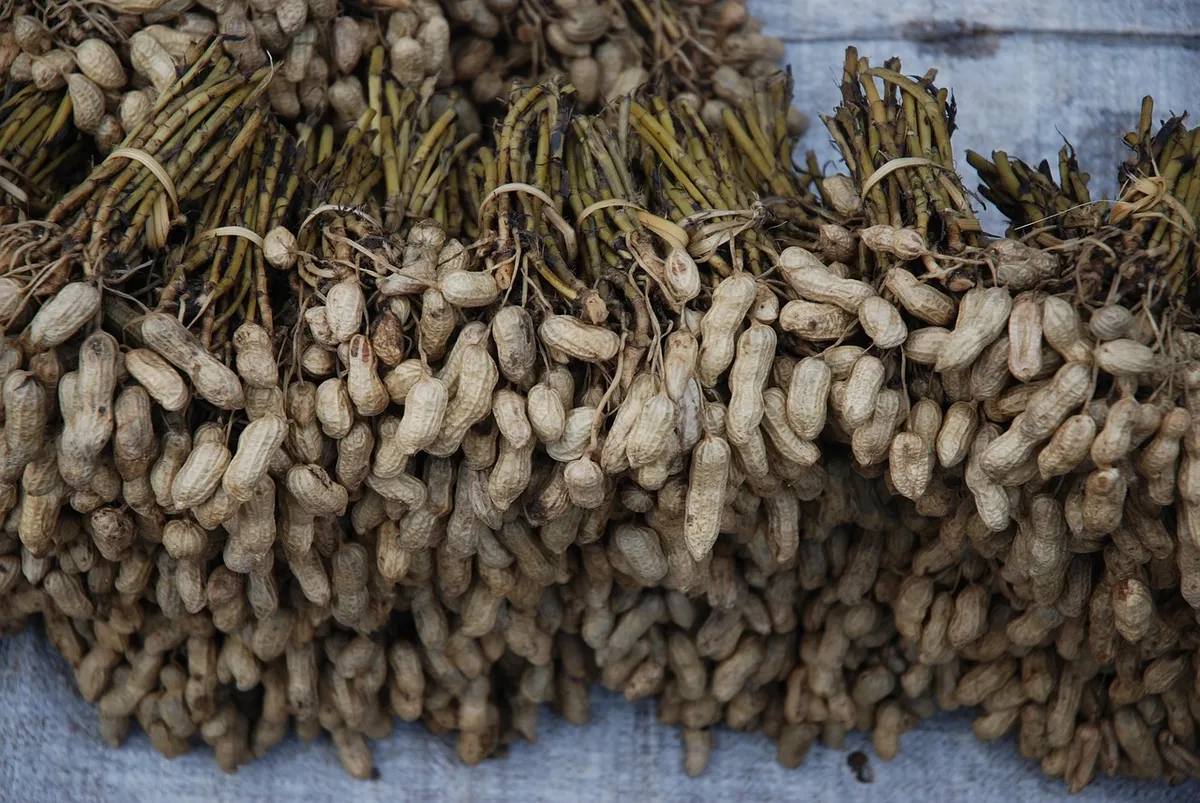
After lifting, the plants are left to dry in the field, then the pods are separated from the plants. Drying must be quick and even. Pods that stay wet or are piled up too early give mould time to grow, which raises aflatoxin risk. The pods are then stored dry until shelling.
Shelling, also called decortication, cracks the shells and separates them from the kernels. Air streams and sieves blow away shell pieces and dust. The output is a mix of whole kernels, split kernels and small or broken pieces, which go on to cleaning and grading.
How Are Peanuts Graded by Size and Count?
Peanuts are graded by count: the number of kernels in one ounce (28.35 g). A count of 40/50 means an ounce contains between 40 and 50 kernels. The lower the numbers, the bigger the kernels.
Grading machines pass the kernels over vibrating screens with different hole sizes. Each screen separates one size band. Indian exports are traded in three main types:
- Bold peanuts: large, long, oval kernels from Virginia-type varieties, usually in counts from 35/40 to 50/60. Used mainly for roasted and salted snacks.
- Java peanuts: small, round kernels from Spanish-type varieties with a light pink skin, usually 50/60 to 80/90. Preferred for peanut butter, coated peanuts and confectionery.
- TJ peanuts: a medium type between Bold and Java, in counts such as 60/70 to 80/90.
Graded kernels are also cleaned to meet physical limits. A typical export specification for Bold kernels allows 7% maximum moisture, 1% maximum admixture, 0.5% maximum foreign matter and 1–2% maximum damaged kernels.
How Do Colour Sorting and Defect Removal Work?
Colour sorting removes kernels that look wrong. Optical sorters, often called sortex machines, use cameras to scan each kernel as it falls. Jets of air push out discoloured, mouldy, shrivelled or damaged kernels and foreign material.
Hand picking follows or replaces machine sorting, and it remains common in Indian processing units. Trained workers check the kernels on moving belts and remove defects by hand. Kernels sorted this way are sold as HPS, which stands for hand picked and selected. Many lots combine both methods for the best result.
These steps are the main way to control aflatoxin. Aflatoxin is concentrated in a small share of damaged and discoloured kernels, so removing them lowers the level in the whole lot. Read more in our guide to aflatoxin in peanuts.
What Are Blanching, Splitting and Other Value-Added Steps?
Many buyers want kernels prepared further. The main value-added steps are:
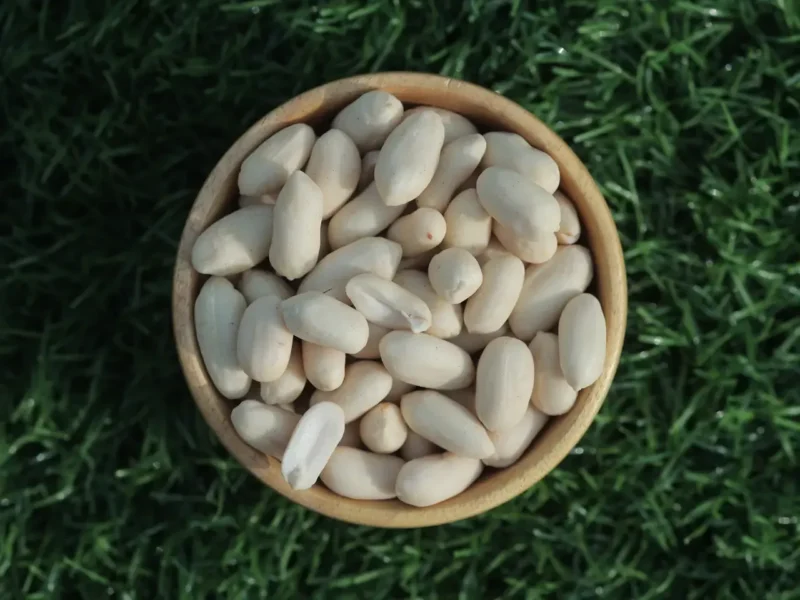
- Blanching: removing the thin red skin. In dry blanching, mild heat loosens the skin, which is rubbed off, leaving a creamy-white kernel that is still raw. US studies found that blanching with electronic sorting cut aflatoxin by about 90% on average.
- Splitting: separating blanched kernels into their two halves and screening out the heart (germ). Butter and confectionery makers buy degermed splits because the heart can give a bitter note.
- Roasting: dry-roasting kernels until brown and crunchy, plain or salted, for snacks and ingredients.
- Dicing: cutting roasted or blanched kernels into small pieces for bakery, ice cream and toppings.
What is the difference between shelling and blanching? Shelling removes the hard outer pod. Blanching removes the thin red skin from the kernel inside. A blanched peanut has been both shelled and blanched.
What Are the Peanut Processing Stages at a Glance?
| Stage | What happens | Why it matters to buyers |
|---|---|---|
| Harvesting and drying | Plants lifted, pods dried quickly | Limits mould growth and aflatoxin |
| Shelling | Shells cracked and removed | Produces kernels; shell pieces removed |
| Cleaning and grading | Stones, dust removed; kernels sized by count | Uniform size for your product and price |
| Colour sorting and hand picking | Damaged and discoloured kernels removed | Lower aflatoxin, better appearance |
| Blanching / splitting | Skin removed; kernels split and degermed | Clean colour for butter, confectionery and bakery |
| Roasting / dicing | Kernels roasted, salted or cut | Ready-to-use ingredient or snack |
| Testing | Aflatoxin and, where needed, microbiology tested | Proves the lot meets your market limit |
| Packing and loading | Bagged or vacuum-packed, container inspected | Protects quality during transit |
How peanuts are processed for export, stage by stage.
How Do Quality Checks, Packing and Shipping Work?
India controls peanut exports closely. Under APEDA’s export procedure, peanuts are shelled, graded and stored at APEDA-registered units. Samples are drawn at a registered warehouse, and aflatoxin B1 and total aflatoxins are tested at an APEDA-approved laboratory. APEDA then issues the Certificate of Export through its Peanut.Net system, and the phytosanitary certificate follows.
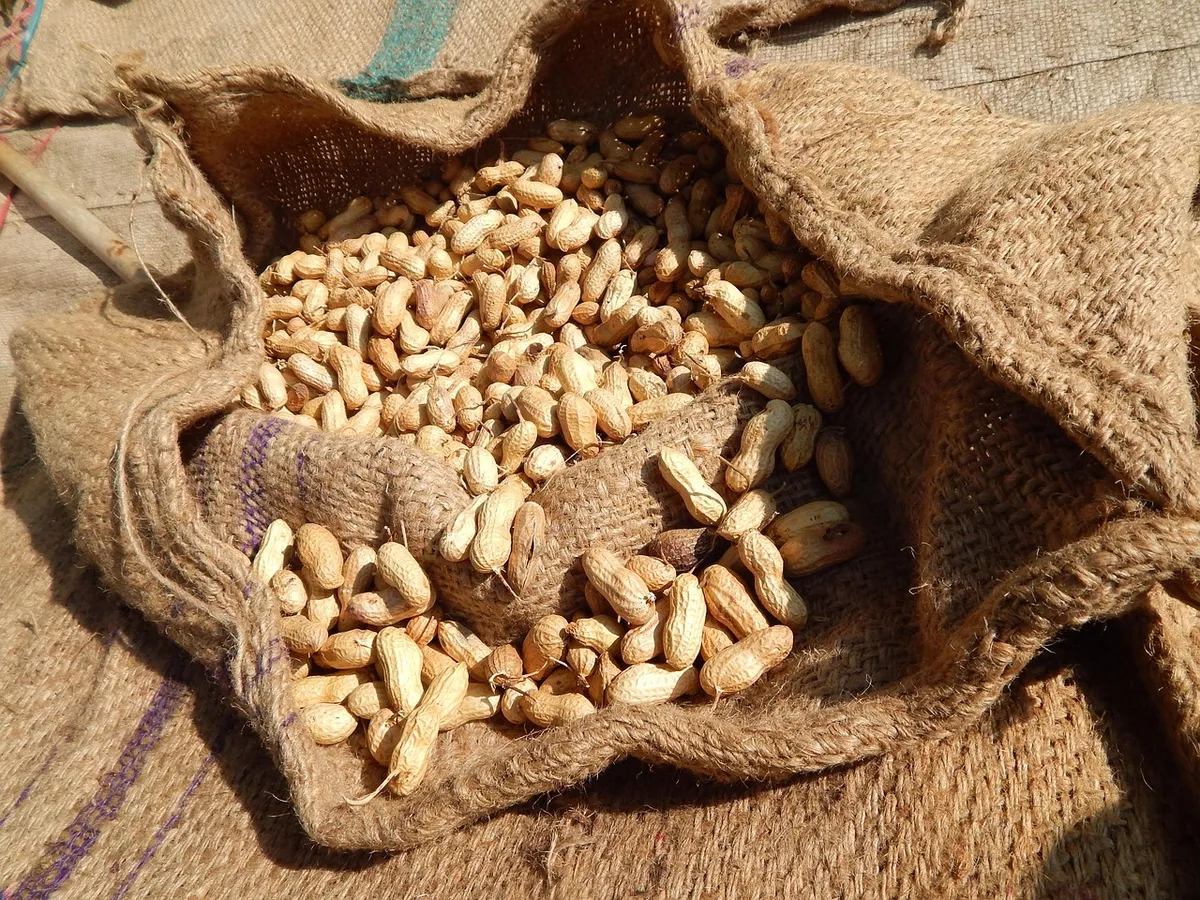
Kernels are packed in 25 or 50 kg jute or PP bags, 25 kg vacuum bags in cartons, or jumbo bags. Containers are inspected to be clean, dry and odour-free before loading. A 20 ft container holds about 19 MT of shelled kernels, and a 40 ft high cube about 26–27 MT. You can plan a load with our container load calculator.
Storage between processing and loading also matters. Kernels absorb moisture and odours, so they are kept in dry, ventilated warehouses away from strong smells. Blanched kernels have lost their protective skin and oxidise faster than skin-on kernels, so they are best stored cool (about 5–12 °C), dry and away from light, and are often vacuum-packed. During the sea journey, temperature swings can cause condensation inside the container. Desiccants, liners and correct moisture at loading reduce this risk.
Not all exports are kernels. In-shell peanuts skip shelling and are cleaned, graded by pod size and sorted instead. They are sold mainly for roasting in the shell and for snack markets.
Related reading: Roasted Peanut Calories and Nutrition: Roasted vs Raw Compared and Peanut Export to the EU: Import Controls on Indian Groundnuts.
How Do You Source Processed Peanuts from India?
Choose an exporter that controls the processing steps that matter for your product, and ask for a lot-wise aflatoxin Certificate of Analysis from an APEDA-approved lab.
Elysium Agri Corporation exports Bold, Java and TJ peanuts from Jamnagar, in Gujarat’s Saurashtra groundnut belt. We supply blanched peanuts dry-blanched at an APEDA-registered unit, split blanched peanuts and roasted peanuts, all colour-sorted and tested for aflatoxin before every shipment. See how we test on our lab testing page, or read our guide on how to import peanuts from India.
Now that you know how peanuts are processed, tell us the type, count, processing and destination port you need. Request a processed peanuts quote →
Frequently asked questions
How are peanuts processed for export?
Peanuts are harvested and dried, then shelled to separate the kernels. The kernels are cleaned, graded by size into counts, colour-sorted and hand-picked to remove defects. Some are blanched, split, roasted or diced. In India, each export lot is then sampled and tested for aflatoxin by an APEDA-approved lab before it is packed and shipped.
What is the difference between shelling and blanching peanuts?
Shelling removes the hard outer pod to release the kernels inside. Blanching is a later step that removes the thin red skin from the kernel. In dry blanching, mild heat loosens the skin, which is rubbed off to leave a creamy-white kernel that is still raw. A blanched peanut has been both shelled and blanched.
How are peanuts graded by size?
Peanuts are graded by count, which is the number of kernels in one ounce, or 28.35 g. Machines with vibrating screens separate the kernels into size bands. A 40/50 count means 40 to 50 kernels per ounce. Lower numbers mean bigger kernels, so Bold peanuts have lower counts than the smaller Java peanuts.
How is aflatoxin risk controlled during peanut processing?
The first control is fast, even drying after harvest and dry storage. Later, cleaning, grading, colour sorting, hand picking and blanching remove damaged, shrivelled and discoloured kernels, which carry most of the aflatoxin. US studies found blanching with electronic sorting cut aflatoxin by about 90% on average. Every lot is still tested before export.
What is colour sorting of peanut kernels?
Colour sorting uses optical machines, often called sortex machines, with cameras that scan each kernel as it falls. When the camera detects a discoloured, mouldy, shrivelled or damaged kernel, or foreign material, a jet of air pushes it out of the stream. It improves appearance and is one of the main tools for lowering aflatoxin.
Related reads


