
On this page
- What Are the Nutrition Facts of Roasted Peanuts?
- How Do Roasted Peanut Calories, Protein and Fat Compare with Raw?
- Which Vitamins and Minerals Are in Roasted Peanuts?
- What Happens to Nutrients During Roasting?
- How Do Dry-Roasted and Oil-Roasted Peanuts Differ?
- What Does the Research Say?
- What Are Sensible Portion Sizes and Ways to Use Roasted Peanuts?
- Where Can Bulk Buyers Source Roasted Peanuts?
- Frequently asked questions
Roasted peanut calories are about 587 kcal per 100 g for dry-roasted peanuts without salt, or roughly 165 kcal in a 28 g (1 oz) handful, according to USDA FoodData Central. Roasting removes water, so roasted peanuts have slightly more calories per gram than raw peanuts (567 kcal per 100 g), while protein and fat stay at similar levels. This fact sheet compares roasted and raw peanuts, explains what roasting does to nutrients, and summarises what research says about eating peanuts.
Key takeaways
- Dry-roasted peanuts provide about 587 kcal, 24 g protein and 50 g fat per 100 g.
- Most of the fat in peanuts is unsaturated, and peanuts contain no cholesterol.
- Roasting slightly lowers some heat-sensitive vitamins such as thiamin and folate.
- Large cohort studies link regular nut and peanut intake with lower heart disease risk, but they show association, not cause.
What Are the Nutrition Facts of Roasted Peanuts?
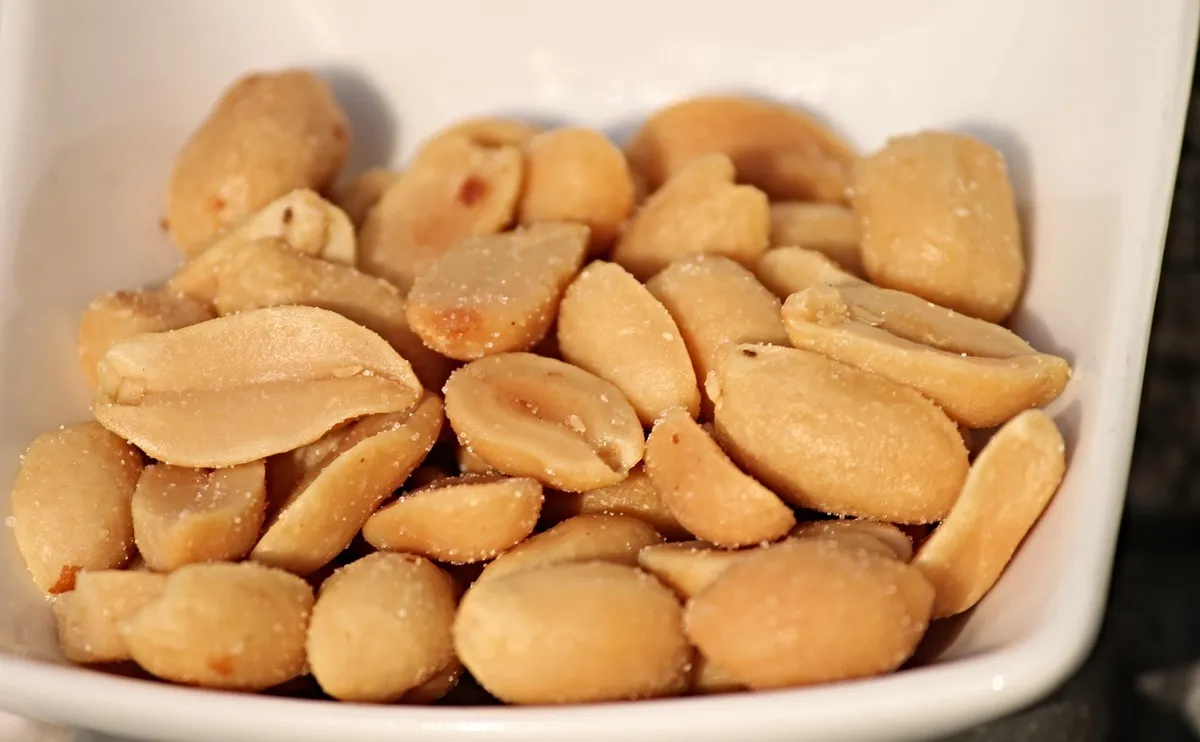
Roasted peanuts are an energy-dense food rich in protein, fat and fibre. Per 100 g, dry-roasted peanuts without salt contain about 587 kcal, 24.4 g protein, 49.7 g fat, 21.3 g carbohydrate and about 8 g fibre. They are also a good source of niacin, magnesium, phosphorus, potassium and manganese.
Peanuts are botanically legumes, not tree nuts, but they are eaten and classed in diets much like nuts. They are one of the most affordable sources of plant protein in the world. For snack makers and food manufacturers, the roasted form is the most common, because roasting develops flavour, crunch and colour.
Most of the fat in peanuts is unsaturated. In raw peanuts, USDA lists about 24.4 g monounsaturated fat, 15.6 g polyunsaturated fat and 6.3 g saturated fat per 100 g. The main monounsaturated fat is oleic acid, the same fatty acid found in olive oil, and the main polyunsaturated fat is linoleic acid. Dry roasting does not change this fat profile much, although the exact balance depends on the peanut variety. High-oleic varieties contain more oleic acid and keep fresh for longer after roasting.
How Do Roasted Peanut Calories, Protein and Fat Compare with Raw?
The table compares raw peanuts with dry-roasted peanuts without salt, using values from USDA FoodData Central. Values are per 100 g and rounded.
| Nutrient (per 100 g) | Raw peanuts | Dry-roasted, no salt |
|---|---|---|
| Energy | 567 kcal | 587 kcal |
| Protein | 25.8 g | 24.4 g |
| Total fat | 49.2 g | 49.7 g |
| Carbohydrate | 16.1 g | 21.3 g |
| Dietary fibre | 8.5 g | about 8 g |
| Niacin | 12.1 mg | about 14 mg |
| Magnesium | 168 mg | about 178 mg |
| Potassium | 705 mg | about 634 mg |
| Cholesterol | 0 mg | 0 mg |
Roasted vs raw peanut nutrition. Source: USDA FoodData Central. Values vary by variety and roast.
Do roasted peanuts have more protein than raw peanuts? Not really. Per 100 g the values are very close, and small differences come from water loss, variety and analysis. Roasting does not add protein. It simply concentrates what is already there by removing moisture.
How much protein is in a handful? A typical handful is about 28 g (1 oz). Based on the USDA values above, a 28 g handful of dry-roasted peanuts gives about 6.8 g protein, 14 g fat and roughly 165 kcal.
Which Vitamins and Minerals Are in Roasted Peanuts?
Roasted peanuts supply several micronutrients in useful amounts:
- Niacin (vitamin B3): peanuts are one of the richest plant sources of niacin.
- Vitamin E: an antioxidant vitamin found in the peanut oil.
- Folate: raw peanuts are a good source, though some is lost in roasting.
- Magnesium, phosphorus and potassium: minerals involved in muscle, bone and nerve function.
- Manganese and copper: trace minerals present in meaningful amounts.
Unsalted roasted peanuts are naturally low in sodium, which suits brands making low-salt snacks. Salted peanuts can contain much more, depending on the amount of salt applied. Check the label or the specification for the exact figure.
For food brands, these figures are a starting point for a nutrition label, not a final value. Nutrient content changes with variety, crop year, roast level and added salt or oil. Many brands send a sample of the finished product to an accredited lab, or use an approved nutrient database for the exact ingredient, before they print a nutrition panel.
What Happens to Nutrients During Roasting?
Roasting changes peanuts in three main ways. First, it removes water, which raises the calories and most nutrients per gram slightly. Second, heat reduces some sensitive vitamins. USDA data show lower thiamin and folate in dry-roasted peanuts than in raw peanuts. Third, roasting creates the brown colour and roasted flavour through the Maillard reaction between sugars and proteins.
Commercial dry roasting usually uses hot air at about 150–180 °C, followed by rapid cooling. The fat content stays almost the same, because dry roasting does not add oil. Roasting is also a food-safety step: a validated dry roast gives at least a 5-log reduction in Salmonella. After roasting, the oils are more exposed to air, so roasted peanuts need good packing to stay fresh. Oxidation of the fat causes rancid flavours and slowly reduces vitamin E. This is why export specifications set limits for free fatty acids and peroxide value at dispatch, and why roasted peanuts are often packed in nitrogen-flushed bags and kept in cool storage.
How Do Dry-Roasted and Oil-Roasted Peanuts Differ?
Dry-roasted peanuts are roasted with hot air and no added oil. Oil-roasted peanuts are cooked in hot oil. Oil-roasted peanuts absorb a small amount of the frying oil, so they usually have slightly more fat and calories per 100 g. The type of oil used also affects the fat profile and the flavour.
- Dry-roasted: no added fat, longer shelf life when nitrogen-packed, clean label.
- Oil-roasted: richer mouthfeel and colour, slightly higher fat, depends on the frying oil.
What Does the Research Say?
Research on peanuts mostly comes from large observational studies of nut intake. A 2017 analysis of three US cohorts followed more than 210,000 adults for up to 32 years. People who ate peanuts or tree nuts two or more times a week had a 13–19% lower risk of total cardiovascular disease than people who rarely ate them.
These results show an association, not proof that peanuts cause the lower risk. People who eat nuts may differ in other ways, such as overall diet and activity. In the USA, the FDA allows a qualified health claim for nuts that states the evidence “suggests but does not prove” a benefit for heart disease risk when nuts are part of a diet low in saturated fat and cholesterol. Peanuts are high in calories, so portion size matters for people watching their weight. Peanuts are also a major allergen and must be labelled.
What Are Sensible Portion Sizes and Ways to Use Roasted Peanuts?
A common reference portion for nuts and peanuts is about 28–30 g, roughly a small handful. Because peanuts are energy-dense, it is easy to eat several portions at once, so pre-portioned snack packs are popular with brands and consumers. Choosing unsalted or lightly salted peanuts keeps sodium low. Roasted peanuts are used in many ways:
- Snacks: salted, unsalted, spiced or coated peanuts and trail mixes.
- Bakery and confectionery: cookies, bars, brittle, chikki and chocolate.
- Cooking: crushed in sauces, salads, noodles, curries and satay.
- Ingredients: peanut butter, diced toppings for ice cream and desserts.
This article is for general information and is not medical or dietary advice.
Related reading: Peanut Export to the EU: Import Controls on Indian Groundnuts.
Where Can Bulk Buyers Source Roasted Peanuts?
For snack brands, packers and food manufacturers, roasted peanut calories and nutrition depend on the kernel, roast and salt level, so agree all three in the specification. Elysium Agri Corporation exports bulk roasted peanuts from Gujarat, dry-roasted with skin or blanched, salted or unsalted, whole or split. We use Bold or Java HPS kernels, roast to your colour standard and pack in nitrogen-flushed bags in cartons. Every lot is metal-detected and tested for aflatoxin, Salmonella and Listeria before shipment. To see each step from raw kernel to roasted product, read how peanuts are processed for export, or view our lab testing page.
Tell us the count, roast, salt level, quantity and destination port, and we will send a price with the specification sheet. Request a roasted peanuts quote →
Frequently asked questions
How many calories are in roasted peanuts?
According to USDA FoodData Central, dry-roasted peanuts without salt contain about 587 kcal per 100 g. A typical 28 g (1 oz) handful therefore provides roughly 165 kcal. Oil-roasted peanuts usually contain slightly more, because they absorb a little frying oil. Raw peanuts contain about 567 kcal per 100 g, as they hold more water.
Do roasted peanuts have more protein than raw peanuts?
Not in any meaningful way. USDA data show about 25.8 g protein per 100 g for raw peanuts and about 24.4 g for dry-roasted peanuts. The small difference reflects water loss, variety and analysis. Roasting does not add protein; it concentrates nutrients slightly by removing moisture and develops flavour and crunch.
Does roasting change the fat content of peanuts?
Dry roasting does not add fat, so the fat content stays almost the same, at about 49 to 50 g per 100 g. Because water is removed, values per gram rise slightly. Oil roasting is different: the peanuts absorb some frying oil, so fat and calories increase a little, and the oil type affects the fat profile.
Are dry-roasted peanuts different from oil-roasted peanuts?
Yes. Dry-roasted peanuts are roasted with hot air and no added oil, typically at about 150 to 180 °C. Oil-roasted peanuts are cooked in hot oil, absorb a small amount of it and usually have slightly more fat and calories. Dry-roasted peanuts have a cleaner label, while oil-roasted peanuts have a richer mouthfeel.
How much protein is in a handful of roasted peanuts?
A typical handful is about 28 g, or 1 ounce. Based on USDA values for dry-roasted peanuts without salt, this gives about 6.8 g of protein, about 14 g of fat and roughly 165 kcal. The exact amount depends on the size of the handful, the peanut variety and whether the peanuts are salted or oil-roasted.
Related reads


