
On this page
- What Is a Container Liner Bag?
- How Do Bulk Liners Work?
- Bulk Shipping vs Bagged Shipping: Which Suits Your Cargo?
- Which Commodities Are Suited to Liner Bag Shipping?
- How Do Liner Bags Protect Against Moisture and Contamination?
- What Is the Loading and Discharge Process?
- How Do You Buy Grains and Meals in Bulk from India?
- Frequently asked questions
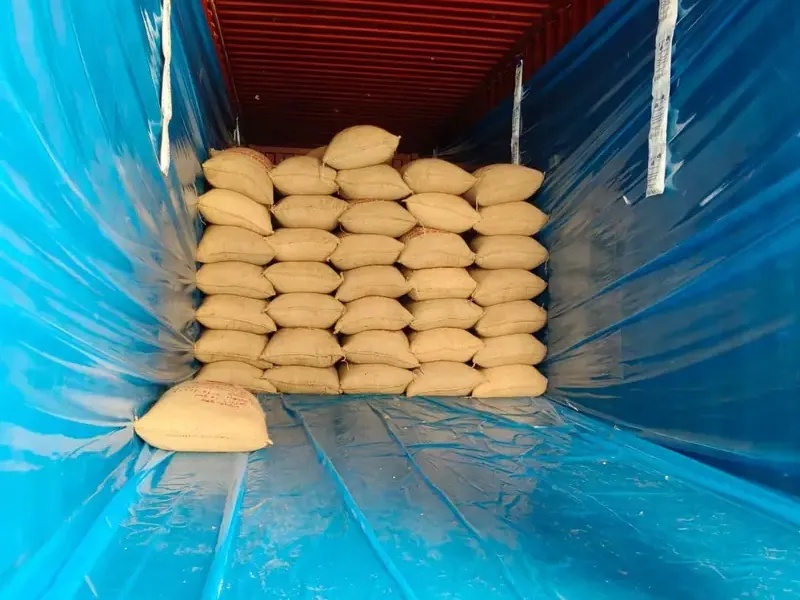
A container liner bag is a large, single-use bag that is fitted inside a standard 20 ft or 40 ft dry container so that loose, free-flowing cargo such as grain or oilmeal can be shipped in bulk without sacks. The liner keeps the cargo clean and dry, protects the container walls and lets the goods be poured in at origin and tipped out at destination. This guide explains how a dry bulk liner works, which commodities suit it, how it protects against moisture and how loading and discharge are done.
Key takeaways
- A bulk container liner turns an ordinary dry container into a sealed bulk hopper for free-flowing cargo.
- It removes the cost and handling of sacks, but you need tipping or discharge equipment at the receiving end.
- Liners suit grains, oilmeals, some seeds and granular products. Fragile, sticky or very light goods are usually better in bags.
- Dry cargo, a clean container and correct sealing matter more than the liner itself in preventing moisture damage.
What Is a Container Liner Bag?
A container liner bag is a flexible inner lining shaped to the inside of a shipping container. It is made from polyethylene (PE) film, woven polypropylene (PP) fabric, or a laminate of both. Once fitted, it forms a closed envelope that holds the whole cargo as one mass. The trade also calls it a bulk container liner, a dry bulk liner or a sea bulk liner.
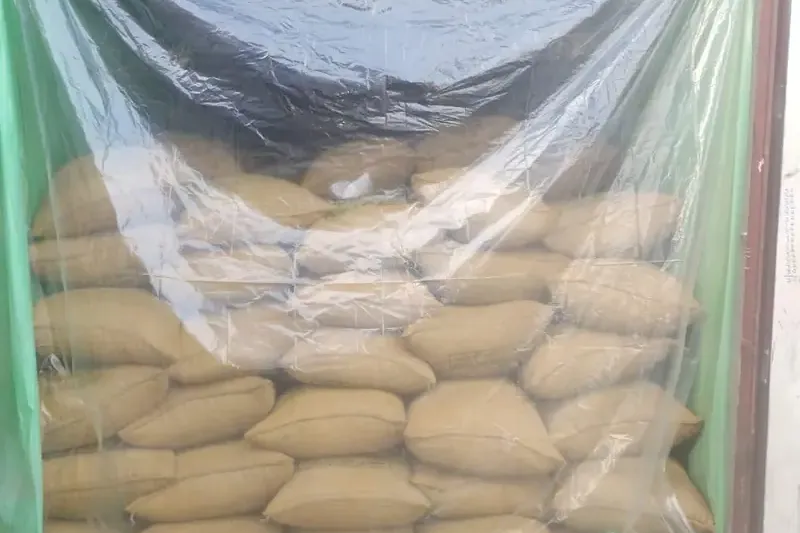
It differs from the plastic or kraft paper sheet that exporters hang around bagged goods. That sheet only protects sacks. A dry bulk liner carries loose product directly, with no sacks.
Liner suppliers describe two main material choices. As one manufacturer explains, polyethylene liners give a strong moisture barrier, while woven polypropylene liners give strength and can allow some air exchange. The right choice depends on the product’s moisture sensitivity, particle size, weight and hygiene needs.
How Do Bulk Liners Work?
A bulk liner works by hanging inside the container from the roof and side lashing points, then filling like a giant sack. Steel bars or a rigid bulkhead at the door end hold the front wall of the liner in place, so the cargo cannot push against the container doors. A filling spout or hatch near the roof lets the product in, and a discharge spout at the base of the door end lets it out.
The main parts of a typical dry bulk liner are:
- The liner body: PE film or woven PP sized for a 20 ft or 40 ft container.
- Fixing loops or straps: tie the liner to the container’s lashing rings so it hangs square and does not sag during filling.
- The door bulkhead: steel bars, timber or a reinforced fabric panel that takes the load at the door end.
- Filling inlets: one or more sleeves near the top for a blower, conveyor or belt thrower.
- Discharge spout: a sleeve at the bottom of the bulkhead, opened when the container is tilted at destination.
Loading methods vary by site. Liner makers list belt throwers, conveyors, pneumatic blowers and gravity feed as common options. What matters is that the inlet and outlet positions match the equipment at both ends of the trip.
Bulk Shipping vs Bagged Shipping: Which Suits Your Cargo?
Bulk liner shipping suits buyers who receive large, regular volumes and have intake pits, silos or tipping trailers. Bagged shipping suits buyers who store in warehouses, sell in smaller lots or need to trace each bag. The table below compares the two methods for a container load.
| Factor | Bulk in container liner | Bagged (25 / 50 kg sacks) |
|---|---|---|
| Packing material | One liner per container | Hundreds of sacks per container, plus an optional wall liner |
| Use of container space | Cargo fills the box with no gaps between bags | Some space lost between and above bags |
| Loading at origin | Blower, conveyor or belt thrower; fast but needs equipment | Manual or forklift stacking; flexible at any warehouse |
| Discharge at destination | Tipping chassis or tilting platform into a pit or hopper | Manual de-stuffing or forklift |
| Storage after arrival | Silo or bulk bay | Warehouse on pallets |
| Traceability | One lot per container | Lot code printed on each bag |
| Best for | Feed mills, crushers and processors with intake systems | Distributors, wholesalers and smaller buyers |
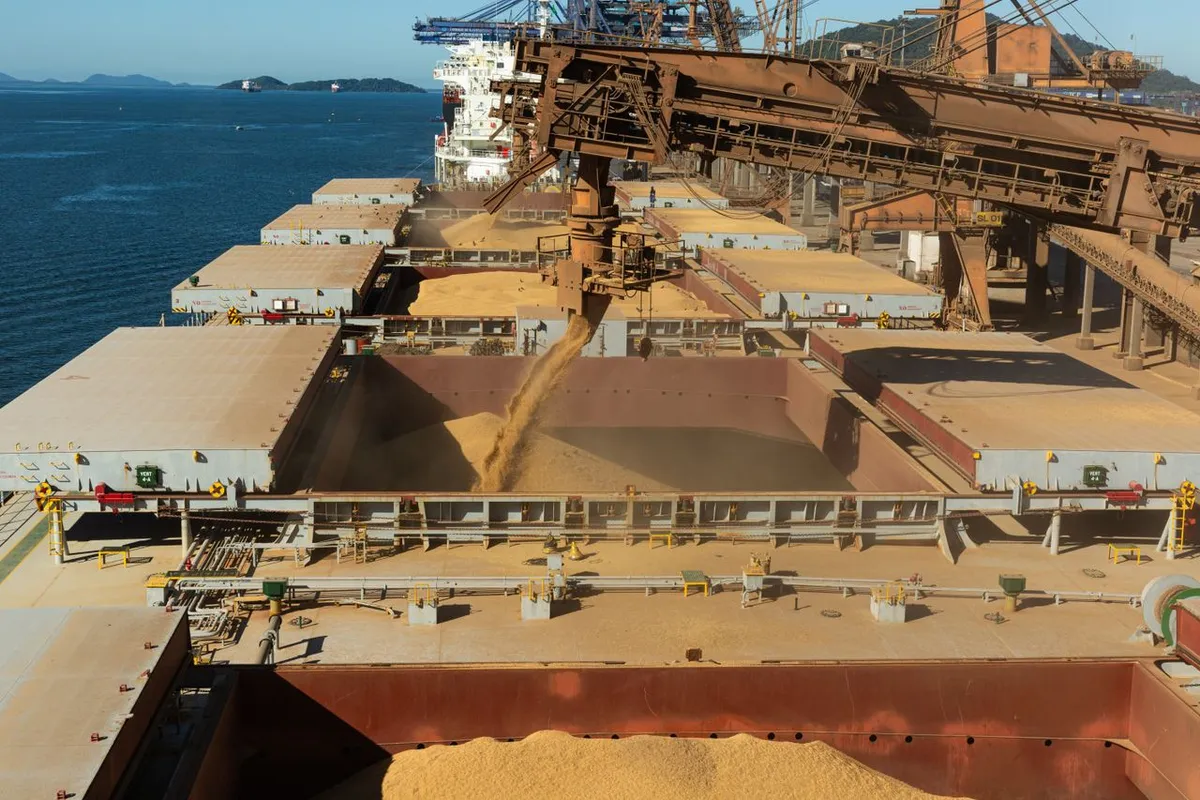
Bulk vessels suit very large volumes but need a full shipload and grain berths. Container liners give bulk handling in smaller, regular parcels. If you are unsure which container size to book, our guide to 20 ft vs 40 ft containers explains the weight and volume limits.
Which Commodities Are Suited to Liner Bag Shipping?
Liner bags suit dry, free-flowing products that pour easily and can be tipped out under their own weight. In the agri-commodity trade, the common candidates are:
- Oilmeals: soyabean meal and rapeseed meal, which Elysium can ship in bulk in containers with liner bags.
- Feed grains: maize and wheat.
- Some pulses and seeds: where the buyer has a cleaning line and does not need bag-level traceability.
- Pellets: pelleted feed ingredients flow well and load densely.
Some products are better left in bags. Fragile goods such as blanched peanuts can break when blown or tipped. Fine powders may need special liners with discharge aids. Food products for retail packers usually stay in bags, because their buyers need lot codes on every unit.
How Do Liner Bags Protect Against Moisture and Contamination?
A liner bag protects cargo by putting a clean, closed barrier between the product and the container’s steel walls, floor and roof. It keeps out dust, rust flakes, old cargo residues and floor contamination. A PE liner also stops liquid water that drips from the roof from reaching the cargo.
A liner cannot remove moisture that is already inside the cargo. Grains and meals are hygroscopic: they take up and give off water vapour. During a voyage the container heats by day and cools by night. The German insurers’ Transport Information Service explains that warm, moist air condenses on cold container surfaces, which causes “container sweat”, and that hygroscopic cargo should be loaded as dry as possible to reduce this risk. Inside a sealed liner, any water released by damp cargo has nowhere to go.
Good practice therefore combines the liner with other checks:
- Test the moisture of each lot before loading and keep it within the contract limit.
- Use a clean, dry, odour-free container with no holes or roof damage.
- Choose the liner material for the product: PE for a strong barrier, woven PP where some breathing is wanted.
- Add desiccants where the route crosses large temperature changes. Our article on container desiccants explains how they work.
- Seal the container quickly after loading and record the seal number.
What Is the Loading and Discharge Process?
Loading and discharge follow a set sequence, and gravity does most of the work at destination. The usual steps are:
- Inspect the container. Check that it is clean, dry, free of odour, nails and sharp edges, and that the roof and doors seal well.
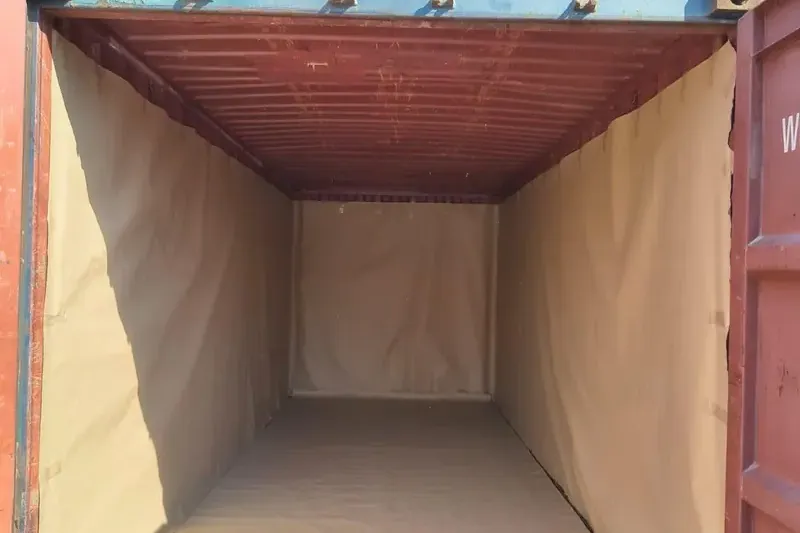
- Install the liner. Unfold the liner on the container floor, tie it to the lashing rings along the roof and sides, and fit the door bulkhead bars.
- Connect the inlet. Attach the filling sleeve to the blower, conveyor or belt thrower.
- Fill the liner. Feed the product in steadily so it spreads to the far end and settles evenly across the floor.
- Close and seal. Tie off the inlet, close the doors and fix the shipping line’s seal. Record the weight, seal number and photos.
- Tip and discharge. At destination the container is placed on a tipping chassis or tilting platform. The discharge spout is opened and the product flows into a pit, hopper or silo intake.
Before you order, confirm that your receiving site or clearing agent can tip a loaded container. Also check the road weight limits between the port and your plant, as they can limit how much you load. Our container load calculator gives a starting estimate for each product.
Related reading: Letter of Credit Process: A Step-by-Step Guide for Agri Importers and Shipping Time from India to Dubai, Europe and Other Markets.
How Do You Buy Grains and Meals in Bulk from India?
To buy grains and meals in bulk from India, agree the product specification, the shipping form (bags, jumbo bags, container liners or bulk vessel), the load per container and the test panel before you confirm the order. Ask for a moisture and quality report for each lot, loading photos and the seal number. If you use a container liner bag for the first time, start with a trial container so your team can test the discharge set-up.
Elysium Agri Corporation exports animal feed ingredients and grains from Jamnagar, Gujarat, shipping through Kandla and Mundra. We supply soyabean meal and rapeseed meal in 50 kg PP bags, in bulk in containers with liner bags, or in bulk vessels. For bagged cargo we use clean, dry, inspected containers, kraft paper liners and desiccants. Every lot is tested before loading, and our lab testing page lists the parameters. All our packing options, from PP bags to jumbo bags, are set out on the packaging page.
Tell us the product, quantity, packing form and destination port, and we will quote for bagged and container liner shipments side by side. Request a bulk shipping quote →
Frequently asked questions
What is a container liner bag?
A container liner bag is a large polyethylene or woven polypropylene bag fitted inside a standard 20 ft or 40 ft dry container. It lets loose, free-flowing cargo such as grain or oilmeal travel in bulk without sacks. The liner keeps the product clean and dry and is filled through a top inlet and emptied through a spout at the door end.
What is a dry bulk liner used for?
A dry bulk liner is used to ship free-flowing dry products in ordinary shipping containers instead of in bags or bulk vessels. It suits feed mills, crushers and processors that receive regular volumes and have intake pits or silos. It saves the cost and handling of sacks and allows fast tipping discharge at destination.
Which commodities can be shipped in bulk liners?
Bulk liners suit dry, free-flowing products that pour easily. Common agri cargoes include soyabean meal, rapeseed meal, maize, wheat, pelleted feed and some seeds. Liner suppliers also ship sugar, minerals, fertilisers and plastic granules this way. Fragile products, sticky goods and retail food lots that need lot codes on every bag are usually shipped in bags.
How do liner bags protect cargo from moisture?
A liner bag places a clean, closed barrier between the cargo and the container's steel walls, roof and floor, so dripping condensation and dirt cannot reach the product. Polyethylene gives the strongest moisture barrier. However, a liner cannot dry damp cargo, so each lot should be loaded at a safe moisture level in a clean, dry container, with desiccants where needed.
How is a bulk liner loaded and unloaded?
The liner is tied to the container's lashing rings and held at the door end by steel bars or a bulkhead. Product is blown, conveyed or thrown in through a top inlet until the container is full, then the doors are sealed. At destination the container is tilted on a tipping chassis and the cargo flows out through a bottom discharge spout.
Related reads


