
On this page
- What Makes a Sesame Seed Good for Tahini?
- How Is Tahini Made?
- Should Tahini Be Made from Hulled or Unhulled Sesame?
- How Do Sesame Types Compare for Tahini Production?
- What Are the Oil Content, Moisture and Purity Requirements?
- How Do Roasting and Grinding Quality Factors Start with the Seed?
- How Can You Buy Hulled Sesame Seeds for Tahini in Bulk?
- Frequently asked questions
The best tahini sesame seeds are white, mechanically hulled seeds with high purity (99.95% or more), low moisture (5% or less), high oil content (48% minimum, typically 50–55%) and low free fatty acid. These seeds give a light, smooth and mild tahini with little bitterness. Tahini quality is set mostly by the seed, before roasting and grinding begin. This guide explains which sesame types work best, how tahini is made and which specifications tahini makers should write into their contracts.
Key takeaways
- Most commercial tahini is made from hulled white sesame; unhulled and black sesame make darker, more bitter pastes.
- Mechanically hulled seed is preferred for natural-label and premium tahini, and some buyers refuse chemically hulled seed.
- Key seed specifications are purity, moisture, oil content, free fatty acid, Salmonella and ethylene oxide.
- Roasting at around 130 °C develops flavour, but it cannot fix poor or rancid seed.
What Makes a Sesame Seed Good for Tahini?
A good tahini seed is white, clean, fresh, oil-rich and safe. Each of these qualities shows up directly in the paste.
- Colour: white, evenly coloured seed gives a pale, cream-coloured tahini. Off-colour or brown seeds darken the paste.
- Purity: foreign matter, stones and other seeds damage mills and spoil taste. Tahini makers usually buy 99.95% purity or higher.
- Oil content: more oil gives a smoother, more fluid paste. Most tahini buyers ask for at least 48%.
- Freshness: low free fatty acid (FFA) and low peroxide value mean the oil has not started to turn rancid.
- Safety: tahini is a ready-to-eat food that is not cooked again, so Salmonella control is critical.
Origin also matters. Many tahini makers in the Middle East buy Indian sesame from Gujarat, alongside seed from Africa. Each origin has its own colour, oil and flavour profile, so most buyers test a type sample in their own mill before they contract.
How Is Tahini Made?
Tahini is made by hulling, roasting and grinding sesame seeds into a smooth paste. Industrial lines follow these main steps:
- Cleaning: the seed is cleaned again to remove any dust or foreign matter left after export cleaning.
- Hulling: if the plant buys natural seed, it soaks the seed and removes the hull. Most tahini makers buy seed that is already hulled.
- Roasting: the hulled seed is roasted, typically at around 130 °C, until it reaches the target colour and aroma.
- Cooling: the seed is cooled quickly to stop the roast and protect the oil.
- Grinding: stone mills or colloid mills grind the seed into a fine paste. The heat and pressure release the oil.
- Filling: the tahini is filled into jars, pails or drums.
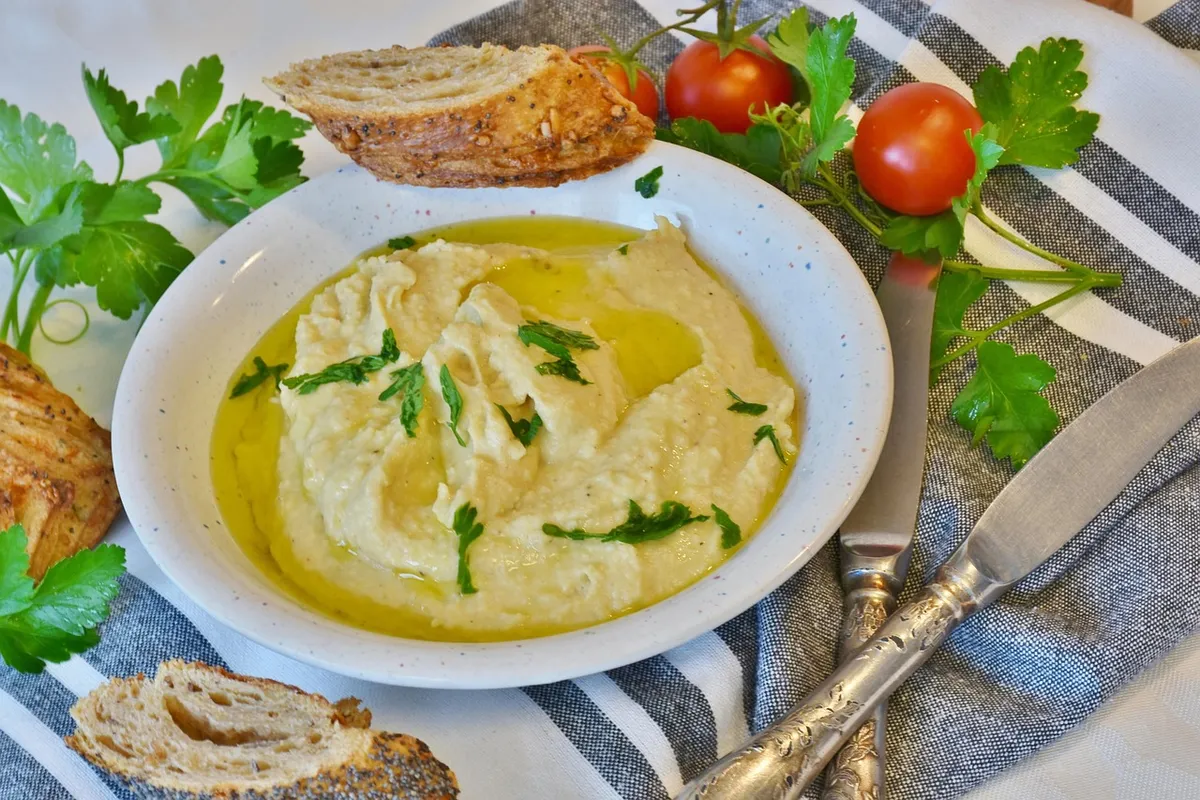
Pure tahini contains only sesame. In the Near East, the Codex Alimentarius has a regional standard for tehena (CXS 259R-2007), and many countries have their own national standards. Tahini is the base for hummus, baba ghanoush, halva and many sauces and dressings.
Should Tahini Be Made from Hulled or Unhulled Sesame?
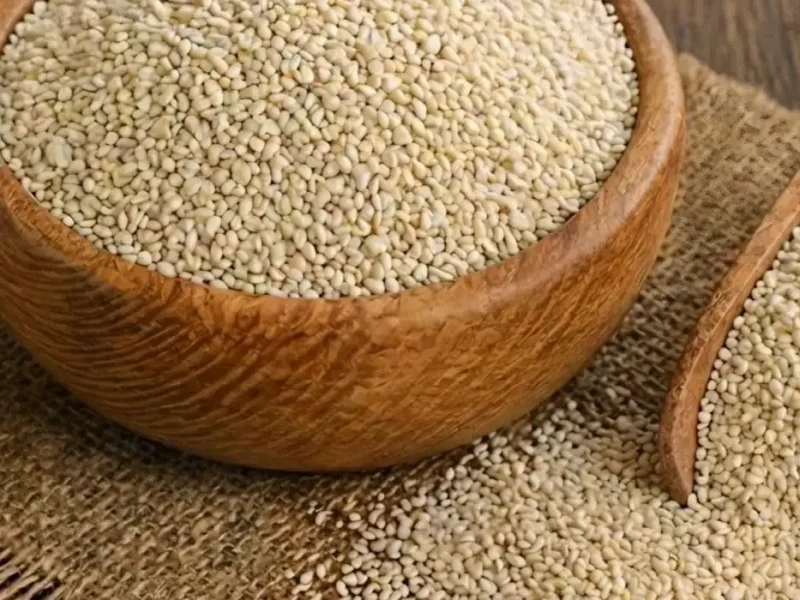
Most tahini is made from hulled sesame. Hulled seed gives a lighter, smoother and milder paste. Unhulled (natural) sesame makes a darker, thicker and more bitter tahini. Some health-food brands sell whole-seed tahini for its fibre and minerals, but it is a niche product.
The hulling method also matters. There are two main methods:
- Mechanical hulling: the seed is soaked in water and the hull is removed by friction. It is then dried and sortex-cleaned. This method is preferred for natural-label and premium tahini.
- Chemical hulling: the hull is loosened in a caustic soda (sodium hydroxide) solution, then washed off. It is cheaper and gives very white seed, but some tahini buyers exclude it from their specifications.
State the hulling method in your contract, and ask the supplier to confirm it on each lot. Hulled seed is also more delicate than natural seed, because the protective hull is gone. It needs a liner in the bag and careful storage to avoid moisture and odours.
How Do Sesame Types Compare for Tahini Production?
The table compares the main sesame types used, or sometimes used, for tahini.
| Sesame type | Tahini colour and taste | Typical purity | Best use |
|---|---|---|---|
| Hulled white, mechanically hulled | Light cream, smooth, mild | 99.95–99.98% | Premium and natural-label tahini, hummus, halva |
| Hulled white, chemically hulled | Very white, mild | 99.95%+ | Price-led tahini where the buyer accepts the method |
| Natural (unhulled) white | Darker, thicker, more bitter | 99/1 to 99.95% | Whole-seed tahini, health-food spreads |
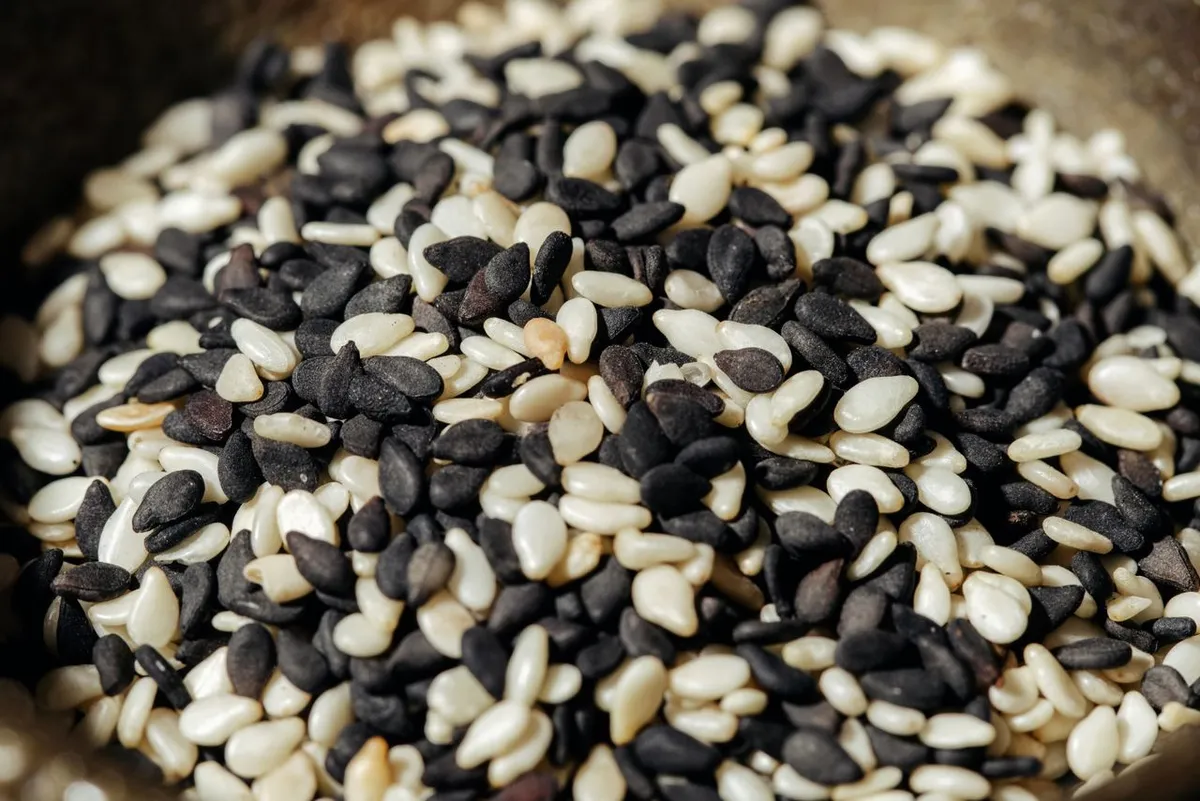
| Black sesame | Black, strong, nutty and slightly bitter | Up to 99.95% | Black tahini, Asian pastes, desserts |
Sesame types for tahini. Most commercial tahini uses mechanically hulled white sesame.
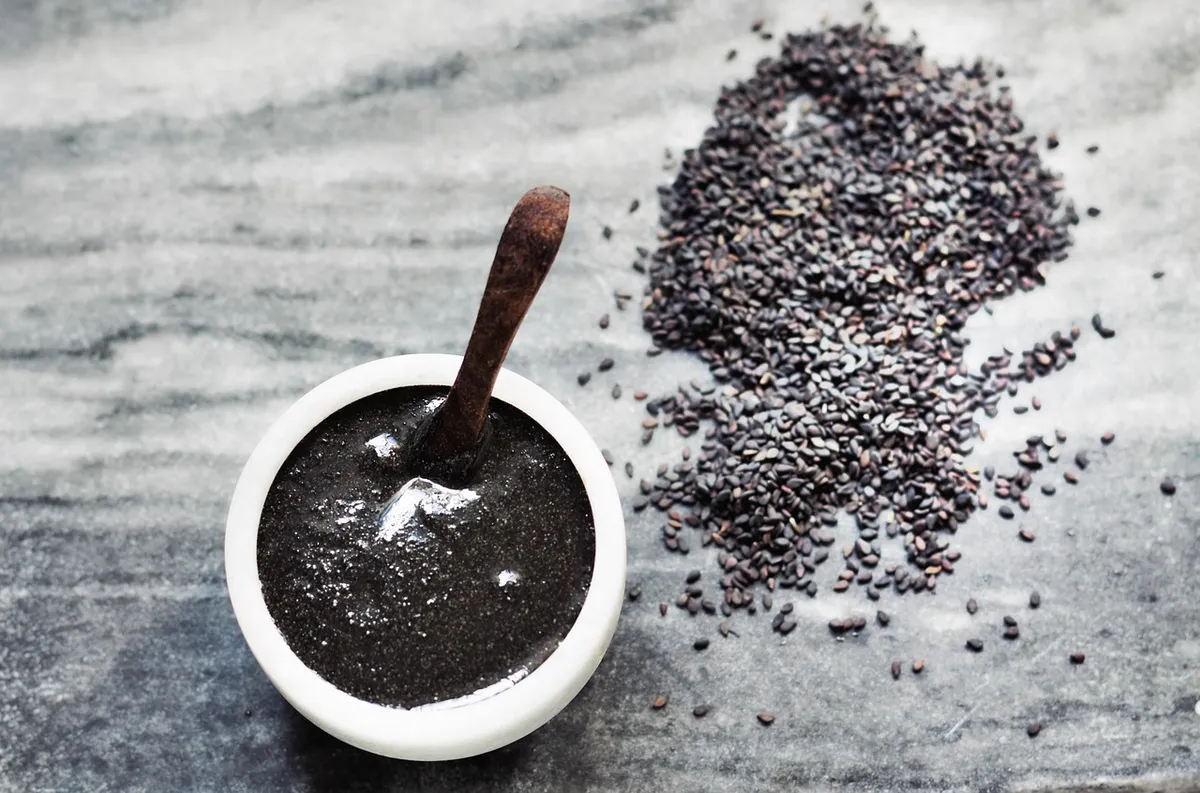
Black tahini has become popular in bakeries and desserts. It is usually made from whole black sesame seeds, because the colour is in the hull. Expect a stronger, more bitter flavour than white tahini.
What Are the Oil Content, Moisture and Purity Requirements?
Tahini makers usually write these limits into their seed specification. The values below are typical for export-grade hulled sesame from Gujarat.
- Purity: 99.95%, 99.97% or 99.98%, with unhulled and off-colour seeds at 1% maximum.
- Moisture: 5% maximum, typically 4–5%. Higher moisture slows roasting and shortens storage life.
- Oil content: 48% minimum, typically 50–55%. Higher oil gives a smoother, more pourable tahini.
- Free fatty acid (as oleic): 1.0% maximum for premium grades and 1.5% for standard grades. Lower FFA means fresher oil and less risk of off-flavours.
- Salmonella: absent in 25 g. Many tahini makers ask for multiple samples per lot, because Salmonella is not evenly spread.
- Ethylene oxide: below the EU limit of 0.05 mg/kg, measured as the sum of ethylene oxide and 2-chloroethanol.
- Pesticide residues and aflatoxin: within the limits of your market.
For the EU, Indian sesame is subject to increased official controls, with an official certificate and lab results for each consignment. Our lab testing page sets out the tests we run before loading.
How Do Roasting and Grinding Quality Factors Start with the Seed?
Roasting and grinding bring out the flavour of tahini, but they depend on the seed. A good roast needs seed of even size, moisture and colour, so every seed reaches the same roast level at the same time. Mixed lots roast unevenly, which leaves some seeds pale and others burnt.
Roasting cannot fix rancid or old seed. If the oil has already started to break down, roasting makes the off-flavour stronger. Low FFA and peroxide values are therefore a good guide to how the tahini will taste and how long it will keep. Roasting also reduces bacteria, but it is not a guaranteed kill step for every lot. That is why the seed must arrive with clean Salmonella results.
During grinding, oil content and seed purity matter most. Oil-rich seed grinds into a fluid paste with less energy. Stones or hard foreign matter damage mill stones and can leave grit in the tahini. Clean, sortex-cleaned seed protects both the mill and the product.
Storage at the tahini plant matters too. Keep hulled seed in its lined bags in a cool, dry warehouse, away from strong odours, and use lots in the order they arrive. Gujarat grows two sesame crops a year: the kharif crop arrives in October and November, and a summer crop is harvested from April to June. Many tahini makers plan purchases around these harvests, so they always work with fresh seed. They also keep a small reserve to cover shipping delays. Our crop calendar shows the harvest windows month by month.
Related reading: Black Sesame Seeds Benefits: Nutrition, Research and Uses.
How Can You Buy Hulled Sesame Seeds for Tahini in Bulk?
When you buy tahini sesame seeds, ask for a type sample for a trial roast and grind, then contract on purity, hulling method, moisture, oil, FFA and the full safety panel. Approve a pre-shipment sample and lot-wise Certificate of Analysis before loading.
Elysium Agri Corporation exports mechanically hulled white hulled sesame seeds from Gujarat in 99.95%, 99.97% and 99.98% purity, with 5% maximum moisture, 48% minimum oil and FFA down to 1.0% for premium grades. Every lot is tested for Salmonella, ethylene oxide and pesticide residues before shipment, and we provide the official EU certificate where required. A 20 ft container holds about 19 MT. We also supply natural sesame seeds and black sesame. Read our sesame import guide and sesame nutrition guide for more detail.
Tell us your grade, quantity and destination port. Request a hulled sesame quote →
Frequently asked questions
Which sesame seeds are best for making tahini?
Mechanically hulled white sesame seeds are the usual choice for tahini. Look for purity of 99.95% or more, moisture of 5% or less, oil content of at least 48% and low free fatty acid. This seed gives a light, smooth, mild tahini. Black or unhulled seed makes darker, more bitter specialty tahini.
Should tahini be made from hulled or unhulled sesame?
Most commercial tahini is made from hulled sesame, because it gives a lighter colour, smoother texture and milder taste. Unhulled sesame makes a darker, thicker and more bitter paste, sold as whole-seed tahini in some health-food ranges. Many buyers also specify mechanically hulled seed rather than chemically hulled seed.
Why is roasting important in tahini making?
Roasting, typically at around 130 °C, develops the nutty flavour and aroma of tahini, sets its colour and dries the seed so it grinds smoothly. It also reduces bacteria. However, roasting cannot fix poor or rancid seed, and uneven seed roasts unevenly, so seed quality must be right before the roaster.
Does sesame seed oil content affect tahini quality?
Yes. Oil is released during grinding and gives tahini its smooth, fluid texture. Seed with higher oil content, typically 50 to 55%, grinds more easily into a pourable paste. Seed with low oil makes a thicker, drier tahini. Fresh oil, shown by low free fatty acid, also keeps flavour clean.
What purity level do tahini manufacturers look for in sesame?
Tahini manufacturers usually buy hulled sesame at 99.95%, 99.97% or 99.98% purity, with unhulled and off-colour seeds limited to about 1%. High purity keeps the colour even, protects mill stones from grit and avoids off-flavours. They also require Salmonella-free results and ethylene oxide below the EU limit.
Related reads


