
On this page
- Can You Import Sesame Seeds from India?
- Which Sesame Varieties Are Available from India?
- What Purity, Oil Content and Quality Specifications Should You Ask For?
- Which Documents and Certificates Are Required for Import?
- How Is Sesame Packed, Loaded and Shipped from India?
- How Do Payment Terms and Sample Approval Work Before Shipment?
- How Do You Source Sesame Seeds from an Indian Exporter?
- Frequently asked questions
Yes, you can import sesame seeds directly from India. Buy from a registered Indian exporter on an agreed purity grade, insist on a lot-wise lab report for Salmonella, ethylene oxide and pesticide residues, and receive the goods with a phytosanitary certificate, a certificate of origin and, for the EU, an official certificate. Most buyers order by the container: a 20 ft load holds about 19 MT of sesame. This guide covers the varieties, specifications, documents, shipping and payment steps for a first order.
Key takeaways
- India shipped about 244,000 tonnes of sesame worth US$ 497 million in 2024. South Korea, the USA, Russia, Vietnam and Iraq were the largest buyers.
- Choose natural, hulled or black sesame by end use: bakery, tahini or East Asian food.
- Grades such as 99/1 and 99.95% are different products. Name the grade and the cleaning method in the contract.
- Indian sesame is under increased EU border checks for Salmonella and ethylene oxide, so every lot should be tested before loading.
Can You Import Sesame Seeds from India?
Yes. India is one of the world’s largest sesame exporters, and most of its export-grade white sesame comes from Gujarat. Any importer can buy directly from an Indian exporter that holds an Import Export Code (IEC), an APEDA registration and an FSSAI food licence. You do not need an Indian agent. Many buyers prefer to deal with the exporter that cleans and tests the seed, because that is where quality is controlled.
Gujarat grows two crops a year, so white sesame is available for most months. The main kharif crop is sown in July and arrives in October and November. A large summer crop is sown from January to March and harvested from April to June. Buying soon after each harvest usually gives the widest choice of lots and the freshest seed. Our crop calendar shows the harvest windows for sesame and other Indian crops.
Which Sesame Varieties Are Available from India?
India exports three main sesame products. Each suits a different kind of buyer, so start from your end use.
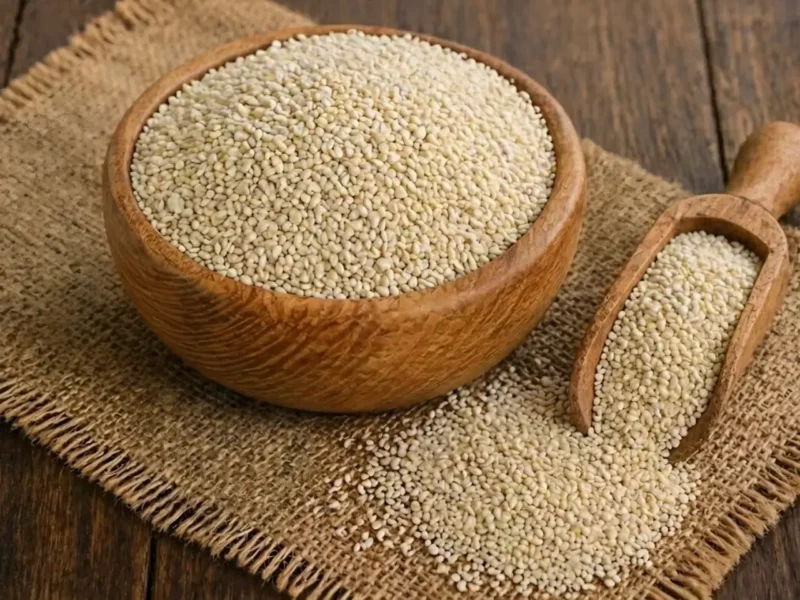
- Natural (unhulled) white sesame: the whole seed with the hull left on. It is nutty and crunchy, keeps more calcium and fibre, and costs the least. Bakeries, chikki and confectionery makers, oil millers and hulling plants buy it most.
- Hulled white sesame: the hull is removed to leave a bright white, mild, soft seed. It is the standard choice for tahini, halva, burger buns and sushi, and usually costs about 15% more than natural.
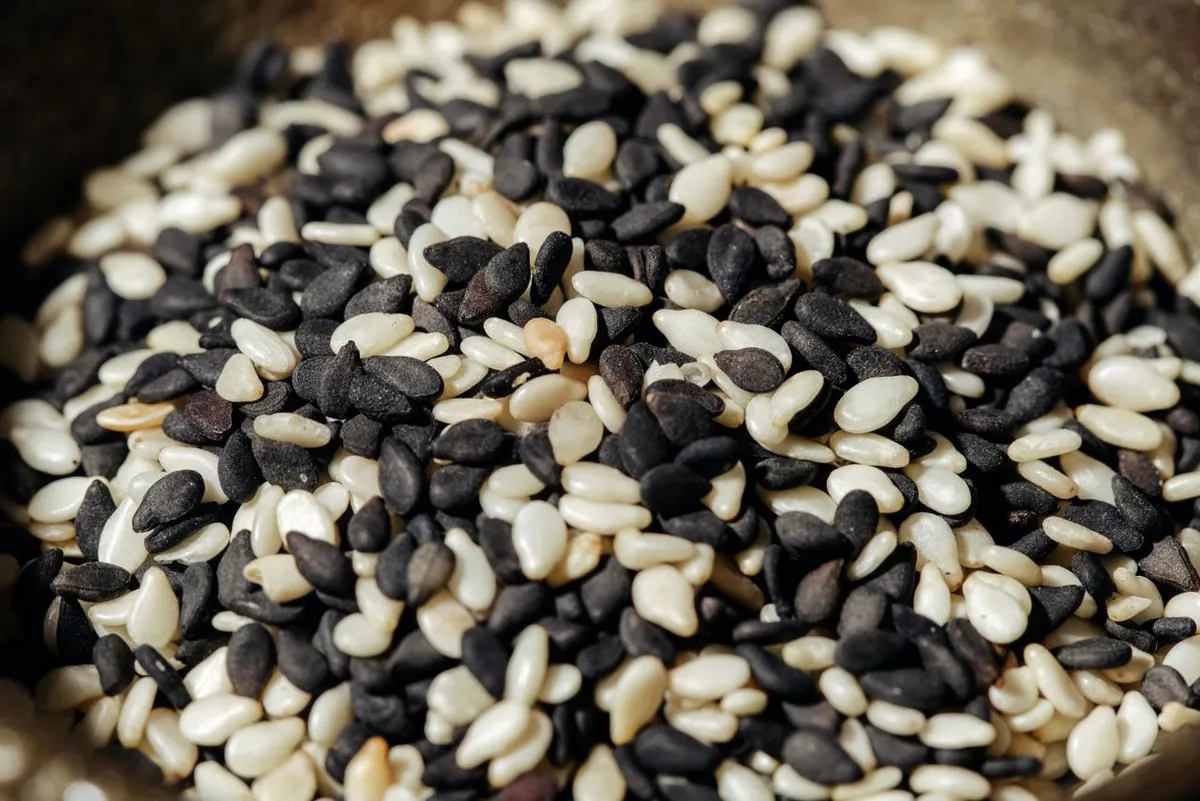
- Black sesame (kala til): natural black seed with a stronger, slightly bitter taste. It is used in East Asian cooking, pastes, oil and sweets, and usually sells at a premium over white.
For tahini, ask how the seed is hulled. Mechanical hulling soaks the seed in water and rubs the hull off by friction. Chemical hulling dissolves the hull in a caustic soda solution. Mechanically hulled seed is preferred for natural-label and premium products, and some tahini buyers exclude chemically hulled seed altogether.
What Purity, Oil Content and Quality Specifications Should You Ask For?
Sesame is sold by purity grade. A grade such as 99/1 means 99% white seeds and 1% other-colour seeds or admixture. The higher grades need sortex (optical colour) cleaning and cost more. The table shows typical export specifications.
| Parameter | Natural white | Hulled white |
|---|---|---|
| Purity grades | 99/1, 99.90, 99.95% (98/2 and 95/5 for crushing) | 99.95, 99.97, 99.98% |
| Cleaning | Machine-cleaned or sortex | Mechanically hulled, then sortex |
| Moisture | 6% max | 5% max |
| Oil content | 48% min | 48% min (typically 50–55%) |
| Free fatty acid | 1.5% max (sortex), 2% max (machine-cleaned) | 1.0–1.5% max |
| Salmonella | Absent in 25 g | Absent in 25 g |
| Ethylene oxide | Below 0.05 mg/kg (EU MRL) | Below 0.05 mg/kg (EU MRL) |
| Aflatoxin (EU, direct use) | B1 ≤ 2 µg/kg, total ≤ 4 µg/kg | B1 ≤ 2 µg/kg, total ≤ 4 µg/kg |
Typical export specifications for Gujarat sesame. Your contract limits apply.
Pesticide limits depend on your market. The EU, Japan and Korea each set their own maximum residue limits. Korea’s Positive List System applies a default limit of 0.01 mg/kg to any pesticide without a specific limit, so Korean buyers need the tightest residue screen. Send your own specification with your enquiry and make sure the exporter quotes against it, grade for grade.
Which Documents and Certificates Are Required for Import?
A sesame shipment from India normally travels with these documents:
- Commercial invoice and packing list: issued by the exporter, showing value, quantity, grade and packing.
- Bill of lading: issued by the shipping line. It is the title document you need to collect the container.
- Phytosanitary certificate: issued by India’s Plant Quarantine authority after inspection.
- Certificate of origin: a preferential version can reduce duty where a trade agreement applies.
- Certificate of Analysis: from an NABL-accredited lab, covering Salmonella, ethylene oxide, pesticide residues and aflatoxin for your specific lot.
- Official certificate for the EU: required because Indian sesame is listed for increased controls.
- Fumigation certificate: only when the buyer or destination requires one.
The EU tightened controls after ethylene oxide was found in Indian sesame in 2020. Under Commission Implementing Regulation (EU) 2026/194, which amends Regulation 2019/1793, Indian sesame remains in Annex II. Each consignment needs an official certificate and lab results. EU border posts physically check about 30% of consignments for Salmonella and 20% for ethylene oxide. A failed check usually means destruction or re-export at the importer’s cost. For US imports, the importer must file FDA Prior Notice and usually keep a Foreign Supplier Verification Program (FSVP). Food-grade sesame is classified under HS 1207 40 90. Check your local tariff line with our HS code finder.
How Is Sesame Packed, Loaded and Shipped from India?
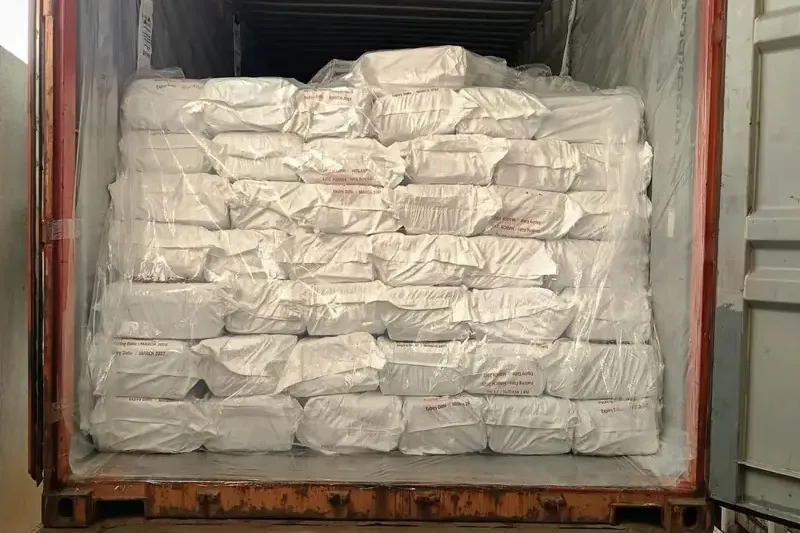
Sesame is packed in 25 or 50 kg PP bags, 25 kg multi-wall paper bags, 22.68 kg (50 lb) paper bags for North American buyers, or 750–1,000 kg jumbo bags. Hulled sesame should always have a liner, because the bare seed picks up moisture and odours more easily. Ask for your own marks and lot numbers to be printed on the bags if you need traceability through your plant.
A 20 ft container holds about 19 MT of bagged sesame, and a 40 ft about 25–27 MT, depending on the shipping line’s weight limit. Sesame from Gujarat ships from Mundra, Kandla (Deendayal) or Pipavav. Gulf ports are usually reached in under a week. Northern Europe, the Mediterranean and East Asia usually take three to five weeks port to port, depending on the route and transhipment. If you only need part of a container, a mixed container can combine sesame with peanuts, spices or pulses. The container load calculator estimates how much of each product fits.
How Do Payment Terms and Sample Approval Work Before Shipment?
Approve the quality before you pay the balance. A sound sequence for a first sesame order is:
- Type sample: the exporter sends a sample of the grade you asked for. You test it for colour, taste, purity and, if you are a tahini maker, a trial grind.
- Contract: name the grade, cleaning method, crop year, specification, packing, Incoterm, shipment period and payment terms.
- Pre-shipment sample and CoA: once your lot is cleaned, it is sampled and tested. You receive the lab report before loading. On larger orders, you can appoint SGS, Intertek or Bureau Veritas to sample at stuffing.
- Loading and documents: the container is loaded and sealed, and scans of the documents are sent to you.
Common payment terms for Indian sesame are a part advance by telegraphic transfer (TT) with the balance against scanned documents, cash against documents (CAD) through banks, or an irrevocable letter of credit (LC) at sight. First orders usually start with a part advance or an LC, and many buyers move to open terms after a few clean shipments. Before you pay any advance, check that the exporter’s bank details match its GST and IEC records. The choice between FOB, CFR and CIF also changes who books the freight; see FOB vs CIF for agri imports.

Related reading: Types of Sesame Seeds: Natural, Hulled, Black and Roasted and Sesame Seeds Benefits: Nutrition Facts and What Research Shows.
How Do You Source Sesame Seeds from an Indian Exporter?
Short-list exporters located close to the sesame markets that clean, sort and test in-house or through accredited labs. Check six things before you book: a lot-wise Salmonella and ethylene oxide report from an NABL lab, the purity grade and cleaning method written into the contract, the crop year and origin, the packing and liner, the container load, and the registrations (IEC, APEDA RCMC, FSSAI and GST) on the official portals.
Elysium Agri Corporation exports natural, hulled and black sesame from Jamnagar, Gujarat, close to the Jam Jodhpur and Dhrol sesame markets and within reach of Rajkot, Amreli and Unjha. We supply sortex-cleaned grades up to 99.98% purity. Every lot is tested for Salmonella, ethylene oxide, pesticide residues and aflatoxin before loading, and we provide the official EU certificate where required. Our registrations are listed on the certificates page, and our lab testing page sets out the full test panel.
Tell us the variety, grade, quantity and destination port, and we will send a quote and specification sheet within one working day. Request a sesame quote →
Frequently asked questions
Can you import sesame seeds directly from India?
Yes. Any importer can buy directly from an Indian exporter that holds an IEC, APEDA registration and FSSAI licence. No Indian agent is needed. Most buyers order by the container, with the grade, specification and tests agreed in the contract.
What documents are needed to import sesame seeds from India?
A commercial invoice, packing list, bill of lading, phytosanitary certificate, certificate of origin and a lot-wise Certificate of Analysis. EU shipments also need an official certificate under Regulation 2019/1793, and US importers file FDA Prior Notice and keep an FSVP.
Which Indian sesame variety suits bakery and tahini buyers?
Natural (unhulled) white sesame in 99/1 to 99.95% purity suits most bakery and confectionery use. Tahini and halva makers usually buy mechanically hulled white sesame in 99.95 to 99.98% purity for a lighter, smoother, less bitter paste.
What is the minimum order quantity for sesame seed imports?
Usually one 20 ft container, which holds about 19 MT of bagged sesame. A 40 ft container holds about 25–27 MT. Smaller quantities can travel in a mixed container with other products.
How is sesame quality checked before shipment from India?
Each cleaned lot is sampled and tested at an NABL-accredited lab for Salmonella, ethylene oxide, pesticide residues and aflatoxin, and the buyer receives the Certificate of Analysis before loading. Independent surveyors such as SGS can also sample at container stuffing.
Related reads


