
On this page
- What Feed Ingredients Does India Export?
- DOC, DDGS and DORB: What Is Each One?
- How Do the Nutrient Profiles Compare?
- How Do You Choose the Right Ingredient for Your Feed Formulation?
- Which Quality Parameters and Lab Tests Should You Ask For?
- How Are Feed Ingredients Packed, Shipped and Documented?
- What Are the Steps to Import Feed Ingredients from India?
- How Do You Source Feed Ingredients from an Indian Exporter?
- Frequently asked questions
Indian feed ingredients suppliers export soyabean meal, rapeseed meal, groundnut de-oiled cake (DOC), corn DDGS, de-oiled rice bran (DORB), millet meal and feed maize, with protein levels from about 10% to 48%. To import them, agree the grade in numbers, test every lot for protein and aflatoxin, and check India’s export policy on the day you contract. This guide explains each ingredient, how they compare and how to import them.
Key takeaways
- India exported 37.7 lakh tonnes of oilmeals in 2025-26, and rapeseed meal is now the largest line.
- Indian soybeans and maize are non-GMO, so Indian soymeal and corn DDGS suit non-GMO feed programmes.
- Aflatoxin is the key risk. The EU caps aflatoxin B1 in feed materials at 20 µg/kg.
- Feed export policy can change at short notice, as the DORB export ban from 2023 to 2025 showed.
What Feed Ingredients Does India Export?
India exports two broad groups of feed ingredients: protein meals and energy feeds. Protein meals are the solids left after oil is extracted from oilseeds. Energy feeds are grains and milling by-products that supply starch, fat and fibre.
- Protein meals: soyabean meal, rapeseed (mustard) meal, groundnut DOC, cottonseed and sunflower DOC, and corn DDGS.
- Energy and fibre feeds: de-oiled rice bran, millet meal and feed-grade yellow maize.
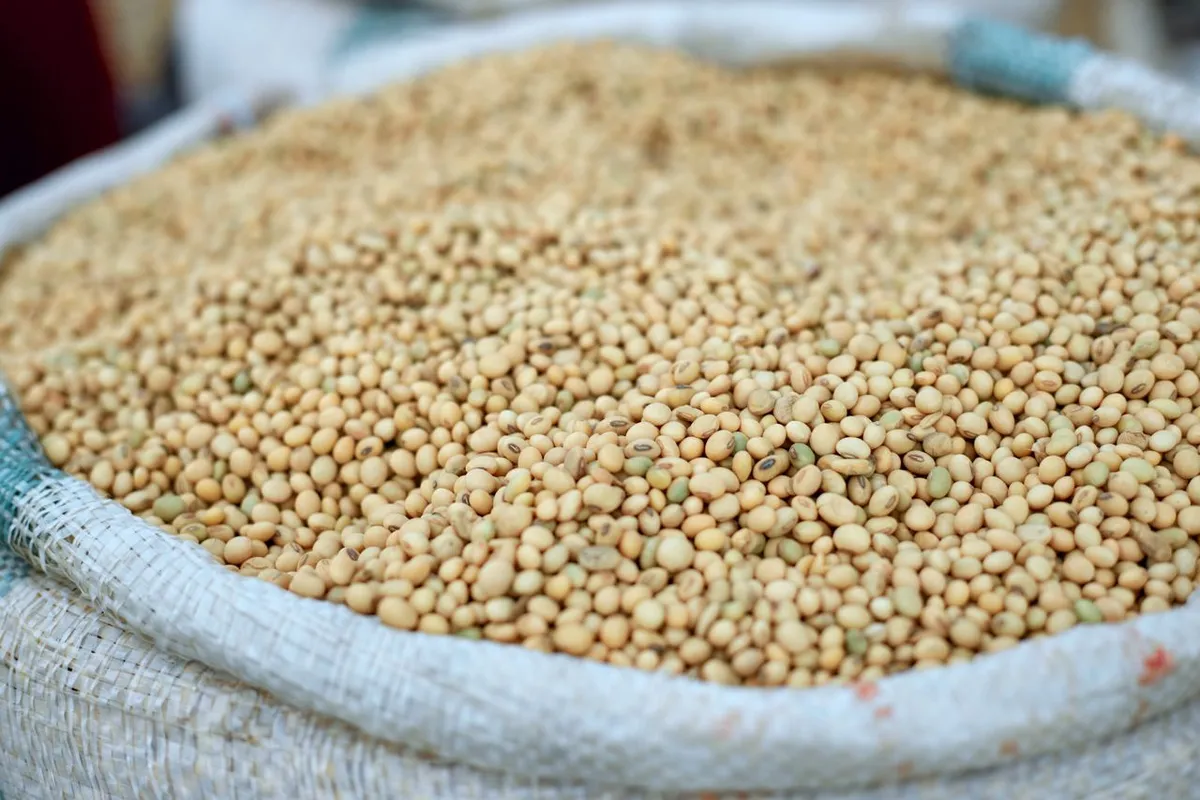
According to the Solvent Extractors’ Association of India (SEA), India exported 37.7 lakh tonnes of oilmeals in 2025-26. Rapeseed meal is now the largest line, with China the biggest buyer. India’s grain-ethanol industry has also made it a new exporter of DDGS. Because India permits no genetically modified soybean or maize cultivation, Indian soymeal, maize and DDGS are non-GMO, which matters to many European and Asian feed buyers.
DOC, DDGS and DORB: What Is Each One?
DOC, DDGS and DORB are three common Indian feed ingredients made by different processes.
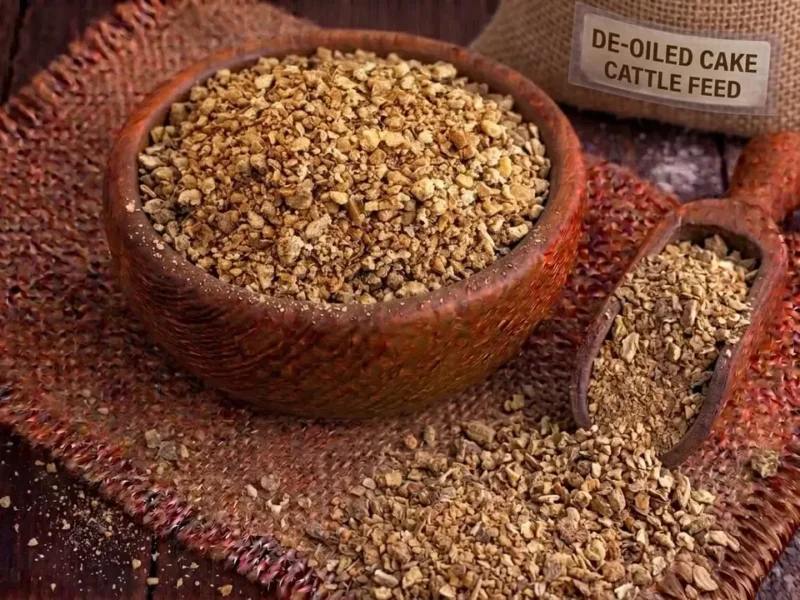
- De-oiled cake (DOC): the meal left after solvent extraction removes oil from an oilseed. Groundnut DOC is the best known, with 45–50% protein and 1% oil or less. Expeller cake, pressed but not solvent-extracted, keeps 6–8% oil and has less protein.
- Distillers’ dried grains with solubles (DDGS): the dried residue of maize after starch is fermented into ethanol. Corn DDGS has 26–32% protein and 5–10% fat.
- De-oiled rice bran (DORB): rice bran after its oil is extracted. It has 14–16% protein, 1% oil or less and up to about 14% fibre, and is used mainly for cattle and fish.
DORB exports were banned from July 2023 to cool cattle-feed prices in India. DGFT Notification 37/2025-26 made them free again on 3 October 2025.
How Do the Nutrient Profiles Compare?
Protein is the main way to compare feed ingredients, but each one also has a specific quality risk to watch. The table shows typical values for Indian export grades.
| Ingredient | Protein (typical) | Fat / oil | Main use | Watch-out |
|---|---|---|---|---|
| Soyabean meal | 46–48% | 0.5–1.5% | Poultry, aqua | Urease and KOH solubility (toasting) |
| Groundnut DOC | 45–50% | ≤ 1% | Cattle, poultry | Aflatoxin |
| Rapeseed meal | 36–38% | Low | Dairy, cattle, aqua | Glucosinolates |
| Corn DDGS | 26–32% | 5–10% | Poultry, dairy, aqua | Aflatoxin, sulphur |
| DORB | 14–16% | ≤ 1% | Cattle, fish | Sand / silica |
| Millet meal | 10–12% | Natural grain fat | Poultry, pigs (energy) | Rancidity after grinding |
| Feed maize | 7–9% | Natural grain fat | Poultry, pigs (energy) | Aflatoxin, moisture |
Typical specifications of Indian feed ingredients. Contract grades apply.
How Do You Choose the Right Ingredient for Your Feed Formulation?
Choose by the animal, the protein you need and the risk your formulation can carry. Poultry and aqua feeds usually rely on hi-pro soyabean meal, because it has a good amino acid balance and low fibre. Dairy and cattle feeds can use more rapeseed meal, groundnut DOC and DORB, because ruminants handle fibre well. DDGS adds both protein and energy and is widely used in poultry, dairy and aqua diets at controlled inclusion rates. Millet meal and maize supply energy for poultry and pigs.
Price per unit of protein is often more useful than price per tonne. A cheaper, lower-protein meal can cost more once you calculate how much you need. Your nutritionist should also set maximum inclusion levels for ingredients with anti-nutritional factors, such as glucosinolates in rapeseed meal and gossypol in cottonseed meal.
Energy feeds need a different check. De-oiled rice bran is low in oil, so it stores well, but its sand and silica content can vary between mills, so set a clear limit. Millet meal is ground grain and can turn rancid after grinding, so plan shorter storage and faster use. Feed maize must be dry when loaded, because damp grain in a sealed container can develop mould and aflatoxin during the voyage. If you are building a new formulation, start with a trial container of the ingredient you know least, test it in your own mill, and scale up once the results match the specification.
Which Quality Parameters and Lab Tests Should You Ask For?
Ask for protein, fat, fibre, moisture, sand / silica and aflatoxin B1 on every lot, plus tests specific to each ingredient. Write the grade in numbers. For example, SEA grade 48/2.5 means 48% protein and at most 2.5% sand / silica; rapeseed meal trades at 38/2.5.
- Aflatoxin B1: the EU and UK cap it at 20 µg/kg in feed materials at 12% moisture under Directive 2002/32/EC, and at 5 µg/kg in compound feed for dairy animals. Asian buyers often set 50 µg/kg by contract. Read more in our guide to aflatoxin in animal feed.
- Soyabean meal: urease activity of 0.05–0.3 ΔpH and KOH protein solubility of 75–85% show correct toasting.
- Rapeseed meal: volatile mustard oil within 4,000 mg/kg for the EU.
- Cottonseed meal: free gossypol within 1,200 mg/kg for the EU.
- DDGS: sulphur and colour, which indicate processing quality.
Ask for a Certificate of Analysis from each shipment, not a general product sheet. Many EU buyers also require GMP+ assurance, and China accepts Indian rapeseed meal only from plants registered with its customs authority (GACC). Our lab testing page lists the tests we run.
How Are Feed Ingredients Packed, Shipped and Documented?
Feed ingredients ship in 50 kg bags in containers, or loose in bulk vessels for large volumes. Oilmeals load about 20–22 MT in a 20 ft container. Light feeds such as DDGS and DORB fill the space at about 16–20 MT, so pellets or 40 ft containers are cheaper per tonne. Maize loads 24–26 MT. Our container load calculator helps you compare options. Most Indian oilmeal is shipped through Kandla and Mundra in Gujarat.
A feed shipment usually travels with a commercial invoice, packing list, bill of lading, Certificate of Analysis, phytosanitary certificate, certificate of origin and fumigation certificate. Soymeal, maize and DDGS can carry a non-GMO declaration. Indian HS codes include soyabean meal 2304 00 30, rapeseed meal 2306 49 00, corn DDGS 2303 30 00 and maize 1005 90 00. DORB usually ships under 2306 90 90.
What Are the Steps to Import Feed Ingredients from India?
- Set your specification: ingredient, protein grade, sand / silica, moisture and aflatoxin limit.
- Check policy and market access: confirm the product is free to export from India on the day you contract, and check your own import permits, GACC or GMP+ needs.
- Time your purchase: soyabean meal is most available from October to March, rapeseed meal from March to August and groundnut DOC from November to April. DORB and DDGS are available all year.
- Agree the contract: grade, packing, Incoterm, shipment period, payment terms and the lab to be used.
- Inspect and load: receive the Certificate of Analysis before loading, and appoint SGS or a similar inspector on larger orders.
- Clear and receive: your broker clears the goods with the shipping documents.
Related reading: EUDR Regulation Explained: What It Means for Soybean Meal Imports.
How Do You Source Feed Ingredients from an Indian Exporter?
Good feed ingredients suppliers state grades in numbers, test every lot for aflatoxin and check export policy before each contract. Elysium Agri Corporation, based in Jamnagar, Gujarat, exports soyabean meal, rapeseed meal, de-oiled cakes, corn DDGS, de-oiled rice bran, millet meal and feed maize. See our full animal feed range.
Every lot is tested for protein, fat, fibre, moisture, sand / silica and aflatoxin B1, with urease, gossypol or mustard oil tests where relevant. We ship through Kandla and Mundra, in containers or bulk vessels, and independent inspection is available on request.
Tell us the ingredient, grade, quantity, aflatoxin limit and destination port, and we will send a quote with the specification sheet. Request a feed ingredients quote →
Frequently asked questions
What animal feed ingredients can be imported from India?
India exports soyabean meal, rapeseed meal, groundnut, cottonseed and sunflower de-oiled cakes, corn DDGS, de-oiled rice bran, millet meal and feed-grade maize. Protein ranges from about 7–9% in maize to 46–48% in hi-pro soymeal. Indian soymeal, maize and DDGS are non-GMO, because India permits no GM soybean or maize cultivation.
What is the difference between DOC, DDGS and DORB?
DOC is de-oiled cake, the meal left after oil is solvent-extracted from an oilseed such as groundnut. DDGS is the dried residue of maize after ethanol fermentation, with 26–32% protein and 5–10% fat. DORB is de-oiled rice bran, with 14–16% protein, used mainly for cattle and fish feed.
What protein level do Indian oilseed cakes typically have?
Indian soyabean meal usually has 46–48% protein, groundnut DOC 45–50%, rapeseed meal 36–38%, decorticated cottonseed DOC 38–42% and sunflower DOC 30–36%. Grades are often written in the SEA format, such as 48/2.5, which means 48% protein and at most 2.5% sand and silica.
Which tests should I request before importing feed ingredients?
Request protein, fat, fibre, moisture, sand and silica, and aflatoxin B1 on every lot. Add urease and KOH solubility for soymeal, free gossypol for cottonseed meal, volatile mustard oil for rapeseed meal, and sulphur for DDGS. Ask for a Certificate of Analysis for the actual shipment, measured against your contract limits.
How is bulk animal feed shipped from India?
Feed ingredients ship in 50 kg bags in containers or loose in bulk vessels. A 20 ft container holds about 20–22 MT of oilmeal, while light feeds such as DDGS and DORB fill it at about 16–20 MT. Most Indian oilmeal leaves through Kandla and Mundra ports in Gujarat.
Related reads


