
On this page
- What Are Sesame Seeds and What Do They Contain?
- What Is the Nutrition Profile of Sesame Seeds?
- What Are the Key Compounds: Lignans, Healthy Fats and Minerals?
- What Does the Research Say?
- Hulled vs Unhulled Sesame: What Are the Nutritional Differences?
- How Is Sesame Used in Foods?
- How Can You Source Natural Sesame Seeds from India?
- Frequently asked questions
The main sesame seeds benefits come from their nutrient density: 100 g of whole sesame seeds provides about 18 g of protein, 12 g of fibre, mostly unsaturated fat, and large amounts of calcium, iron, magnesium, zinc and copper. They also contain lignans such as sesamin and sesamolin, which researchers continue to study. Because a typical serving is small, sesame adds nutrients to a diet rather than replacing main foods. This fact sheet sets out what the seeds contain and what current research says, without overstating it.
Key takeaways
- Whole, dried sesame seeds provide about 573 kcal, 17.7 g protein, 49.7 g fat and 11.8 g fibre per 100 g (USDA FoodData Central).
- Whole (unhulled) seeds contain about 975 mg calcium per 100 g; hulled seeds contain about 60 mg, because much of the calcium sits in the hull.
- Controlled trials suggest sesame may help some blood lipid, glucose and inflammation markers, but most studies are small and short.
- Sesame is a major food allergen in the US, EU and many other markets and must be declared on labels.
What Are Sesame Seeds and What Do They Contain?
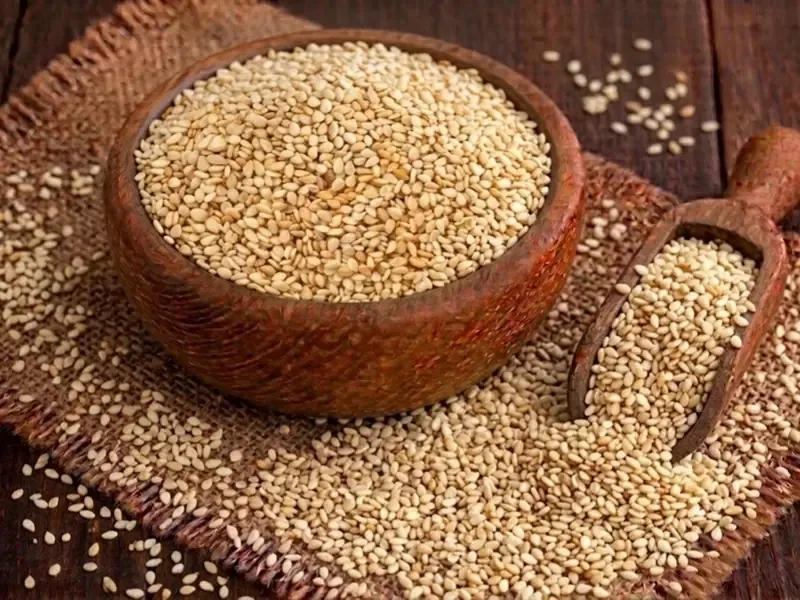
Sesame seeds are the small, flat, oil-rich seeds of Sesamum indicum, one of the oldest oilseed crops in the world. They are white, cream, brown or black, depending on the variety. India is one of the largest exporters, and most of its export-grade white sesame comes from Gujarat.
About half of the seed’s weight is oil. The rest is mainly protein, fibre and carbohydrate, with a high mineral content. Sesame also contains plant compounds called lignans, which are less common in other foods. The seed is eaten whole, toasted, ground into tahini or pressed for oil.
Sesame is traded in two main forms. Natural sesame seeds keep their outer hull. Hulled sesame seeds have the hull removed, which gives a whiter seed with a milder taste. As this article shows, the two forms differ in nutrition, especially in calcium.
What Is the Nutrition Profile of Sesame Seeds?
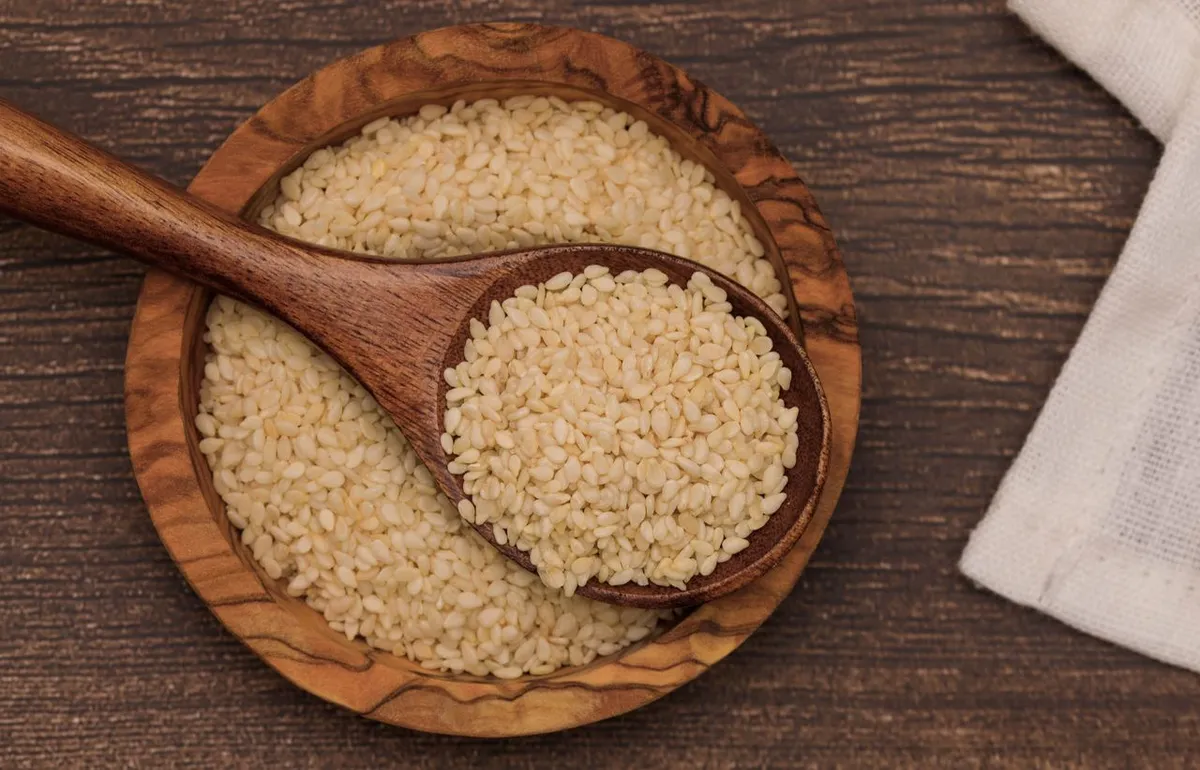
Sesame seeds are energy-dense and rich in minerals. The table uses USDA FoodData Central values for whole, dried seeds and for dried, hulled (decorticated) kernels. One tablespoon of whole seeds weighs about 9 g, so a typical serving gives roughly one-tenth of the figures shown.
| Nutrient (per 100 g) | Whole sesame seeds | Hulled sesame kernels |
|---|---|---|
| Energy | 573 kcal | 631 kcal |
| Protein | 17.7 g | 20.5 g |
| Total fat | 49.7 g | 61.2 g |
| Carbohydrate | 23.5 g | 11.7 g |
| Dietary fibre | 11.8 g | 11.6 g |
| Calcium | 975 mg | 60 mg |
| Iron | 14.6 mg | 6.4 mg |
| Magnesium | 351 mg | 345 mg |
| Phosphorus | 629 mg | 667 mg |
| Zinc | 7.8 mg | 6.7 mg |
| Copper | 4.1 mg | 1.4 mg |
Source: USDA FoodData Central (SR Legacy). Values vary by variety, crop and processing.
These figures are for raw seeds. Toasting changes the flavour and slightly reduces moisture, but it does not change the overall picture much. Values also vary with variety, soil and season, so food manufacturers should rely on their own lab analysis for nutrition labels.
What Are the Key Compounds: Lignans, Healthy Fats and Minerals?
Three groups of nutrients explain most of the interest in sesame: its fats, its minerals and its lignans.
- Fats: of the roughly 50 g of fat in 100 g of whole seed, about 22 g is polyunsaturated (mainly linoleic acid) and about 19 g is monounsaturated (mainly oleic acid). Saturated fat is about 7 g. Health authorities generally advise choosing unsaturated fats in place of saturated fats.
- Minerals: whole sesame is a dense source of calcium, iron, magnesium, phosphorus, zinc, copper and manganese. Like other seeds, it also contains phytate and oxalate, which can reduce how much of some minerals the body absorbs.
- Lignans: sesamin, sesamolin and sesaminol are lignans found in sesame. Roasting converts part of the sesamolin into sesamol, which helps explain why toasted sesame oil is stable. These compounds are a major focus of sesame research.
- Protein: sesame protein is rich in the amino acid methionine, which is low in many legumes. This makes sesame a useful partner for chickpeas in foods such as hummus.
What Does the Research Say?
Research on sesame is promising but limited. Most human studies are small, short and use different sesame products, from whole seed and tahini to oil and sesamin capsules. The results below should be read with that in mind.
- Blood lipids: a 2016 meta-analysis in the British Journal of Nutrition pooled 10 controlled trials with 908 participants. Sesame lowered blood triglycerides, but the authors found insufficient evidence that it lowers total or LDL cholesterol.
- Glucose and inflammation markers: a 2025 GRADE-assessed meta-analysis in Nutrition & Metabolism pooled 13 trials with 521 participants. It found reductions in HbA1c, C-reactive protein and interleukin-6, and a borderline effect on fasting blood sugar. The authors called sesame a possible addition to the diet, not a replacement for medical care.
- Heart health in context: sesame fits the general dietary advice to eat more nuts, seeds and unsaturated fats. No single food, however, can be relied on to prevent or treat heart disease.
Sesame is also one of the most important food allergens. In the US, the FASTER Act made sesame the ninth major allergen from January 2023. The EU, UK, Canada, Australia and other markets also require sesame to be declared on labels. People with a sesame allergy must avoid it completely.
Hulled vs Unhulled Sesame: What Are the Nutritional Differences?
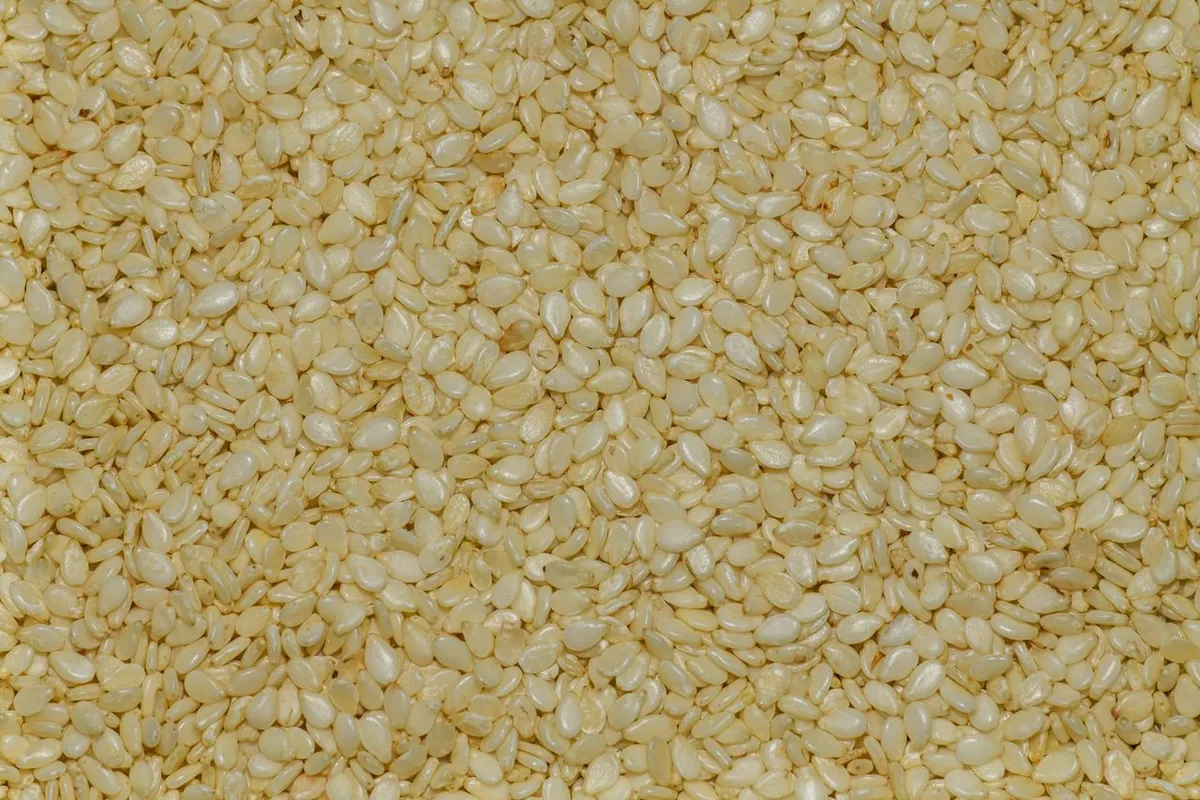
Unhulled (natural) sesame has more calcium, iron and copper, while hulled sesame has slightly more fat, protein and energy per 100 g. The largest gap is calcium. Whole seeds contain about 975 mg per 100 g, against about 60 mg for hulled kernels. Most of the calcium in sesame sits in the hull, and much of it is bound to oxalate there, which reduces absorption.
Hulled seeds are softer, whiter and milder. That is why tahini, halva and burger buns usually use hulled sesame. Natural seeds are crunchier, slightly bitter and keep more fibre-related compounds from the hull. They suit bakery toppings, chikki, crackers, health foods and oil pressing.
For food manufacturers, the choice is usually about taste, colour and texture first. If your product makes a calcium content claim, base it on lab results for the exact seed you buy, not on general tables.
How Is Sesame Used in Foods?
Sesame appears in many food categories around the world.
- Bakery: toppings on buns, bagels, simit, breadsticks and crackers.
- Pastes and spreads: tahini, hummus, halva and sesame butter.
- Confectionery: chikki, til laddoo, sesame bars and brittle.
- Asian cooking: dressings, sushi, stir-fries and sesame oil.
- Health foods: granola, seed mixes, cereal bars and plant-based products.
- Oil: cold-pressed and toasted sesame oil for cooking and flavour.
How many sesame seeds can you eat in a day? There is no official intake target. Typical recipes use one to two tablespoons, about 9–18 g of whole seed. At that level, sesame adds protein, minerals and fibre without much effect on total energy intake. Because it is energy-dense, larger amounts add calories quickly.
Freshness also affects nutritional quality. Sesame is rich in unsaturated oil, which can turn rancid with heat, light and time. Rancid seeds taste bitter and stale, and their oil quality is lower. Buy from recent crops, store seeds in sealed packs in a cool, dry and dark place, and keep opened packs well closed. Hulled seeds are more exposed than natural seeds, so they need more care. For bulk buyers, the free fatty acid and peroxide values on the Certificate of Analysis are useful signs of freshness. Lower values usually mean fresher, better-stored seed.

This article is for general information and is not medical or dietary advice.
Related reading: Tahini Sesame Seeds: Choosing the Best Seed for Tahini Making and Black Sesame Seeds Benefits: Nutrition, Research and Uses.
How Can You Source Natural Sesame Seeds from India?
For brands that sell on sesame seeds benefits, consistent quality and safety matter as much as nutrition. Specify the purity grade, moisture, oil content, free fatty acid and the test panel for Salmonella, ethylene oxide, pesticide residues and aflatoxin. Ask for a lot-wise Certificate of Analysis before loading.
Elysium Agri Corporation exports natural, hulled and black sesame seeds from Jamnagar, Gujarat, close to the main sesame markets of Saurashtra. We supply sortex-cleaned grades up to 99.98% purity, and every lot is tested before loading. Our lab testing page sets out the full test panel, and our guide to importing sesame seeds from India explains grades, documents and shipping.
Tell us the variety, grade, quantity and destination port. Request a sesame quote →
Frequently asked questions
What nutrients are found in sesame seeds?
According to USDA FoodData Central, 100 g of whole dried sesame seeds provides about 573 kcal, 17.7 g protein, 49.7 g fat, 23.5 g carbohydrate and 11.8 g fibre. The seeds are also rich in calcium, iron, magnesium, phosphorus, zinc and copper, and they contain lignans such as sesamin and sesamolin.
Are sesame seeds a good source of calcium and minerals?
Whole, unhulled sesame seeds are a dense source of minerals, with about 975 mg calcium, 14.6 mg iron and 351 mg magnesium per 100 g. Hulled seeds contain only about 60 mg calcium. Sesame also contains oxalate and phytate, which can reduce how much of these minerals the body absorbs.
How many sesame seeds can you eat in a day?
There is no official daily intake for sesame seeds. Most recipes use one to two tablespoons, about 9 to 18 g of whole seed, which adds protein, fibre and minerals without many extra calories. Sesame is energy-dense, so larger amounts add calories quickly. People with a sesame allergy should avoid it completely.
Is it better to eat hulled or unhulled sesame seeds?
It depends on your purpose. Unhulled seeds contain far more calcium, iron and copper, and have a crunchier, slightly bitter taste. Hulled seeds are whiter and milder, and suit tahini, halva and buns. Both provide protein, healthy fats and magnesium, so the choice is often about taste and texture.
What does research say about sesame seeds and heart health?
Research is promising but limited. A 2016 meta-analysis of 10 trials found sesame lowered blood triglycerides but not clearly total or LDL cholesterol. A 2025 meta-analysis reported improvements in some glucose and inflammation markers. Most studies are small and short, so sesame should be seen as part of a balanced diet, not a treatment.
Related reads


