
On this page
- What Are Black Sesame Seeds?
- What Is the Nutrition Profile of Black Sesame?
- How Do Black and White Sesame Differ?
- What Does the Research Say?
- How Is Black Sesame Used in Cooking and the Food Industry?
- What Are the Quality and Storage Considerations?
- How Can You Buy Black Sesame Seeds in Bulk from India?
- Frequently asked questions
Black sesame seeds benefits come mainly from the whole seed and its dark hull: like other unhulled sesame, black sesame is rich in healthy fats, protein, fibre, calcium, iron and magnesium, and its hull contains more phenolic antioxidants than white sesame hulls. Early human studies are promising, but they are small. Black sesame, called kala til in India, is the same species as white sesame. This fact sheet explains what it contains, how it differs from white sesame and what research says, without claiming more than the evidence supports.
Key takeaways
- Black and white sesame are both Sesamum indicum; the colour comes from natural pigments in the hull.
- Black sesame is usually eaten whole, so it keeps the hull’s calcium, iron and fibre.
- A 2006 study in Food Chemistry found far higher phenolic content and antioxidant activity in black sesame hulls than in white sesame.
- A small 2011 trial linked black sesame meal to lower systolic blood pressure in pre-hypertensive adults, but larger studies are needed.
What Are Black Sesame Seeds?
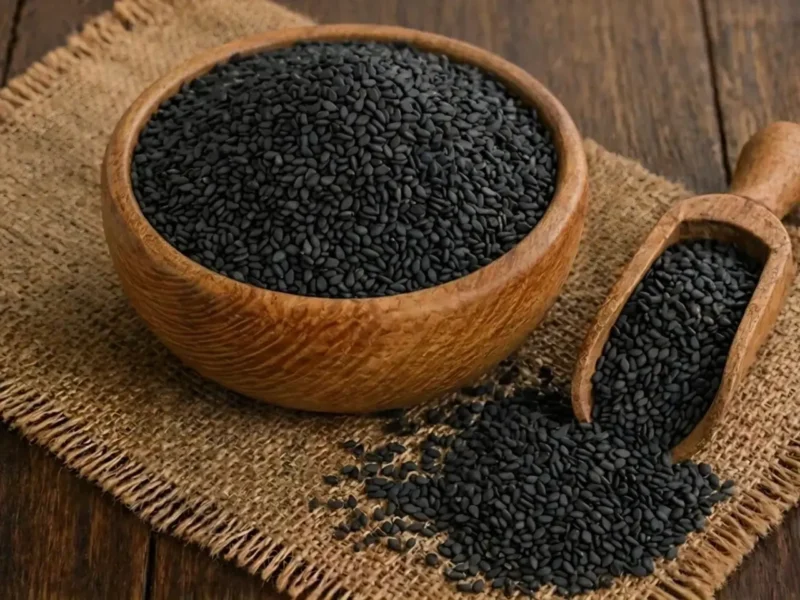
Black sesame seeds are whole sesame seeds with a natural black hull. They come from black-seeded varieties of Sesamum indicum, the same plant that gives white sesame. In India they are called kala til. Most Indian black sesame grows in the Saurashtra region of Gujarat, in the Amreli, Junagadh and Jamnagar belt.
Black sesame has a stronger, nuttier and slightly bitter taste than white sesame. The seed inside the hull is white. Because the colour, flavour and much of the nutrition sit in the hull, black sesame is almost always sold and eaten unhulled. Gujarat grows two crops a year: a kharif crop harvested from September to November and a summer crop from March to June.
What is black til and how is it used in cooking? Black til is simply the Hindi name for black sesame. In India it is used in winter sweets such as til laddoo and chikki, and in religious food offerings. In East Asia it is roasted and ground into paste, used in desserts and pressed into dark, aromatic oil.
What Is the Nutrition Profile of Black Sesame?
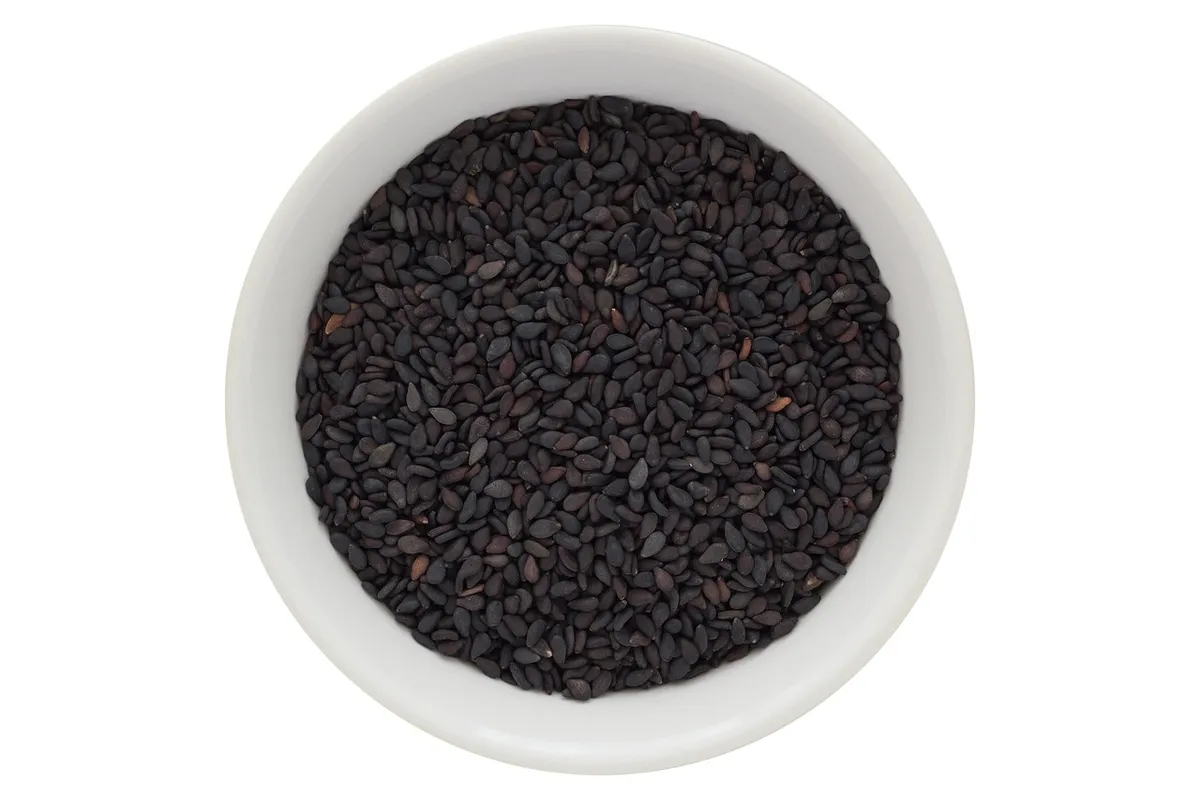
USDA FoodData Central does not list black sesame separately. Its values for whole, dried sesame seeds are the closest standard reference, because black sesame is also eaten whole. The table sets these values beside figures from a 2011 laboratory comparison of black and white sesame from China.
| Nutrient (per 100 g) | Whole sesame seeds (USDA) | Black sesame (2011 study) | White sesame (2011 study) |
|---|---|---|---|
| Energy | 573 kcal | Not reported | Not reported |
| Protein | 17.7 g | 20.8 g | 22.2 g |
| Total fat | 49.7 g | 48.4 g | 52.6 g |
| Dietary fibre | 11.8 g | Not reported | Not reported |
| Calcium | 975 mg | Higher than white | Lower than black |
| Iron | 14.6 mg | Higher than white | Lower than black |
| Magnesium | 351 mg | Not compared | Not compared |
| Main fatty acid | Linoleic and oleic | Oleic about 46% | Oleic about 46% |
Sources: USDA FoodData Central (SR Legacy, sesame seeds, whole, dried); Kanu, American Journal of Biochemistry and Molecular Biology, 2011. Values vary by variety and crop.
One tablespoon of whole sesame weighs about 9 g, so a normal serving provides about one-tenth of these amounts. Black sesame from our Gujarat lots typically has 45–48% oil and 6% maximum moisture. Food brands should use their own lab analysis for nutrition labels.
Like all seeds, black sesame also contains phytate and oxalate. These natural compounds can bind minerals such as calcium and iron and reduce how much the body absorbs. Toasting, grinding into paste and eating sesame with a varied diet are common ways it is consumed, but the exact effect on absorption is still studied. For this reason, the mineral figures in food tables show what the seed contains, not exactly what the body takes up.
How Do Black and White Sesame Differ?
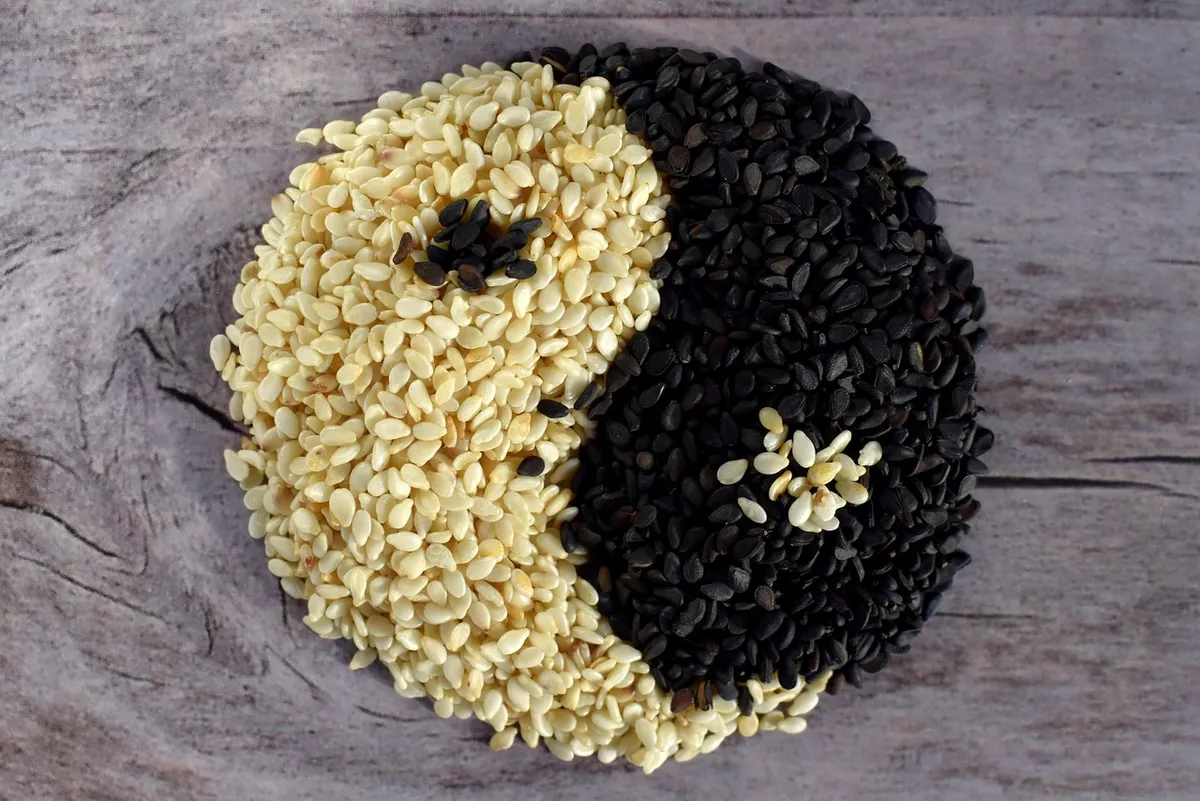
Black and white sesame differ mainly in the hull. That one difference affects colour, flavour, nutrition, use and price.
- Colour and taste: black sesame is stronger, nuttier and more bitter. White sesame is milder.
- Form: black sesame is almost always eaten whole. White sesame is sold both natural and hulled.
- Minerals: the 2011 comparison found more calcium, potassium, phosphorus, iron and manganese in black sesame than in white.
- Protein and fat: in the same study, white sesame had slightly more protein and fat.
- Antioxidants: black sesame hulls had the highest phenolic content in a 2006 study (see below).
- Price: black sesame usually sells at a premium over white sesame of the same grade.
Are black sesame seeds healthier than white sesame seeds? Not in every way. Black sesame has more of some minerals and hull antioxidants, while white sesame has slightly more protein and fat. Unhulled white sesame is also rich in calcium. Both fit well in a balanced diet. Does black sesame have more calcium than white sesame? Compared with hulled white sesame, clearly yes, because hulling removes most of the calcium. Compared with natural white sesame, the gap is smaller and depends on the variety.
What Does the Research Say?
Most research on black sesame is laboratory work or small human trials. It is useful, but it does not prove health effects on its own.
- Antioxidants in the hull: a 2006 study in Food Chemistry by Shahidi and colleagues compared white and black sesame seeds and their hulls. Black sesame hulls had the highest total phenolic content, about five times that of white hulls, and the strongest antioxidant activity in laboratory tests.
- Blood pressure: a 2011 randomised trial in Nutrition Journal gave 30 pre-hypertensive adults 2.52 g of black sesame meal or a placebo each day for four weeks. Systolic blood pressure fell from 129.3 to 121.0 mmHg in the sesame group, and markers of oxidative stress improved.
- Sesame in general: meta-analyses of sesame products have reported effects on blood triglycerides and some glucose and inflammation markers. Our sesame seeds benefits article summarises this research.
These results come from small groups and short periods. Black sesame should be seen as a nutritious food, not as a treatment. Sesame is also a major allergen in the US, EU and many other markets, and people with a sesame allergy must avoid all types, including black sesame.
How Is Black Sesame Used in Cooking and the Food Industry?
- East Asian food: black sesame paste, soups, dumpling fillings, mochi, ice cream and roasted black sesame oil in Japan, Korea and China.
- Indian sweets: til laddoo, chikki and festival foods, especially in winter.
- Bakery: toppings for bagels, buns, crackers and breadsticks, often mixed with white sesame for contrast.
- Black tahini: a darker, stronger tahini for desserts, dressings and specialty bakery. See our guide to tahini sesame seeds.
- Coatings and garnishes: fish and chicken crusts, sushi, salads and snack mixes.

What Are the Quality and Storage Considerations?
For black sesame, the most important quality check is natural colour. Some low-grade seed has been dyed to look darker. Three simple tests help: natural black sesame does not bleed colour into cold water, the inside of a cut seed is white, and no colour rubs off on a damp palm or paper. Buyers should also check purity, moisture, damaged or discoloured seeds, Salmonella, ethylene oxide and pesticide residues. Japan and Korea apply strict residue limits, including Korea’s default limit of 0.01 mg/kg under its Positive List System.
How should black sesame seeds be stored to stay fresh? Keep them in sealed, airtight packs in a cool, dry and dark place. The oil in sesame can go rancid with heat, light and air, which gives a bitter, stale taste. For long storage, a cool room or refrigeration helps. In bulk, lined bags and container liners protect against moisture during shipping.
This article is for general information and is not medical or dietary advice.
How Can You Buy Black Sesame Seeds in Bulk from India?
Whatever black sesame seeds benefits your brand highlights, the product starts with clean, naturally coloured seed. Elysium Agri Corporation exports natural black sesame seeds from Saurashtra in machine-cleaned and sortex grades up to 99.95% purity. Every lot is checked for natural colour with a water-bleed and cut-seed test, and tested for Salmonella, ethylene oxide and pesticide residues against EU, Japan and Korea limits. A 20 ft container holds about 19 MT. See our lab testing page and our sesame range, including natural and hulled white sesame.
Tell us your grade, quantity and destination port. Request a black sesame quote →
Frequently asked questions
What are the nutrition facts of black sesame seeds?
USDA does not list black sesame separately, but whole sesame seeds provide about 573 kcal, 17.7 g protein, 49.7 g fat, 11.8 g fibre and 975 mg calcium per 100 g. A 2011 study found black sesame had about 20.8% protein and 48.4% fat, with more calcium and iron than white sesame.
Are black sesame seeds healthier than white sesame seeds?
Not in every way. Black sesame is eaten whole and contains more of some minerals and far more hull antioxidants than white sesame, according to laboratory studies. White sesame has slightly more protein and fat. Unhulled white sesame is also rich in calcium. Both are nutritious, and the best choice depends on taste and use.
What is black til and how is it used in cooking?
Black til is the Hindi name for black sesame seeds. In India it is used in til laddoo, chikki and other winter sweets and festival foods. In Japan, Korea and China it is roasted and ground into paste for desserts and soups, or pressed into dark oil. It also tops breads and crackers.
Does black sesame have more calcium than white sesame?
Black sesame has much more calcium than hulled white sesame, because hulling removes most of the calcium with the seed coat. Compared with natural, unhulled white sesame, a 2011 laboratory study found black sesame higher in calcium, but the difference is smaller and varies with variety and growing conditions.
How should black sesame seeds be stored to stay fresh?
Store black sesame seeds in sealed, airtight packs in a cool, dry and dark place, away from strong odours. Their oil can go rancid with heat, light and air, giving a bitter, stale taste. For longer storage, a cool room or refrigeration helps. Bulk seed should travel in lined bags to keep out moisture.
Related reads


