
On this page
- Quinoa vs Chia Seeds: The Short Answer
- What Is Quinoa?
- What Are Chia Seeds?
- How Do Quinoa and Chia Compare per 100 g?
- What Does the Research Say About Quinoa and Chia?
- How Are Quinoa and Chia Used in Food and Industry?
- How Do Texture, Taste and Cooking Differ?
- Buying Quinoa and Chia Seeds in Bulk
- Frequently asked questions
In the quinoa vs chia comparison, chia seeds win on fibre, fat, omega-3 and calcium, while quinoa is lower in calories and fat and works as a cooked staple like rice. Per 100 g dry, chia has about 34 g of fibre and 16.5 g of protein; quinoa has about 7 g of fibre and 14 g of protein. Both are naturally gluten-free seeds, but they do different jobs in food. This guide compares their nutrition, research, uses and bulk-buying specifications.
Key takeaways
- Chia is the richer seed: about five times the fibre, five times the fat and more than ten times the calcium of quinoa per 100 g.
- Quinoa is the better base food: it is cooked and eaten in portions of 50–80 g, like rice or couscous.
- Both are gluten-free, and quinoa contains all the essential amino acids.
- For bulk buyers, the key specifications differ: saponin and grain size for quinoa, purity and moisture for chia.
Quinoa vs Chia Seeds: The Short Answer
Quinoa and chia are not substitutes for each other. Quinoa is a staple food that you boil and eat as a side dish, salad base or breakfast grain. Chia is a functional seed that you sprinkle, soak or blend in small amounts, usually 10–25 g at a time.
Gram for gram, chia is more nutrient-dense. It has more fibre, fat, omega-3, calcium, iron and magnesium. Quinoa has more carbohydrate and potassium and far less fat, so it gives steady energy in a full meal. For a food manufacturer, the choice depends on the job: quinoa adds bulk, texture and protein to a product, while chia adds fibre, omega-3 and gel-forming power in small doses.
What Is Quinoa?
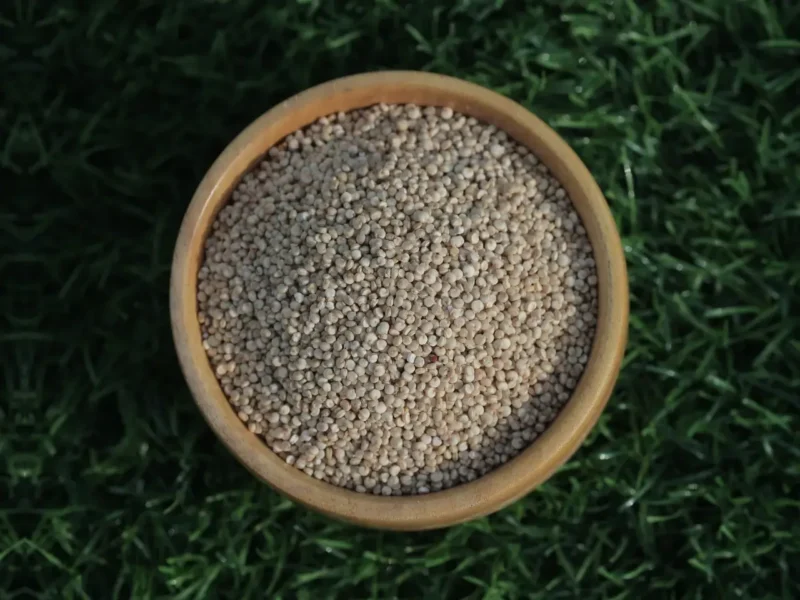
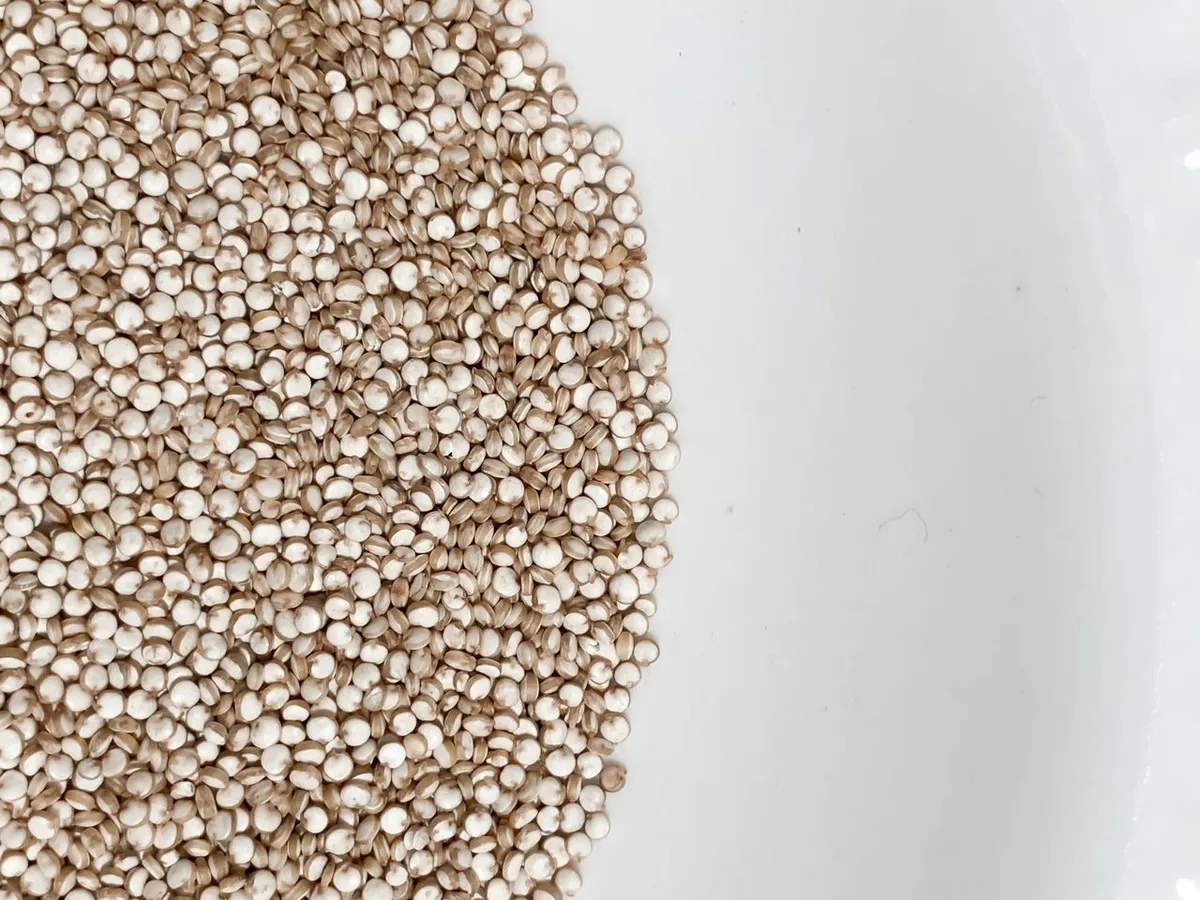
Quinoa (Chenopodium quinoa) is the seed of a plant in the amaranth family. It is a pseudocereal: it is cooked and eaten like a grain, but botanically it is a seed, not a grass. It comes from the Andes of Peru and Bolivia, which still lead world production. India started commercial quinoa farming in the mid-2010s, mainly in Rajasthan and Andhra Pradesh, as a rabi crop harvested in February and March.
The raw seed is coated with saponin, a bitter, soapy compound. Export quinoa is washed or scarified to remove it. Our Indian white quinoa is processed to a saponin level of 0.1% or less and sortex-cleaned to 99.5–99.9% purity. White quinoa is the most traded type; red and black quinoa are firmer and are sold mainly to retail and food-service buyers.
What Are Chia Seeds?
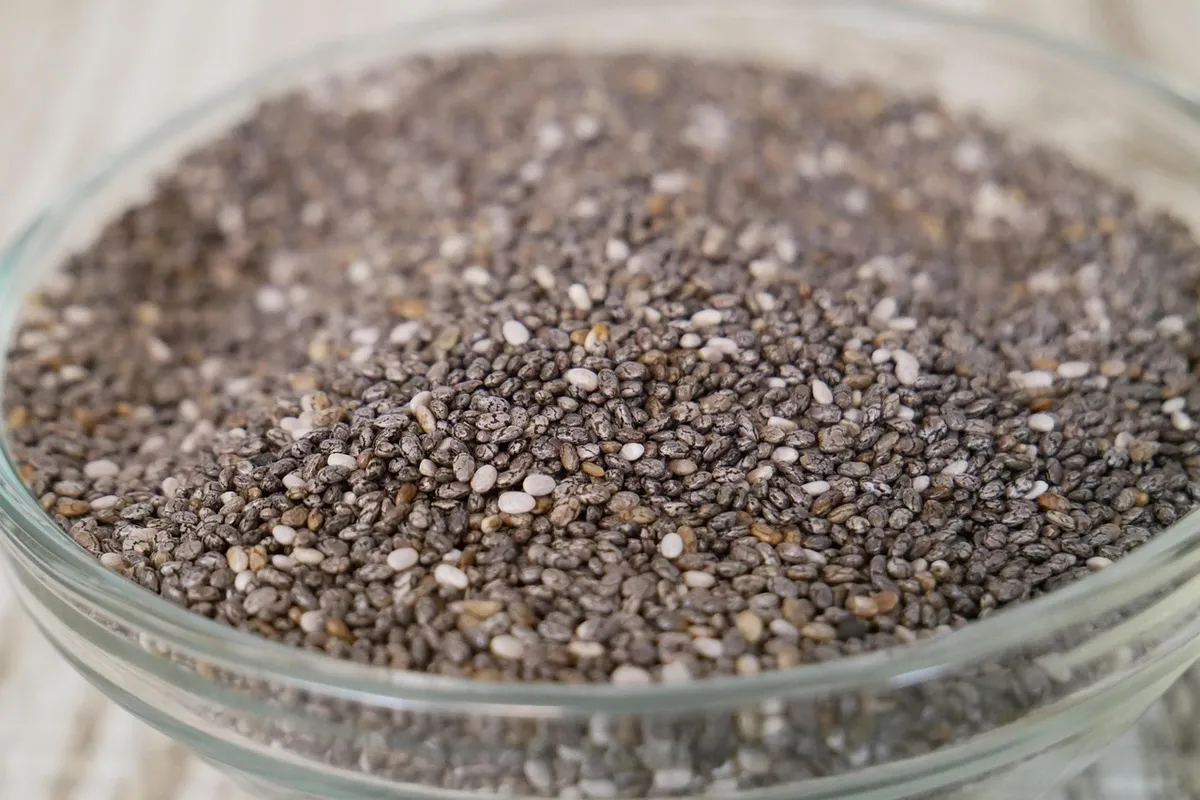
Chia (Salvia hispanica) is a small oval seed from a plant in the mint family, native to Mexico and Guatemala. Paraguay and Bolivia are the largest exporters today. In India, chia is grown mainly in the Neemuch–Mandsaur belt of Madhya Pradesh, with newer areas in Maharashtra and Karnataka. Like Indian quinoa, it is a rabi crop harvested in February and March.
Most traded chia is black or grey-mottled; white chia is a smaller, premium segment. When chia seeds are soaked, the outer coat releases soluble fibre that forms a clear gel. This gel is what makes chia useful in puddings, drinks, jams and egg-free baking. In the EU, chia is an authorised novel food, and since Regulation (EU) 2021/668 it can be sold as such, in bulk or pre-packed. You can read more in our guide to the advantages of chia seeds.
How Do Quinoa and Chia Compare per 100 g?
The table uses dry, uncooked values from USDA FoodData Central (SR Legacy entries “Quinoa, uncooked” and “Seeds, chia seeds, dried”).
| Nutrient (per 100 g, dry) | Quinoa | Chia seeds |
|---|---|---|
| Energy | 368 kcal | 486 kcal |
| Protein | 14.1 g | 16.5 g |
| Total fat | 6.1 g | 30.7 g |
| Omega-3 (ALA) | 0.26 g | 17.8 g |
| Carbohydrate | 64.2 g | 42.1 g |
| Dietary fibre | 7.0 g | 34.4 g |
| Calcium | 47 mg | 631 mg |
| Iron | 4.6 mg | 7.7 mg |
| Magnesium | 197 mg | 335 mg |
| Potassium | 563 mg | 407 mg |
| Typical serving | 50–80 g dry (cooked portion) | 10–25 g (1–2 tablespoons) |
Source: USDA FoodData Central, SR Legacy. Values are typical, not specifications.
Serving size matters when you read the table. A 60 g dry portion of quinoa gives about 8.5 g of protein. A 15 g spoon of chia gives about 2.5 g. So in a real meal, quinoa usually supplies more protein, even though chia has more per 100 g. Chia, on the other hand, gives about 5 g of fibre and 2.7 g of omega-3 in a single 15 g spoon.
What Does the Research Say About Quinoa and Chia?
For quinoa, the research focuses on protein quality. The FAO master plan for the International Year of Quinoa 2013 describes quinoa as a plant food that contains all the essential amino acids and is gluten-free. It notes that protein content ranges from about 13.8% to 21.9% depending on variety, and that quinoa is a good source of lysine, the amino acid that wheat and rice lack.
For chia, the research focuses on fibre and omega-3. A 2024 systematic review and meta-analysis of 10 randomised controlled trials in overweight adults found lower waist circumference, systolic blood pressure and C-reactive protein with chia supplementation. It found no significant change in blood lipids or blood glucose. The authors said chia works best as part of a wider diet and lifestyle plan. Note also that the omega-3 in chia is ALA, the plant form. The body converts only a small part of ALA into the longer-chain EPA and DHA found in fish.
In short, the evidence supports quinoa as a high-quality plant protein and staple, and chia as a fibre- and ALA-rich addition. Neither is a medicine. For a wider view of seed choices, see our comparison of chia seeds vs flax seeds.
How Are Quinoa and Chia Used in Food and Industry?
The two seeds go into different product lines. Quinoa is used where volume and texture matter. Chia is used where a small dose adds a nutrition claim or a functional effect.
- Quinoa: retail packs, ready meals and salads, breakfast cereals and granola, puffed quinoa, quinoa flakes, gluten-free flour and bakery, crackers and snack bars, and plant-protein blends.
- Chia: retail packs, bread and crackers (as a topping or inclusion), muesli and granola, chia puddings, yoghurt and dairy desserts, fruit and seed mixes, beverages, jams, and as an egg replacer in vegan baking. Chia is also pressed for oil and milled into protein-rich flour.
For EU buyers, check the novel food conditions before you add chia to a new product category. Most common uses are now authorised, but the Union list still sets conditions for some foods.
How Do Texture, Taste and Cooking Differ?
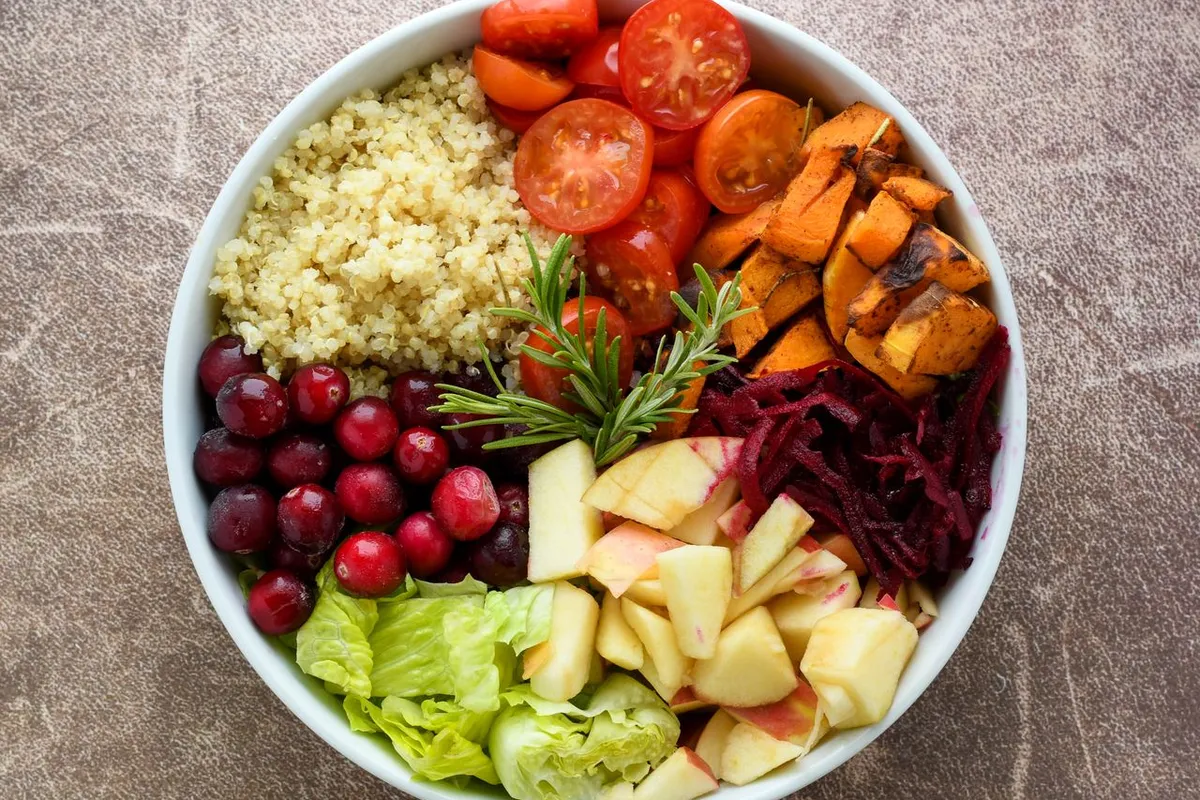
Quinoa is cooked; chia is usually not. Quinoa is rinsed and simmered in about twice its volume of water for 12–15 minutes. Each grain swells to about three times its dry volume and shows a small white “tail”, which is the germ. The texture is fluffy with a light bite, and the taste is mild and slightly nutty. Indian white quinoa is a little milder than South American quinoa.
Chia has almost no taste of its own. Dry, it is crunchy. Soaked, it absorbs many times its weight in liquid and turns soft and jelly-like within 15–20 minutes. This is why chia cannot simply replace quinoa in a recipe: a cup of chia in a pot of water gives a thick gel, not a fluffy side dish. See how long to soak chia seeds for practical timings.
| Property | Quinoa | Chia seeds |
|---|---|---|
| Preparation | Rinse and boil 12–15 minutes | Eat raw, or soak 15–20 minutes |
| Texture | Fluffy, light bite | Crunchy dry; gel-like soaked |
| Taste | Mild, slightly nutty | Neutral |
| Role in a recipe | Base or main ingredient | Topping, thickener or binder |
| Off-taste risk | Bitterness if saponin is not removed | Rancidity if stored warm (high oil) |
This article is for general information and is not medical or dietary advice.
Related reading: Protein Content of Quinoa: Nutrition Facts per 100 g and Types of Quinoa: White, Red and Black Quinoa Compared.
Buying Quinoa and Chia Seeds in Bulk
When you compare quinoa vs chia as a buyer, the specifications to control are different. For quinoa, set saponin, purity, grain size and broken grains. For chia, set purity, moisture, foreign matter and the food-safety panel.
| Specification | Quinoa (Elysium) | Chia (Elysium) |
|---|---|---|
| Purity | 99.5–99.9% (sortex) | 99.5% machine · 99.9–99.95% sortex |
| Moisture | 12% max | 8% max |
| Key quality point | Saponin ≤ 0.1% | Foreign matter by grade |
| HS code | 1008 50 00 | 1207 99 90 |
| 20 ft container | About 18–20 MT | About 18–19 MT |
| Shelf life | 12–24 months, cool and dry | 24 months, cool and dry |
Elysium Agri Corporation exports Indian white quinoa and black chia from Jamnagar, Gujarat. Both crops are harvested in February and March, which gives buyers an off-season alternative to South American supply. Indian quinoa is usually 8–25% cheaper than Peruvian or Bolivian quinoa. We supply chia seeds and quinoa in 25 kg bags or 1 MT big bags, with buyer’s marks and private label packing on request. Every lot is tested before loading, as set out on our lab testing page, and you can plan a mixed load with the container load calculator.
Tell us the product, grade, quantity and destination port, and we will send a quote and specification sheet. Request a quinoa or chia quote →
Frequently asked questions
Which has more protein, quinoa or chia seeds?
Per 100 g dry, chia seeds have slightly more protein, about 16.5 g against 14.1 g for quinoa, according to USDA FoodData Central. In a normal meal, however, quinoa usually supplies more, because people eat 50–80 g of quinoa but only 10–25 g of chia. Quinoa also contains all the essential amino acids, including lysine.
Is quinoa or chia higher in fibre?
Chia is far higher in fibre. USDA data shows about 34.4 g of dietary fibre per 100 g of dried chia seeds, compared with about 7 g per 100 g of uncooked quinoa. Much of the fibre in chia is soluble and forms a gel when the seeds are soaked, which is why chia is used to thicken puddings and drinks.
Are quinoa and chia seeds gluten-free?
Yes. Both quinoa and chia seeds are naturally gluten-free, because neither comes from wheat, barley or rye. The risk is cross-contact during farming, cleaning or packing. Buyers making gluten-free claims should ask for a gluten test by ELISA on each lot. Elysium can test quinoa to below 20 ppm gluten on request.
Can chia seeds replace quinoa in recipes?
Not directly. Quinoa is boiled and eaten as a fluffy base like rice, while chia absorbs liquid and turns into a gel. Cooking chia in place of quinoa gives a thick pudding, not a side dish. Chia works better as a topping, binder or egg replacer, and quinoa works better as the main grain of a meal.
Is quinoa a grain or a seed?
Botanically, quinoa is a seed. It comes from Chenopodium quinoa, a plant in the amaranth family, not from a cereal grass. Because it is cooked and eaten like a grain, it is called a pseudocereal, as are buckwheat and amaranth. In trade, quinoa is classified under HS heading 1008 with cereals, code 1008 50 00.
Related reads


