
On this page
How long to soak chia seeds depends on the texture you want: 15–20 minutes is enough for a loose gel, about 30 minutes for a thick gel, and 2 hours to overnight in the refrigerator for a set chia pudding. Use about 1 part chia to 4–6 parts liquid by volume, and stir well in the first few minutes so the seeds do not clump. This step-by-step guide explains why chia forms a gel, the right times and ratios for different uses, and how to store soaked chia safely.
Key takeaways
- Chia starts to gel within minutes; 15–30 minutes gives a usable gel and overnight gives the firmest set.
- A ratio of 1:4 to 1:6 chia to liquid suits most drinks and puddings; use less liquid for a thicker set.
- Stir twice: once when mixing and again after 2–3 minutes to break up clumps.
- Do not eat a spoonful of dry chia followed by water; let the seeds expand in liquid first.
How Long Should You Soak Chia Seeds?
For most uses, soak chia seeds for at least 15–20 minutes. In that time the seeds swell and form a soft gel coating. If you want a thick, spoonable texture, wait about 30 minutes. For chia pudding or overnight oats, soak for at least 2 hours, or overnight in the refrigerator, so the mixture sets fully.
Soaking longer than overnight does not improve the texture much. The seeds reach their full gel within a few hours. After that, the mixture only gets slightly thicker as it cools and settles. So the practical answer to how much time chia seeds should be soaked is: 20 minutes if you are in a hurry, and overnight if you want the best pudding.
Why Do Chia Seeds Form a Gel?
Chia seeds form a gel because their outer seed coat contains mucilage, a type of soluble fibre that swells when it meets water. Within a few minutes, a clear, jelly-like layer forms around each seed. This is the same natural mechanism that helps the seed hold water when it germinates in the soil.
Chia can absorb a large amount of liquid. A gastroenterologist quoted by HealthDay said chia seeds can absorb up to 27 times their weight in water. In everyday recipes, the seeds take up most of the liquid around them, which is why a small spoonful can thicken a whole glass.
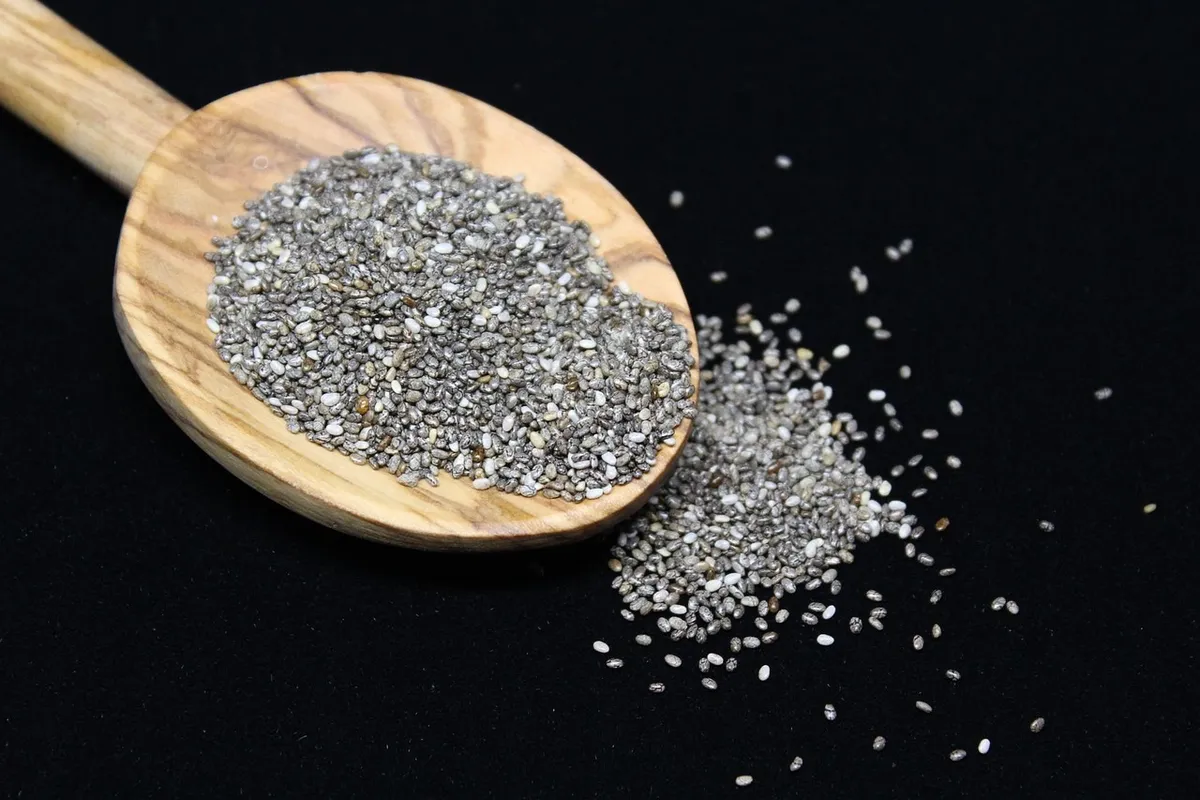
Chia seeds (Salvia hispanica) are also high in fat, protein and fibre. Export-grade chia typically contains about 30–34% fat, 17–22% protein and 17–19 g of omega-3 alpha-linolenic acid (ALA) per 100 g. Black and white chia are the same species with almost identical nutrition, and both soak in the same way, so you can use the same times and ratios for either colour.
Soaking Times and Ratios
The right time and ratio depend on the result you want. The table gives practical guidance by volume.
| Use | Chia : liquid (by volume) | Minimum soak | Best soak |
|---|---|---|---|
| Chia water or drink | 1 : 8 to 1 : 10 | 10–15 minutes | 20–30 minutes |
| Loose gel for smoothies or yoghurt | 1 : 6 | 15–20 minutes | 30 minutes |
| Thick gel (egg replacer in baking) | 1 : 3 | 10–15 minutes | 15–20 minutes |
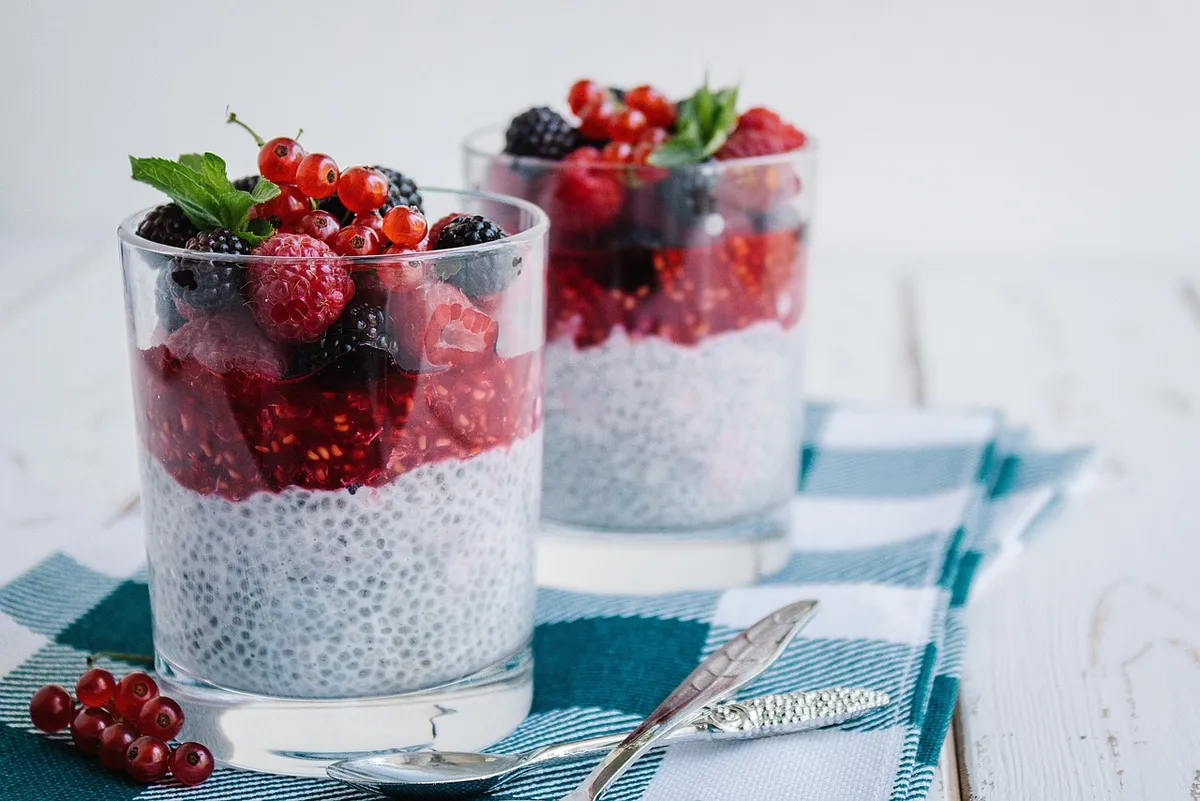
| Chia pudding | 1 : 4 | 2 hours (refrigerated) | Overnight (refrigerated) |
| Overnight oats with chia | Add 1 tablespoon to a normal oats recipe plus extra liquid | 4 hours (refrigerated) | Overnight (refrigerated) |
A simple method works for all of these:
- Measure the chia and the liquid into a jar or bowl.
- Stir or shake well for about 30 seconds.
- Wait 2–3 minutes, then stir again to break up any clumps.
- Cover and leave to soak for the time in the table, in the refrigerator if you are soaking for more than 30 minutes.
- Stir before serving and add more liquid if the gel is too thick. Serve chilled or at room temperature.
Most soaking problems come from a few common mistakes:
- Clumps: the seeds were not stirred a second time. Whisk the mixture or shake the jar after a few minutes.
- Too runny: too much liquid or too short a soak. Add a little more chia and wait another 15 minutes.
- Too stiff: too little liquid. Stir in more liquid, a spoonful at a time.
- Seeds sink to the bottom: the liquid was too thin at the start. Stir again after 10 minutes.
Soaking in Water, Milk and Juice
Chia gels in almost any liquid, but the liquid changes the speed and the texture.
- Water: gels fastest and gives a clear, neutral gel. Good for drinks and for adding to other foods.
- Dairy or plant milk: gives a creamy pudding. Milk is thicker than water, so it can take a little longer to set. Use the refrigerator for any soak longer than 30 minutes.
- Juice or coconut water: adds flavour and sweetness. Acidic juices still form a gel. Dilute very thick juices so the seeds can absorb enough liquid.
- Yoghurt: already thick, so stir in the chia with a little extra milk or water and allow at least 30 minutes.
Why Does Soaking Matter for Texture and Digestion?
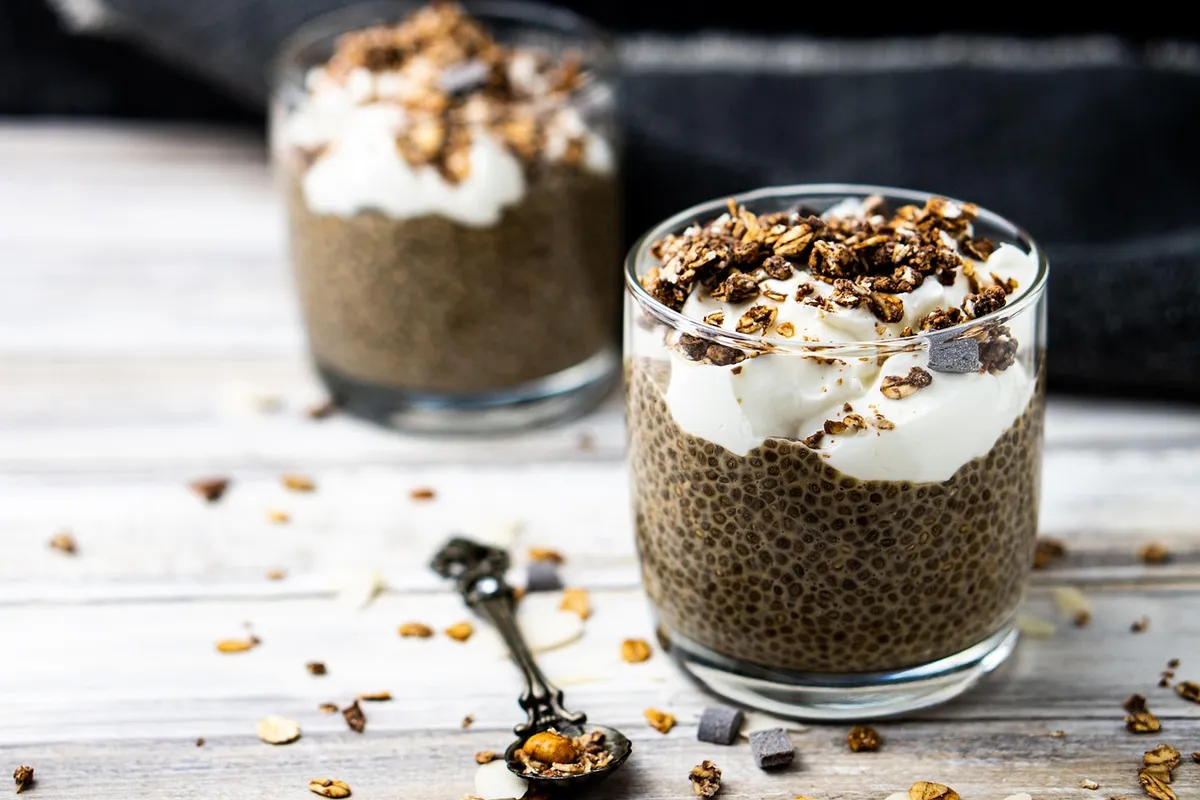
Soaking matters most for texture and for safe swallowing. Soaked chia is soft and easy to eat, while dry chia is hard and crunchy and sticks to the teeth. Food makers use pre-hydrated chia for the same reason, for example in puddings, drinks and jams.
Soaking is also a safety step. HealthDay reported a case in which a man with a swallowing disorder ate dry chia seeds and then drank water; the seeds expanded and blocked his oesophagus. The doctor involved advised that chia should only be eaten after it has fully expanded in liquid. Dry chia sprinkled lightly over a moist dish is generally fine, but a spoonful of dry seeds followed by a drink is not.
Chia is also rich in fibre. If you are not used to high-fibre foods, start with small amounts, such as one tablespoon a day, and drink enough fluids.
How Should You Store Soaked Chia Seeds?
Store soaked chia in a covered container in the refrigerator. As a common kitchen guide, plain chia gel made with water keeps for up to about five days, and chia pudding made with milk keeps for about three to four days, depending on the other ingredients. Discard it if it smells sour or shows any mould.
Dry chia seeds keep much longer. Their natural antioxidants protect the oil, and cleaned, dry seed (8% moisture or less) stored in a cool, dry place away from light keeps well for many months. Make a fresh batch of gel every few days rather than soaking a large amount at once. Do not freeze and thaw chia pudding many times, as the texture becomes watery.
Related reading: Difference Between Chia Seeds and Basil Seeds: A Clear Guide and Black or White Chia Seeds: Differences, Nutrition and Uses.
Buying Chia Seeds in Bulk from India
Clean, well-tested seed soaks evenly and gives a smooth gel, so quality starts at the source. Brown, immature seeds absorb water poorly and are removed in good cleaning. Whatever your customers decide about how long to soak chia seeds, the seed should be at least 99.5% pure, low in moisture and tested for microbiology, because microbial counts are the main reason EU buyers reject Indian chia.
Indian chia is a rabi crop, sown from October to December and harvested in February and March. Paraguay and Bolivia still lead world supply, but Indian chia is a growing alternative for buyers in Asia, the Middle East and Europe. Chia is an authorised novel food in the EU, and since 2021 it can be sold there “as such”, in bulk as well as pre-packed.
Elysium Agri Corporation, based in Jamnagar, Gujarat, exports Indian black chia seeds in machine-cleaned and sortex grades up to 99.95% purity. Our chia comes from the Neemuch–Mandsaur belt of Madhya Pradesh and newer areas in Maharashtra and Karnataka. Every lot is tested for plate count, yeast and mould, E. coli, Salmonella, aflatoxin, pesticides and cadmium at an NABL-accredited lab. We offer private label packs and bulk export packing, and our certificates are listed online.
Tell us the grade, packing and quantity, and we will send a specification and price. Request a chia seeds quote →
Frequently asked questions
How long should chia seeds be soaked?
Soak chia seeds for at least 15 to 20 minutes for a soft gel, about 30 minutes for a thick gel, and 2 hours to overnight in the refrigerator for chia pudding. Stir well when mixing and again after two or three minutes so the seeds do not clump. Longer than overnight adds little to the texture.
Can you soak chia seeds overnight?
Yes. Overnight soaking in the refrigerator is the standard method for chia pudding and overnight oats. It gives the firmest, most even set. Use a covered container, keep it cold, and eat the pudding within about three to four days. Plain chia gel made with water keeps a little longer, up to about five days.
What is the correct ratio of chia seeds to water?
A good general ratio is 1 part chia to 4 to 6 parts liquid by volume. Use about 1 to 4 for a firm pudding, 1 to 6 for a looser gel, 1 to 3 for a thick egg replacer in baking and 1 to 8 or more for a drinkable chia water. Add more liquid if the gel is too thick.
Why do chia seeds form a gel when soaked?
The outer coat of a chia seed contains mucilage, a soluble fibre that swells when it meets water. Within minutes, a clear jelly-like layer forms around each seed. Chia can absorb a large amount of liquid, up to 27 times its weight according to one gastroenterologist, which is why a small spoonful thickens a whole glass.
Is it safe to eat dry chia seeds without soaking?
A light sprinkle of dry chia over moist food such as yoghurt or salad is generally fine. Eating a spoonful of dry seeds and then drinking water is not advised, because the seeds can swell in the throat. A reported case involved a blocked oesophagus. People with swallowing difficulties should always eat chia fully soaked.
Related reads


